When to Upgrade from Semi-Automatic to an Automatic Bottle Labeling Machine
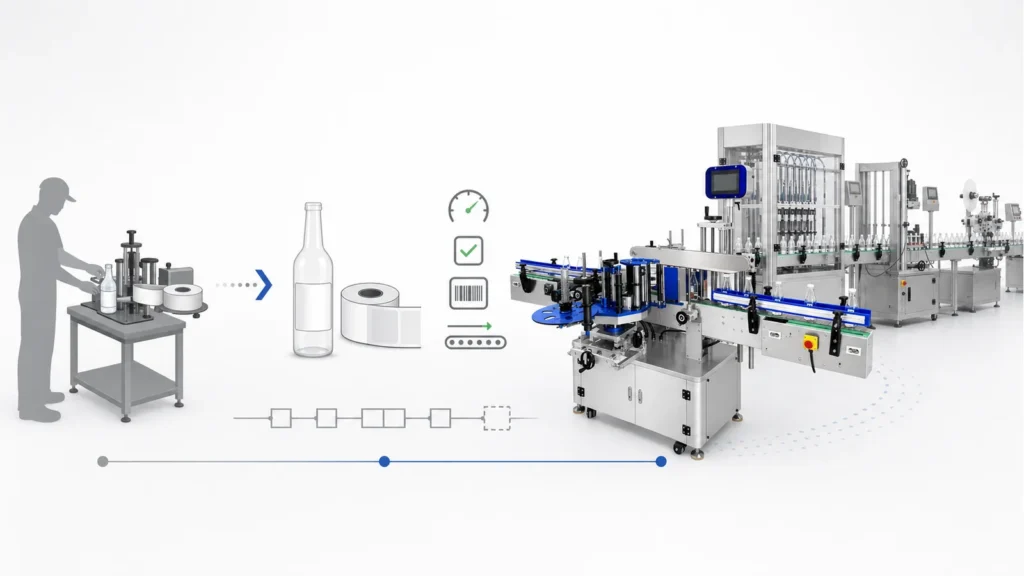
A factory should not buy an automatic bottle labeling machine just because automation looks more advanced. The real question is whether your current labeling process has become a production bottleneck—and whether your package is actually ready for automatic handling. The upgrade pays off when operator-loaded labeling can no longer deliver the output, consistency, or line connection the rest of your packaging process needs.
Manual applicators and semi-automatic labelers are common stages in the market. LEKA Pack Line focuses on automatic conveyor-fed labeling machines and integrated labeling-line solutions. This distinction matters: the manual and semi-automatic methods described below reflect your factory’s current process or a market transition stage—not products offered by LEKA.
The right automatic configuration still depends on your package. Bottle shape and stability, label construction, production workload, coding, changeovers, upstream equipment, and factory layout all shape the outcome. Use this guide to decide whether your process is ready for automation and to prepare the information needed for a configuration review. The LEKA automatic labeling machine range is the natural starting point for reviewing commercial automatic options.
Current Labeling Methods Before Full Automation
Machine names are not used consistently across the market. Take tabletop as an example: the term describes a machine’s physical format, not its automation level. One compact device may require an operator to present every bottle by hand, while another compact system may include a conveyor and automatic product detection. Before you compare machines, confirm three things: how the bottle enters, how the labeling cycle starts, and how the labeled product leaves.
| Method | Common Market Use | Operator Role | Conveyor-Fed? | LEKA Current Scope |
|---|---|---|---|---|
| Hand labeling | Samples, trials and very small or highly variable batches | Peels, positions and presses every label | No | Not supplied |
| Manual applicator | Small batches needing help with label dispensing or positioning | Loads or presents every product and completes the application | No | Not supplied |
| Semi-automatic labeler | Repeated operator-loaded batches requiring a controlled cycle | Loads each product and triggers or supports each cycle | No, in the operator-loaded meaning used in this guide | Not supplied |
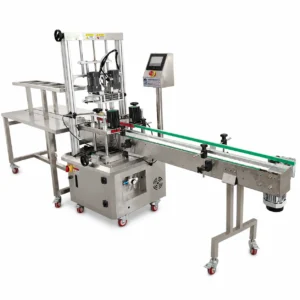
| Automatic conveyor-fed labeler | Stand-alone automatic production with repeatable packages and scheduled output | Sets up, replenishes, monitors and checks the process | Yes | Available |
| Integrated inline automatic labeler | Connected filling, capping, coding, labeling and packing operations | Manages the connected process, changeovers and quality checks | Yes | Available by project configuration |
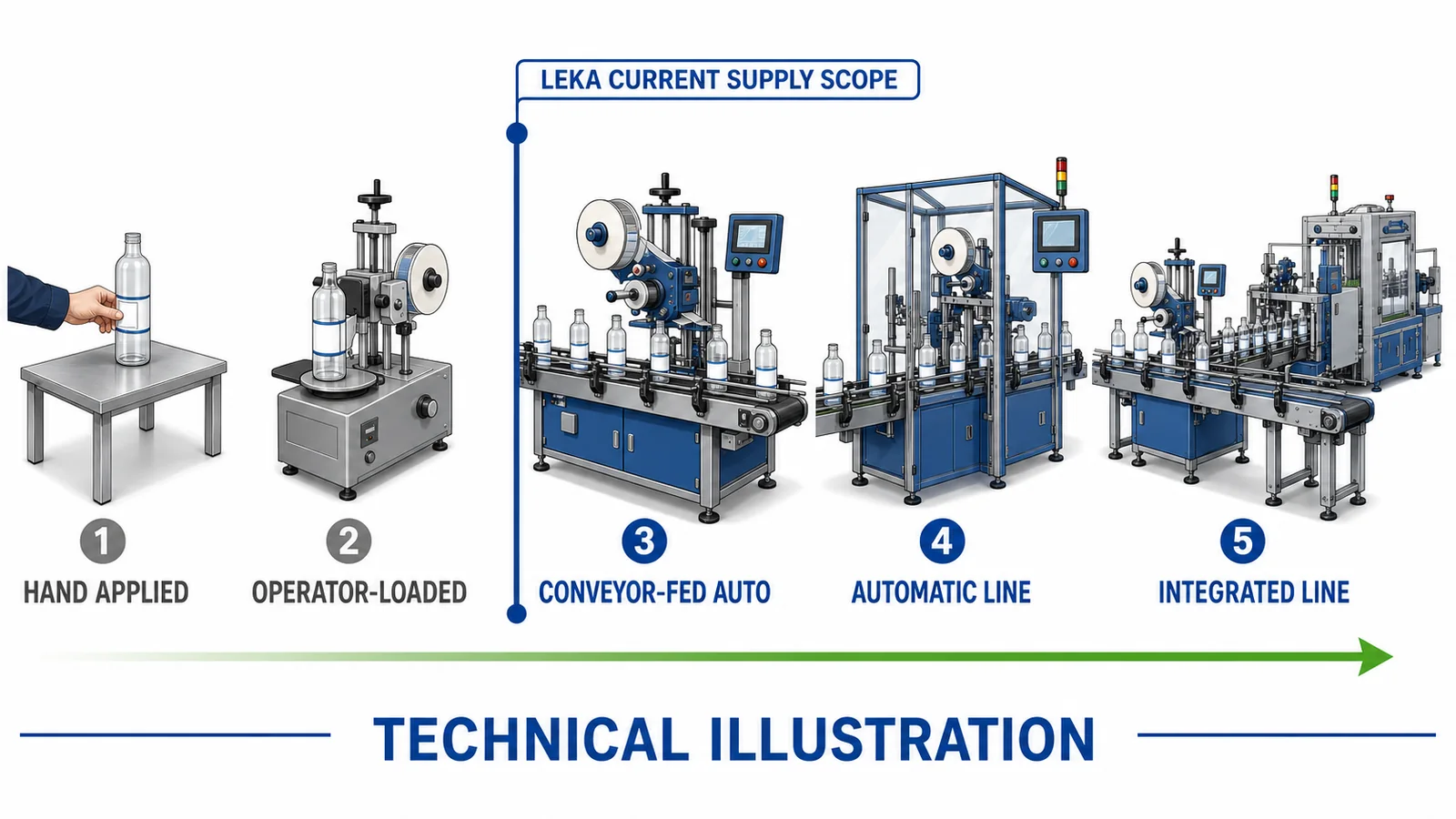
Company size alone does not set the upgrade timeline. A co-packer running many short runs may stay operator-loaded for years, while a factory producing one stable bottle in long campaigns may need automatic conveyor-fed labeling much earlier. Let the actual work pattern drive the decision.
When Operator-Loaded Labeling Still Makes Sense
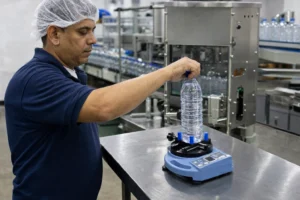
Manual application still has a place in product development, market samples, short launch batches, or packs that change too often to justify a dedicated automatic setup. An operator-loaded or semi-automatic process can also remain workable when daily batches are small, labor is already planned for the task, and labeling never delays downstream packing.
That said, the labor and quality impact is never zero. Record the full routine: material preparation, bottle handling, label application, checks, rework, changeovers, and movement to the next station. A short demonstration cycle rarely reflects a full batch. Measuring this stage gives you an honest baseline for an automatic-labeling decision—it is not meant to present these methods as part of the LEKA equipment range.
Seven Signs It Is Time to Automate Bottle Labeling
- Labeling delays packing or shipment. Finished bottles wait for labels, or downstream staff regularly wait for labeled products.
- Required output exceeds the available operator-loaded time. A normal batch no longer fits the production window without extra people or overtime.
- Placement variation creates avoidable checks or rework. Label position depends heavily on the operator, especially across long batches.
- Operators spend too much time presenting bottles. Repetitive loading, triggering, and unloading consume labor the factory needs elsewhere.
- The package and label have become repeatable. Bottle dimensions, labeling panels, label rolls, and SKU rules are stable enough to define automatic handling.
- Filling and capping already create a controlled bottle flow. A labeling station can now receive bottles from a conveyor instead of trays or manual transfer.
- Production needs a connected process. The factory wants filling, capping, coding, labeling, inspection responsibility, and packing flow planned as one system.
No single sign justifies a purchase on its own. Taken together, these observations reveal where an automatic system could remove a real constraint. Before comparing models, define the job with the PLACE Check.
Use the PLACE Check Before Comparing Automatic Machines
The PLACE Check organizes the five groups of information that determine an automatic configuration.
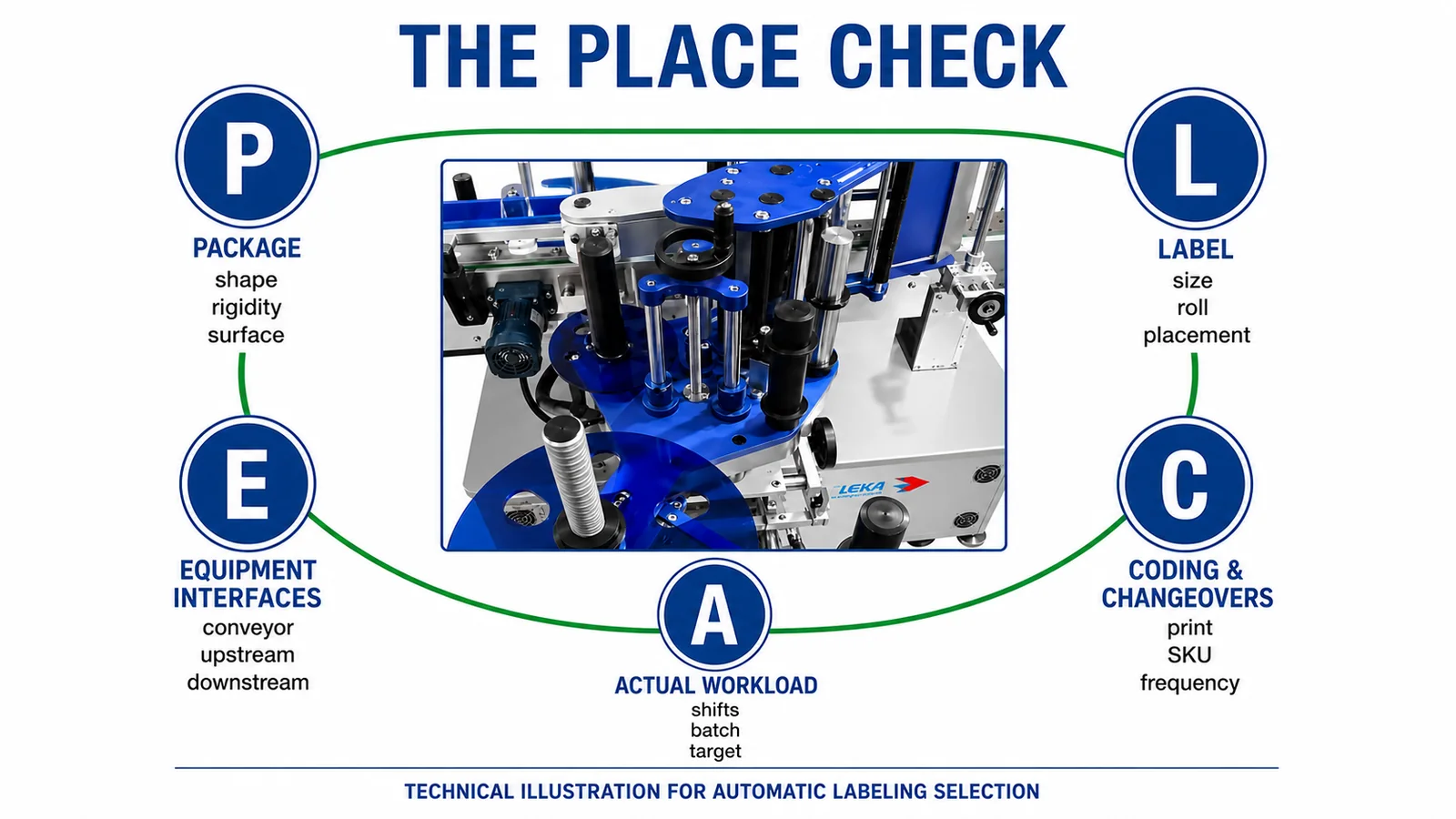
| PLACE Input | Questions to Answer | Why It Changes the Configuration |
|---|---|---|
| P — Package | Is the container round, flat, square, oval or tapered? Is it rigid, soft, smooth or unstable? How does it behave when filled and capped? | Geometry and condition determine feeding, spacing, guiding, rotation and support. |
| L — Label | Is the application wrap-around, front only, front and back, top or fixed-position? What are the label, liner, gap, core and unwind details? | The application method, label path and sensing arrangement must match the intended roll. |
| A — Actual workload | How many saleable bottles are required per batch and shift? How many labeling minutes remain after setup, checks, cleaning and changeovers? | Stable production need is different from an isolated maximum-speed figure. |
| C — Coding and changeovers | Is a date, lot number or variable code required? How many bottles and labels change? Who checks the correct label and code? | Coder position, SKU control and setup steps affect the layout and operating process. |
| E — Equipment interfaces | Will the labeler run alone or connect with filling, capping, conveying and packing? What space, conveyor height, utilities and controls are available? | Every automatic station must receive, control and discharge the package reliably. |
Choose the Automatic Labeling Method by Package
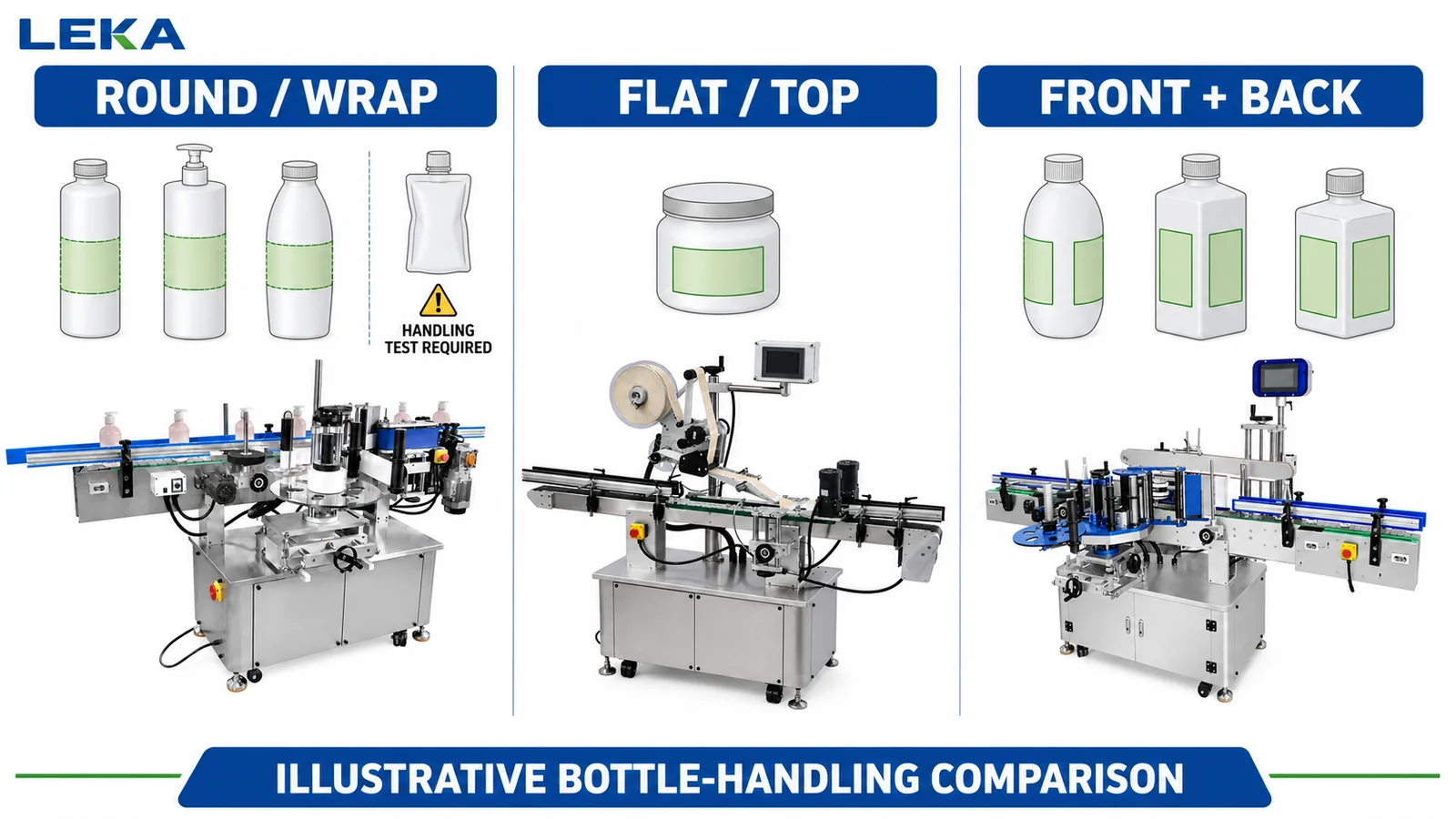
Round and cylindrical bottles
Straight-sided cylindrical bottles and jars are usually rotated during wrap-around application. Check whether the container rolls consistently, whether the label fits the usable straight wall, and whether a seam or package feature calls for fixed-position labeling. Once the profile is confirmed, compare automatic round bottle labeling systems.
“Round bottle” is not a complete specification. A tapered shoulder, flared base, recessed panel, or changing diameter can all affect contact with belts or rollers. Send a drawing or sample whenever the wall is not straight.
Flat products and flat labeling surfaces
A flat bottle face, carton, lid, tray, or pouch calls for a different method than a container that rotates. The product may pass under or beside an applicator, and thin or unstable products may need extra support. Review automatic labeling machines for flat products only after confirming how each product will feed and travel.
Flat, oval and square bottles with two label panels
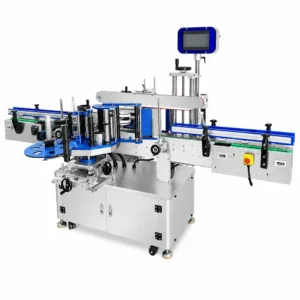
Front-and-back labeling requires the bottle to stay correctly oriented and stabilized while two label positions are controlled. If you need to handle several shapes or label stations, review automatic front-and-back labeling configurations instead of assuming a wrap-around machine can do the job.
Soft, lightweight or unstable bottles
A bottle that flexes under pressure or moves unpredictably on the conveyor needs a handling review before anyone talks about output. Evaluate bottle spacing, side-guide contact, top pressure, belt support, and transfers. Test the bottle in the condition it reaches the labeler—filling, capping, heating, or cooling can all change its behavior.
Stand-Alone Automatic vs Inline Automatic Labeling
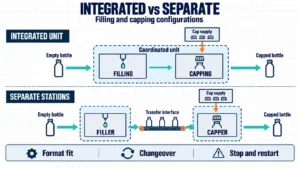
A stand-alone automatic labeler is still conveyor-fed, but operators or a separate handling method feed and collect bottles around the machine. It suits factories that need automatic application while keeping filling, capping, or packing as separate production steps.
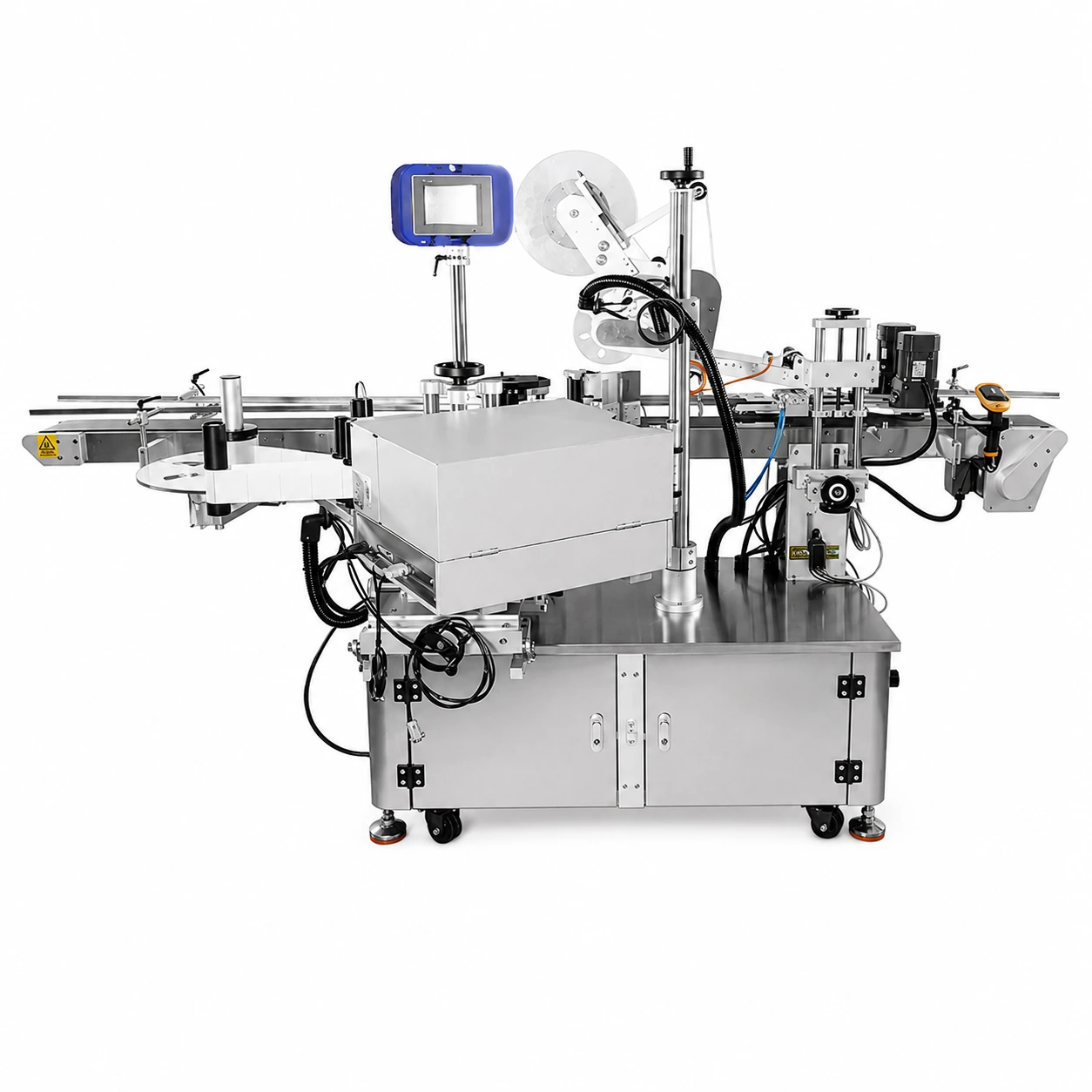
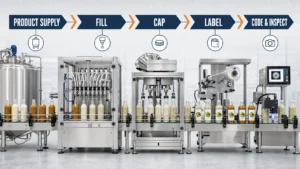
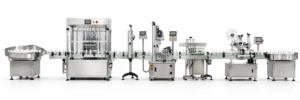
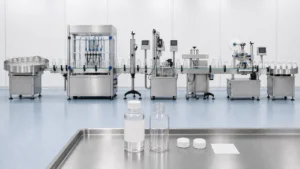
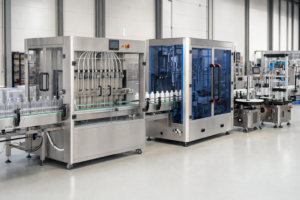
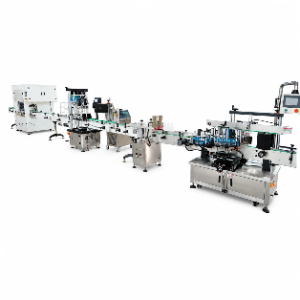
An inline automatic labeler receives bottles from connected upstream equipment and discharges them to the next operation. It becomes relevant when the factory already has a repeatable bottle flow and wants labeling to operate within an integrated bottle packaging line.
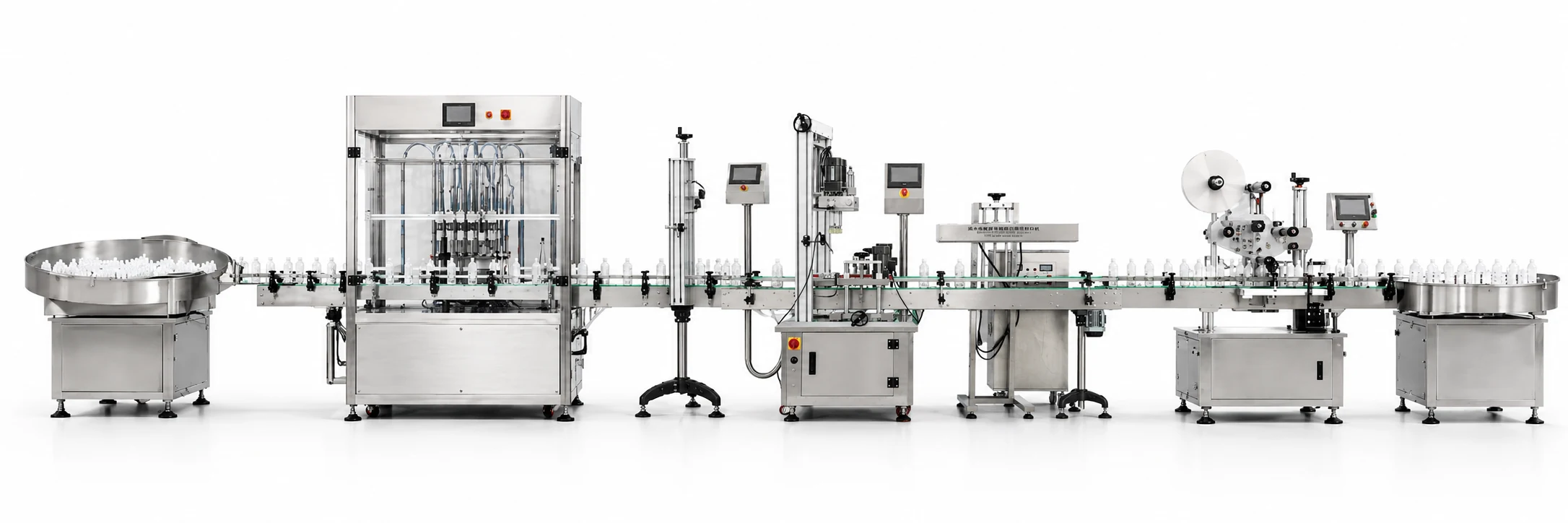
| Decision Area | Stand-Alone Automatic | Inline Automatic |
|---|---|---|
| Bottle supply | Fed separately to the labeler’s conveyor | Received from connected upstream equipment |
| Output planning | Based on labeling batches and local handling | Based on stable whole-line flow |
| Controls and faults | Primarily local machine operation | Start, stop and fault behavior must be coordinated across interfaces |
| Layout | Needs feed, discharge and operator-access space | Needs conveyor transfers, accumulation and access within the full line |
| Best review basis | Bottle, label, batch routine and surrounding handling | Bottle, label, upstream/downstream machines, line target and layout |
Neither format should be chosen from a speed number alone. A stand-alone machine still needs practical bottle feeding and collection, and an inline machine must match the behavior of every connected station.
Calculate the Required Stable Output
Annual volume alone does not define the machine. The useful starting figure is the average labeling rate required during the time actually available:
Required average labeling rate = saleable bottles required ÷ available labeling minutes
Count saleable bottles, not every bottle entering the area. Deduct normal non-running time—setup, roll loading, first-piece checks, planned cleaning, and product changeovers. Also account for minor stops, rework, and the availability of bottles from upstream.
For an inline project, repeat the calculation across the whole line. The selected liquid filling equipment shapes how filled bottles arrive, while bottle capping equipment affects spacing, stability, and discharge. A labeler cannot fix irregular upstream flow or downstream blocking on its own.
Plan Coding, Changeovers and Line Interfaces Together
Coding and print-and-apply scope
Define any date, lot number, batch code, or variable data before fixing the layout. Record the code content, data source, print area, and verification responsibility. LEKA has a confirmed printing and labeling integration for flat products; do not treat this specific configuration as a universal coding solution for every bottle. Round bottles, preprinted labels, and separate coding stations each need their own review.
Changeovers and label versions
List every planned bottle-and-label combination. For each SKU, document container dimensions, the usable labeling panel, label material and dimensions, liner, gap, unwind direction, application position, coding data, and first-piece approval. The most difficult format—or the largest changeover—often defines the right configuration.
Filling, capping, conveying and layout interfaces
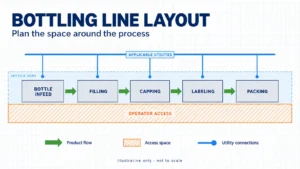
Confirm conveyor direction, height, width, and transfers; the method used to create bottle spacing; guide and top-pressure contact; accumulation; access for label-roll changes and maintenance; and start, stop, and fault behavior. Also define who supplies and validates each interface. An automatic labeler is one station in a physical production flow—even when it runs as a stand-alone system.
Automatic Bottle Labeling Machine Selection Checklist
| Decision Area | Information to Provide | What LEKA Should Confirm |
|---|---|---|
| Container | Material, shape, dimensions, photos, drawings, filled condition and representative samples | Automatic feeding, spacing, guidance, stabilization, application and discharge method |
| Label | Position, dimensions, material, liner, gap, core, outer diameter and unwind direction | Applicator method, sensing arrangement and roll compatibility |
| Production | Saleable batch target, shift target, available minutes, SKU count and changeover frequency | Stable-output basis and assumptions requiring a test |
| Automation scope | Current handling, stand-alone or connected-line goal, operator tasks and future line plan | Stand-alone automatic, inline automatic or integrated automatic labeling-line configuration |
| Coding | Code content, print position, variable-data source and verification process | Coder location, interface and responsibility boundary |
| Existing line | Machine list, flow direction, conveyor details, current output and observed problems | Mechanical, electrical, control and bottle-flow interfaces |
| Factory | Available footprint, access, voltage, air supply, environment and destination | Layout fit, utilities, maintenance access, installation and service scope |
Common automatic-selection mistakes
- Buying by maximum speed: stable saleable output across the full batch or line is the figure that matters.
- Using “round bottle” as the full specification: taper, rigidity, and wall profile can change handling.
- Ordering labels before confirming the applicator: label and liner details must match the system.
- Assuming tabletop defines automation: confirm product feed and cycle initiation for the actual machine.
- Leaving coding until the end: print position and data requirements can reshape the layout.
- Testing only an easy SKU: include the difficult container and the largest expected changeover.
- Ignoring access: the layout must allow safe setup, roll changes, cleaning, and maintenance.
Build a Sample Test and RFQ Package
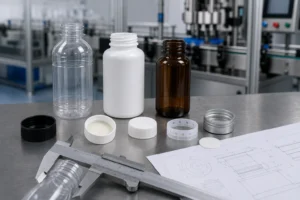
A useful test starts before the machine ever runs. Provide representative production containers and production-intent label rolls. If filling, heating, cooling, or capping changes the bottle, supply it in the condition expected at the labeling station.
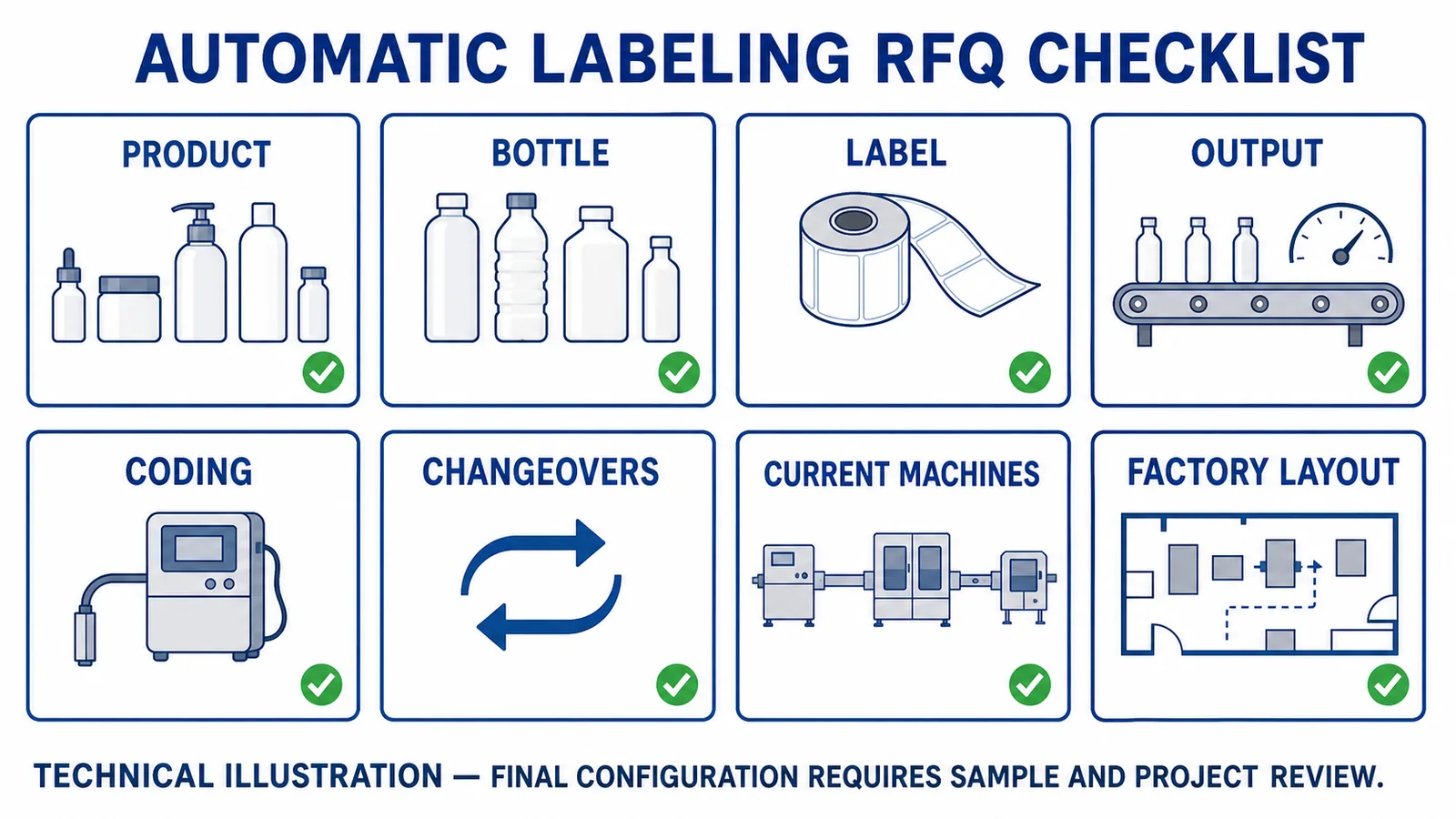
Sample pack
- Representative bottles covering the normal production tolerance
- Filled and capped samples when their condition differs from empty bottles
- Production-intent label rolls rather than loose artwork only
- Label drawing, liner, gap, roll direction, core, and outer-diameter information
- Photos or video of the current process and the observed problem
- A list of planned SKUs, with the most difficult format identified
Test observations
Agree in advance on what the test will observe: automatic feeding, spacing, stability, label dispensing, placement, wrap or panel result, code position, changeover steps, and discharge. Record the settings and any special guide or fixture used. A passing result for one bottle-and-label combination does not prove untested formats will work.
RFQ information
Include the product industry, bottle material and dimensions, label position and roll details, required saleable output, available production time, batch pattern, number of SKUs, coding needs, current machines, layout, voltage, compressed-air availability, and destination country. State clearly whether the request covers a stand-alone automatic labeler or an integrated automatic line.
Frequently Asked Questions
When should a factory move from hand labeling to an automatic machine?
Review the change when operator-loaded labeling can no longer finish the batch in the available time, creates unacceptable variation or rework, ties up people needed elsewhere, or delays the connected packaging process. Measure the current routine first, and confirm that your bottle and label are stable enough for automatic handling.
Does LEKA supply semi-automatic labeling machines?
LEKA currently focuses on fully automatic labeling machines and integrated labeling-line solutions. We are glad to review whether your production is ready for an automatic system, but semi-automatic labelers are not part of the current LEKA range.
Is a tabletop labeler always semi-automatic?
No. Tabletop describes the physical format, not an automation class. Confirm how products are fed, whether a conveyor is present, and how the labeling cycle starts. LEKA’s current commercial scope remains automatic conveyor-fed labeling.
Is annual production volume enough to choose an automatic labeler?
No. The same annual volume can be produced in many short batches or a few long campaigns. Available minutes, SKU range, changeovers, bottle flow, and line connection all shape the configuration.
Can one automatic machine handle round and flat bottles?
Some multifunction configurations can support more than one shape or label position, but compatibility depends on the machine structure and your actual samples. Submit every planned bottle and label format for review rather than assuming universal capability.
Should labels be ordered before the machine is confirmed?
Finalize production rolls only after coordinating label dimensions, liner, gap, core, outer diameter, and unwind direction with the selected applicator. This avoids preventable roll and feeding mismatches.
What should be checked before connecting a labeler to a filling line?
Check bottle condition, conveyor direction and height, spacing, guide contact, accumulation, upstream and downstream flow, start/stop behavior, coding position, layout, and maintenance access. Define responsibility for every interface.
Request an Automatic Labeling Configuration Review
Send us your bottle photos, label dimensions, and required output for an initial automatic-labeling review. LEKA specializes in fully automatic labeling machines and integrated labeling-line configurations. Semi-automatic labeling equipment is outside our current supply scope.
For a detailed stand-alone, inline, or integrated automatic labeling-line configuration, we may then request:
- Representative bottle samples
- Bottle dimensions, material, and the filled and capped condition
- Label artwork, application position, and complete label-roll specification
- Saleable batch target, available labeling minutes, and number of SKUs
- Date, lot, or other coding requirements
- Existing filling, capping, and conveying equipment
- Factory layout, voltage, compressed-air availability, and destination country
With these inputs, LEKA can review a stand-alone automatic, inline automatic, or integrated automatic labeling-line configuration—and identify the samples, interfaces, and tests that still need confirmation.