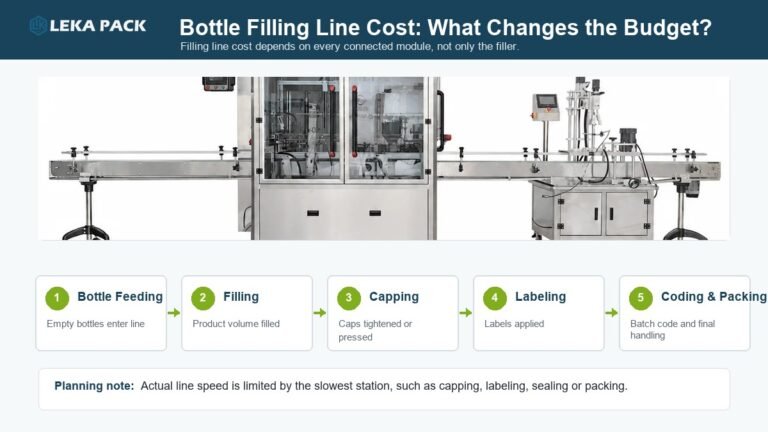
Bottle feeding
Turntable, conveyor or bottle unscrambler feeds bottles into the line.
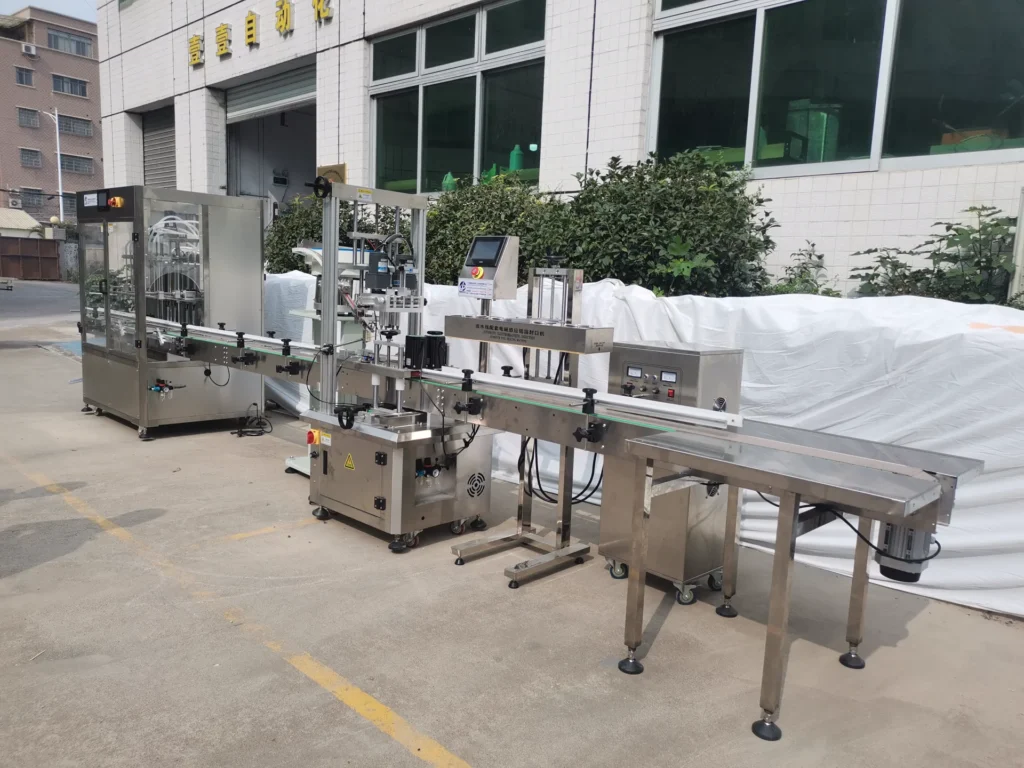 Complete line capability
Plan the machine around your product, container and output
Complete line capability
Plan the machine around your product, container and output
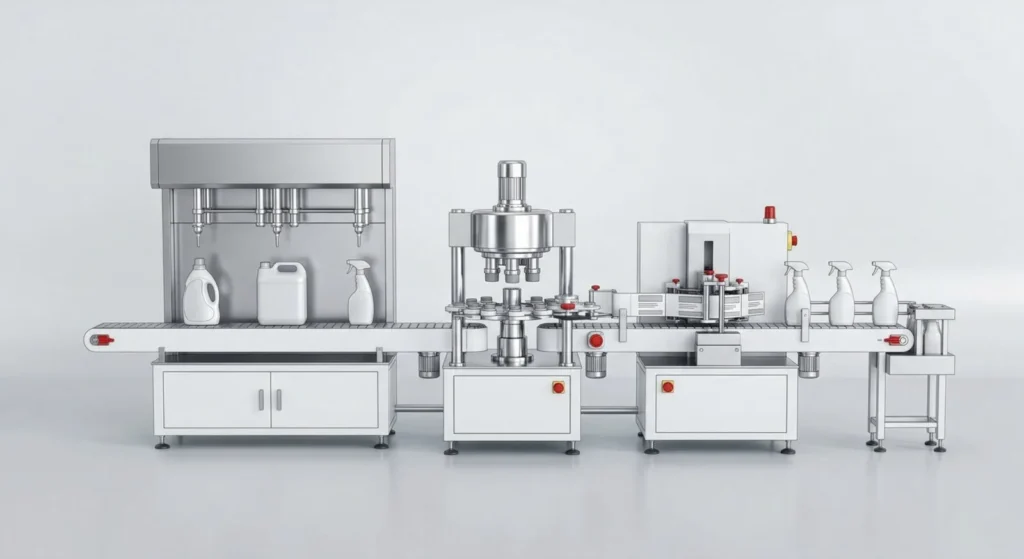 Line planning
Connect filling, capping, labeling and conveying
Line planning
Connect filling, capping, labeling and conveying
Tell us the product viscosity, container, cap, label and target output. We will help match the line configuration.
Browse ApplicationsSee how filling and packaging configurations are matched to different products and containers.
Share your product, container and output requirements to receive machine selection support.
Contact LEKALEKA Pack Line supplies filling, capping, labeling and conveying equipment, as well as complete packaging line solutions.
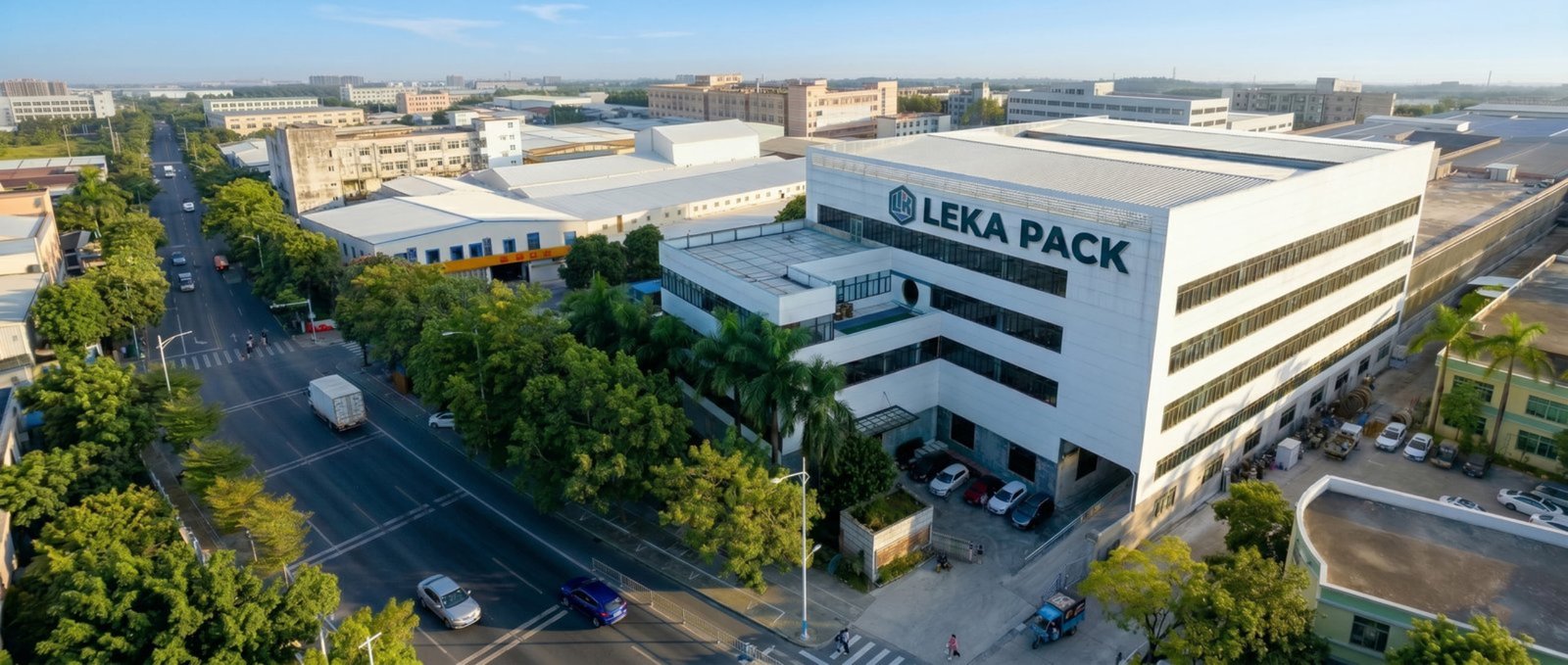
Industry Packaging Line Solution
A bottle packaging line needs stable flow from empty bottle handling to final packing. LEKA helps factories combine filling, capping, sealing, labeling, coding, inspection and packing modules so the whole line works around the customer bottle, cap, product and output target.
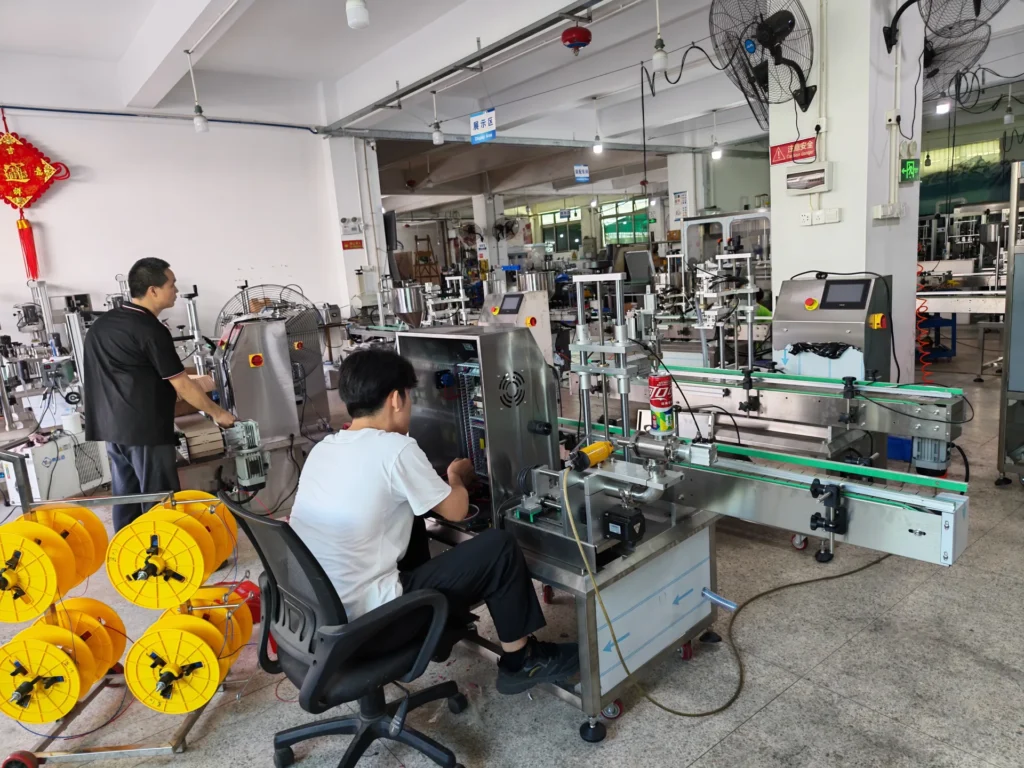
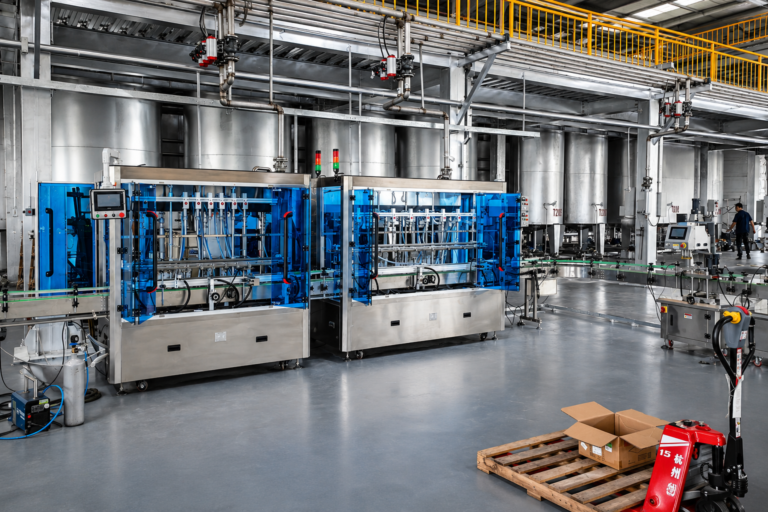
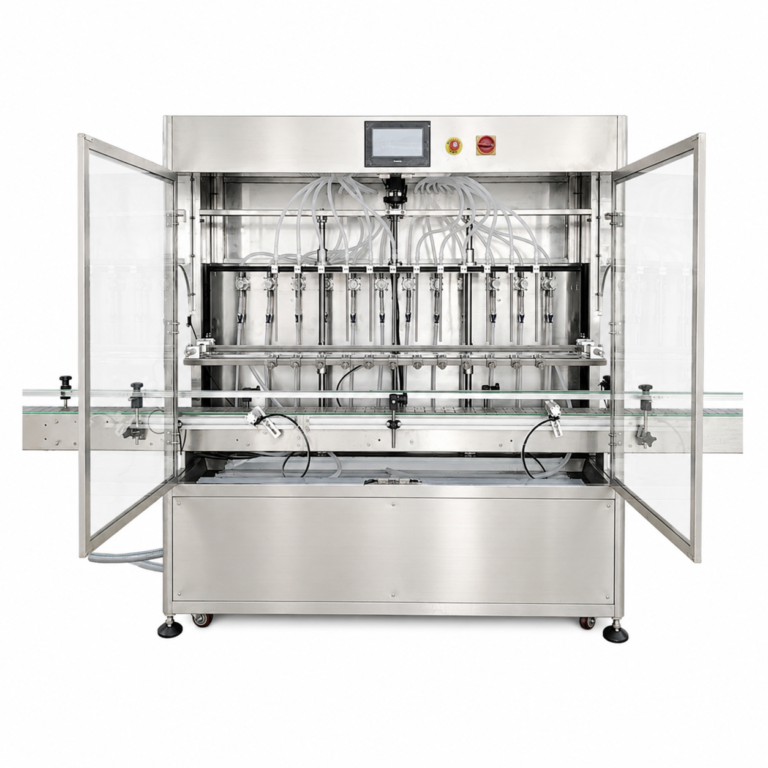
LEKA 8-head filler reference; final output depends on sample and layout.
Filling, capping, labeling and packing modules can be connected by project.
Compact and standard references; integrated line by project.
Final labor depends on feeding, automation level and packing scope.
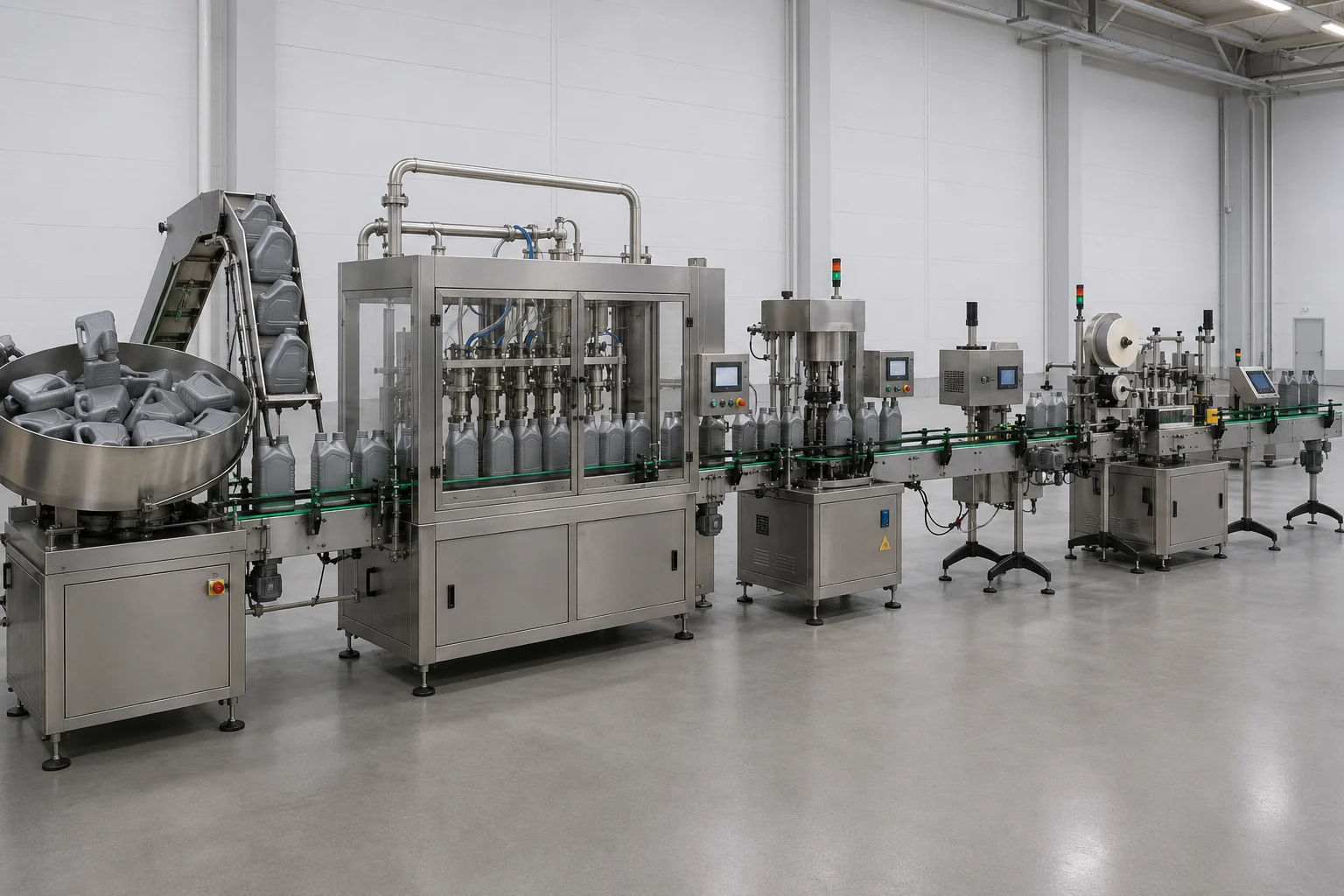
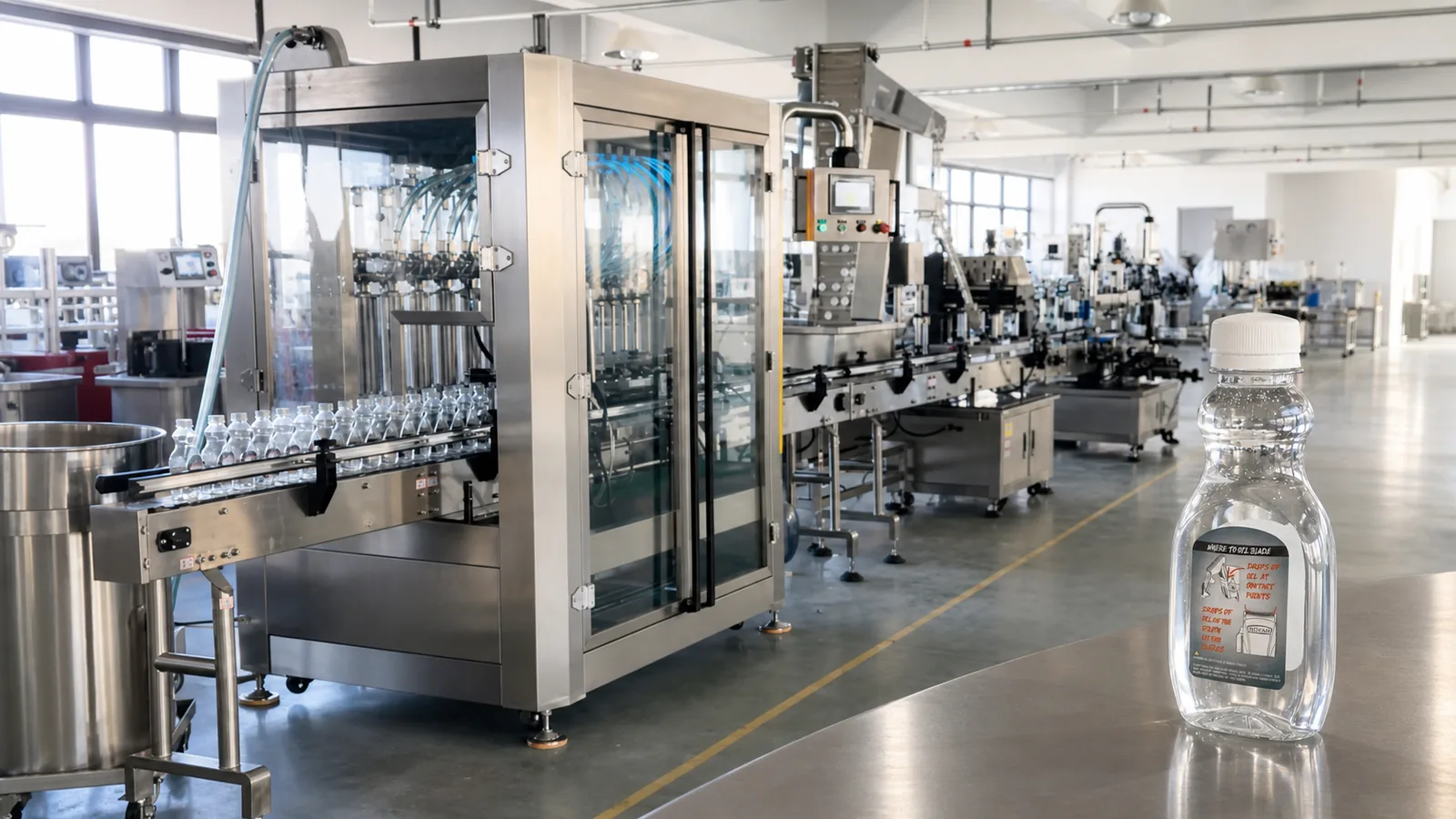
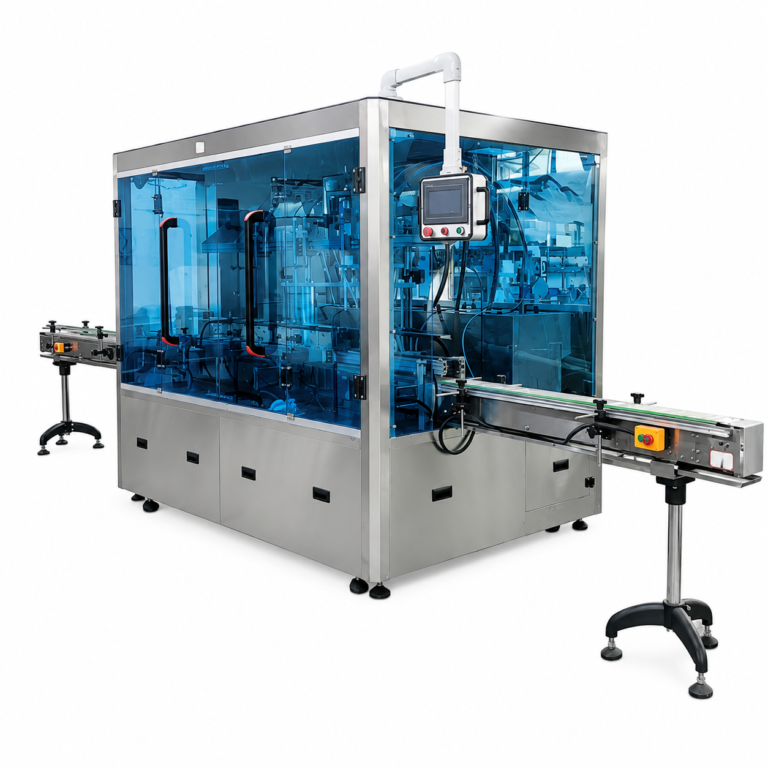
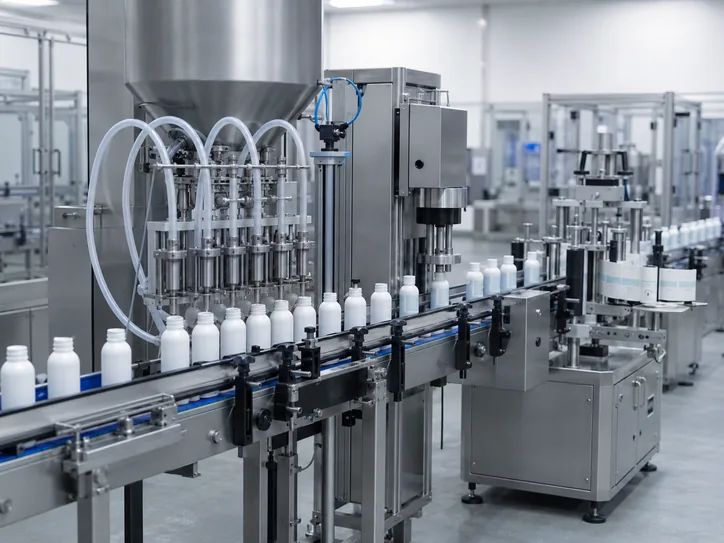
Complete automatic bottle packaging line with filling, capping, labeling and conveyor transfer for line configuration review.
Application Scope
Bottled water, beverages, sauces, oils, detergents, cosmetics, mouthwash, disinfectant, lubricants and chemical liquids packed in bottles or jerry cans.
Beverage factories, food factories, daily chemical plants, cosmetic factories, lubricant plants, chemical plants and packaging contractors.
LEKA 8-head filler reference: 1600-3000 bottles/hour; higher output depends on sample and layout.
Line Integration
Compact 1000-2000 BPH reference; standard 1600-3000 BPH; integrated line by project.
From empty bottle feeding to filled, capped, labeled and packed bottles.
Container Range
Machine Catalogue
Compare filling, capping, sealing, labeling, conveying and complete bottling line options for food, beverage, sauce, edible oil, cosmetics, home care and chemical products.
| Container Type | Volume Range | Closure Options | Labeling Options | Handling Notes |
|---|---|---|---|---|
Small and Medium Bottles |
100ml-5L |
Screw caps, press caps, pump caps or trigger caps by sample. |
Wrap-around, single-side, double-side, sleeve or top labels. |
Bottle guides, filling nozzles and capping heads are confirmed by real samples. |
Jerry Cans and Pails |
5L-25L |
Screw caps, press caps, pail lids or custom closures. |
Front-back labels, warning labels or batch coding. |
Large containers may need stronger conveyor support and slower filling cycles. |
Finished Cartons |
LEKA-CS reference: L150-500mm / W150-500mm / H120-500mm |
Tape sealing after product packing. |
Carton label, shipping label or batch code by project. |
Carton sealing uses LEKA 18m/min belt speed reference; final packing output depends on carton loading. |
Capacity Planning
| Solution Type | Typical Output | Machine Configuration | Operators | Floor Space | Production Use |
|---|---|---|---|---|---|
Compact / Semi-Automatic Line |
1000-2000 BPH reference for small bottles; final output depends on sample and filling volume. |
Manual or turntable feeding with automatic filling, capping, labeling and collection. |
2-3 operators reference |
Compact inline layout; final drawing required. |
Suitable for new projects, smaller factories and flexible SKU changeover. |
Standard Automatic Inline Line |
1600-3000 bottles/hour using LEKA 8-head liquid filler reference. |
Automatic filling, cap feeding, capping, labeling, coding and packing preparation. |
2-3 operators reference |
Straight, L-shaped or U-shaped layout after workshop review. |
Suitable for regular daily production with stable bottle flow. |
Higher-Output / Integrated Line |
Matched by project; bottle feeding reference 60-120 bottles/minute and labeling up to 15000 BPH can be integrated when required. |
Bottle unscrambler, multi-head filling, capping, labeling, inspection, carton sealing or palletizing by project. |
Confirmed by line scope |
Layout drawing required with buffer and packing end. |
Suitable for buyers planning connected production from empty bottles to finished cartons. |
Production Flow
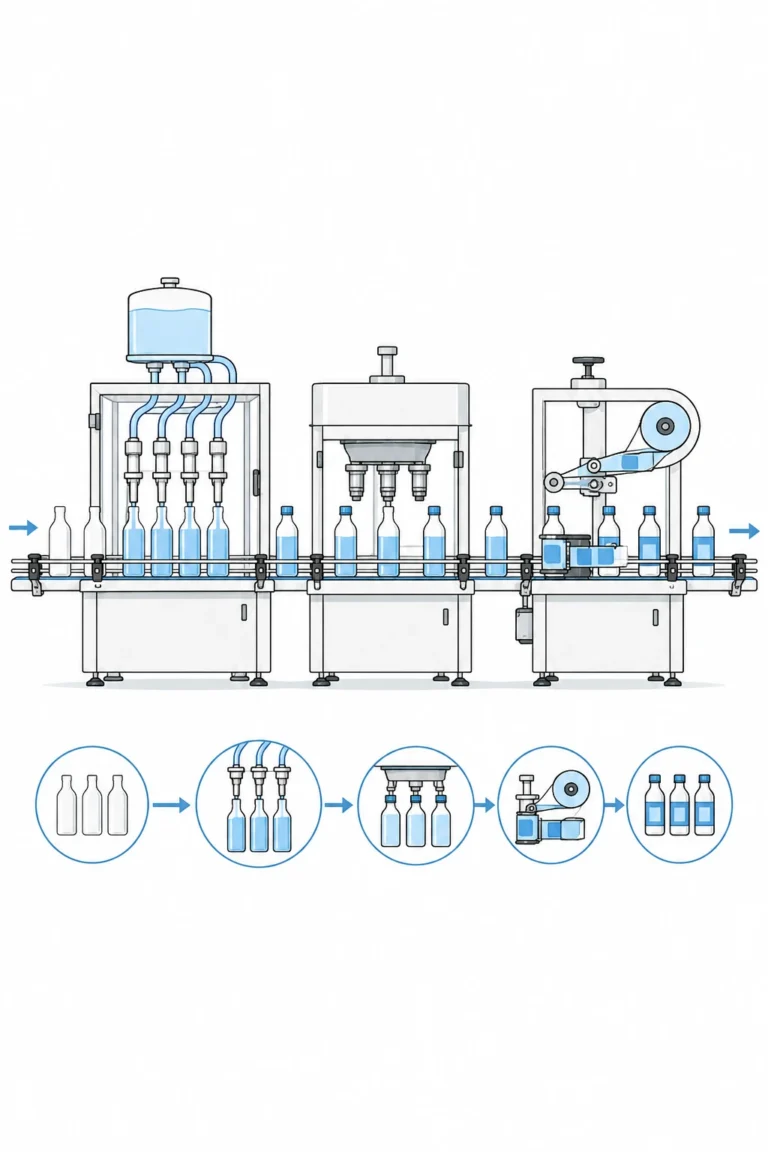
Turntable, conveyor or bottle unscrambler feeds bottles into the line.
Filling structure is selected according to liquid viscosity, foam, particles and accuracy requirement.
Screw caps, press caps, pump caps or trigger caps can be handled according to sample confirmation.
Sticker labeling, sleeve labeling, date coding and batch coding can be integrated.
Light inspection, weight checking, rejection, carton sealing and shrink packing can be added.
Machine Configuration
| Line Stage | Machine Role | Recommended Equipment | Qty | Output Match | Production Use | Configuration Notes |
|---|---|---|---|---|---|---|
| Container Feeding and Line Conveying | Feeds empty containers into the line and keeps transfer stable between machines. |
1 | Confirmed by bottle or container size, filling volume, product characteristics and packing end requirement. |
Line Integration | Bottle unscrambler, bottle receiving table, accumulation table or conveyor layout is selected by container stability and workshop space. Conveyor length, turning direction and accumulation buffer can be customized. | |
| Bottle Washing / Air Rinsing | Removes dust from empty bottles before filling when container storage, hygiene or product quality requires it. |
1 | Confirmed by bottle or container size, filling volume, product characteristics and packing end requirement. |
Optional Module | Bottle washer or air rinsing module is added according to bottle material, cleanliness requirement and line speed. Flip-type air blow washing, ion air cleaning or rinsing structure can be reviewed. | |
| Filling | Fills the target product into bottles, jars, pails or containers. |
1 | Confirmed by bottle or container size, filling volume, product characteristics and packing end requirement. |
Core Machine | Filling equipment is selected by viscosity, foaming, particles, corrosion risk, filling accuracy and target capacity. Servo control, more filling heads, diving nozzles, heating or anti-corrosion structure can be reviewed. | |
| Cap Feeding / Cap Elevating | Feeds caps to the capping machine and reduces manual cap loading during continuous production. |
1 | Confirmed by bottle or container size, filling volume, product characteristics and packing end requirement. |
Optional Module | Cap elevator or vibratory feeder is selected by cap size, cap shape and feeding stability. Customized cap sorting and cap feeding direction can be reviewed. | |
| Capping | Tightens screw caps, press caps or other matched closures according to the container and cap sample. |
1 | Confirmed by bottle or container size, filling volume, product characteristics and packing end requirement. |
Line Integration | Capping structure is selected according to cap type, torque requirement and bottle stability. Servo capping, claw-type capping or press-cap structure can be integrated. | |
| Foil Sealing | Adds induction sealing after capping when leakage control, freshness, tamper evidence or product protection is required. |
1 | Confirmed by bottle or container size, filling volume, product characteristics and packing end requirement. |
Optional Module | Foil sealing is configured by bottle mouth size, foil material, cap structure and line speed. Air-cooled or water-cooled sealing models can be selected by production requirement. | |
| Labeling and Coding | Applies product labels and production date information before final packing. |
1 | Confirmed by bottle or container size, filling volume, product characteristics and packing end requirement. |
Line Integration | Labeling method is matched to container shape, label position and packaging style. Single-side, double-side, wrap-around, top labeling, sleeve labeling and coding can be integrated. | |
| End-of-Line Packing | Prepares finished products for carton sealing, shrink packing, case packing or palletizing. |
1 | Confirmed by bottle or container size, filling volume, product characteristics and packing end requirement. |
Optional Module | Packing end is configured according to carton size, case packing method, labor plan and shipping requirement. Carton sealing, shrink packing, automatic case packing or palletizing can be configured by project. |
Line Details
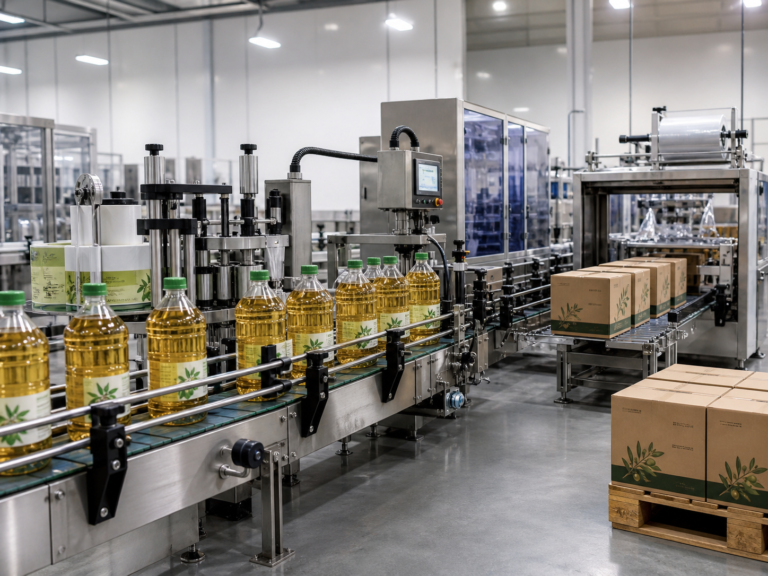
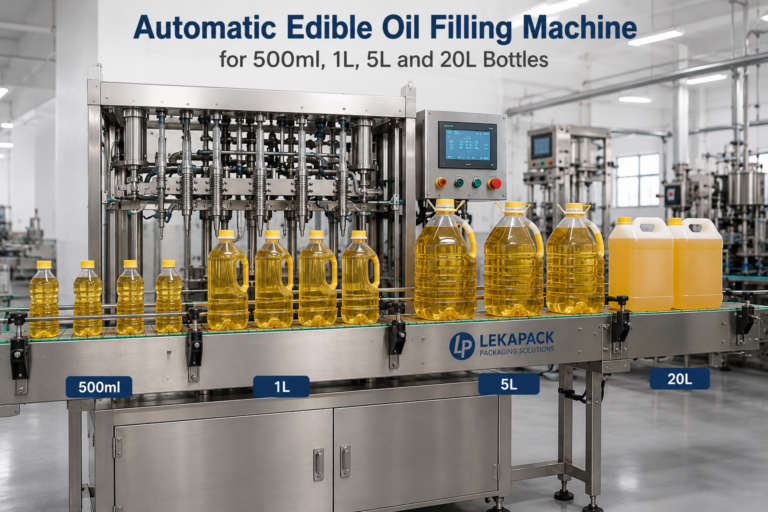
Optional Integration
Reduces manual bottle feeding for higher automation.
Useful for clean bottle production before filling.
Supports continuous cap feeding and reduces operator workload.
Connects the finished bottles to downstream carton packing.
Available for projects requiring automated carton stacking.
Factory Planning
Confirm container volume, height, diameter, mouth size, material and stability before final line design.
Confirm cap type, cap diameter, cap height, torque requirement and whether automatic cap feeding is required.
Confirm label type, label roll size, label position and whether front/back, wrap-around, sleeve or top labeling is needed.
Straight line, U-shaped line or custom layoutnBottle packaging lines can be planned as a straight line, U-shape line or split-line layout according to feeding area, operator access and packing zone. Line speed should be reviewed across filling, cap feeding and capping, labeling, inspection and end-of-line packing; accumulation buffers, change-part access and operator maintenance space should be included in the final layout.
Layout drawing required. LEKA-BU reference size is 1000 x 800 x 900 mm and LEKA-CS reference size is L1650 x W850 x H1350 mm; final floor space depends on conveyor direction and packing end.
Final power and air supply are confirmed by configuration. LEKA-BU reference: AC220V 50Hz, 0.5kW; LEKA-CS reference: 220V 50/60Hz 1 Phase, 240W.
2-3 operators for compact/standard reference; final labor depends on feeding and packing scope.
Automatic feeding, filling, capping, labeling and conveyor integration can reduce repeated manual handling.
Conveyor length, bottle holders, guide rails, filling nozzles, capping heads, label stations, inspection positions and packing modules can be adjusted to the final bottle samples.
Upstream bottle supply and downstream carton packing, collection or palletizing can be connected after layout review.
Manual packing table, carton sealer, shrink wrapper, weighing checker, weighing label printer and palletizing modules can be selected.
Factory Layout Examples
A complete line does not need one fixed arrangement. LEKA can adjust conveyor direction, machine positions, operator access and end-of-line packing areas around your available workshop space.
A clear, linear production flow for factories with sufficient continuous workshop length.
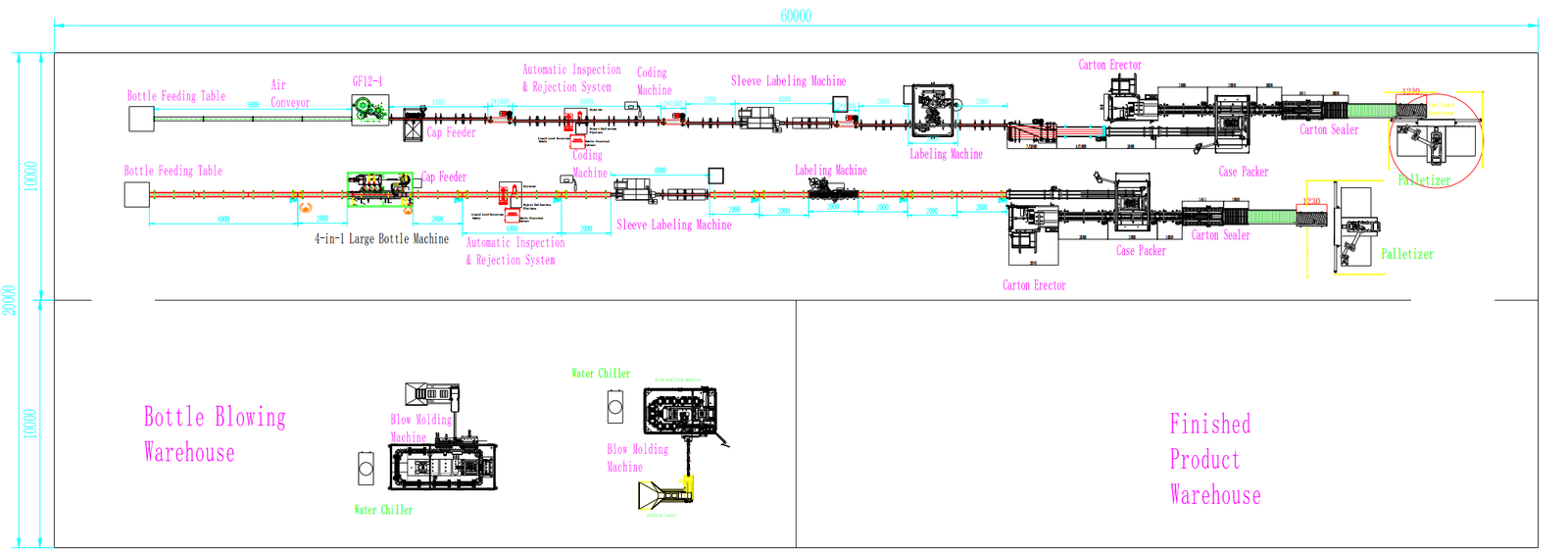 View Full Drawing
Reference workshop: approximately 60 m × 20 m
Download Full Layout (PDF)A flexible conveyor route for workshops with limited continuous straight-line space or more complex production-area geometry.
Selected for This Project
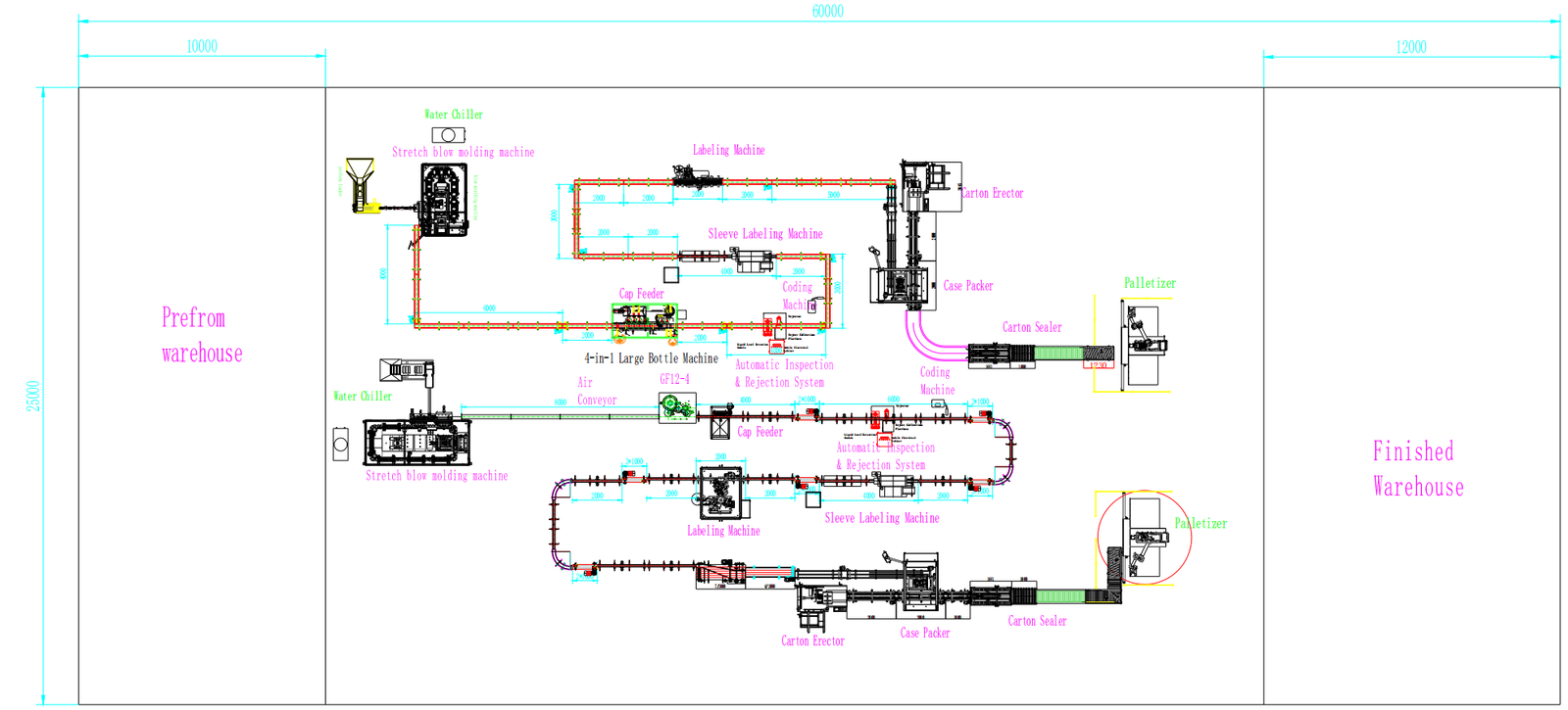 View Full Drawing
Reference workshop: approximately 60 m × 25 m
Download Full Layout (PDF)Send your workshop length and width, columns, entrances, preferred production direction and output target. We will recommend a practical line arrangement for your project.
Quotation Preparation
Helps confirm viscosity, foaming, particles, corrosion risk and filling method.
Helps match filling heads, conveyors, holders, capping structure and line layout.
Helps size the number of filling heads, automation level and downstream equipment.
Helps integrate capping, sealing, labeling, coding and end-of-line packing.
Helps confirm conveyor direction, machine footprint, power, air supply and installation plan.
Delivery Support
LEKA can support line planning, machine configuration, layout drawing, sample testing, factory acceptance test, packing for shipment and installation guidance.
Before shipment, the configured line can be tested with customer samples or comparable products to check filling accuracy, capping stability, labeling position, conveyor flow and basic operation.
Remote installation guidance, operation training and troubleshooting support are available. On-site service can be discussed according to project location and schedule.
Wear parts, electrical parts and common maintenance parts can be prepared according to the final machine configuration.
Project timeline is confirmed after product samples, container samples, cap samples, target capacity and layout are reviewed.
Warranty terms are confirmed in the final quotation and contract.
Connected Resources
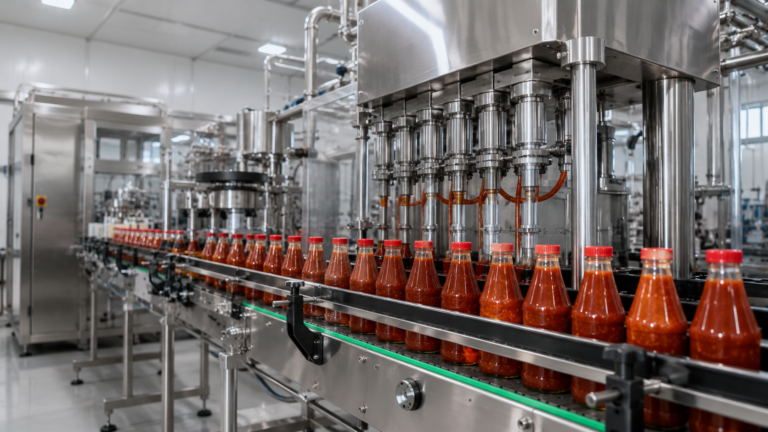 Application PageSauce Filling Line
Sauce filling projects need stable dosing even when the product is thick, sticky or contains small particles. LEKA…
Application PageEdible Oil Filling LineEdible oil filling lines need accurate dosing, clean cut-off and stable handling for different bottle sizes. LEKA can…
 Application PageHoney Filling Line
Honey filling requires controlled flow, accurate volume and clean cut-off because the product is sticky and slow-moving. LEKA…
 Application PageJuice Filling Line
Juice filling lines need smooth bottle flow, stable fill level and reliable capping for beverage production. LEKA can…
 Application PageWater Bottling Line
Water bottling projects need clean bottle handling, stable fill level, reliable capping and smooth downstream labeling or packing.…
 Application PageShampoo Filling Line
Shampoo filling lines need controlled filling for foaming and medium-viscosity products, plus stable handling of pump caps, flip…
Connected Resources
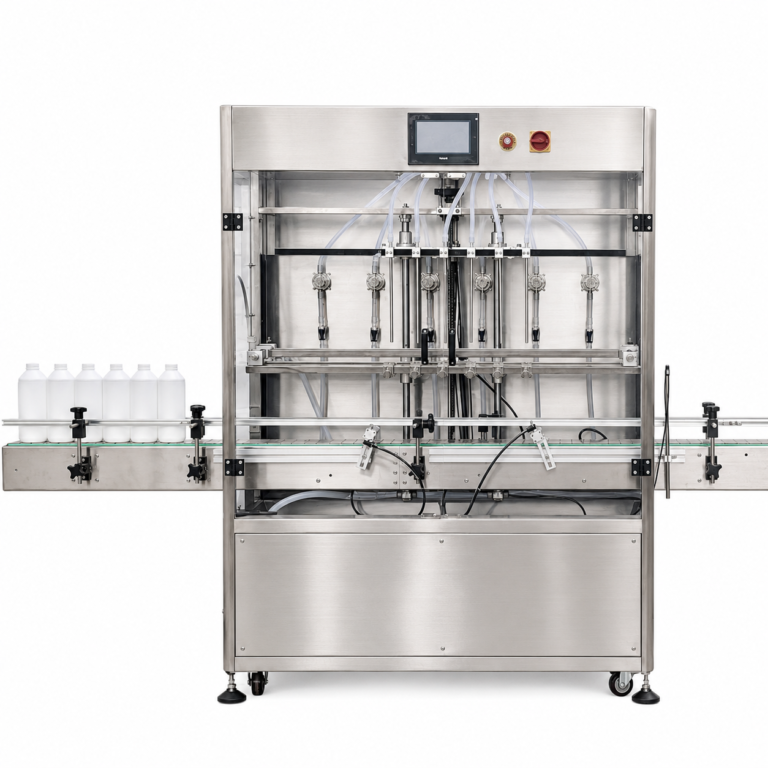 EquipmentLEKA-FLWS-CLB08 Eight-Head Liquid Bottle Filling Machine
Water-based liquid bottle filling where an 8-head configuration is required for higher output.
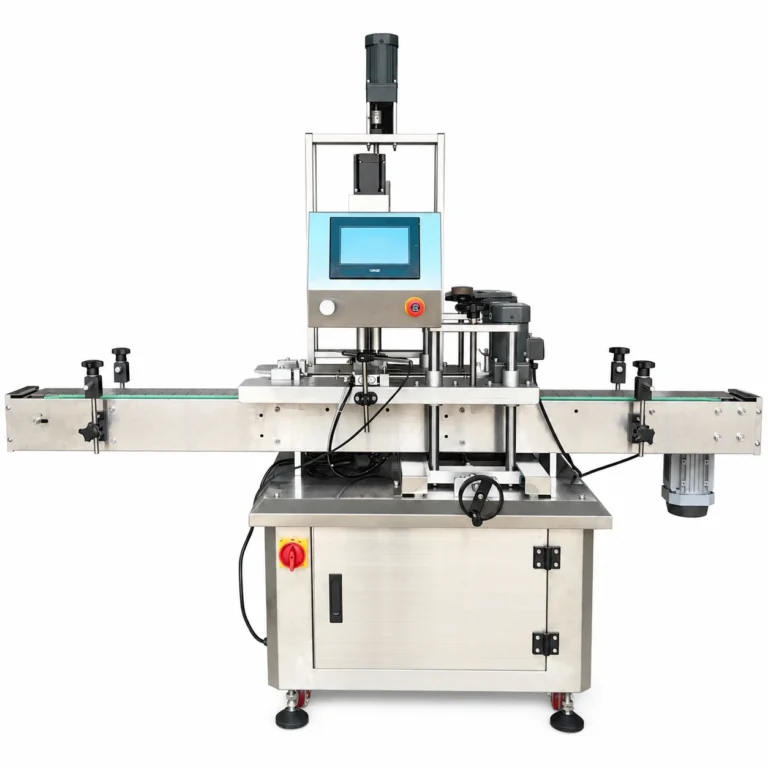 EquipmentLEKA-CP-A-servo Servo Four-Wheel Capping Machine
LEKA-CP-A-servo is a servo four-wheel capping machine with servo-controlled lifting adjustment for different bottle heights. It is suitable…
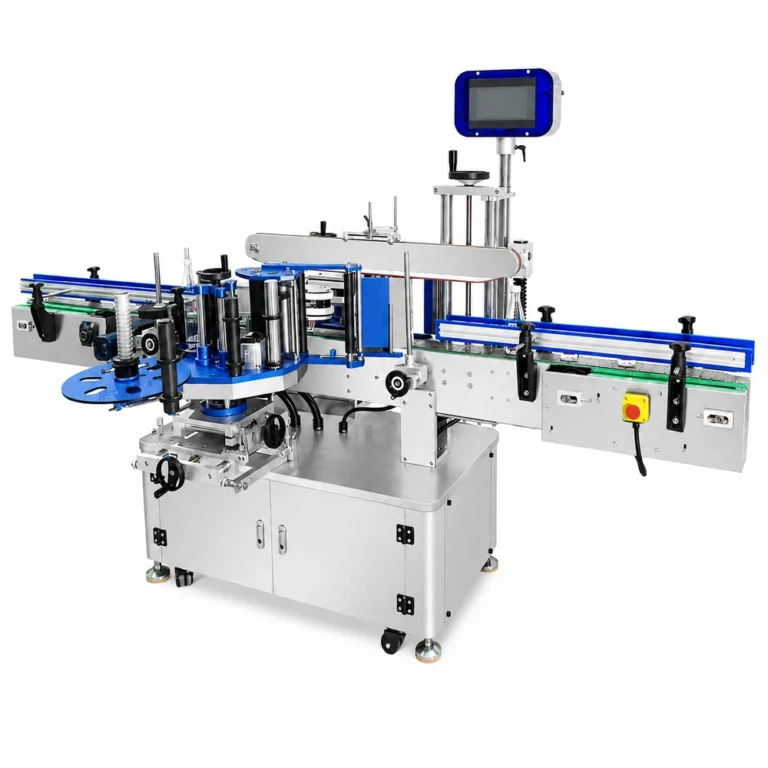 EquipmentLEKA-LB020 Automatic Double-Side Multifunction Labeling Machine
LEKA-LB020 is an automatic double-side labeling machine for square bottles, flat bottles, and rectangular containers, with optional round…
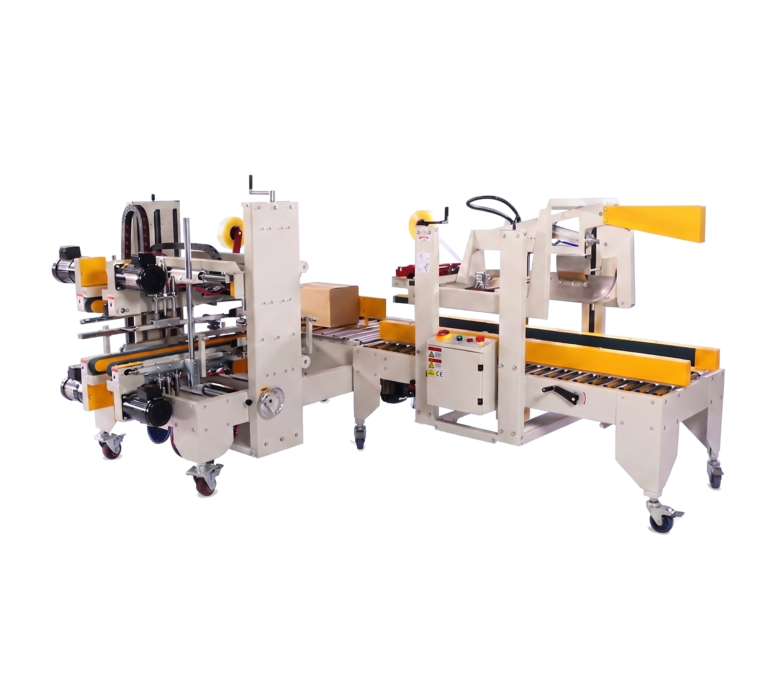 EquipmentLEKA-CS Carton Sealing Machine
LEKA-CS semi-automatic carton sealing machine for end-of-line carton tape sealing, suitable for cartons from 150-500mm length, 150-500mm width…
Customer Questions
Please send product details, bottle photos or drawings, filling volume, cap type, label position, target output and available factory layout.
Yes. LEKA reviews real samples or drawings before confirming bottle guides, conveyors, filling nozzles, cap handling, labeling position and downstream packing.
The filling method is selected by viscosity, foam, particles, corrosion risk, filling volume, accuracy target and bottle opening.
Yes. Filling, capping, sealing, labeling, coding, inspection and downstream packing can be combined according to project scope.
Factory testing can be arranged with customer samples or comparable products. Test videos and photos can be provided for review before shipment.
Send your product, container, cap, label and capacity requirements. LEKA Pack Line will review the details and prepare a suitable filling and packaging line plan.