Sauce Filling Machine Guide: How to Choose the Right Machine for Your Product
Quick Selection Guide: Which Sauce Filling Machine Do You Need?
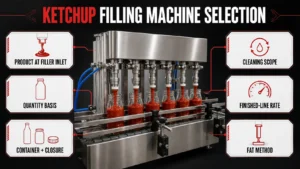
The best sauce filling machine is selected by sauce thickness, particles, bottle type, cap type, filling volume and target output. Therefore, do not choose a machine only by price. First, check how your sauce flows. Then, check whether it contains chili flakes, seeds, pulp, herbs, oil, foam or sticky paste.
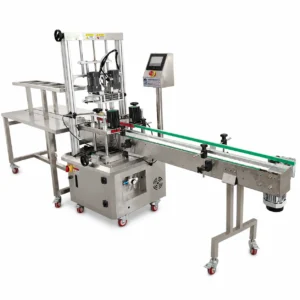
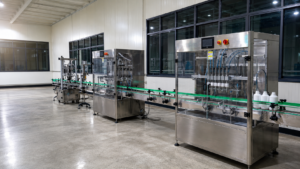
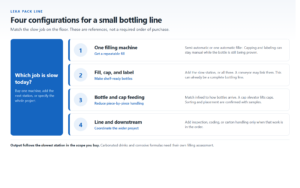
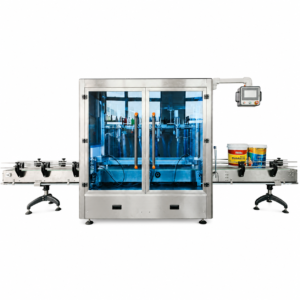
After confirming sauce viscosity, particles, bottle type and output target, you can review our main sauce filling machine solution for complete filling, capping, labeling, coding and packing line configuration.
This quick guide gives you the main answer first. After that, the full article explains each point in simple English. For vinaigrettes, creamy recipes, and dressings with herbs, use the dedicated salad dressing filling machine guide.
| Sauce Type | Product Behavior | Recommended Sauce Filling Machine | Key Buying Note |
|---|---|---|---|
| Hot sauce | Thin and free-flowing | Gravity, pump or piston filling machine | Control splashing, foam and fill level. |
| Chili sauce | Medium or thick, sometimes with flakes | Piston sauce filling machine | Check particle size before choosing the valve and nozzle. |
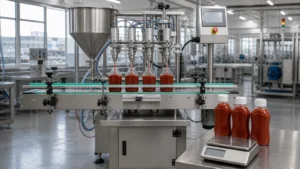
| Ketchup | Thick, smooth and sticky | Piston or pump filling machine | Use anti-drip nozzles for cleaner bottle necks. |
| Tomato paste | Very thick paste | Heavy-duty piston filling machine | Confirm feeding force, hopper design and filling temperature. |
| Salad dressing | Oily, mixed or with herbs | Pump or piston filling machine with agitation | Agitation may help reduce separation inside the hopper. |
| Jam or fruit sauce | Thick and sometimes pulpy | Piston filler with large product path | Use a particle-friendly filling path. |
If you are comparing several filling solutions, start with LEKA Pack Line’s filling machines overview. If your product is mainly ketchup, chili sauce, tomato sauce, mayonnaise, dressing, jam or paste, the more direct page is our sauce filling machine solution page.
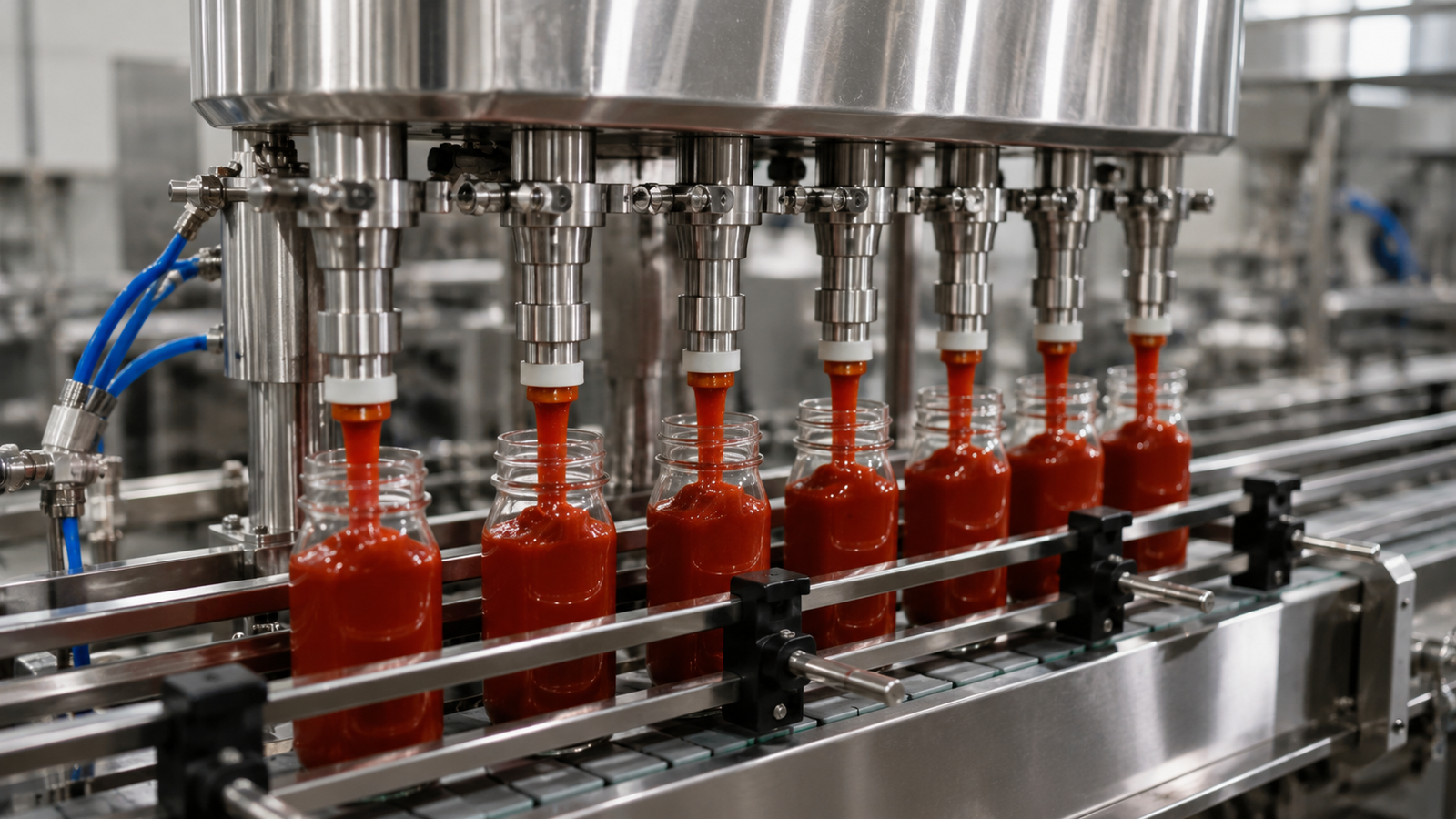
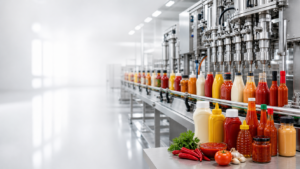
A sauce filling machine may look simple from the outside. It fills sauce into bottles, jars or containers. However, in real factory production, sauce filling is not the same as water filling. Ketchup, chili sauce, tomato sauce, hot sauce, mayonnaise, dressing, jam and paste can all behave differently.
Some sauces flow fast. Some sauces move slowly. Some sauces contain seeds, pulp, herbs or chili flakes. Also, some sauces separate when they sit inside the hopper for too long. Because of this, a buyer should not only ask, “How much is the machine?” A better question is, “Which sauce filling machine is right for my sauce?”
This guide explains how to choose a sauce filling machine in a practical way. It is written for sauce factories, food producers, new sauce brands, purchasing teams and production managers. It also helps buyers understand what information to prepare before asking for a quotation.
Industrial expert quote: “Because I started from assembly and design, I care about whether the machine can really work well in your factory — not just whether it looks good in a quotation.”
— Slany Cheung, Technical Sales Director, LEKA Pack Line
What Is a Sauce Filling Machine?
Simple Definition
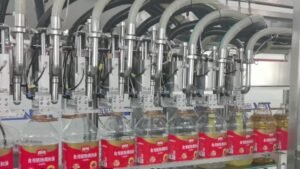
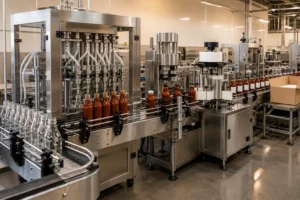
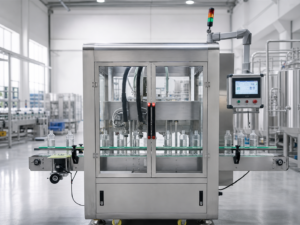
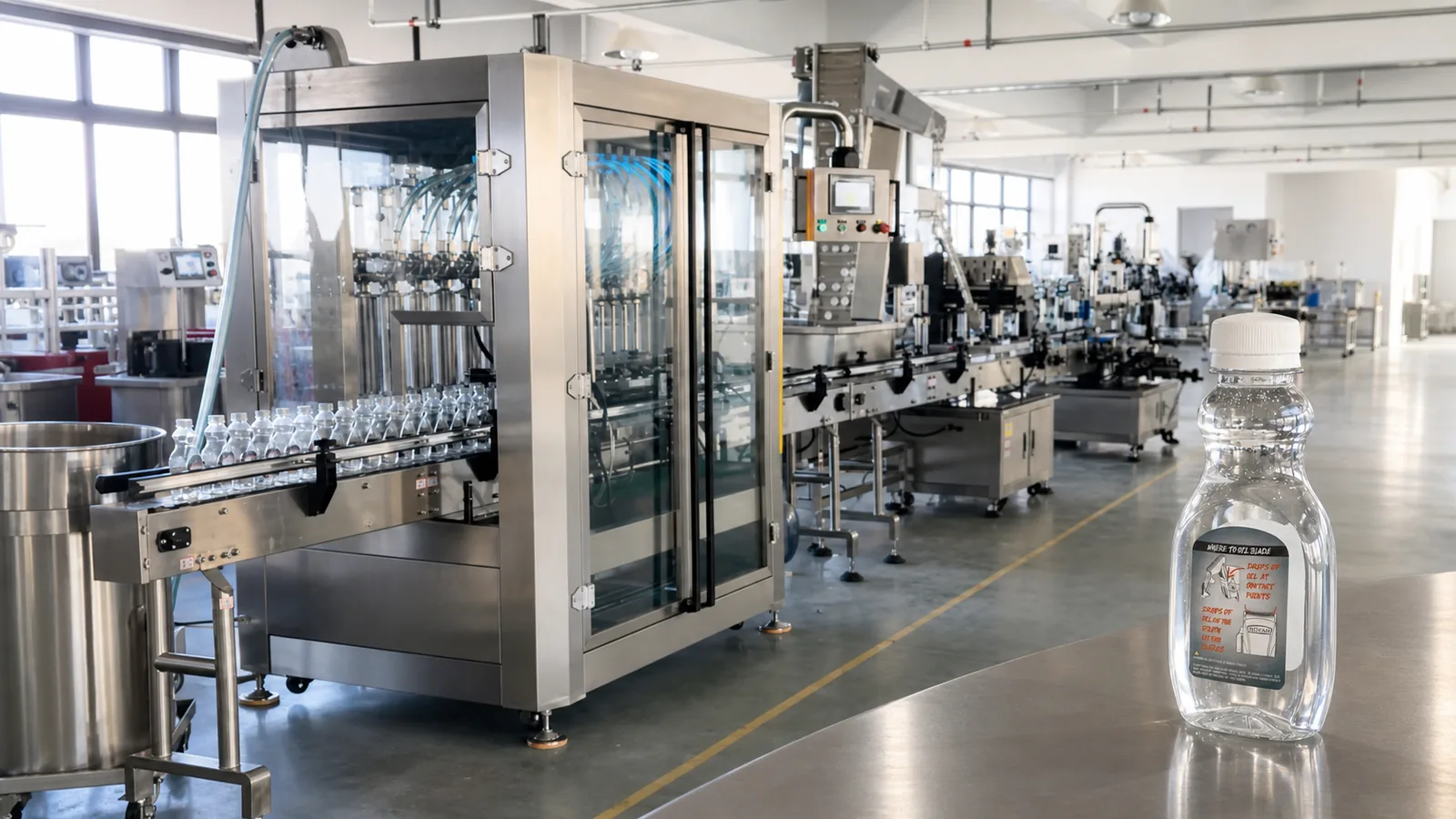
A sauce filling machine is packaging equipment used to fill sauce into bottles, jars, cans or other containers. It can fill food products such as ketchup, chili sauce, hot sauce, tomato sauce, curry paste, mayonnaise, salad dressing, jam, fruit sauce, honey sauce and seasoning paste. In many factories, it is the main machine in the sauce packaging process because it controls the filling volume, filling speed and filling consistency.
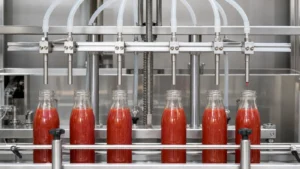
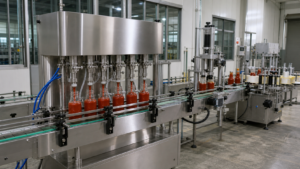
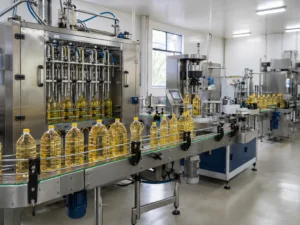
In simple words, the machine takes sauce from a hopper, tank or feeding system. Then, it moves the sauce through the filling path. Finally, it fills the sauce into each bottle or jar through filling nozzles. Depending on the sauce, the machine may use a piston, pump, gravity system, overflow system or weighing system.
Why Sauce Needs Special Filling Equipment
A basic liquid filling machine may work well for water, vinegar, light juice or soy sauce-style products. However, sauce is often more complex. Ketchup is thick and sticky. Chili sauce may contain chili flakes and seeds. Salad dressing may include oil, herbs and small particles. Jam may contain fruit pulp. Tomato paste can be very thick and slow-moving.
As a result, sauce filling equipment must handle more resistance inside the filling path. This is why many sauce applications use a piston filling machine or a pump filling machine. These systems can move thicker products with better control. In contrast, gravity filling depends more on natural flow. So, it is usually better for thin sauce instead of thick paste.
Common Products Filled by Sauce Filling Machines
- Ketchup: thick, smooth and sticky.
- Chili sauce: medium to thick, sometimes with flakes or seeds.
- Hot sauce: often thin and acidic.
- Tomato sauce: medium to thick, sometimes hot-filled.
- Mayonnaise: thick emulsion that needs gentle handling.
- Salad dressing: may contain oil, herbs or particles.
- Jam and fruit sauce: thick and sometimes pulpy.
- Curry paste and seasoning paste: thick, oily and often particle-containing.
Where the Sauce Filling Machine Fits in the Line
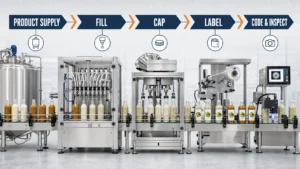
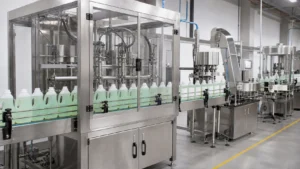
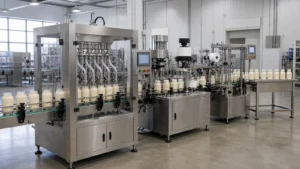
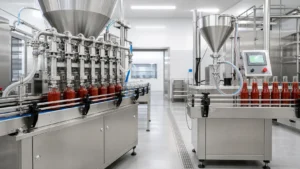
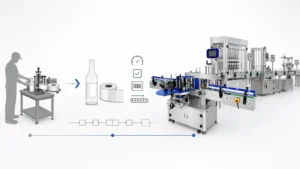
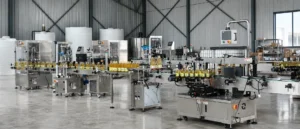
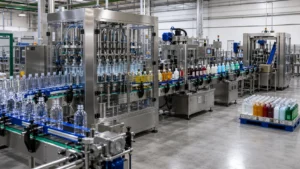
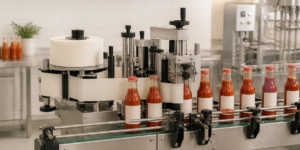
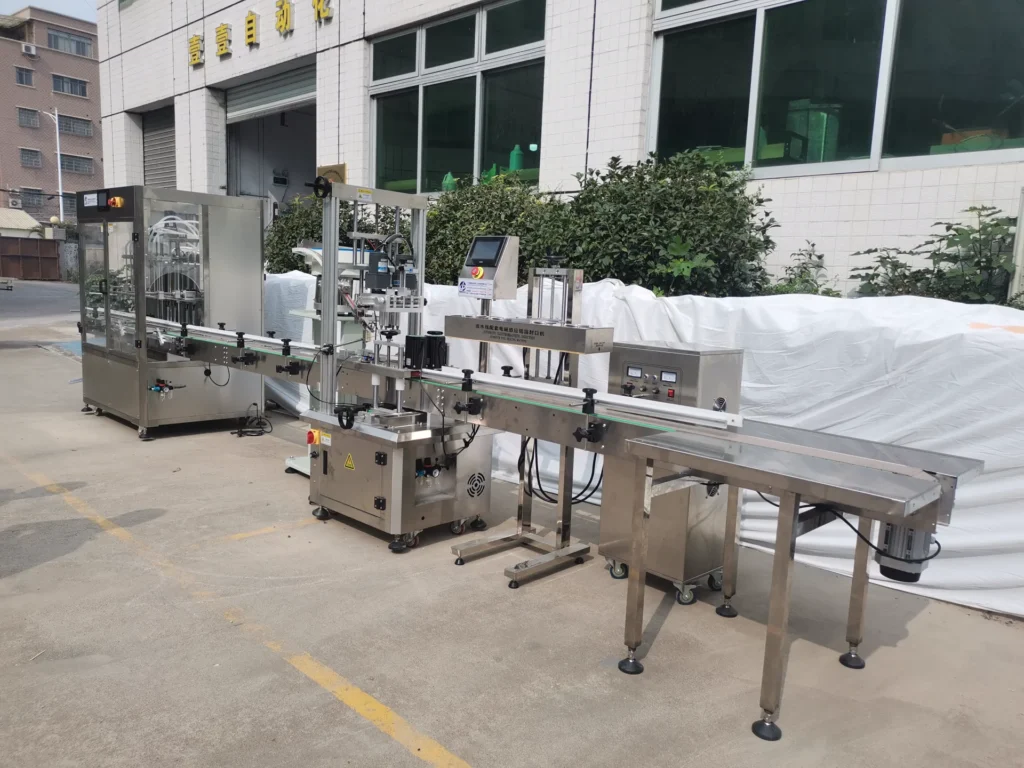
A sauce filling machine is often one part of a complete packaging line. Before filling, bottles may pass through bottle feeding, bottle unscrambling or rinsing. After filling, the bottles may move to capping, induction sealing, labeling, date coding and packing. Therefore, buyers should think about both the filling machine and the full production flow.
For example, a sauce filler may work well alone. However, the full line can still stop if the cap feeding or capping system is not suitable. This is common when the bottle is unstable, the cap is difficult to grip, or the sauce leaves residue on the bottle neck. Because of this, LEKA Pack Line usually reviews the product, bottle, cap and target speed together.
Featured Snippet Answer
A sauce filling machine is equipment that fills sauce into bottles, jars or containers. It is used for ketchup, chili sauce, hot sauce, tomato sauce, mayonnaise, dressing, jam and paste. The best machine depends on sauce viscosity, particles, filling volume, bottle type, cap type and required output.
Why Sauce Filling Is More Difficult Than Normal Liquid Filling
Sauce Does Not Flow Like Water
Normal liquid filling is usually easier because many liquids flow in a predictable way. Water, vinegar, light juice and soy sauce-style products can pass through pipes and nozzles with less resistance. However, sauce can be thin, medium, thick, sticky, pulpy, oily or paste-like. Therefore, sauce filling needs more careful machine selection.
For example, thin hot sauce may flow quickly. It may splash or foam if the filling speed is too high. Ketchup moves more slowly and needs stronger filling force. Chili sauce may contain flakes, so the product path must be wide enough. Tomato paste may be so thick that a normal pump cannot move it smoothly.
Main Sauce Filling Challenges
| Sauce Challenge | Why It Matters | Machine Design Point |
|---|---|---|
| High viscosity | The sauce is thick and moves slowly. | Use piston or pump filling with enough feeding force. |
| Particles | Seeds, flakes, herbs or pulp may block the nozzle. | Use a larger product path and suitable valve. |
| Foaming | Bubbles may affect filling accuracy and bottle appearance. | Control filling speed and nozzle movement. |
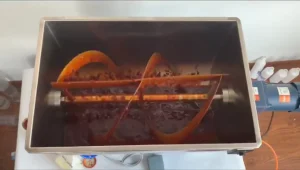
| Oil separation | Oil can rise inside the hopper. | Use agitation when needed. |
| Hot filling | The sauce is filled at a higher temperature. | Use heat-resistant product-contact parts. |
| Sticky residue | Sauce may remain inside pipes, valves and nozzles. | Use smooth surfaces and easy-clean design. |
Particles Can Cause Blockage
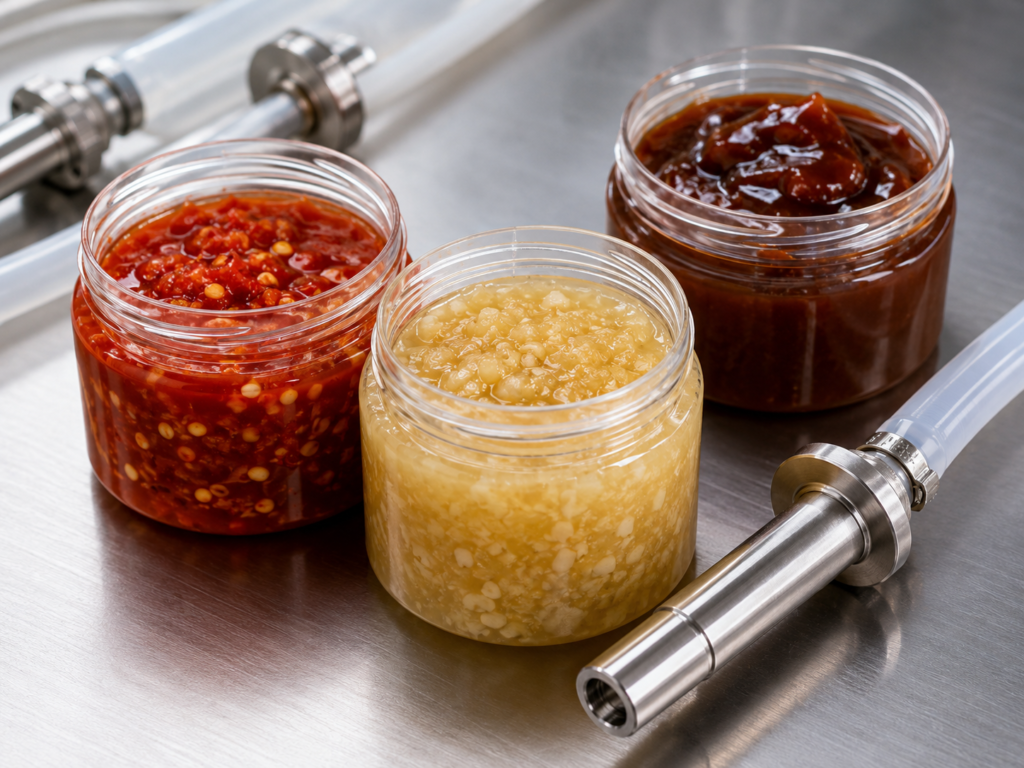
Particles are one of the most common reasons sauce filling machines stop during production. A smooth chili sauce is easier to fill than a chunky chili sauce. A dressing without herbs is easier to fill than one with garlic pieces, seeds or spice particles. If the valve or nozzle is too narrow, the particles may block the filling path.
Therefore, buyers should not only say “chili sauce” when asking for a quotation. They should also explain whether the chili sauce contains flakes, seeds or other solid pieces. If possible, send photos or a short video. This allows the supplier to judge the hopper, valve, nozzle and piston design more correctly.
Temperature Can Change the Filling Result
Temperature also affects sauce filling. Some products become thinner when warm and thicker when cool. Honey sauce, syrup sauce, chocolate sauce and some pastes are good examples. If a product is tested at one temperature but filled at another temperature, the result may change.
For example, a sauce may flow well at 70°C. However, it may become much thicker at room temperature. If the line fills the sauce after it cools down, the machine may need a stronger feeding system or a heated hopper. Therefore, the real filling temperature should be confirmed before machine selection.
Quick Buyer Rule
If your sauce is thick, sticky, hot-filled, oily or contains particles, do not treat it like water. Choose a sauce filling machine based on product behavior, not only bottle size.
Sauce Viscosity and Filling Method Selection
What Is Viscosity in Sauce Filling?
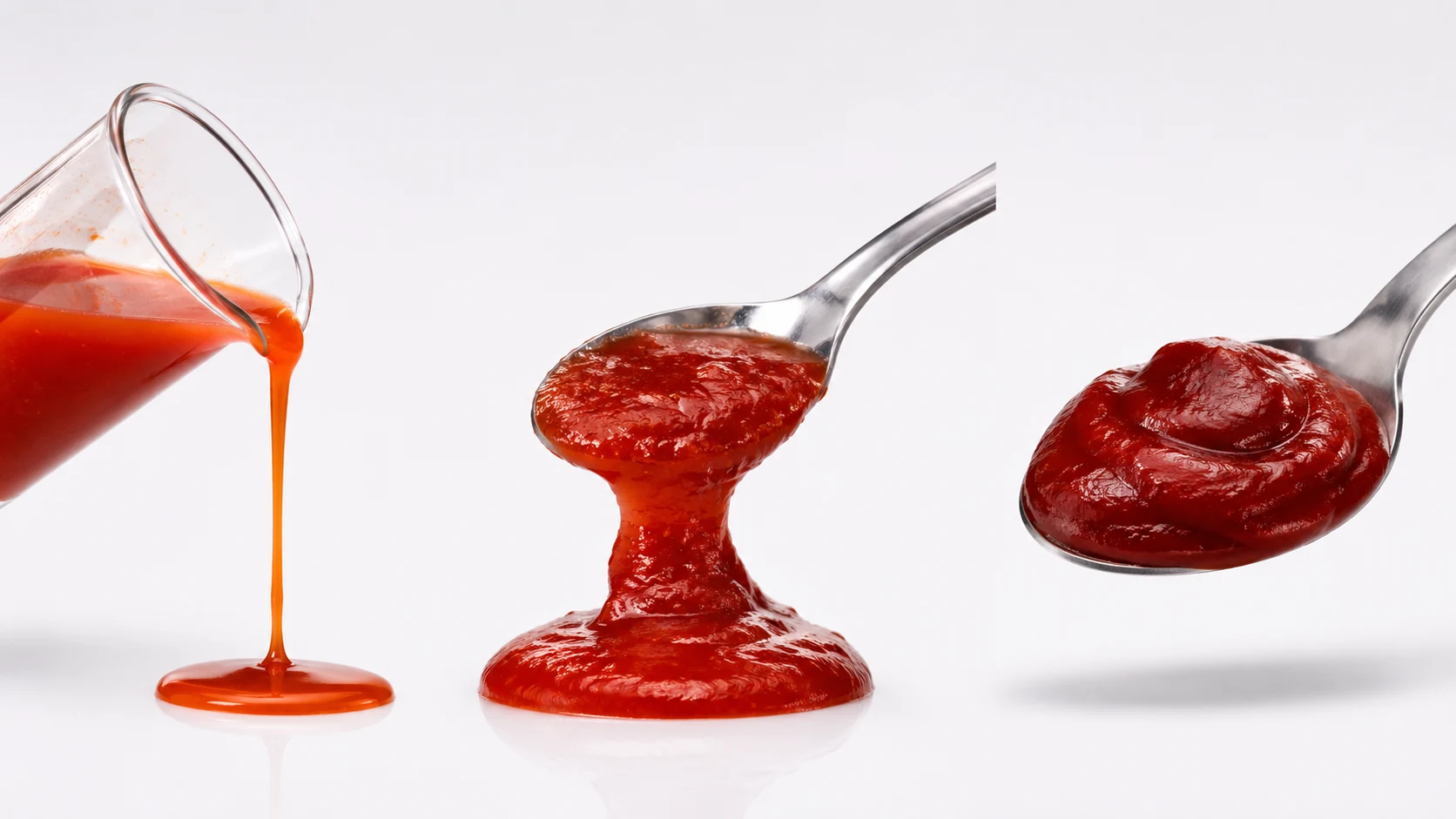
Viscosity means how easily a product flows. A low-viscosity product flows quickly. Water is the easiest example. A high-viscosity product moves slowly. Ketchup, mustard, tomato paste and peanut sauce are common examples. For sauce filling, viscosity is one of the first details to confirm because it affects filling speed, filling accuracy and machine structure.
The unit often used for viscosity is cP, which means centipoise. A small cP number usually means the product is thin. A large cP number usually means the product is thick. However, viscosity can change with temperature, recipe and mixing method. Therefore, the numbers below should be treated as reference examples, not fixed values for every factory.
Viscosity Examples for Common Products
| Product Example | Approximate Viscosity Range | What It Means for Filling |
|---|---|---|
| Water at 70°F | 1–5 cP | Very thin and free-flowing. |
| Corn syrup | 50–100 cP | Still flows, but thicker than water. |
| Maple syrup | 150–200 cP | Light syrup behavior. |
| Honey | 2,000–3,000 cP | Sticky and temperature-sensitive. |
| Chocolate syrup | 10,000–25,000 cP | Needs controlled filling and possibly heating. |
| Ketchup / mustard | 50,000–70,000 cP | Usually needs piston or suitable pump filling. |
| Tomato paste / peanut butter-style product | 150,000–200,000 cP | Very thick and needs strong feeding. |
Why Filling Temperature Matters
Many sauce products change thickness when the temperature changes. This means the same sauce can behave differently in the mixing tank, transfer pipe, hopper and bottle. For example, a honey sauce may look easy to fill when warm. However, it may become much harder to move after cooling.
This detail affects machine design. A hot-fill product may need heat-resistant product-contact parts. A sticky product may need a heated hopper. A paste product may need stronger feeding. A product with oil separation may need agitation. Therefore, viscosity should be checked together with filling temperature, particles and target speed.
How to Explain Viscosity Without a Lab Report
Not every buyer has a viscosity test report. That is normal. However, buyers can still explain product behavior in a useful way. For example, they can say whether the sauce pours like water, flows like syrup, squeezes like ketchup or holds shape like paste. They can also send a short video of the product being poured with a spoon.
For difficult sauce products, a sample test is better. This is especially important for sauces with particles, very thick paste or strict cleaning needs. A small difference in product behavior may require changes in piston size, valve design, nozzle size or hopper structure.
Which Filling Machine Is Best for Sauce?
There Is No Single Best Machine for Every Sauce
The best filling machine for sauce depends on the sauce itself. A thin hot sauce may need a different machine from ketchup. A smooth tomato sauce may need a different design from chunky chili sauce. A small jar of paste may need a different filling structure from a large bucket of bulk sauce. Therefore, the best answer is not one machine name. The best answer is a correct match between product behavior and filling method.
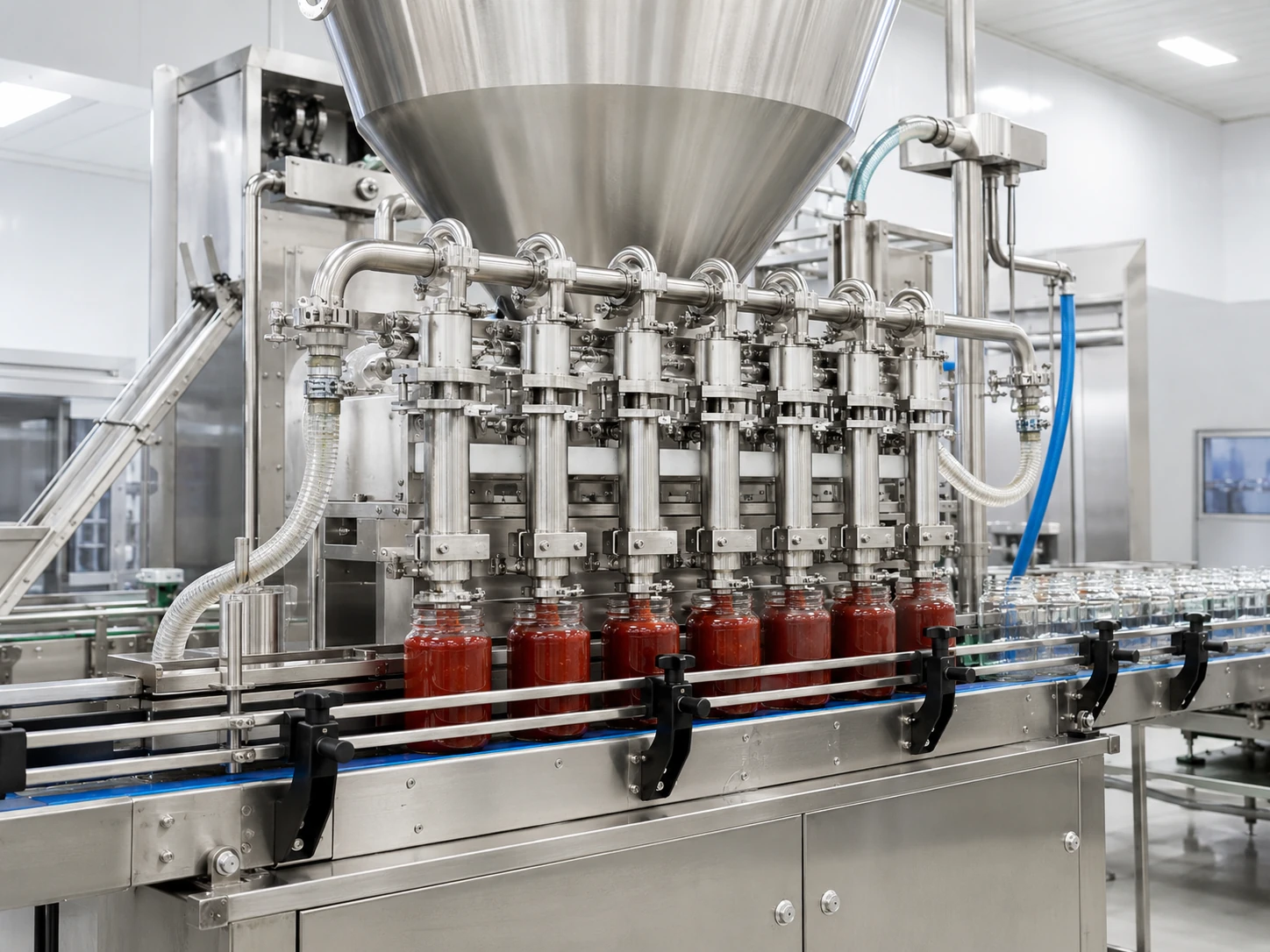
In many sauce projects, a piston filling machine is a strong starting point because it can handle many medium-to-high viscosity products. A piston filler draws a set volume of sauce into a cylinder. Then, it pushes that sauce into the container. This makes it suitable for ketchup, chili sauce, tomato sauce, jam, paste and many thick products.
Piston Sauce Filling Machine
A piston sauce filling machine is often suitable when the sauce is thick, sticky or contains small particles. It is also useful when the filling volume needs to be controlled by cylinder volume. For many factories, this makes piston filling a practical choice for ketchup, chili sauce, tomato sauce, jam, curry paste and similar products.
However, the piston system still needs correct design. The cylinder size should match the filling volume. The nozzle should match the bottle opening. The valve should match the particle size. The hopper should match the feeding method. If the sauce separates easily, agitation may be needed. If the sauce is sticky, anti-drip nozzles may be needed.
Pump Sauce Filling Machine
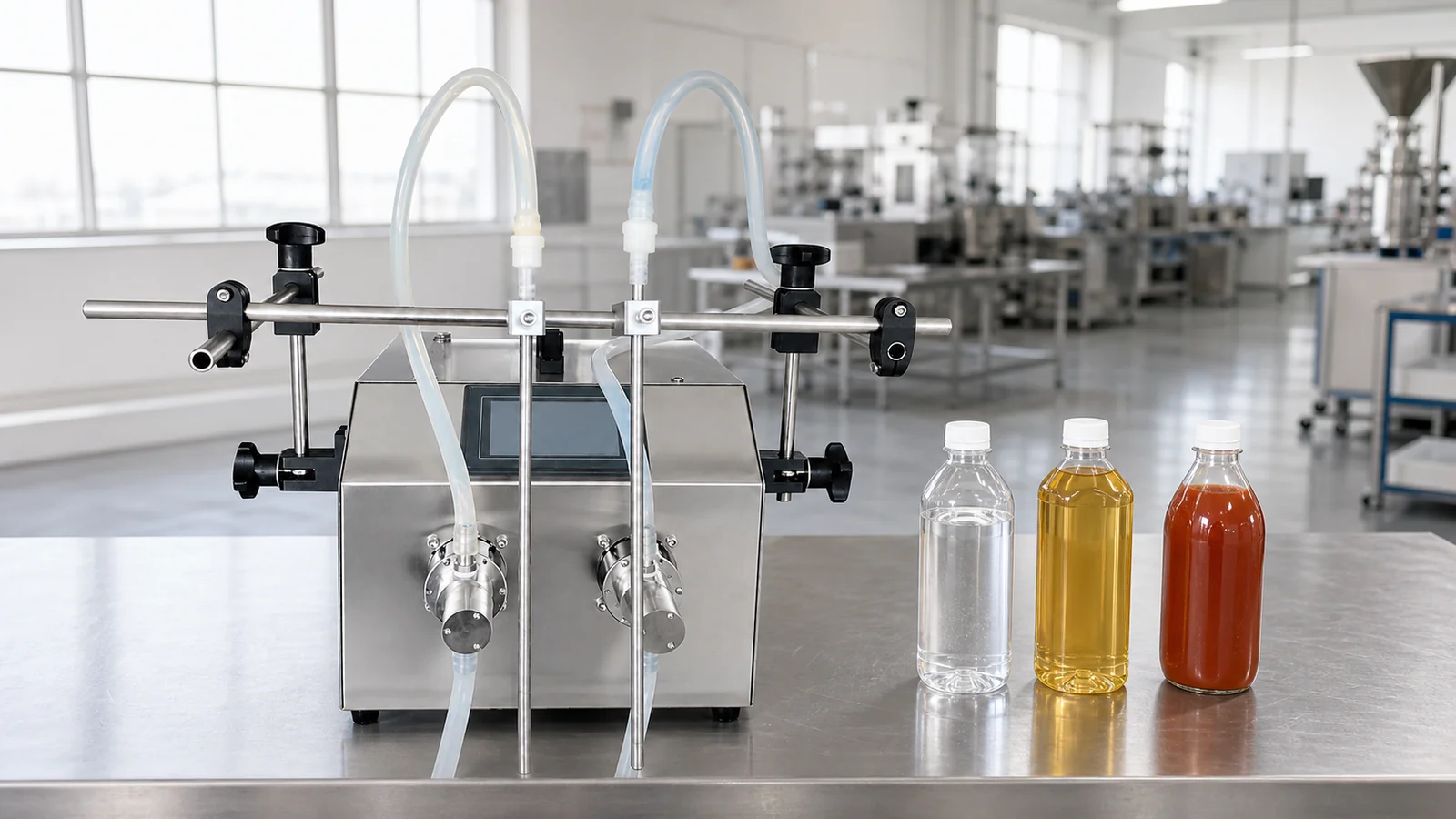
A pump filling machine is useful for sauces that need controlled continuous movement. It may work well for dressings, syrup sauces, oils, medium-viscosity sauces and some thick products. The main point is to choose the correct pump type and product pathway.
If the sauce has large particles, the supplier must check whether the pump can handle them without blockage or product damage. Pump filling can also be useful when the factory needs flexible filling volume adjustment. Depending on the control system, the filling amount can be changed through time, speed or other settings.
Gravity Filling Machine
A gravity filling machine is usually better for thin and free-flowing products. For example, a thin vinegar-based hot sauce may not need the same filling force as tomato paste. If the sauce flows easily, gravity filling can be a simple and practical choice.
However, gravity filling is usually not the best option for ketchup, paste or chunky sauce. These products may move too slowly, fill unevenly or leave too much residue. So, gravity filling should be used only when the product flow is suitable.
Overflow Filling Machine
An overflow filling machine is useful when the visual fill level must look the same across bottles. It is often used for thin products in transparent bottles. The system fills to a consistent level, so the bottles look neat on shelves.
However, overflow filling is usually not suitable for thick sauce or particle-containing sauce. It is not designed for heavy paste movement. Therefore, buyers should choose overflow filling for appearance-sensitive thin sauces, not for ketchup or tomato paste.
Net Weight Filling Machine
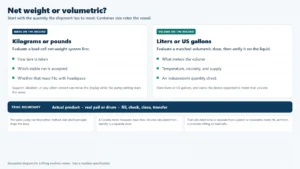
A net weight filling machine fills by weight instead of only volume. It can be useful for large containers, bulk sauce products or high-value products where weight accuracy is very important. The system measures the product on a scale during filling.
However, net weight filling may not always be the fastest choice for small bottles. For many bottled sauce lines, volumetric piston or pump filling is more practical. So, net weight filling should be considered when weight control is more important than simple volumetric speed.
Featured Snippet Answer
For most sauce products, the best filling machine is a piston filling machine or pump filling machine. Piston fillers are commonly used for ketchup, chili sauce, tomato sauce, jam and paste. Pump fillers are useful for many medium-to-thick sauces and dressings. Gravity and overflow fillers are better for thin, free-flowing sauces.
Sauce Type vs Recommended Filling Machine
Why Sauce Type Should Guide Machine Selection
Different sauce types create different filling problems. This is why a supplier should never recommend a sauce filling machine based only on bottle size. The sauce recipe, thickness, particles, filling temperature and target output all affect the final choice.
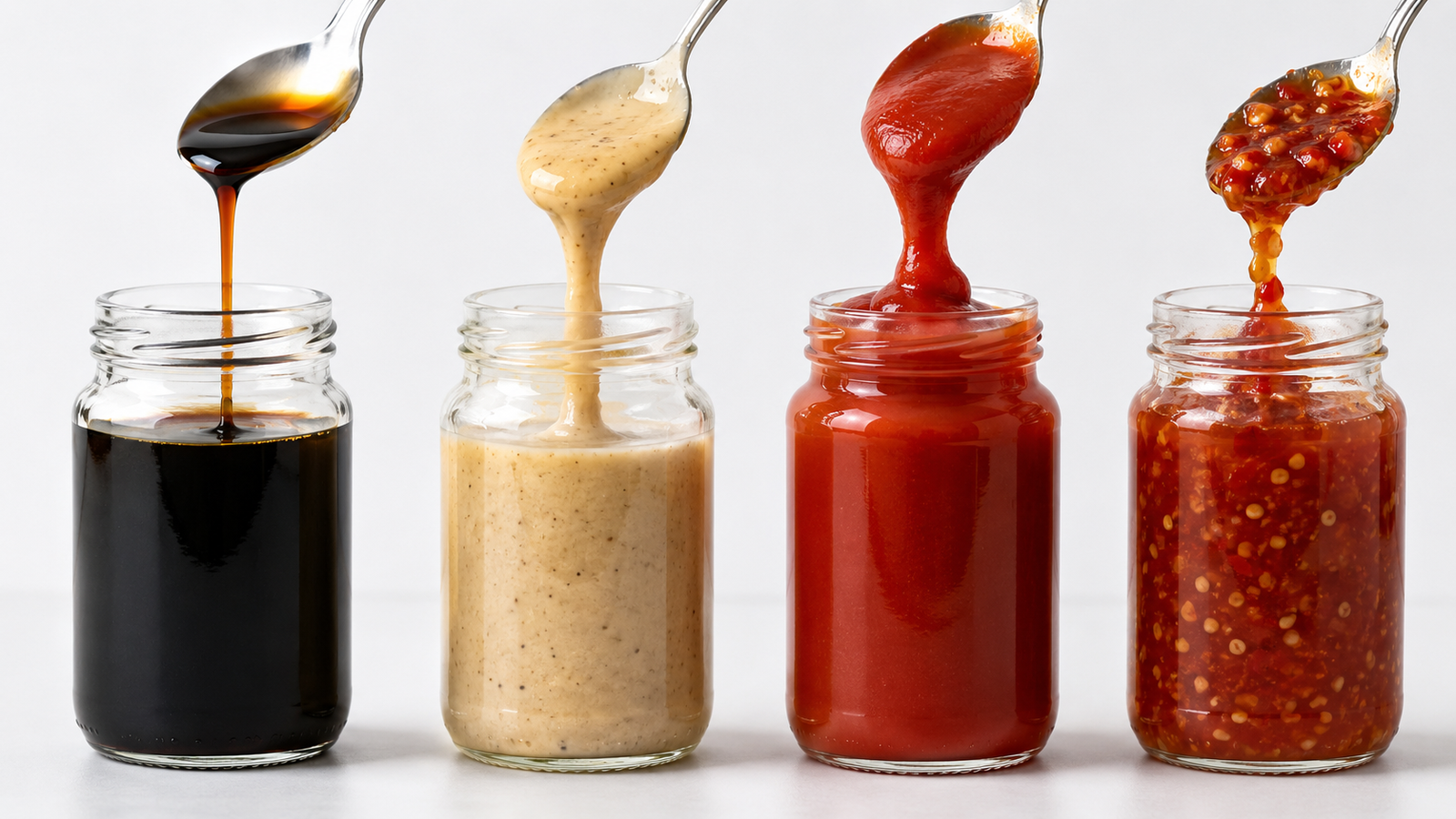
For example, ketchup is thick but usually smooth. Chili sauce may be thick and may contain flakes. Salad dressing may be oily and may separate in the hopper. Jam may contain pulp. Tomato paste may need much stronger feeding force. These products may all be called sauce, but they do not need the same filling design.
Sauce Type Selection Table
| Sauce Type | Common Filling Problem | Recommended Solution |
|---|---|---|
| Ketchup | Thick and slow-flowing | Piston or pump filler with anti-drip nozzles |
| Chili sauce | Particles may block the nozzle | Piston filler with particle-friendly valve |
| Hot sauce | Thin sauce may splash or foam | Gravity, pump or piston filler with controlled speed |
| Tomato paste | Very thick and hard to move | Heavy-duty piston filling machine |
| Mayonnaise | Thick emulsion needs stable handling | Gentle pump or piston filling machine |
| Salad dressing | Oil separation or herb particles | Pump or piston filler with hopper agitation |
| Jam | Fruit pulp and sticky texture | Piston filler with wide product path |
How to Use This Table
This table should be used as a starting point. It helps buyers understand the normal machine direction for each sauce type. However, the final recommendation still depends on details. For example, one chili sauce may be smooth, while another chili sauce may contain large flakes. One dressing may be thin, while another dressing may be creamy and thick.
Therefore, buyers should send clear product details before ordering. A short filling video, product photo, bottle photo and cap photo can prevent many mistakes. If the product is difficult, sample testing may also be useful. This is especially true for sauces with pulp, seeds, fibers, oil separation or high viscosity.
Semi-Automatic vs Automatic Sauce Filling Machine
When to Choose a Semi-Automatic Sauce Filling Machine
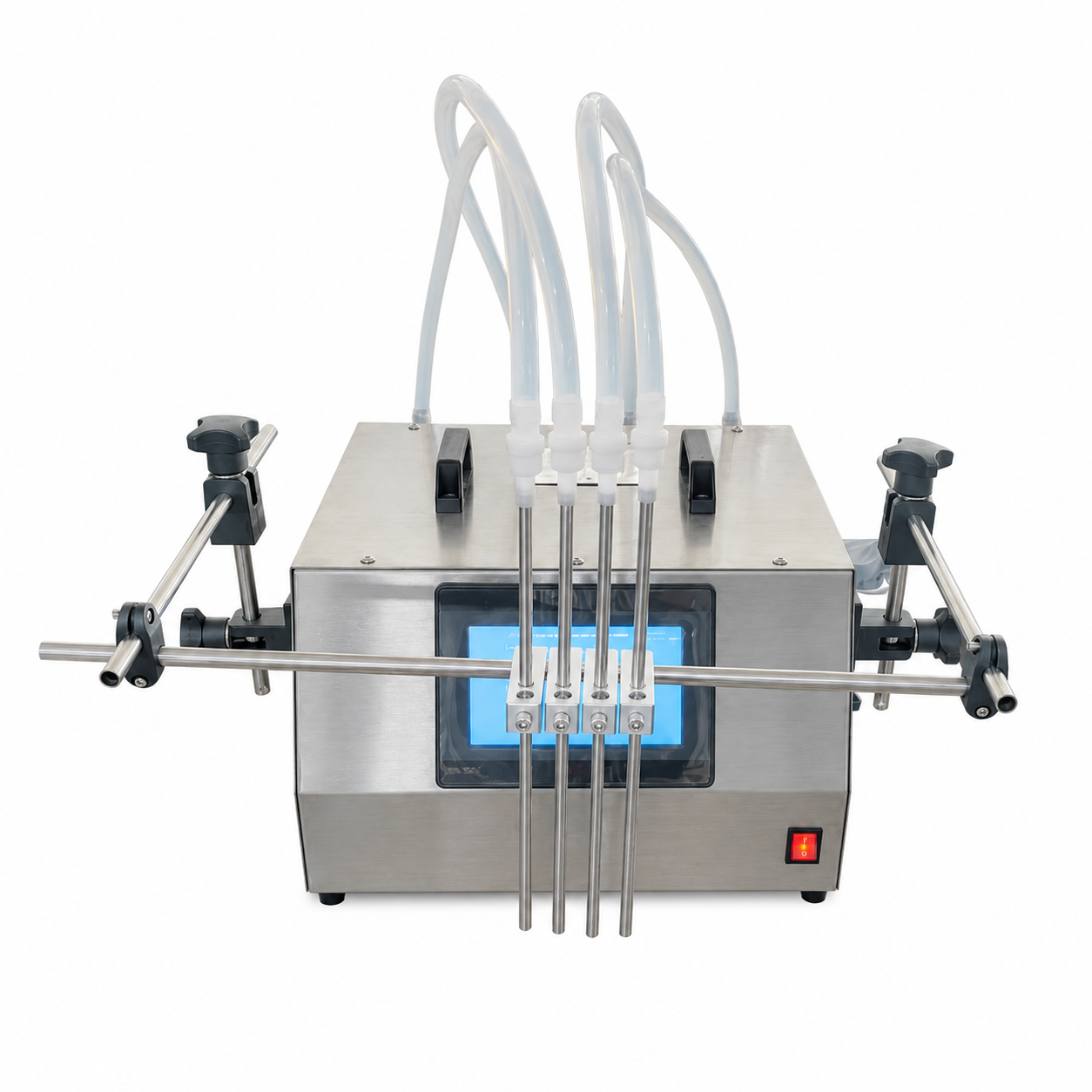
A semi-automatic sauce filling machine is often suitable for small sauce brands, trial production, low-volume factories or businesses with many product changes. It usually needs an operator to place bottles or jars under the nozzle. Then, the machine fills the product according to the setting.
This type of machine is usually easier to start with. It needs less space, lower budget and simpler operation. It can be a good choice when the factory is still testing product demand. It is also useful when one factory fills many different sauce flavors in small batches.
When to Choose an Automatic Sauce Filling Machine
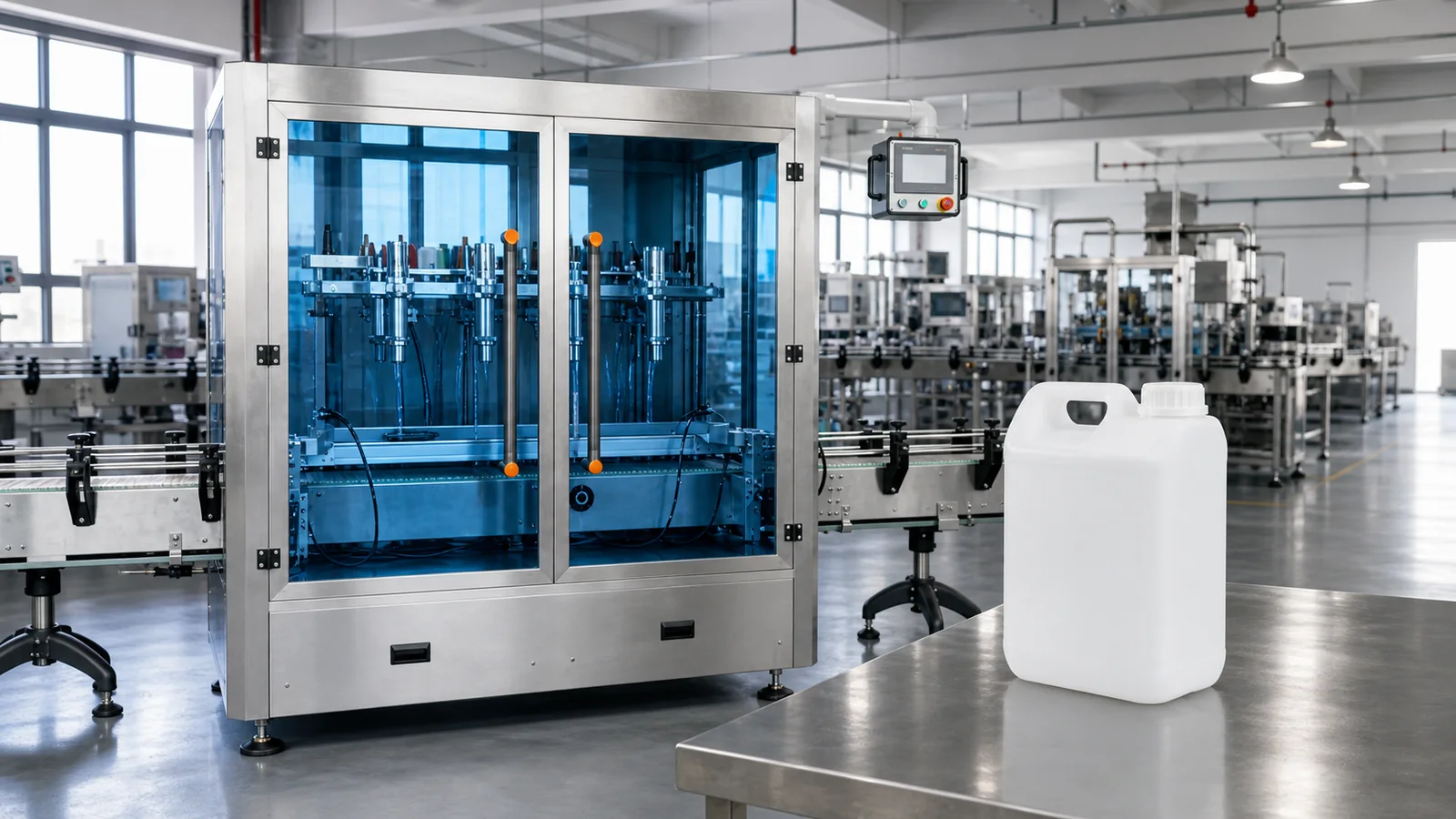
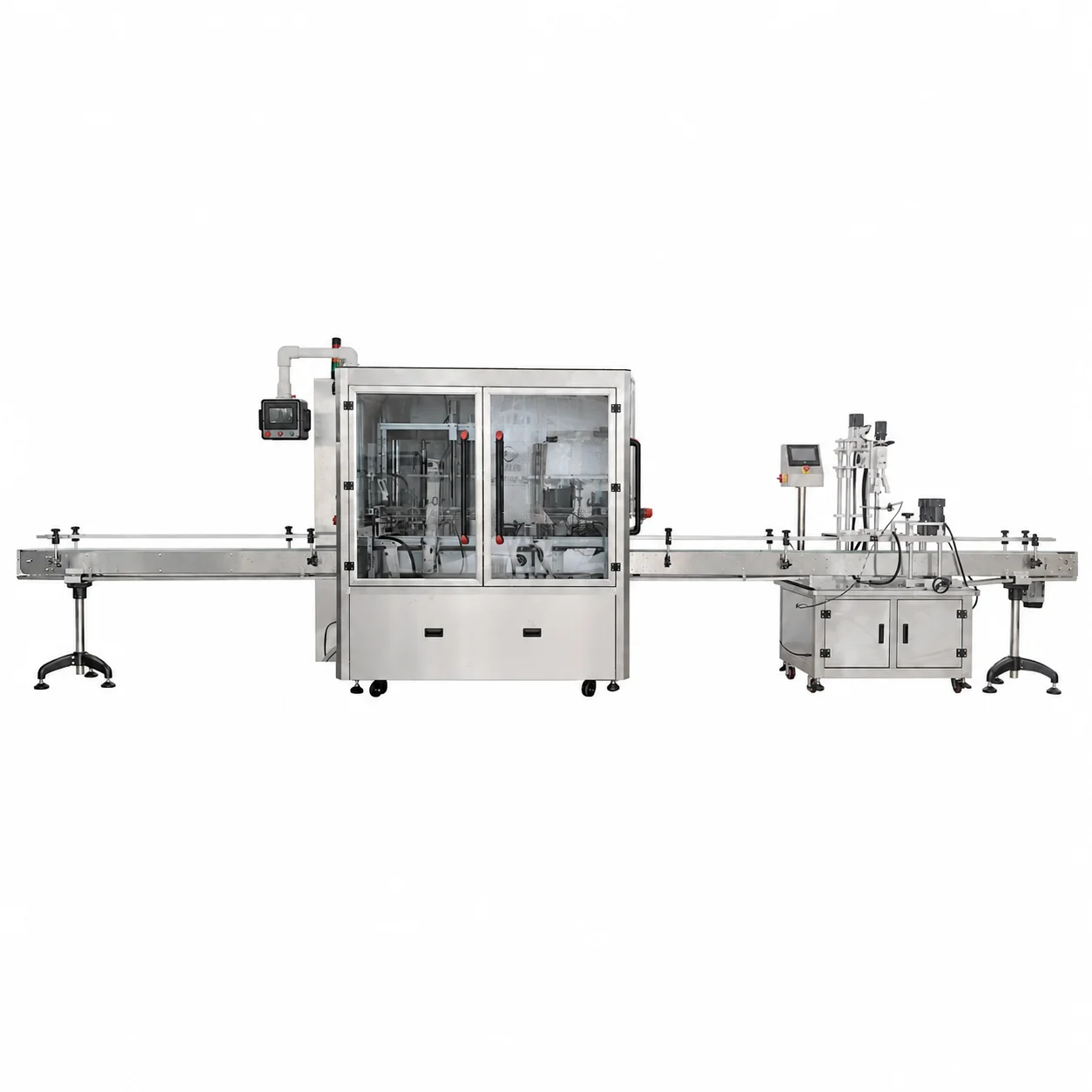
An automatic sauce filling machine is better when the production volume is stable and the factory needs higher output. Bottles move on a conveyor. The filling machine detects bottles and fills them automatically. Then, the bottles can continue to capping, sealing, labeling, coding and packing.
Automatic filling is more suitable for factories that want better speed, lower labor cost and more consistent operation. However, it also needs more space, better line planning and more complete bottle and cap information. Therefore, buyers should confirm the factory layout before choosing an automatic line.
Simple Comparison Table
| Factory Situation | Better Choice | Reason |
|---|---|---|
| Small sauce brand | Semi-automatic piston filler | Lower cost and easier setup. |
| Many flavors and small batches | Semi-auto or compact automatic filler | More flexible for changeover. |
| Stable high-volume production | Automatic sauce filling machine | Better speed and lower labor per bottle. |
| Export-focused factory | Automatic filling, capping and labeling line | More consistent output and better packaging finish. |
How to Decide Between Semi-Automatic and Automatic
The easiest way to decide is to check your daily production target. If the production volume is small and labor is available, a semi-automatic machine may be enough. If the factory needs stable output every day, an automatic machine is usually better.
However, output is not the only factor. Buyers should also check product changeover, cleaning time, available space, bottle stability, cap type and future growth. A small factory may start with one semi-automatic filler. Later, it may upgrade to an automatic sauce filling line when order volume grows.
How Many Filling Heads Does a Sauce Filling Machine Need?
The Simple Output Formula
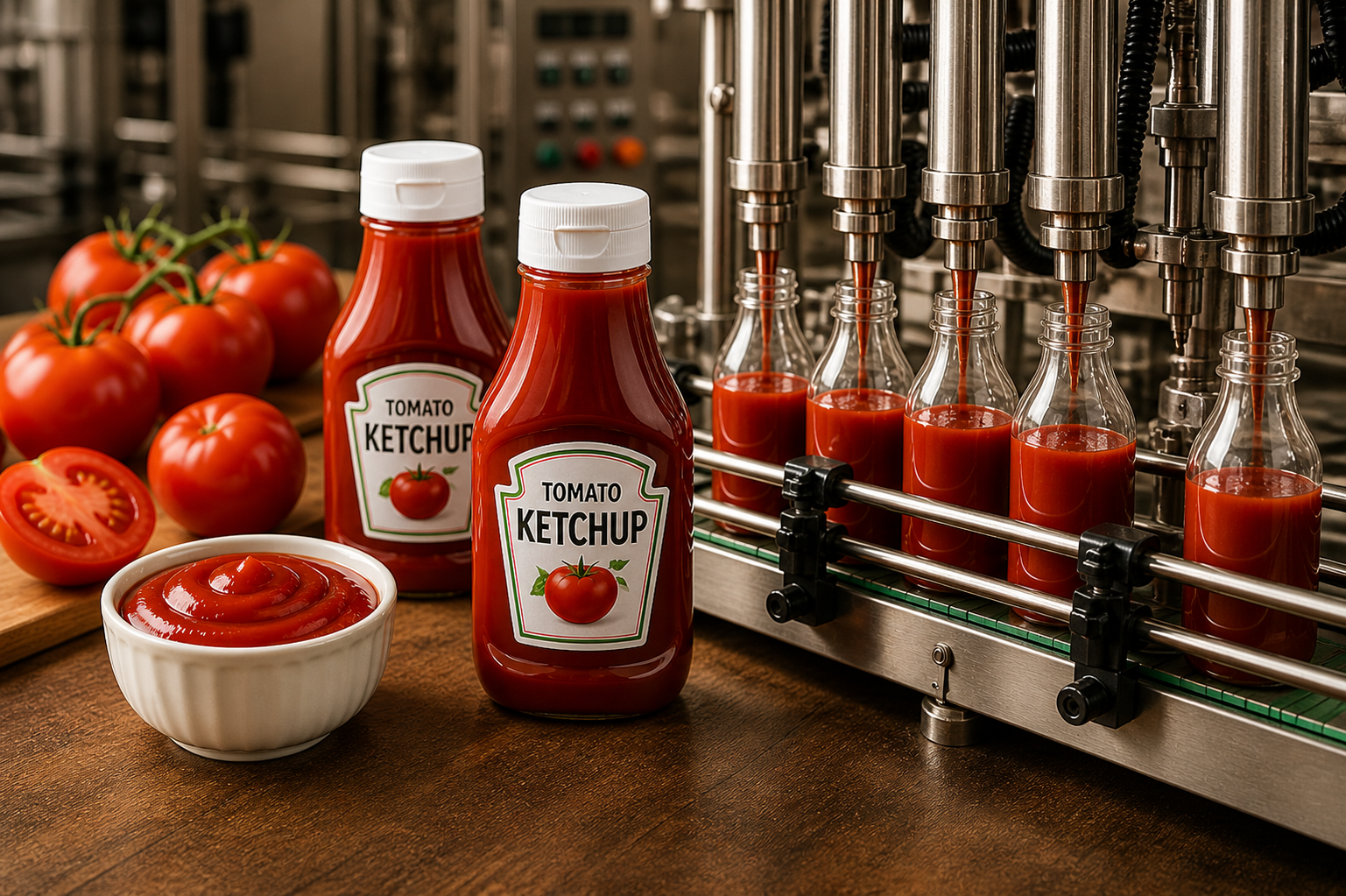
The number of filling heads affects the output of a sauce filling machine. A filling head is the nozzle that fills sauce into one bottle or jar. More filling heads usually mean more bottles can be filled per cycle. However, real output also depends on sauce thickness, filling volume, bottle handling, nozzle design and line speed.
A simple formula is:
Estimated bottles per hour = number of filling heads × filling cycles per minute × 60
For example, if a 4-head machine fills 8 cycles per minute, the estimated output is 4 × 8 × 60 = 1,920 bottles per hour. However, this is only an estimate. Thick sauce, large filling volume or slow bottle handling can reduce the real speed.
Example Output by Filling Head Number
| Filling Heads | Example Cycle Speed | Estimated Output | Best For |
|---|---|---|---|
| 2 heads | 8 cycles/min | 960 bottles/hour | Small production or startup factories |
| 4 heads | 8 cycles/min | 1,920 bottles/hour | Medium production lines |
| 6 heads | 8 cycles/min | 2,880 bottles/hour | Growing factories with stable orders |
| 8 heads | 8 cycles/min | 3,840 bottles/hour | Higher output sauce lines |
Why Thick Sauce May Run Slower
Thick sauce takes more time to move through the filling path. It may also need a slower filling speed to avoid air pockets, dripping or unstable filling volume. For example, tomato paste usually fills slower than thin hot sauce. A sauce with particles may also need lower speed to prevent blockage or product damage.
Because of this, buyers should not only compare filling head numbers. A poorly selected 8-head machine may still run badly if the product path is not suitable. A correctly designed 4-head machine may be more stable for some products. Therefore, the machine should be selected by real sauce behavior and required output together.
Bottle, Cap, and Complete Line Layout
Bottle or Jar Shape
Bottle shape affects the stability of a sauce filling line. Round bottles are usually easier to handle. Square bottles may need better guide rails. Wide-mouth jars may need different filling nozzle positions. Tall and narrow bottles may shake more during conveyor movement. Soft plastic bottles may need gentler handling.
Because of this, buyers should send bottle photos, drawings or samples before confirming the machine. The supplier needs to check bottle height, diameter, opening size, material and base stability. If the bottle is unstable, the line may need special guide rails or bottle holding devices.
Cap Type
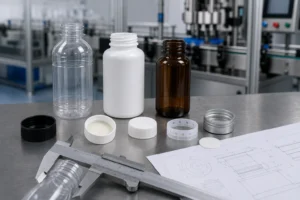
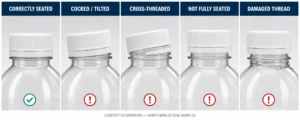
Cap type is also important. Sauce bottles and jars may use screw caps, lug caps, press caps, pump caps or sealing lids. Each cap type needs different capping equipment. If the cap is not matched correctly, the bottle may leak, the cap may tilt, or the line may stop often.
This is why filling and capping should be planned together. A sauce filling machine may fill accurately, but the packaging result is still not acceptable if the cap is not closed properly. For food products, sealing quality is especially important because it affects shelf life, leakage and customer trust.
Complete Sauce Filling Line Layout
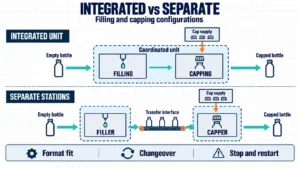
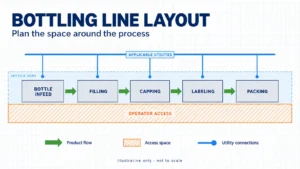
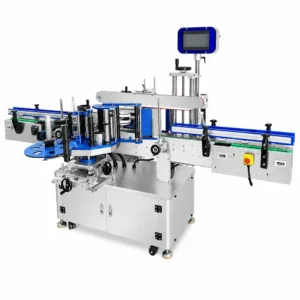
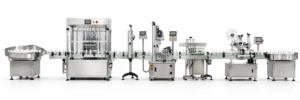
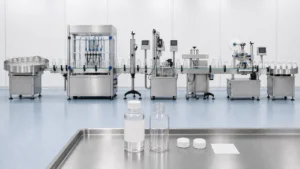
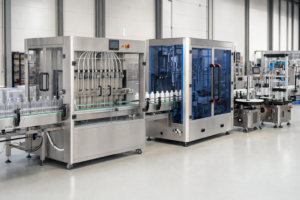
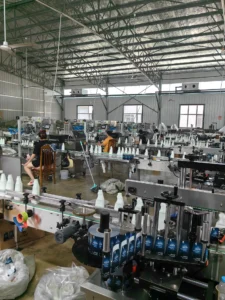
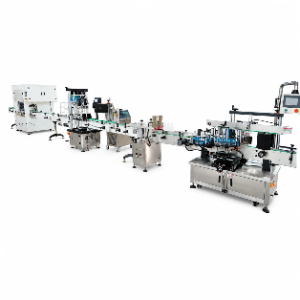
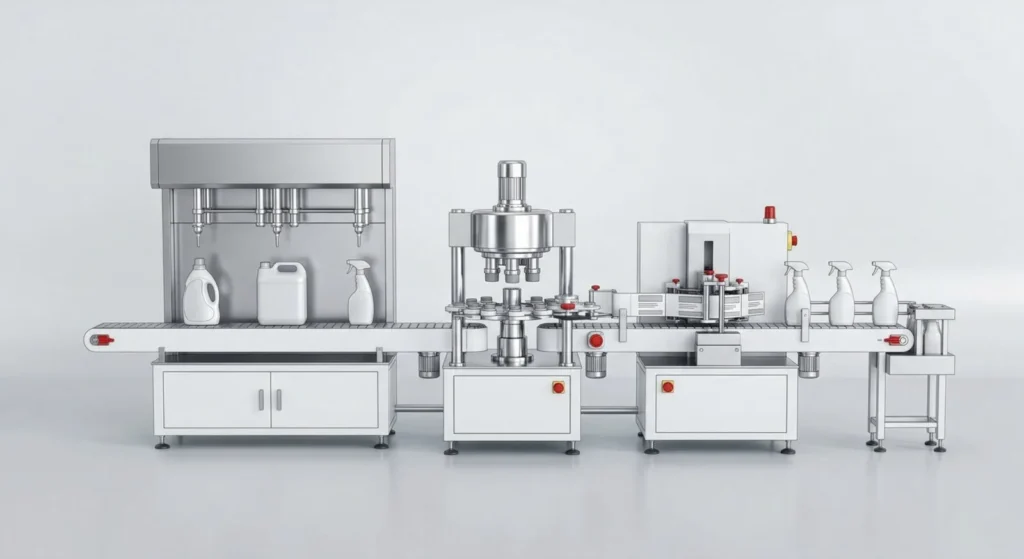
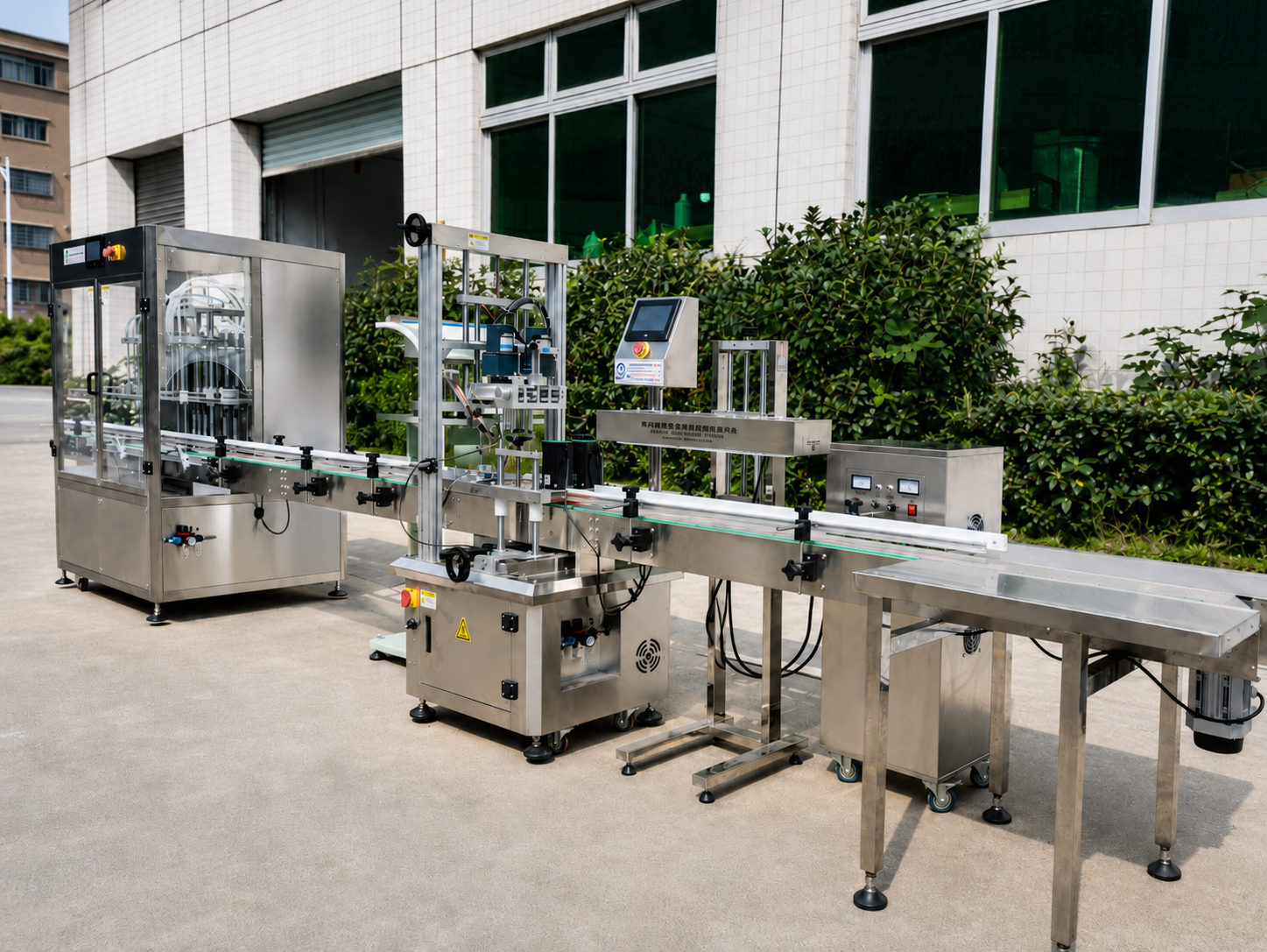
A complete sauce filling line can include several machines. A simple line may include bottle feeding, sauce filling, capping and labeling. A more complete line may also include rinsing, induction sealing, date coding, case packing and case sealing.
A common layout is:
Bottle feeding → rinsing → sauce filling → capping → induction sealing → labeling → date coding → packing
This section is not meant to turn this article into a full sauce packaging line guide. Instead, it shows why the filling machine should be selected with the full line in mind. If you need a broader solution, you can compare related filling machines and connected packaging equipment. If the filling step is your main concern, the sauce filling equipment page is the best starting point.
Food Safety and Sanitary Design Requirements
Food-Contact Materials
Food safety is important for every sauce filling project. The product-contact parts should be suitable for food production. In many cases, stainless steel contact parts are used because they offer better corrosion resistance and easier cleaning. This is especially important for acidic sauces, salty sauces, oily sauces and hot-filled products.
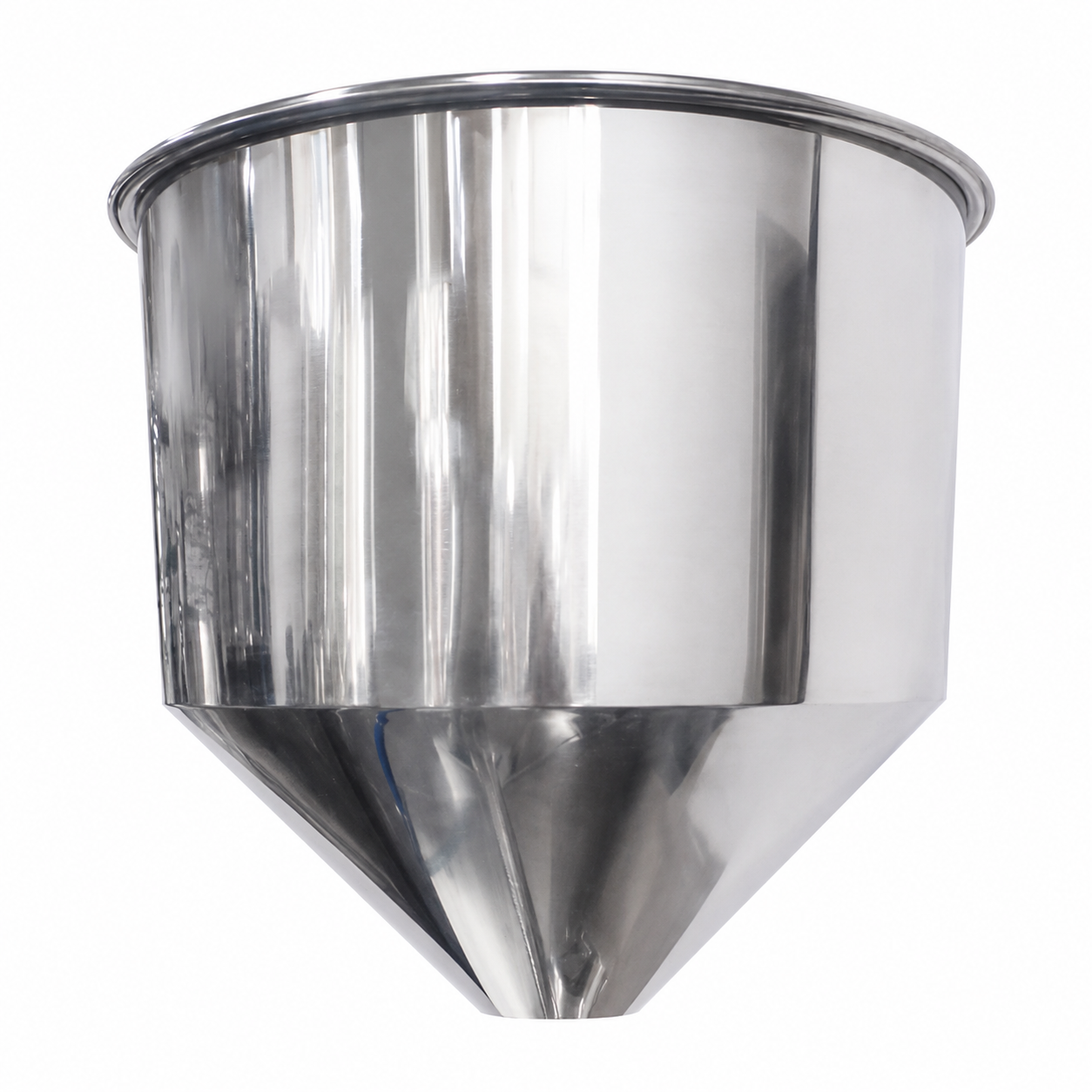
Buyers should ask which parts touch the sauce. These may include the hopper, piston cylinder, valve, pipe, nozzle and seals. The design should reduce dead corners where sauce residue can stay. Smooth surfaces are also important because sticky sauce can remain inside rough areas.
Easy Cleaning and Changeover
Cleaning is not just a hygiene issue. It is also a production efficiency issue. If the machine is difficult to clean, the factory may lose a lot of time during flavor changeover. This is common for sauce factories that produce several recipes, such as garlic sauce, chili sauce, sweet sauce and spicy sauce.
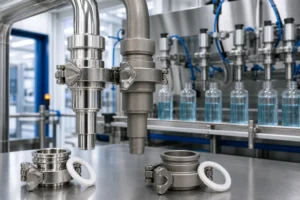
Useful cleaning features may include quick-release hopper parts, removable nozzles, sanitary clamps and accessible filling paths. These details help operators clean the machine faster. They also reduce the risk of flavor carryover.
Anti-Drip and Anti-Contamination Design
Sauce is often sticky. If the nozzle drips after filling, the bottle neck may become dirty. This can affect capping, sealing, labeling and final package appearance. Therefore, anti-drip nozzles are important for many sauce products.
Anti-drip design is especially useful for ketchup, syrup sauce, chili sauce, paste and other sticky products. It helps reduce waste and keeps the packaging area cleaner. In food production, a cleaner bottle neck also helps the cap close more reliably.
Useful Sanitary Features
| Hygienic Feature | Benefit |
|---|---|
| Stainless steel contact parts | Better corrosion resistance and easier cleaning. |
| Quick-release hopper | Faster cleaning and easier product changeover. |
| Smooth product-contact surfaces | Less residue inside the filling path. |
| Sanitary clamps | Easier maintenance and disassembly. |
| Anti-drip nozzles | Less waste and cleaner bottle necks. |
| Hopper agitation | Helps reduce separation for mixed sauces. |
Common Mistakes When Buying a Sauce Filling Machine
Mistake 1: Choosing Only by Price
Price matters, but it should not be the only decision factor. A low-price sauce filling machine may become expensive if it cannot handle your product. It may fill too slowly, drip too much, block often or need too much cleaning time. Therefore, buyers should compare machine suitability, not only quotation price.
Mistake 2: Ignoring Sauce Viscosity
Viscosity is one of the most important details in sauce filling. If the sauce is much thicker than expected, the machine may not reach the target speed. It may also create unstable filling volume. Therefore, buyers should explain whether the sauce is thin, medium, thick, sticky or paste-like.
Mistake 3: Forgetting Particles
Particles can block valves and nozzles. Chili flakes, seeds, herbs, garlic pieces and fruit pulp all matter. If the supplier does not know the particle size, the machine may be designed with a narrow filling path. So, always share particle details before ordering.
Mistake 4: Not Checking Filling Temperature
Some sauces are filled hot. Some are filled at room temperature. Some become thicker after cooling. If the filling temperature is not confirmed, the machine may not match the real production condition. Therefore, buyers should always explain the actual filling temperature.
Mistake 5: Choosing Too Few or Too Many Filling Heads
Too few heads may limit output. Too many heads may increase cost and line complexity. The correct number depends on target output, filling volume, sauce thickness and line speed. So, it is better to calculate the required output before choosing the filling head number.
Mistake 6: Ignoring Cap Compatibility
The filling machine is only one part of the packaging line. If the cap is difficult to handle, the line may still stop after filling. Therefore, bottle and cap details should be checked together. This is especially important for jars, wide-mouth bottles and special caps.
Mistake 7: Not Planning Cleaning
Many buyers focus on filling speed but forget cleaning time. For sauce production, cleaning can take a large part of daily operation. If the machine is hard to clean, the factory loses time and labor. Therefore, quick-release and easy-clean design should be considered from the beginning.
What Information Should You Provide Before Quotation?
Why a Good Quotation Needs Product Details
A sauce filling machine quotation is only useful when the supplier understands the product and packaging format. If the supplier only knows “sauce,” the quotation may be too general. It may not match the real production condition. Therefore, buyers should prepare clear information before asking for a price.
The most important details are sauce type, viscosity, particles, filling volume, bottle photo, cap photo, target output and filling temperature. These details help the supplier judge the filling method, nozzle design, hopper design, capping method and line layout.
Quotation Checklist
| Information Needed | Why It Matters |
|---|---|
| Sauce type | Helps decide the filling method. |
| Viscosity or product behavior | Helps choose piston, pump or gravity filling. |
| Particles | Affects valve, nozzle and product path design. |
| Filling volume | Affects cylinder size, pump setting and speed. |
| Bottle or jar photo | Affects conveyor, guide rail and nozzle positioning. |
| Cap type | Affects capping machine selection. |
| Target output | Affects number of filling heads and automation level. |
| Filling temperature | Affects material, hopper and feeding design. |
| Local voltage | Affects electrical configuration. |
| Single machine or full line | Affects quotation scope and project planning. |
What to Send to LEKA Pack Line
For a faster recommendation, send a product photo or video, bottle photo, cap photo, filling volume and target output. If the sauce has particles, show the particle size clearly. If the sauce is filled hot, tell us the filling temperature. If the factory already has other machines, share the current line layout as well.
This information helps LEKA Pack Line recommend the correct sauce filling equipment. It also helps avoid over-design and under-design. In simple words, better information leads to a better machine recommendation.
Why Work With LEKA Pack Line for Sauce Filling Projects?
Machine Matching Based on Product Behavior
LEKA Pack Line looks at sauce filling from the product first. This means the recommendation starts with the sauce behavior, not only the machine model. For sauce products, this is important because viscosity, particles, filling temperature and cleaning needs can change the machine design.
If your product is ketchup, chili sauce, tomato sauce, mayonnaise, dressing, jam or paste, the filling method must match the product. A suitable machine can improve filling accuracy, reduce dripping, reduce blockage and make operation easier.
Single Machine or Complete Filling Line
Some buyers only need a sauce filling machine. Others need a complete line with filling, capping, sealing, labeling, coding and packing. LEKA Pack Line can help buyers think through both options. This is useful because many production problems happen between machines, not only inside one machine.
For example, a bottle may fill correctly but become unstable on the conveyor. A cap may not tighten correctly. A label may not apply well if the bottle surface is oily. By checking the full process, the line can be planned more smoothly.
Technical Support After Delivery
Machine selection is only the first step. After delivery, factories may need installation guidance, operation training, spare parts and troubleshooting support. For international buyers, clear communication is important because the machine must work in the buyer’s real factory condition.
LEKA Pack Line supports buyers with project discussion, machine matching, quotation support, after-sales support, spare parts coordination and installation guidance. This helps customers move from machine inquiry to real production with fewer surprises.
Related Sauce Filling Resources
For product-level selection, visit our sauce filling equipment page. For a wider view of filling solutions, visit the main filling machines category page.
FAQ About Sauce Filling Machines
1. What is a sauce filling machine?
A sauce filling machine is equipment used to fill sauce products into bottles, jars or containers. It can be used for ketchup, chili sauce, hot sauce, tomato sauce, mayonnaise, dressing, jam, paste and other food products.
2. Which machine is used for sauce filling?
Piston filling machines and pump filling machines are commonly used for sauce filling. Gravity or overflow filling may be used for thin sauces. The best choice depends on sauce viscosity, particles, bottle type and target output.
3. What is the best filling machine for thick sauce?
A piston sauce filling machine is often suitable for thick sauce such as ketchup, chili sauce, tomato paste, jam and paste. It can push thick products more effectively than simple gravity filling.
4. Can one machine fill different sauces?
Yes, one machine can fill different sauces if the products have similar behavior. However, very thin sauce and very thick paste may need different settings, nozzles or filling systems.
5. Can a sauce filling machine fill sauce with particles?
Yes, but the machine must be designed for particles. The valve, nozzle and product path should match the particle size. Buyers should share photos or videos of the particles before ordering.
6. What is the difference between a sauce filling machine and a liquid filling machine?
A liquid filling machine is often used for thin liquids. A sauce filling machine is designed for sauce products that may be thick, sticky, oily or particle-containing. Sauce filling usually needs stronger product movement and better anti-drip design.
7. How many bottles per hour can a sauce filling machine fill?
The output depends on filling heads, filling volume, sauce viscosity and line speed. A 4-head machine may reach around 1,920 bottles per hour in a simple estimate, but real speed depends on the product and bottle.
8. Does a sauce filling machine need heating?
Some sauce filling machines may need heating if the product becomes too thick when cool. Heating can help products such as honey sauce, syrup sauce or thick paste flow more smoothly.
9. How do you clean a sauce filling machine?
Cleaning depends on the machine design. Useful features include quick-release hoppers, removable nozzles, sanitary clamps and smooth product-contact surfaces. These features make cleaning faster and reduce residue.
10. What information should I provide before requesting a quote?
Provide sauce type, viscosity, particles, filling volume, bottle photo, cap photo, target output, filling temperature, voltage and whether you need a single machine or complete line.
Conclusion: Choose the Sauce Filling Machine Around Your Product, Not Just Your Budget
A sauce filling machine should be selected around the real product. This means the first step is not comparing price. The first step is understanding your sauce. Is it thin or thick? Does it contain particles? Is it filled hot? Does it foam? Does it separate? Is the bottle stable? What cap will be used? How many bottles per hour do you need?
Once these questions are clear, the machine choice becomes much easier. Thin sauces may use gravity, pump or piston filling. Thick sauces often need piston or suitable pump filling. Chunky sauces need a particle-friendly product path. Sticky sauces need anti-drip nozzles. Products with separation may need hopper agitation. High-output factories may need an automatic sauce filling line.
LEKA Pack Line can help you review your sauce product, bottle, cap and production target. Then, we can recommend a suitable sauce filling machine or a complete filling, capping, sealing and labeling line.
Need a Sauce Filling Machine Recommendation?
Send us your sauce type, bottle photo, cap photo, filling volume and target output. Our team will help you check the suitable filling method, filling heads, nozzle design and line layout.
Food Safety and Packaging References
These resources can help buyers review food safety, packaging line operation and industry context while planning sauce filling equipment.
- U.S. FDA Food Safety Resources — useful for general food safety and food production reference.
- ISO 22000 Food Safety Management — useful for food safety management system context.
- Food Engineering Magazine — useful for food processing and packaging industry reading.
- Packaging World — useful for packaging line, filling, capping and labeling industry updates.