Sauce Packaging Machine Guide for Bottled Sauce Lines
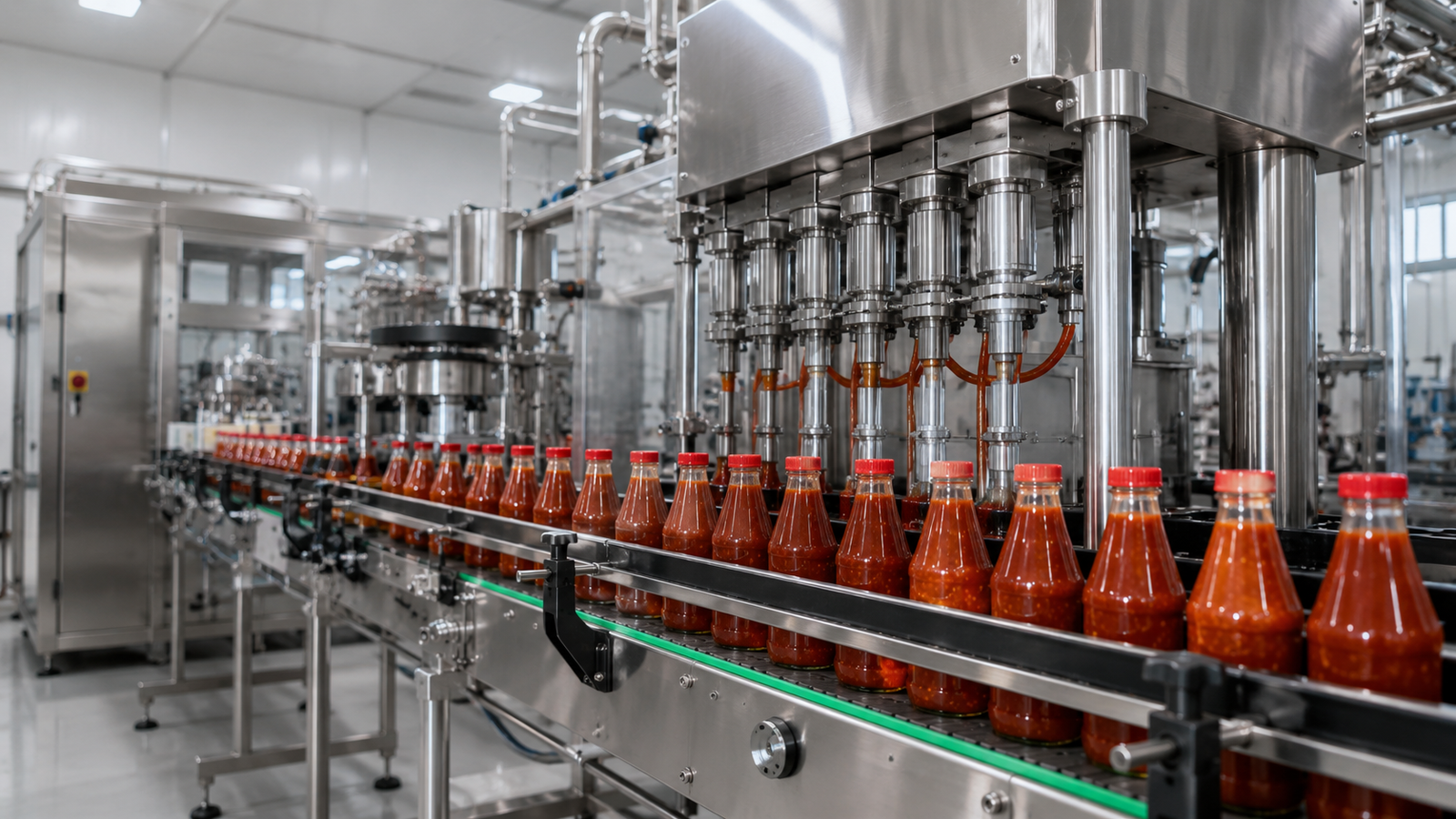
Sauce packaging machine selection is not only about filling sauce into a bottle. Sauce viscosity, particles, filling temperature, bottle shape, cap type, cleaning requirements and target output can all affect the final equipment configuration.
This guide explains how to choose the right sauce packaging machine, when to use a sauce filling machine, and when a complete sauce packaging line may be more suitable for your factory.
Quick Navigation
- Why sauce packaging is more complex than thin liquid bottling
- Selection note from Slany Cheung
- What is a sauce packaging machine?
- Sauce types and machine configurations
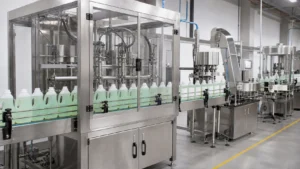
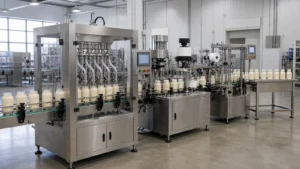
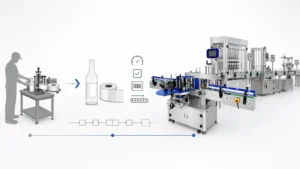
- Main machines in a sauce packaging line
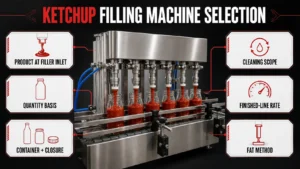
- Key factors before buying
- Common selection mistakes
- Information needed before quotation
Why Sauce Packaging Is More Complex Than Thin Liquid Bottling
Sauce products are usually more difficult to handle than water or thin liquid. A thin soy sauce, a medium-viscosity dressing, a thick ketchup and a chili sauce with seeds may all require different filling structures.
For this reason, a sauce packaging machine should not be selected only by the product name. The supplier should understand how the sauce flows, whether it contains particles, whether it is filled at normal temperature or high temperature, and what production result the customer wants to achieve.
If your project is mainly focused on bottled sauce filling, you can also visit our dedicated sauce filling equipment page for more specific machine configuration details.
If you are still comparing different liquid filling solutions before choosing a sauce-specific machine, our filling machines selection page can help you compare different filling equipment categories for sauce, oil, water-based liquid, chemical liquid and other bottled products.
Machine Selection Note from Slany Cheung
Expert insight by Slany Cheung, Technical Sales Director at LEKA.
“A suitable sauce packaging machine should be selected around the customer’s real product, real bottle and real production target. We listen first, then recommend the configuration that matches what the customer actually needs.”
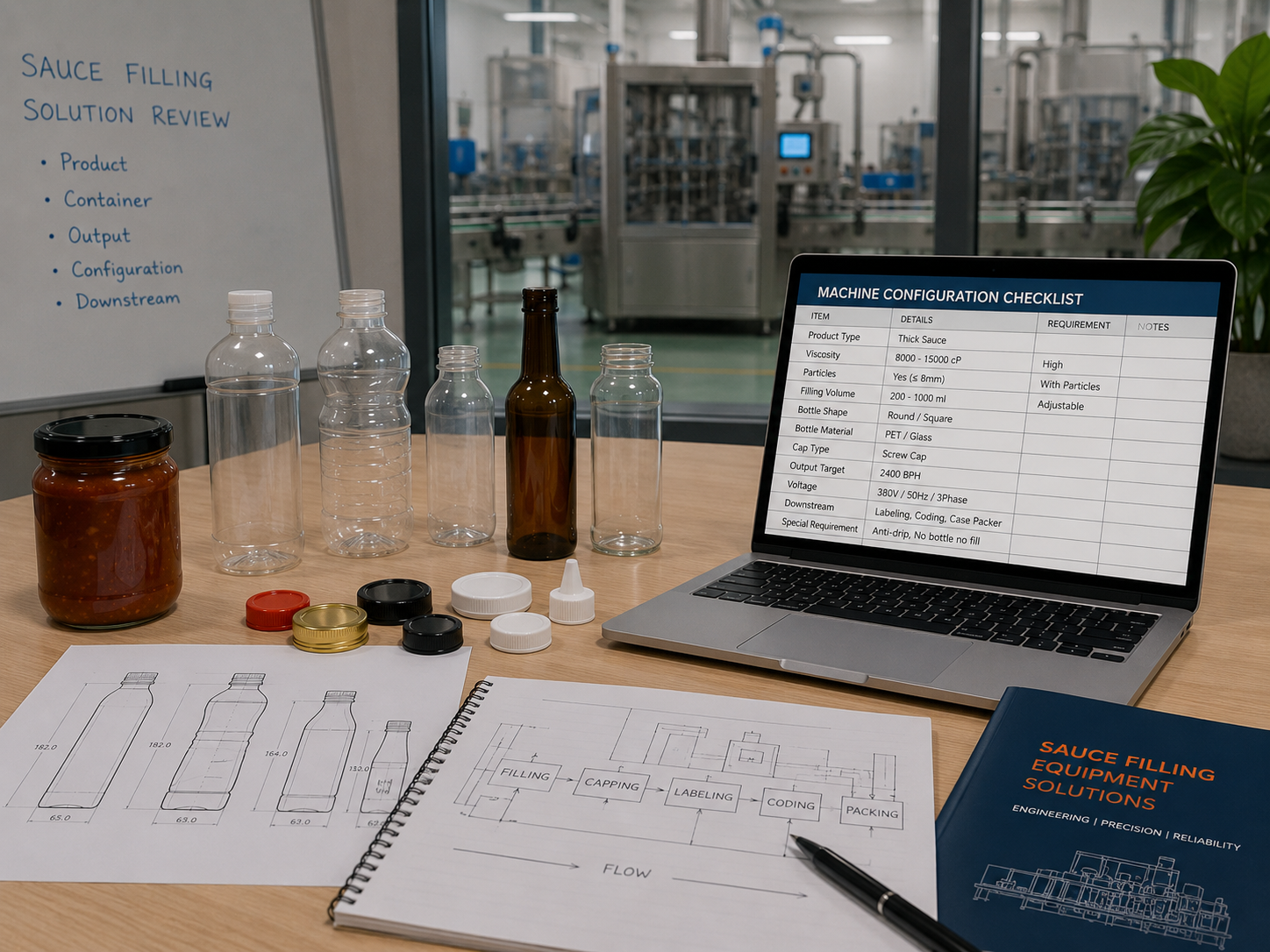
In real sauce filling machine and sauce packaging line projects, we do not recommend a machine only by the sauce name. Before giving a configuration, we usually ask the customer about sauce type, viscosity, particle condition, bottle shape, cap type, target output, bottle photos or drawings, and whether capping, labeling, coding or packing equipment is also required.
This is important because two sauces with the same name may behave differently during production. Thickness, chili seeds, garlic pieces, temperature and cleaning requirements can all change the final machine structure.
What Is a Sauce Packaging Machine?
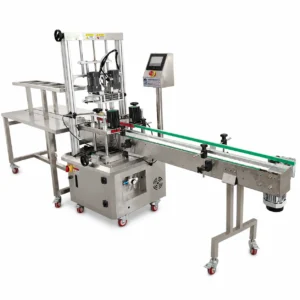
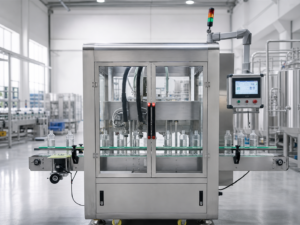
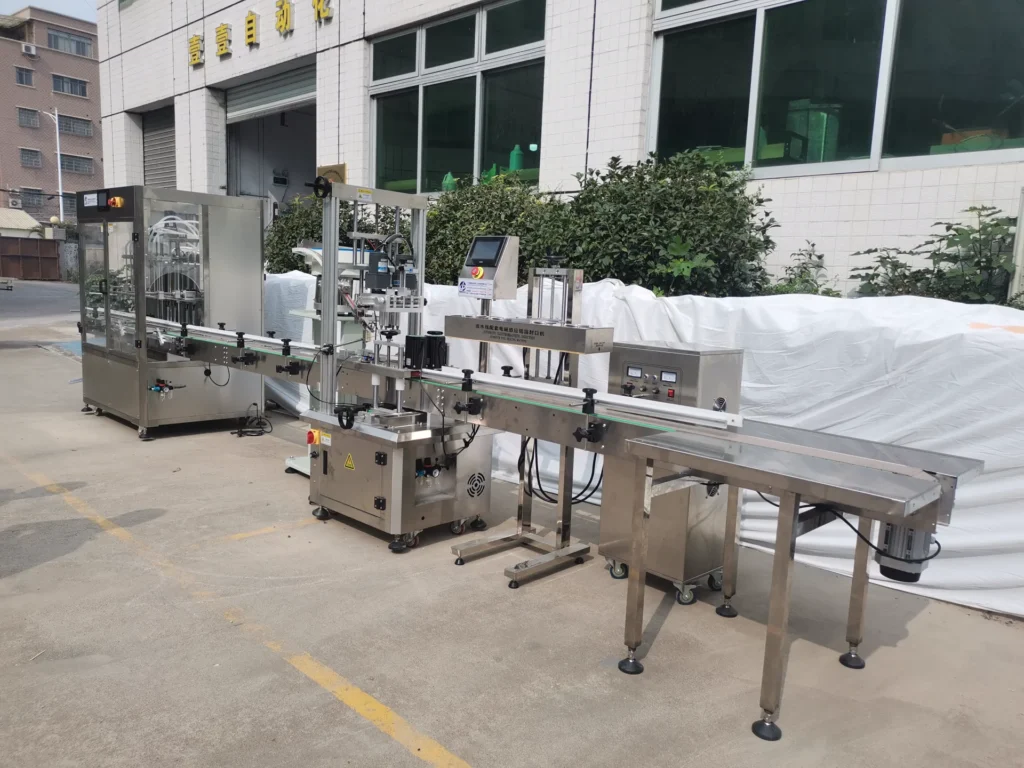
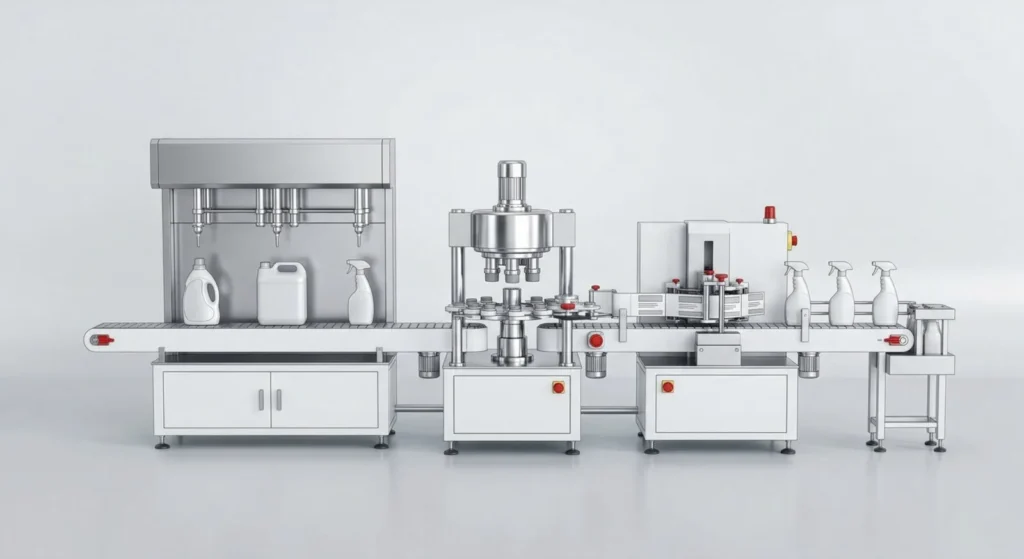
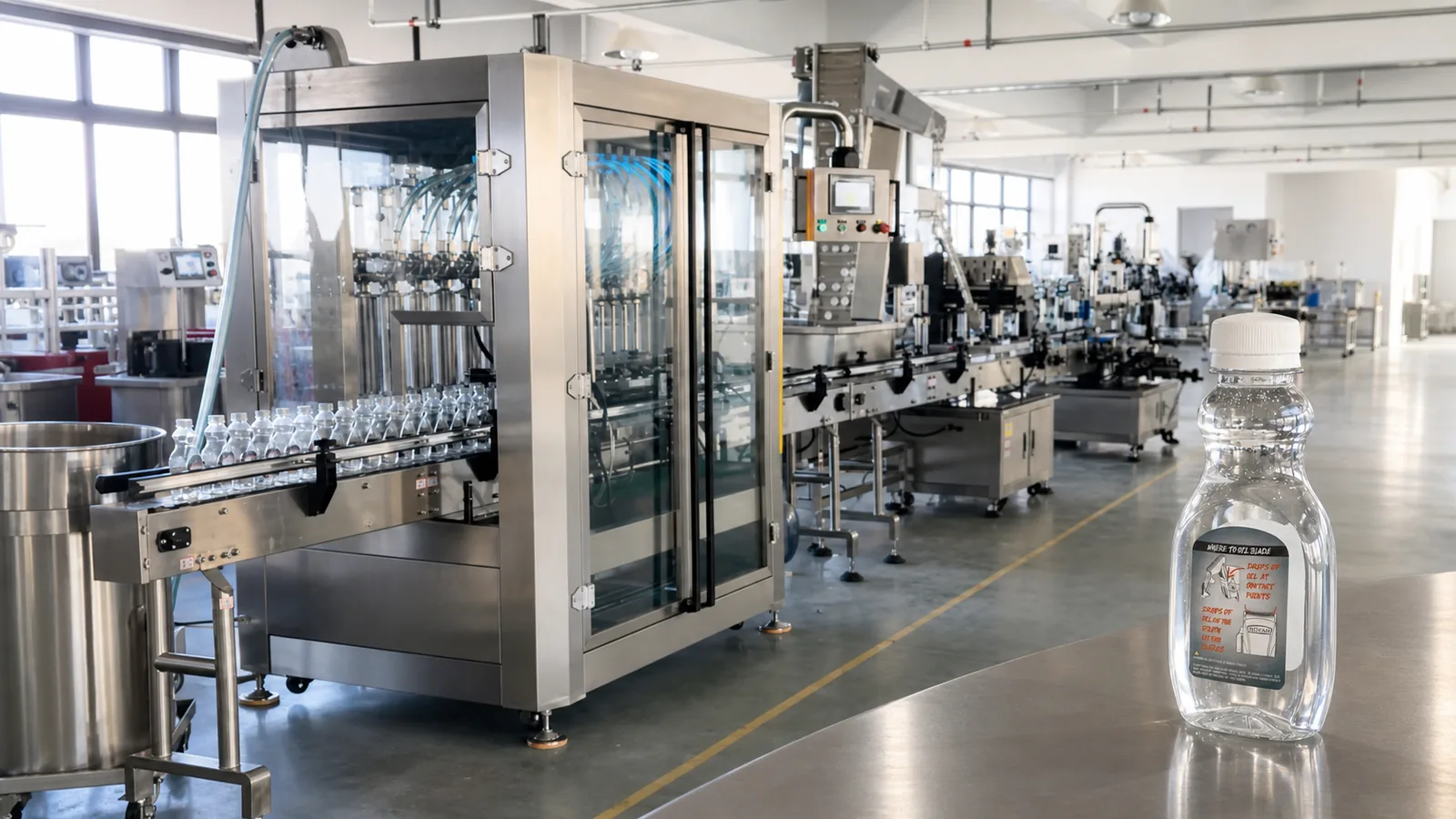
A sauce packaging machine usually refers to the equipment used to pack sauce products into bottles, jars, containers or other packaging formats. In bottle-based sauce production, it may include a sauce filling machine, capping machine, labeling machine, date coding machine, conveyor, packing machine and case sealing machine.
For small sauce factories, the packaging process may start with semi-automatic filling and manual loading. For medium or large production, the system may become a connected automatic sauce packaging line with filling, capping, labeling, coding and packing.
Sauce Packaging Machine vs Sauce Filling Machine
| Packaging Need | Meaning | Typical Production Use |
|---|---|---|
| Sauce filling machine | Mainly fills sauce into bottles, jars or containers | The buyer needs accurate and stable filling |
| Sauce packaging machine | A broader term covering the packaging process | The buyer may need filling, capping, labeling and packing |
| Sauce packaging line | A complete connected production line | The buyer wants higher automation and line efficiency |
If you already know that your main need is filling sauce into bottles, you can start from our sauce filling machine for bottles page. If you are still comparing broader liquid filling options, you may first review our different filling machine types page.
Do You Need Only a Sauce Filling Machine or a Full Sauce Packaging Line?
When a customer says they need a sauce packaging machine, the first question is usually about automation level. Some customers only need sauce filling. Others want the machine to complete several steps, such as filling, capping, labeling, coding, sealing and packing.
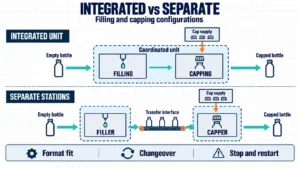
After understanding the production process, we can suggest whether the project should start with a single sauce filling machine, a filling and capping combination, or a more complete sauce packaging line. In some projects, adding a capping machine, labeling machine, bottle washing machine or bottle mouth sealing machine can improve the overall workflow and reduce manual errors.
For most sauce factories, we usually recommend at least a filling machine, capping machine and labeling machine when the budget allows. These three steps are labor-intensive and are also the steps where manual operation can easily cause inconsistency. If the budget is limited, a sauce filling machine and capping machine combination is often a practical starting point.
What Types of Sauce Products Need Different Packaging Configurations?
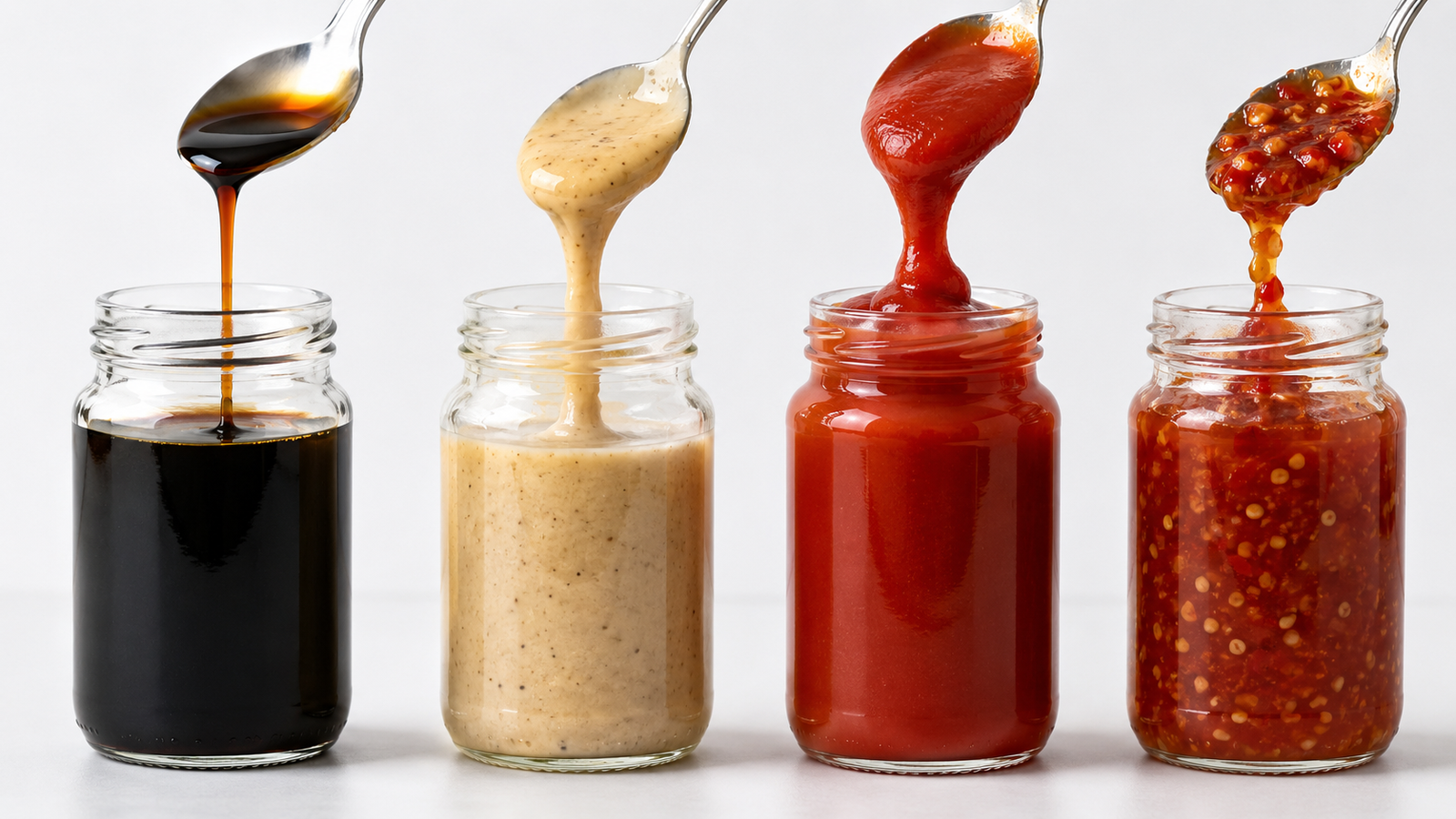
Different sauce products require different machine configurations. A sauce packaging machine for thin soy sauce may not be suitable for thick chili sauce or sauce with garlic pieces.
| Sauce Type | Common Examples | Main Concern | Suggested Machine Direction |
|---|---|---|---|
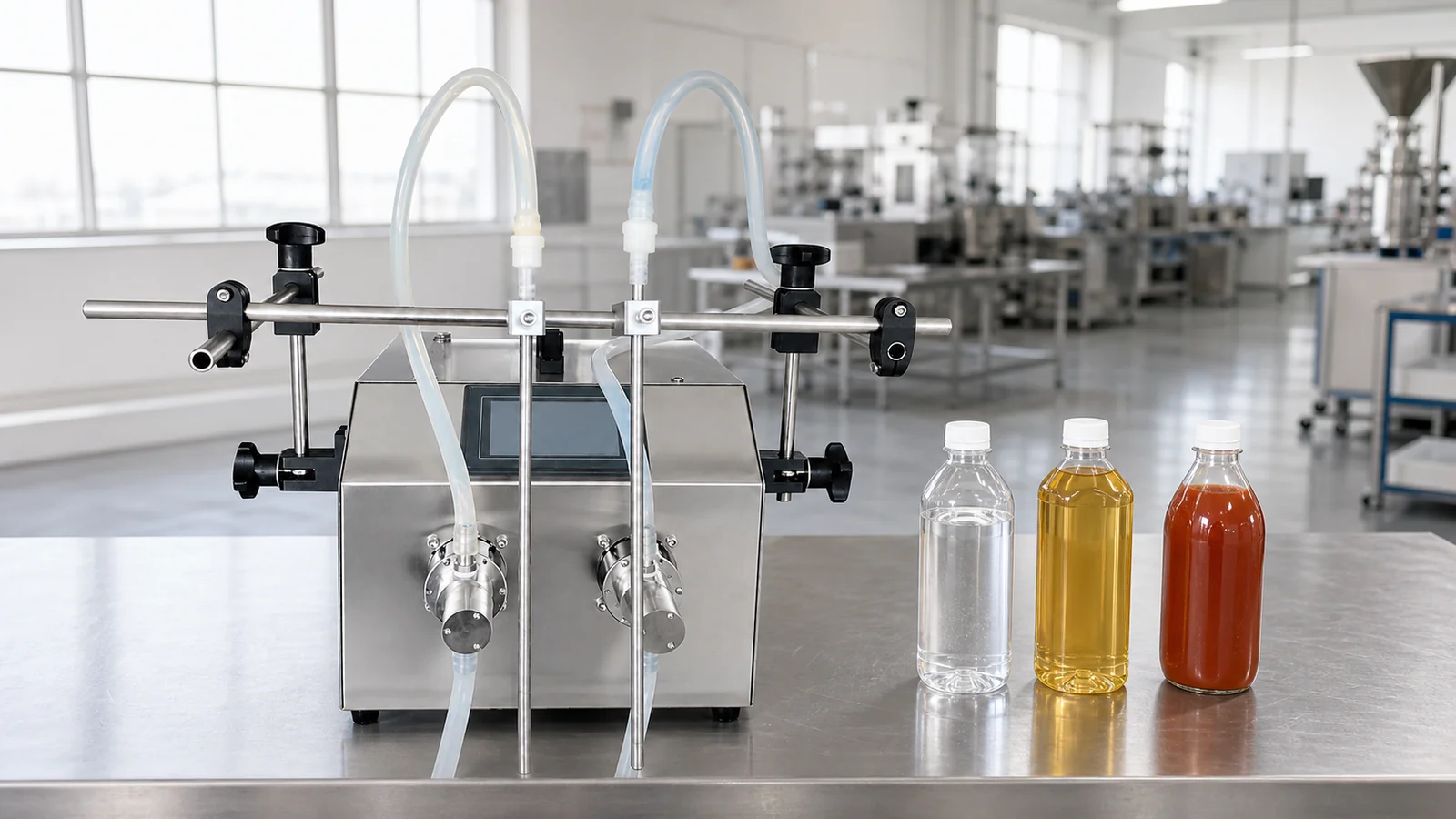
| Thin sauce | Soy sauce, vinegar-based sauce, light seasoning sauce | Dripping, speed and bottle cleanliness | Suitable liquid filling or pump filling configuration |
| Medium-viscosity sauce | Dressing, BBQ sauce, oyster sauce, teriyaki sauce | Filling accuracy and nozzle residue | Piston filling or suitable pump filling |
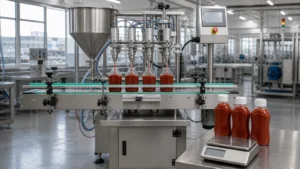
| Thick sauce | Ketchup, chili sauce, garlic sauce, thick dressing | Viscosity, dripping, sticking and uneven weight | Servo piston filling is usually recommended |
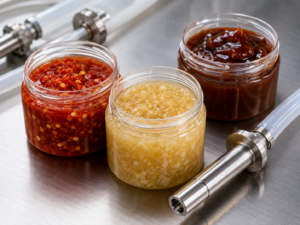
| Sauce with particles | Chili sauce with seeds, salsa, minced garlic sauce | Nozzle blocking, particle ratio and settling | Customized filling path and nozzle review |
| Hot-filled sauce | Cooked sauce, pasteurized sauce, high-temperature filling products | Temperature resistance, sealing parts and maintenance interval | Temperature-reviewed machine configuration |
Thin Sauces
Thin sauces usually include soy sauce, vinegar-based sauce, light seasoning sauce and some liquid dressings. These products normally have good flowability, so the filling speed can be higher. However, anti-drip design is still important to keep the bottle mouth and conveyor clean.
Medium-Viscosity Sauces
Medium-viscosity sauces may include salad dressing, BBQ sauce, oyster sauce and teriyaki sauce. These products may stick to the filling nozzle or create inconsistent filling if the machine structure is not suitable.
Thick Sauces
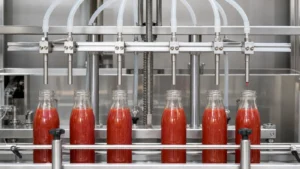
Thick sauces include ketchup, chili sauce, garlic sauce, mayonnaise-style sauce and similar high-viscosity products. For these products, the sauce filling machine must provide stable pushing force and accurate filling control.
Technical Note for Thick Sauce Filling
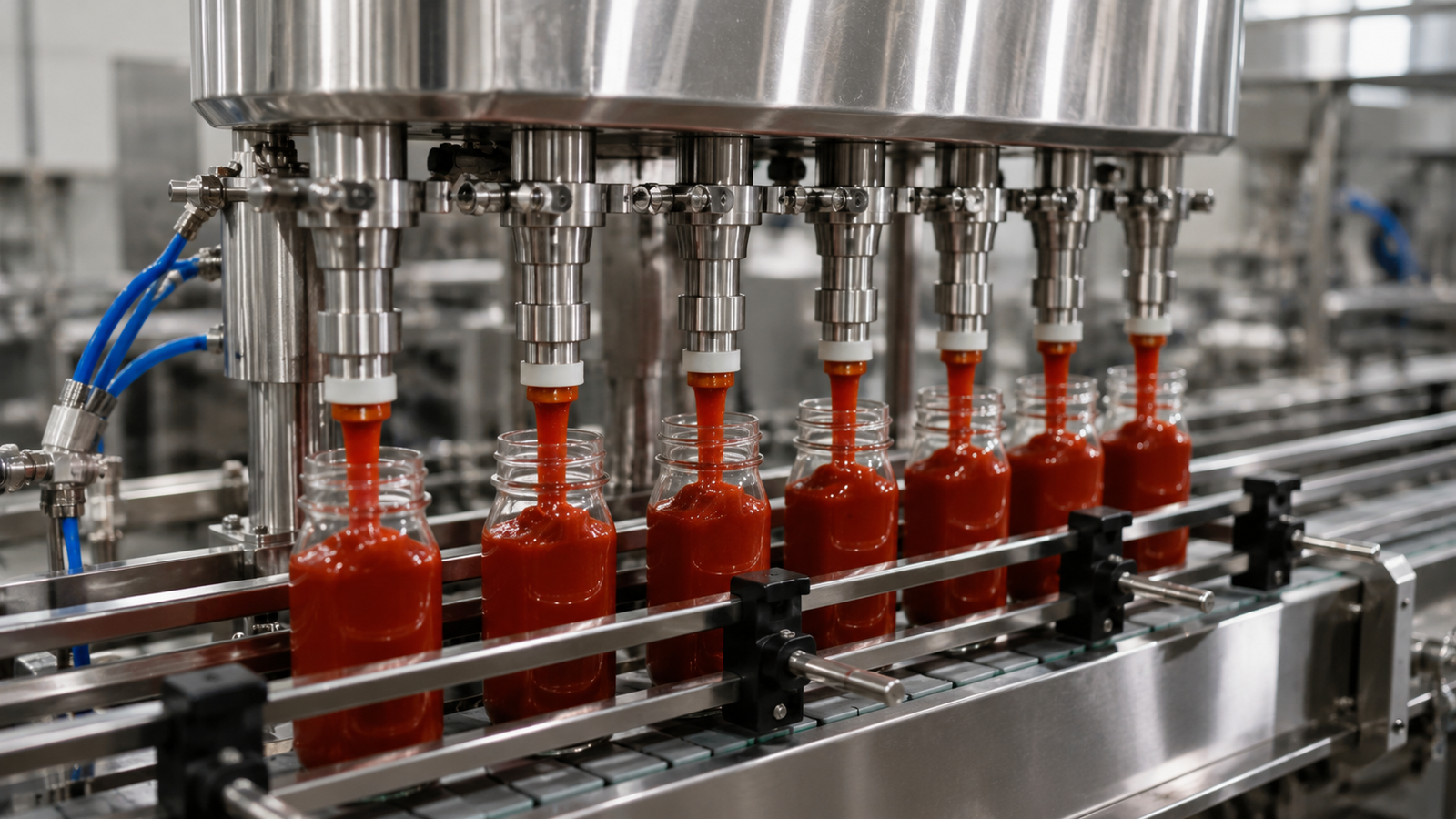
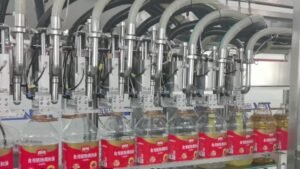
For thick sauce products, we often recommend servo piston filling because it helps improve filling control and reduce problems such as dripping, sticking and filling weight inconsistency. This is especially important for ketchup, chili sauce, garlic sauce, thick dressing and similar high-viscosity products.
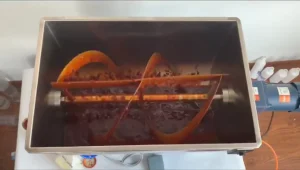
In some cases, a mixing tank or stirring system may also be required before filling. This helps keep particles distributed more evenly in the sauce, especially when the product contains chili seeds, garlic pieces or other solid ingredients. The final setup should be discussed based on the actual sauce sample and production target.
Sauces with Particles
Sauces with particles include chili sauce with seeds, salsa, minced garlic sauce, herb sauce and sauces containing spices or solid ingredients. These products need more careful machine selection because particles may block the filling path or nozzle.
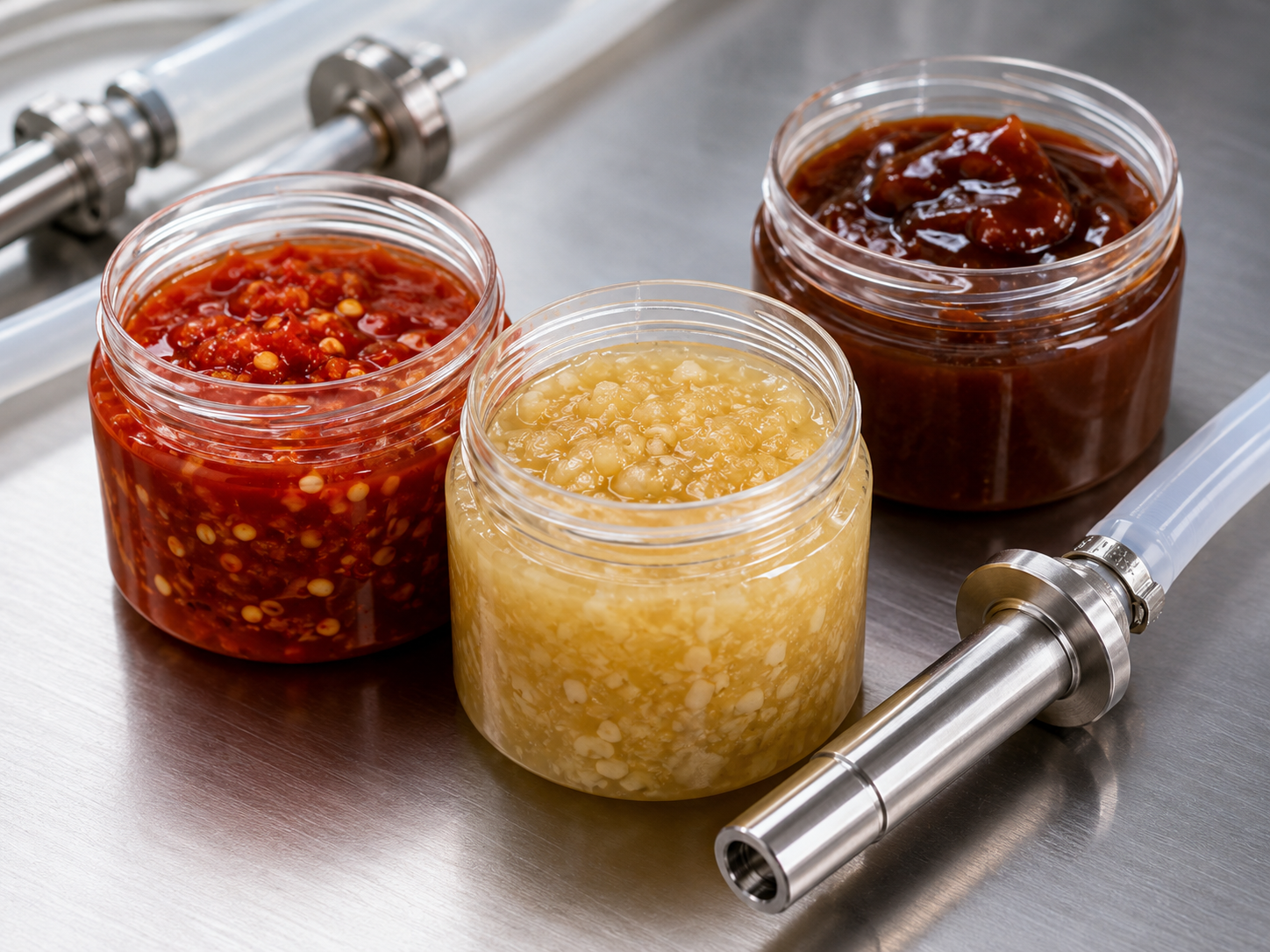
For sauce with particles, we usually check particle size, particle ratio, whether the particles settle easily, and whether the product may block the filling nozzle. If the particle size is large or the sauce is not evenly mixed, the filling valve, nozzle and filling path may need to be enlarged or customized.
Product samples are very helpful for this type of project. A real sauce sample allows the supplier to better understand product flowability, particle behavior and filling stability before confirming the final sauce packaging machine configuration.
Hot-Filled Sauce Products
Some sauce products need to be filled while hot or need to run under higher temperature conditions for a long time. In this case, the machine should be reviewed for temperature resistance, sealing material, filling path, nozzle structure and long-term maintenance.
If the sauce needs to run under high temperature for a long time, the machine configuration should be reviewed carefully. Sealing parts, food-contact materials, filling pipes, nozzle structure and heat exposure around the system may all require suitable adjustment.
High-temperature operation may also shorten the maintenance interval compared with normal-temperature filling. For this reason, the machine should be designed for easier maintenance, cleaning and part replacement. This helps the customer keep production more stable after installation.
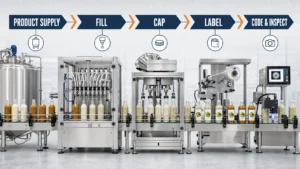
Main Machines in a Sauce Packaging Line
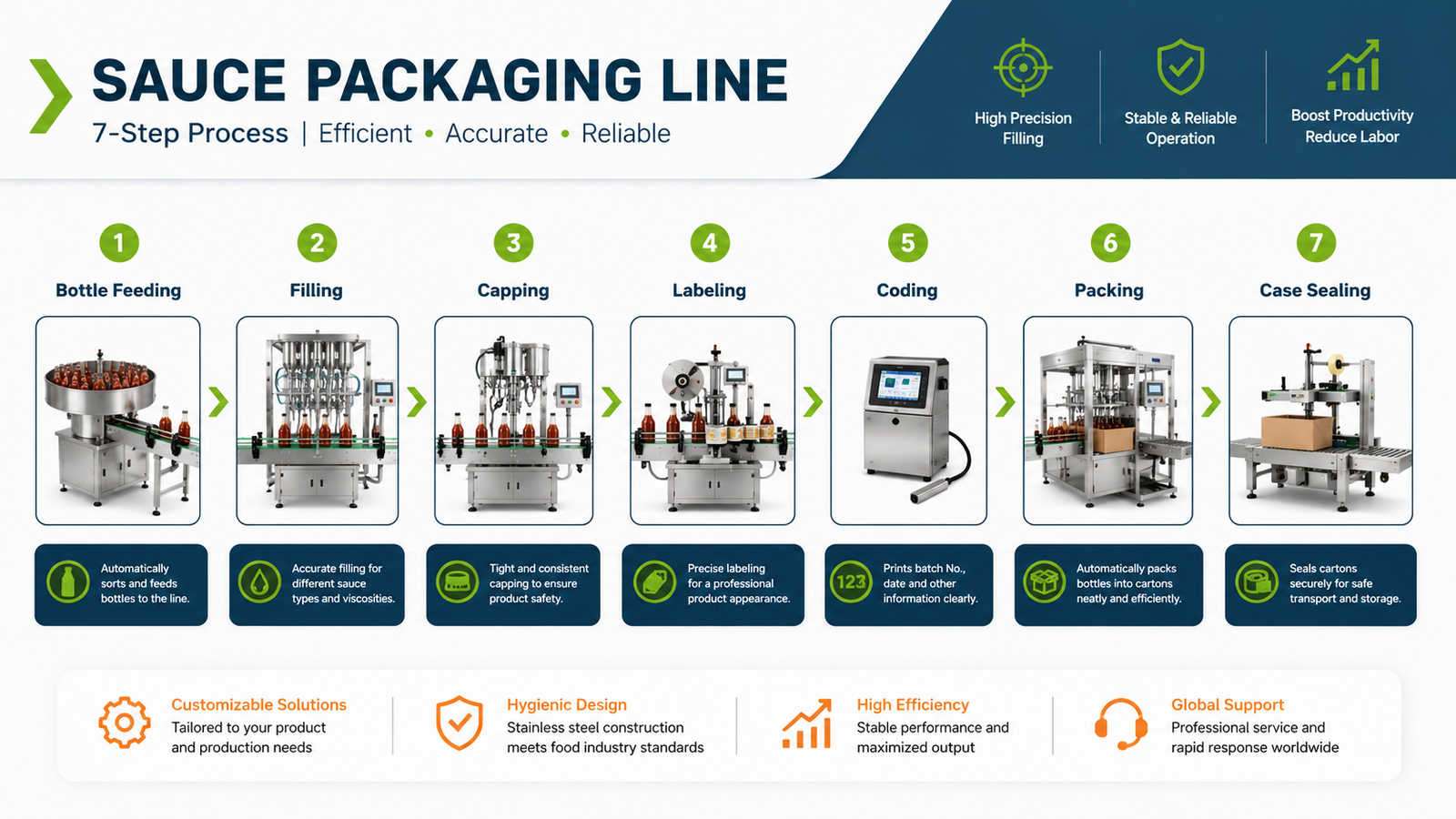
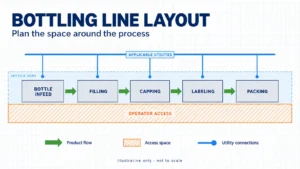
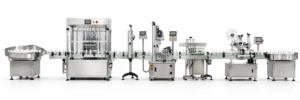
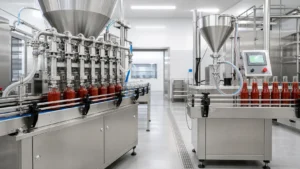
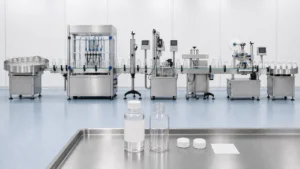
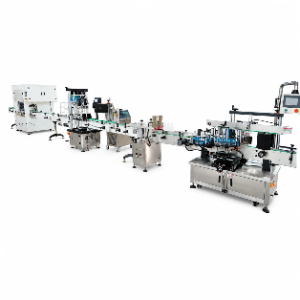
A complete sauce packaging line may include several machines. The exact setup depends on the bottle, cap, label, output target, factory space and automation level.
| Line Stage | Machine or Function | Why It Matters |
|---|---|---|
| Bottle feeding | Manual loading, rotary table or bottle unscrambler | Improves feeding continuity and reduces manual handling |
| Filling | Sauce filling machine | Controls filling accuracy, compatibility and anti-drip performance |
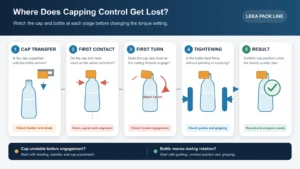
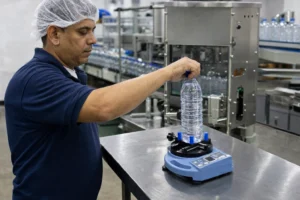
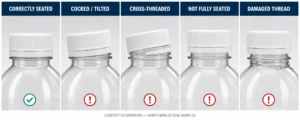
| Capping | Capping machine | Matches cap type, bottle neck and production speed |
| Labeling | Round bottle, flat bottle or wrap-around labeling machine | Supports product identification and retail presentation |
| Coding | Date coding or batch coding machine | Adds production date, expiry date and batch number |
| Packing | Shrink wrapping, carton packing or case sealing | Supports distributor, supermarket and export packing needs |
Bottle Feeding or Bottle Unscrambler
For small and medium sauce factories, bottle feeding can be manual or semi-automatic. For higher output, a bottle unscrambler or rotary table can help improve line continuity and reduce manual handling.
Sauce Filling Machine
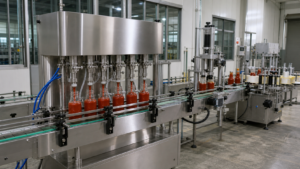
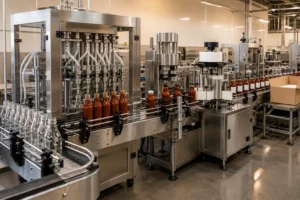
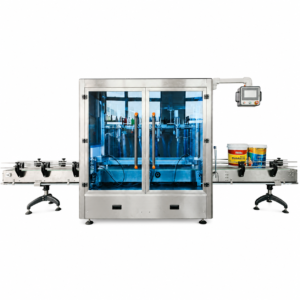
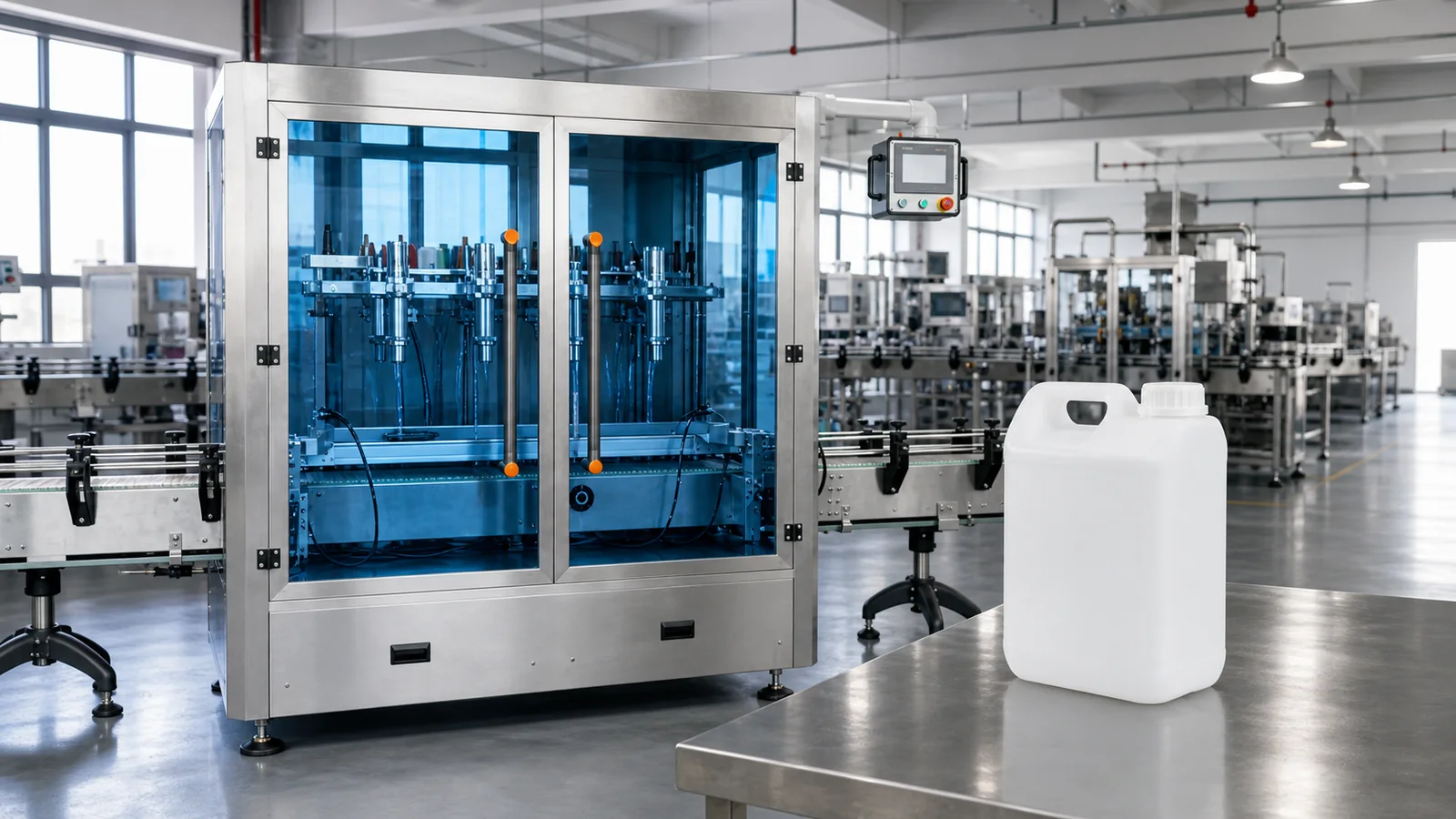
The sauce filling machine is the core equipment in most sauce packaging projects. It decides filling accuracy, sauce compatibility, anti-drip performance and line stability.
For sauce-specific filling structures, you can visit our sauce filling equipment page to review more machine configuration details.
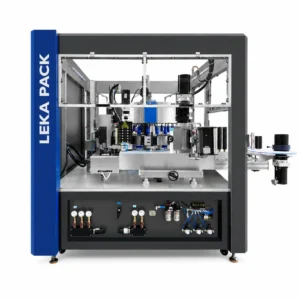
Capping Machine and Labeling Machine
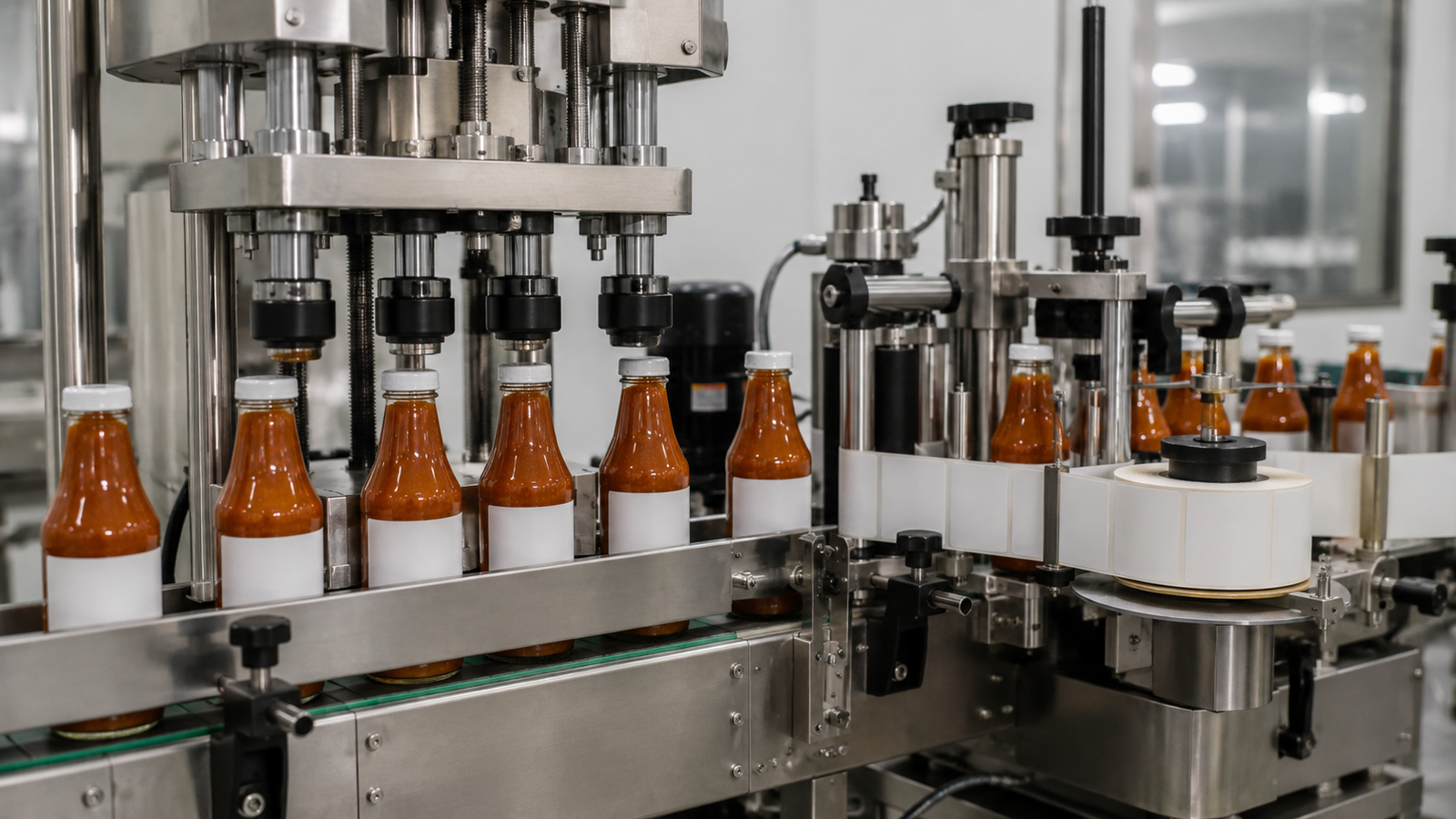
The capping machine should match the cap type, bottle neck and production speed. Common cap types may include screw caps, plastic caps, metal caps, flip-top caps and jar lids.
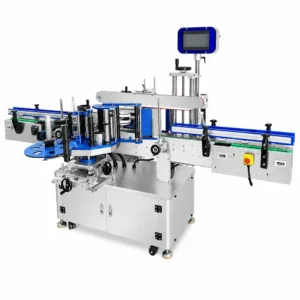
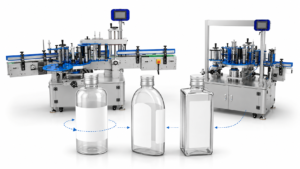
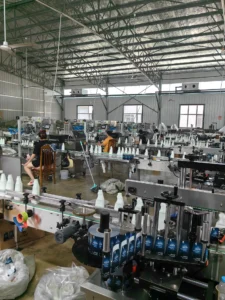
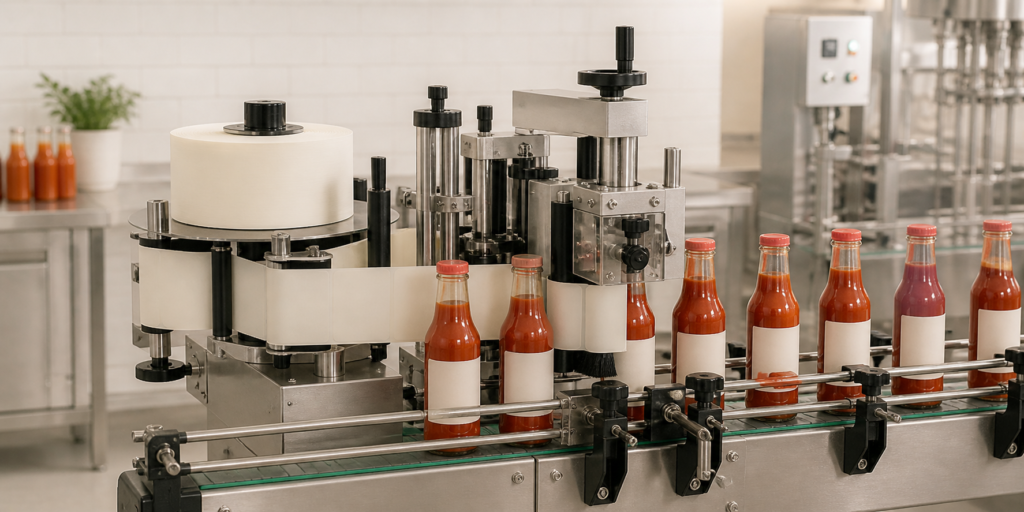
Labeling depends on bottle shape and label type. A round bottle, flat bottle, square bottle or jar may require a different labeling structure. Front-and-back labeling and wrap-around labeling should also be confirmed early.
Date Coding Machine
Sauce products often need production date, expiry date, batch number or other coding information. Coding equipment can be added to the line depending on package type and factory requirements.
Packing and Case Sealing
For factories supplying supermarkets, distributors or export markets, carton packing and case sealing may also be required. These machines help the factory complete the packaging workflow after filling, capping and labeling.
Key Factors Before Choosing a Sauce Packaging Machine
Sauce Viscosity
Viscosity directly affects filling speed, machine structure and filling accuracy. Thin liquid sauce, medium-viscosity sauce, thick paste-like sauce and semi-flowing sauce may require different filling methods.
Particles and Solids
Chili seeds, garlic pieces, herbs, spices and other solids should be checked before selecting a sauce filling machine. Particle size and particle ratio may affect nozzle design and filling path diameter.
Filling Volume
Common sauce filling volumes include 50ml, 100ml, 200ml, 250ml, 500ml, 1L and larger containers. Filling volume affects machine speed, piston size, nozzle configuration and changeover design.
Bottle or Jar Shape
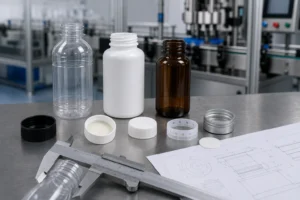
Round bottles, square bottles, glass jars, PET bottles, HDPE bottles and wide-mouth containers may require different bottle positioning, conveying and capping solutions.
Cap Type
Cap type affects capping machine selection. Screw caps, plastic caps, lug caps, flip-top caps and other closure types should be confirmed before finalizing the sauce packaging line.
Target Output
Before choosing automatic equipment, buyers should estimate hourly output, daily production time and later capacity needs. This helps determine whether a semi-automatic machine, automatic filler or complete line is more suitable.
Cleaning and Food Safety Requirements
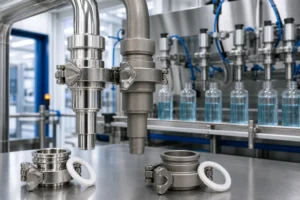
Sauce residue is often sticky. Cleaning convenience, food-contact material, product changeover and operator access should be considered early, especially when one machine is expected to fill different sauce products.
If you are not sure whether your product should use a piston filling machine, pump filling machine or another filling solution, start from our liquid filling equipment options page before narrowing down to sauce packaging.
Common Mistakes We See in Sauce Packaging Machine Selection
From our experience, many buyers first think that one sauce packaging machine can handle all sauce products. In practice, this is often not true. Sauce viscosity, particles, bottle size, cap type and cleaning method all affect the machine choice.
One common mistake is ignoring chili seeds, garlic pieces or other particles. These ingredients may block the nozzle or require a wider filling path. Another common mistake is focusing only on the filling machine price, while overlooking long-term production stability, cleaning convenience and future changeover needs.
Some customers also plan to fill many different sauce products with one machine, but do not check whether the machine is easy to clean or whether the control system can store different filling recipes. For compatible configurations, recipe memory can help operators switch between products more efficiently, but the machine structure still needs to match the actual sauce condition.
Another common issue is buying only a sauce filling machine first, then later discovering that capping, labeling or downstream packing cannot keep up with the filling speed. That is why early line planning is important.
Semi-Automatic vs Automatic Sauce Packaging Machine
When to Choose Semi-Automatic Sauce Packaging Equipment
Semi-automatic sauce packaging equipment may be suitable for startup production, small batch sauce brands, product testing, limited budget or many SKUs with low daily volume.
When to Choose an Automatic Sauce Packaging Line
An automatic sauce packaging line is usually more suitable when the factory has stable production orders, higher output requirements, export plans, supermarket supply, high labor cost or clear expansion needs.
| Production Situation | Suggested Option | Best For |
|---|---|---|
| Small batch, many sauce flavors | Semi-automatic filling with flexible operation | Startups, product testing and low-volume SKUs |
| Medium output bottled sauce | Automatic filling and capping combination | Factories that want better consistency and less manual error |
| High output factory | Complete automatic sauce packaging line | Stable orders, distributor supply and export production |
| Sauce with particles | Customized filling path and nozzle review | Chili sauce, garlic sauce, salsa and sauces with solids |
| High-temperature sauce filling | Temperature-resistant configuration review | Cooked sauce, pasteurized sauce and long hot-filling operation |
Sauce Bottling Equipment Configuration
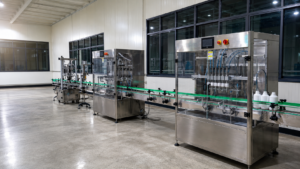
For bottled sauce projects, sauce bottling equipment normally includes more than the filling machine. A practical line may need bottle feeding, sauce filling, cap sorting, capping, labeling, date coding, conveying, inspection and packing support, depending on the product and factory workflow.
| Production Need | Recommended Configuration | Suitable Products | Production Use |
|---|---|---|---|
| Basic filling upgrade | Sauce filling machine with anti-drip nozzles, product hopper and suitable filling control | Hot sauce, chili sauce, tomato sauce, BBQ sauce and dressing | For factories replacing manual filling while keeping existing capping or labeling steps. |
| Bottled sauce equipment set | Filling machine, capping machine, labeling machine, coding unit and conveyor | Round bottles, PET bottles, glass bottles, squeeze bottles and jars | For buyers who need stable bottle handling from filling to finished labeled bottles. |
| Complete sauce packaging line | Bottle feeding, filling, cap sorting, capping, labeling, coding, inspection and packing support | Medium to thick sauces, dressings, pastes and sauces with small particles | For new factory layouts or higher-output projects that need coordinated line planning. |
LEKA can match piston filling, pump filling, anti-drip filling, cap handling and labeling according to sauce viscosity, bottle shape, cap type, filling volume, target output and available factory space.
Need a sauce bottling equipment plan? Send your sauce type, bottle photo, cap style, filling volume and target bottles per hour. LEKA will suggest a practical machine configuration and layout direction for your project.
For the filling section itself, review our sauce filling machine options.
Common Sauce Packaging Machine Configurations
Basic Sauce Bottling Setup
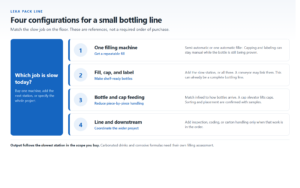
A basic sauce bottling setup may include manual bottle loading, a sauce filling machine, capping machine, labeling machine and date coding equipment. This setup is suitable for small and medium sauce production.
Automatic Sauce Filling and Capping Line
An automatic sauce filling and capping line may include bottle feeding, automatic filling, automatic capping, conveyor and collection table. This is often suitable for factories that want stable output and less manual handling.
Full Sauce Packaging Line
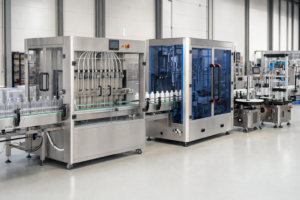
A full sauce packaging line may include bottle feeding, filling, capping, labeling, coding, shrink wrapping or carton packing, and case sealing. This is more suitable for larger production, export orders, distributor supply and supermarket channels.
If your production is focused on chili sauce, ketchup, dressing, soy sauce or other bottled sauce products, our hot sauce bottling machine configuration page can help you understand more sauce-specific equipment options.
Project Insight: Why Early Line Planning Matters
In one sauce packaging project, the customer first focused mainly on the filling machine. Later, after reviewing the actual production flow, they realized that additional line equipment was also needed to keep the project on schedule. Because the missing equipment was confirmed late, the overall project timeline became more urgent.
To support the customer, our team arranged the matching line equipment quickly and completed the shipment preparation within three days. This case reminded us that sauce packaging should be planned as a complete workflow from the beginning, not only as a single filling step.
What Sauce Factory Buyers Usually Care About
In sauce packaging machine projects, factory owners, purchasing managers and production teams usually care most about stable production, filling accuracy, budget, after-sales support, cleaning difficulty and changeover speed. Delivery time and spare parts availability are also important, especially when the machine is part of a larger production plan.
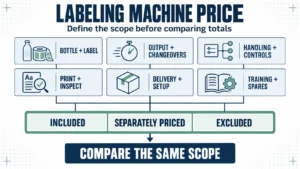
For this reason, the lowest machine price is not always the best choice. A sauce packaging machine should be evaluated by product compatibility, filling stability, cleaning convenience, operator safety, maintenance support and later capacity needs.
Information to Prepare Before Requesting a Sauce Packaging Machine Quote
To recommend the right sauce packaging machine faster, it is helpful to prepare the following information before contacting a supplier:
| Information Needed | Why It Matters |
|---|---|
| Sauce sample or product description | Helps check flowability, viscosity, particles and filling stability |
| Viscosity condition | Helps decide whether the sauce is thin, medium, thick or paste-like |
| Particle condition | Helps review chili seeds, garlic pieces, herbs or other solids |
| Bottle photo, drawing or sample | Helps confirm bottle positioning, conveyor design and machine compatibility |
| Cap type and bottle neck size | Helps select the correct capping machine and cap feeding method |
| Filling volume | Affects piston size, nozzle number, filling speed and changeover design |
| Target output per hour | Helps decide semi-automatic equipment, automatic filling or a complete line |
| Voltage and factory location | Helps prepare the correct electrical configuration |
| Factory layout or available space | Helps plan machine arrangement, conveyor direction and operating space |
| Label sample and packing requirements | Helps confirm whether labeling, coding, packing or case sealing is needed |
How LEKA Recommends Sauce Packaging Machine Configurations
LEKA does not recommend a machine only by product name. We first review the material characteristics, including sauce type, viscosity, particle condition, filling volume and temperature. Then we check bottle shape, cap type, target output, factory layout and downstream packaging requirements.
Based on this information, we can recommend whether the project needs a sauce filling machine, a filling and capping combination, or a more complete sauce packaging line with labeling, coding, packing and case sealing. For thick sauce, hot sauce and sauce with particles, the filling path, nozzle design and pump or piston system may need to be customized.
We also help customers review which configurations are necessary and which may not be needed at the current stage. This helps avoid unnecessary budget waste while still keeping the production line practical for planned capacity growth.
Operation Safety and After-Sales Support
For sauce packaging equipment, machine selection is only the first step. Safe operation, correct startup sequence, cleaning method and prohibited operations should also be explained clearly before the machine is used in production.
LEKA provides operation guidance and safety documentation for customers. After delivery, customers can contact us through WhatsApp when support is needed, and our team will respond as soon as possible with troubleshooting suggestions or follow-up solutions.
Conclusion: Choose a Sauce Packaging Machine Based on Real Production Needs
A sauce packaging machine should not be selected only by sauce name. Viscosity, particles, temperature, bottle shape, cap type, filling volume, cleaning method and target output all matter.
For many sauce factories, the sauce filling machine is the core of the packaging line. However, capping, labeling, coding and packing should also be planned early if the factory wants stable production and lower manual error.
If your project is mainly for chili sauce, ketchup, dressing, soy sauce or thick sauce bottling, visit our sauce bottling and filling equipment page for more specific machine configuration details.
If you are still comparing different filling solutions for multiple products, you can start from our filling machines page and choose the machine category that matches your product.
Need help choosing a sauce packaging machine? Send us your sauce type, bottle size, cap type, target output and automation requirement. We will help you review the suitable filling and packaging line configuration.
FAQ About Sauce Packaging Machines
What is a sauce packaging machine?
A sauce packaging machine is equipment used to pack sauce products into bottles, jars or containers. A complete sauce packaging line may include filling, capping, labeling, coding, conveying, packing and case sealing.
What is the difference between a sauce filling machine and a sauce packaging machine?
A sauce filling machine mainly fills sauce into bottles or jars. A sauce packaging machine is a broader term and may include filling, capping, labeling, coding and packing equipment.
Can one machine fill different sauce types?
It depends on viscosity, particles, filling volume and cleaning requirements. Thin sauce, thick sauce and sauce with particles may require different filling structures or customized parts.
Can a sauce packaging machine handle chili seeds or particles?
Yes, but the filling path, valve, nozzle and pump or piston structure should be selected according to particle size, particle ratio and product flowability.
What information is needed before choosing a sauce packaging machine?
You should provide sauce type, viscosity, particle condition, filling volume, bottle or jar size, cap type, target output, voltage and whether you need filling only or a full packaging line.
Do I need a full sauce packaging line or only a sauce filling machine?
If you already have capping, labeling and packing equipment, you may only need a sauce filling machine. If you want to improve automation and reduce manual handling, a complete sauce packaging line may be more suitable.
Related Sauce Guides
More Sauce Bottling Planning Guides
Explore the guides below when your project needs a more detailed decision about filling method, compact production or multi-SKU operation.
Selection by product
Choose a suitable process in the sauce filling machine selection guide.
Compact projects
Compare sauce bottle filler options for small producers before expanding automation.
BBQ sauce
See the BBQ sauce bottling equipment guide for a product-specific example.
Changeover planning
Learn how to reduce sauce bottling line changeover time for multi-SKU production.