Packaging Line Project
Razor Lubricant PET Bottle Filling and Packaging Line
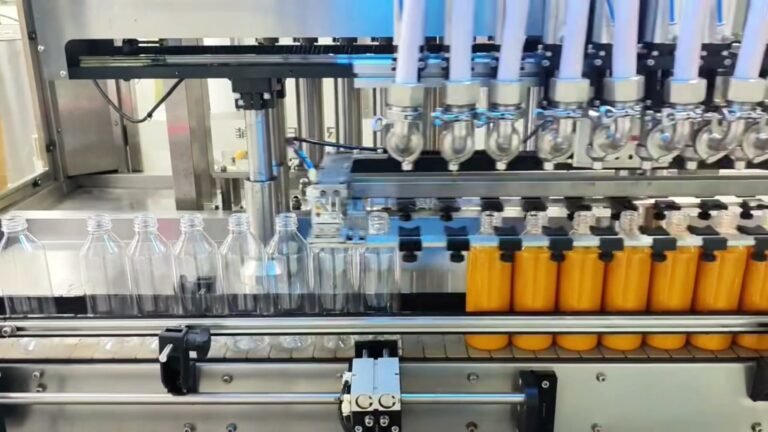
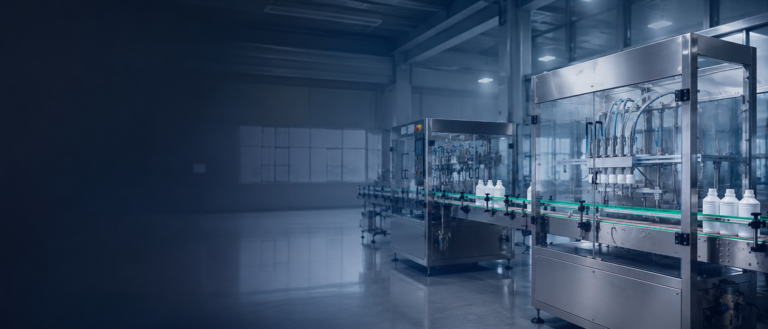
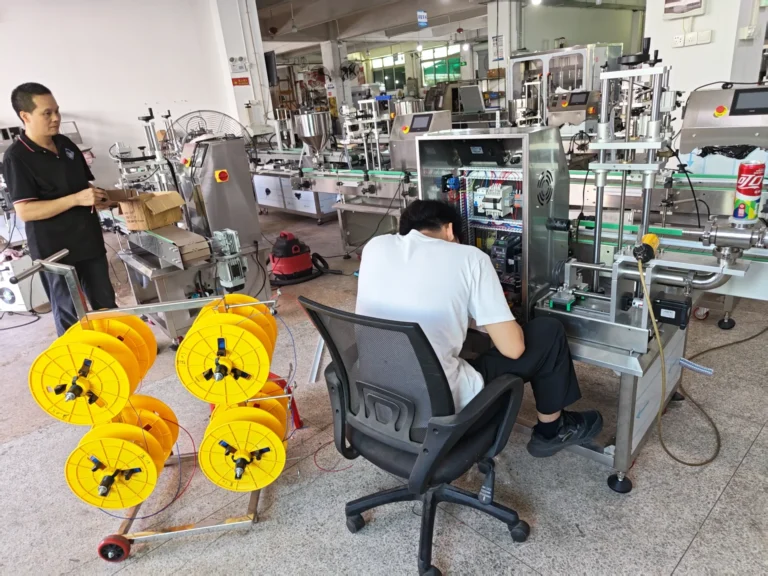
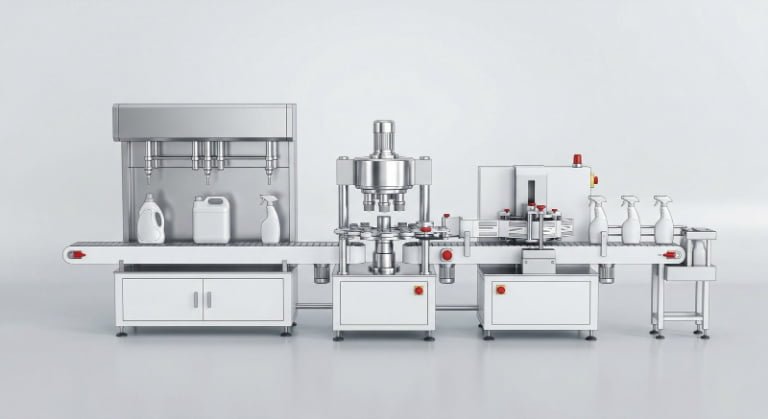
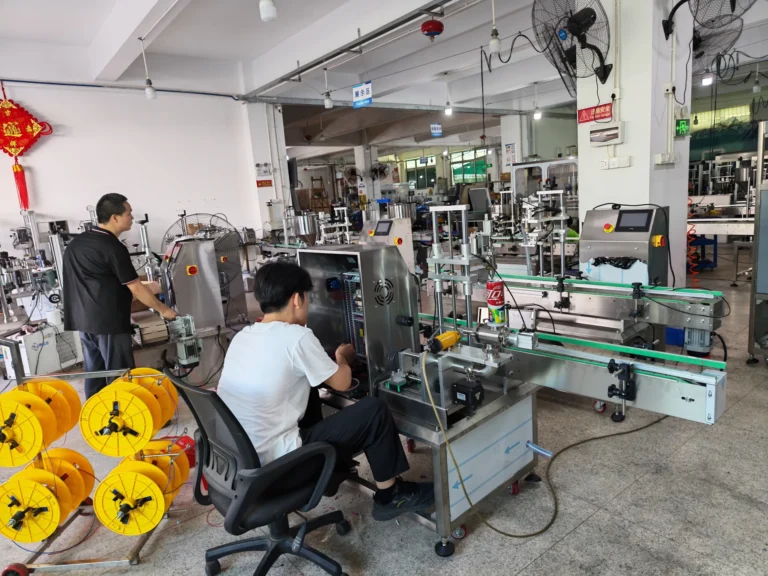
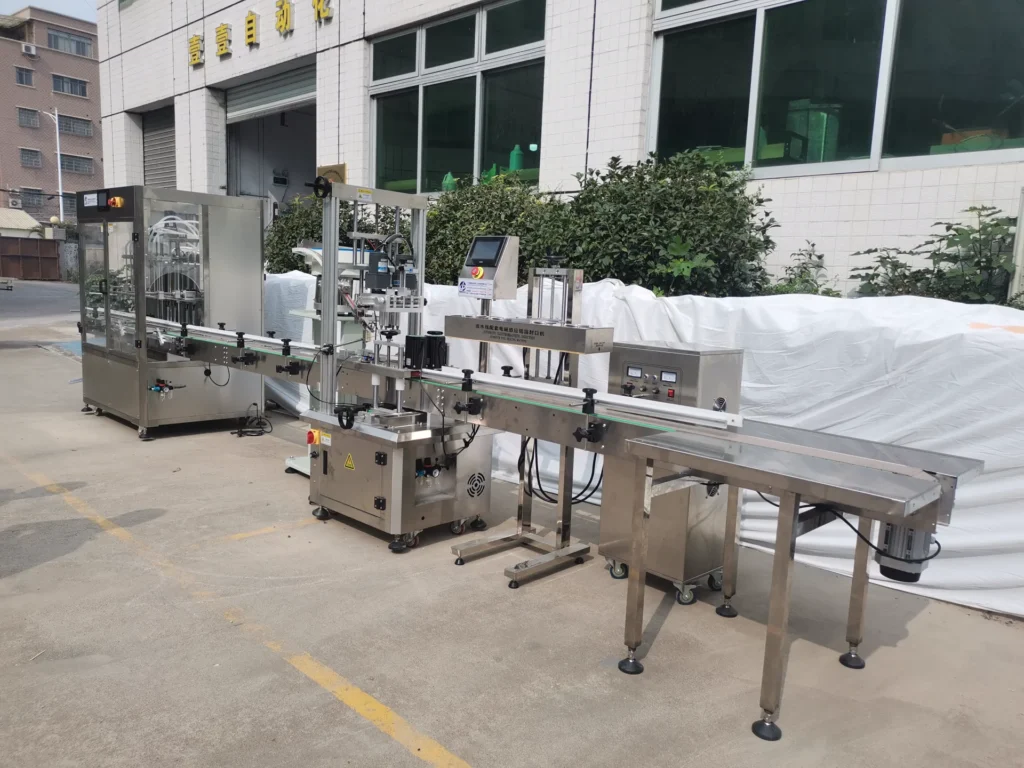
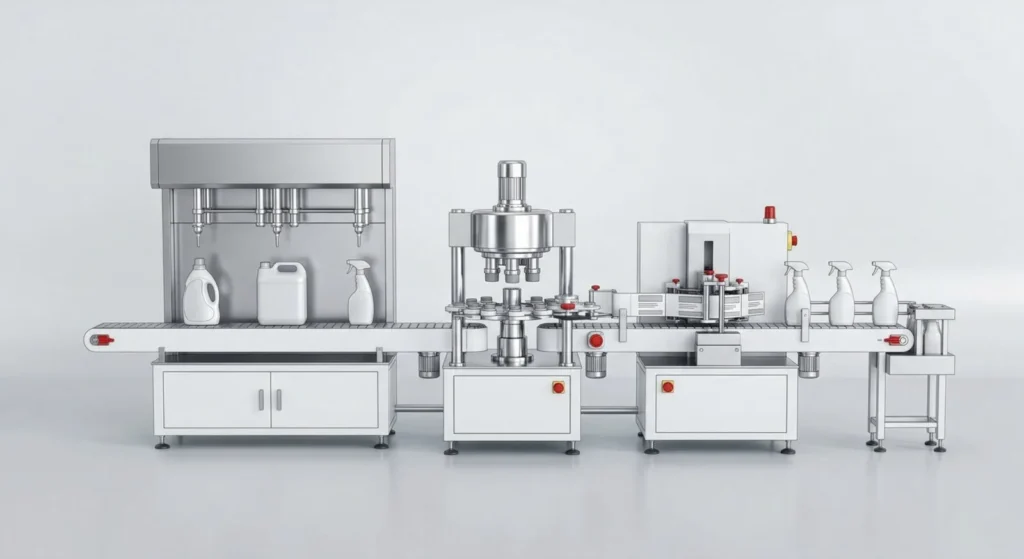
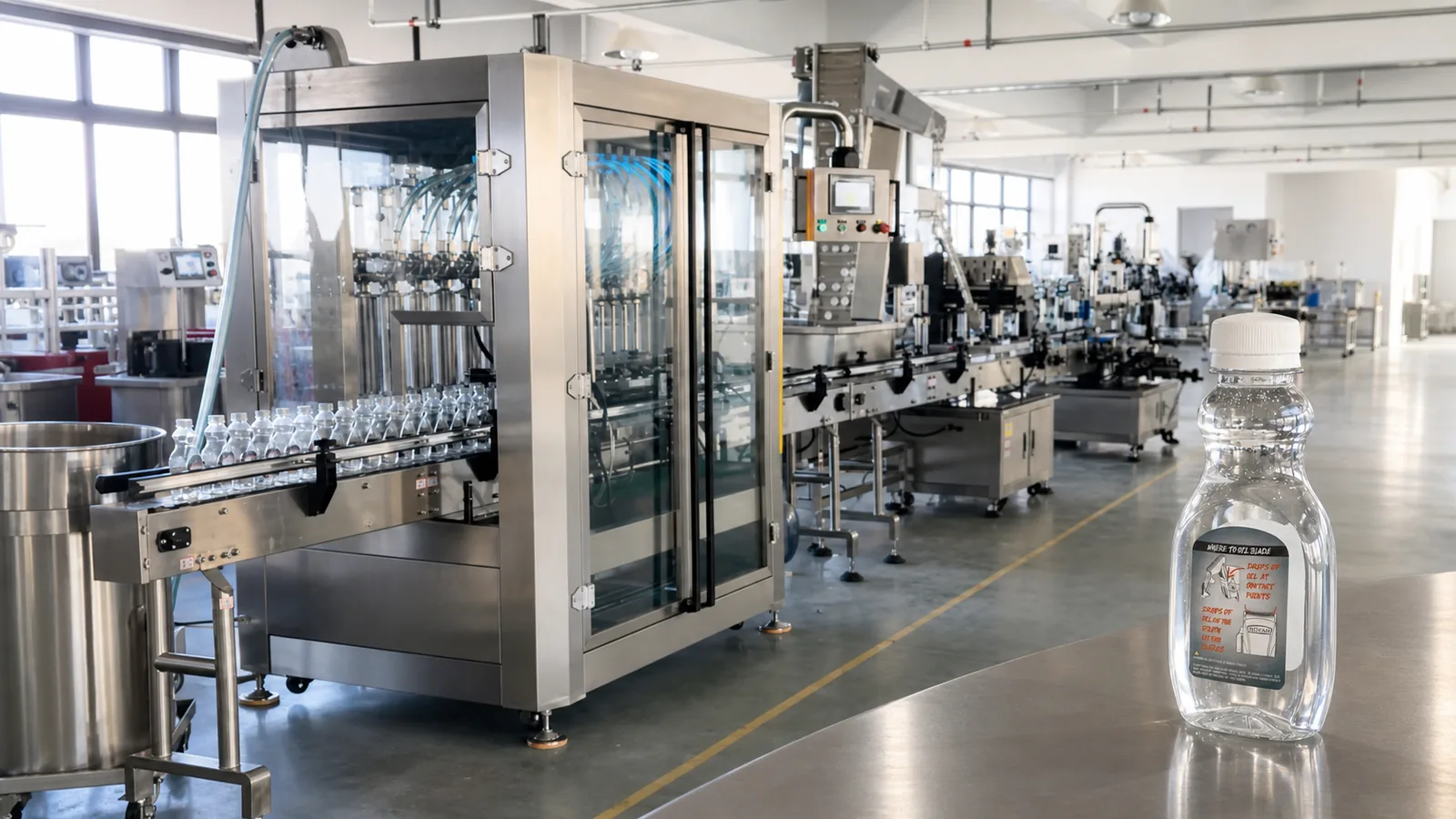
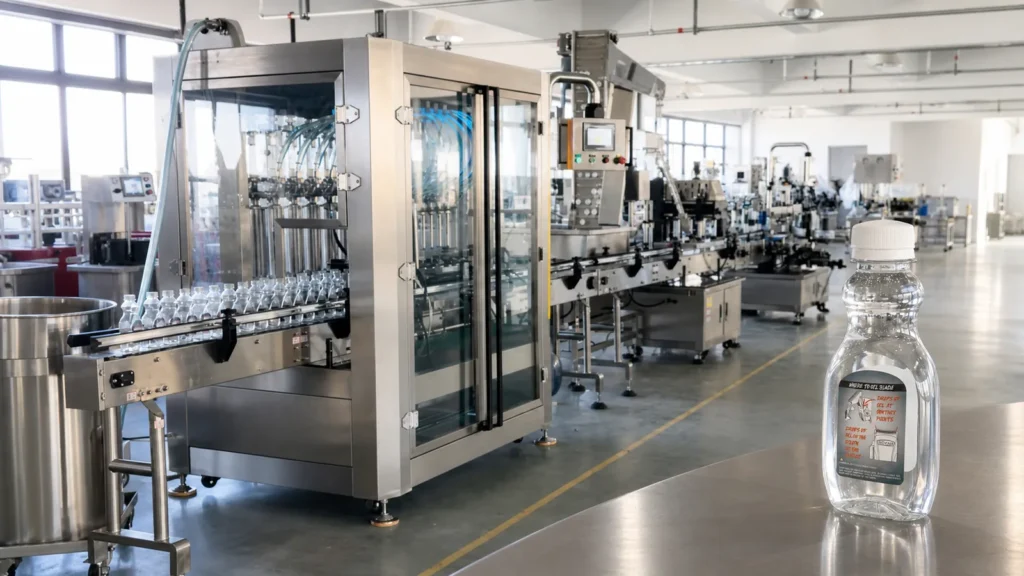
LEKA Pack Line configured a connected lubricant filling line for razor oil for an Australian daily chemical products manufacturer. The line combines eight-head servo rotary-pump filling, automatic screw-cap sorting and placement, single-head capping and double-side labeling for irregular PET bottles from 100 ml to 1 L, with a target output of 5,000 bottles per hour.
- Product
- Razor Lubricant / Electric Shaver Lubricating Oil
- Customer Target Output
- 5,000 bottles per hour
- Designed Line Capacity
- 5,600–5,800 bottles per hour (verified 500 ml FAT range)
- Country / Region
- Australia
Automatic Lubricant Oil Filling, Capping and Labeling Line
Project Overview
Key project data for equipment selection and line planning.
- Application / Industry
- Daily Chemical Products Manufacturer
- Country / Region
- Australia
- Product
- Razor Lubricant / Electric Shaver Lubricating Oil
- Customer Target Output
- 5,000 bottles per hour
- Designed Line Capacity
- 5,600–5,800 bottles per hour (verified 500 ml FAT range)
- Customer Industry
- Daily chemical products manufacturing
- Delivery Date
- August 2025
- Product Viscosity
- Water-like, low-viscosity liquid
- Compatible Filling Range
- 100 ml–1 L
- FAT Test Bottle
- 500 ml irregular PET bottle
- Bottle Opening
- 38 mm internal diameter
The customer’s target output was 5,000 bottles/hour. During a two-hour continuous FAT using the actual razor lubricant and 500 mL bottles, the project-specific eight-head filling line operated at 5,600–5,800 bottles/hour with recorded ±1% filling accuracy. These FAT results apply to this delivered configuration; output for other volumes or container formats is confirmed separately.
Customer Requirements
What the customer needed the line to handle and achieve.
The Australian daily chemical products manufacturer required a connected filling and packaging line for water-like razor lubricant. The line needed to handle irregular PET bottles from 100 ml to 1 L with a 38 mm internal bottle opening, screw caps and separate front and back labels.
The confirmed target output was 5,000 bottles per hour with a filling accuracy requirement of ±1%. The electrical supply was specified as three-phase, 415 V, 50 Hz.
Customer Challenge and Project Goal
The production constraints that shaped the proposed solution.
Production Challenge
The customer needed to replace a slow semi-automatic process with a more efficient connected line.
The main requirements were to increase production speed, reduce labor and cleaning demands, improve factory cleanliness, handle water-like razor lubricant, accommodate irregular PET bottles from 100 ml to 1 L, automate screw-cap handling and apply separate front and back labels consistently.
Required Improvement
Before: The customer relied on semi-automatic filling equipment. Limited production speed, repeated manual handling and cleaning increased labor requirements, operating time and cleaning costs, while making it more difficult to maintain an orderly production area.
After: The connected filling, cap handling, capping and double-side labeling line increased output and reduced manual handling between production stages. During FAT, the line achieved 5,600–5,800 bottles per hour using 500 ml bottles and the actual lubricant product.
Why This Configuration Was Selected
How the product, package and output target influenced equipment selection.
The customer needed to replace a slow semi-automatic filling process with a connected packaging line that could increase output, reduce manual handling and help maintain a cleaner production environment.
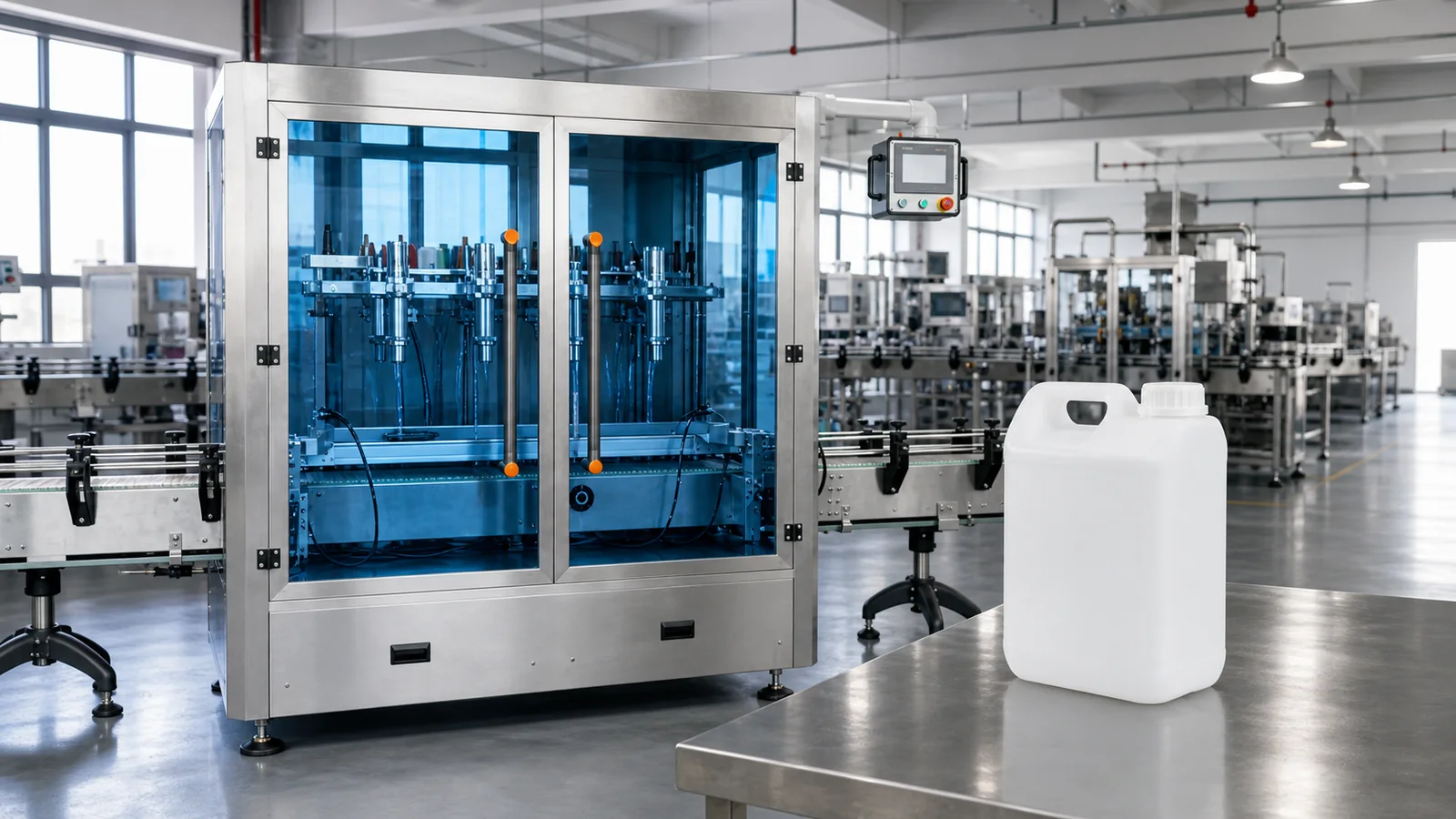
An eight-head servo rotary pump filling machine was selected for the water-like razor lubricant and the required 100 ml–1 L filling range. The servo-controlled system supports flexible volume adjustment, while diving filling nozzles and no-bottle-no-fill control support stable operation with irregular PET containers. Bottle-size changeover at the filling station does not require replacement filling nozzles; operators adjust the bottle-holding mechanism for the selected format.
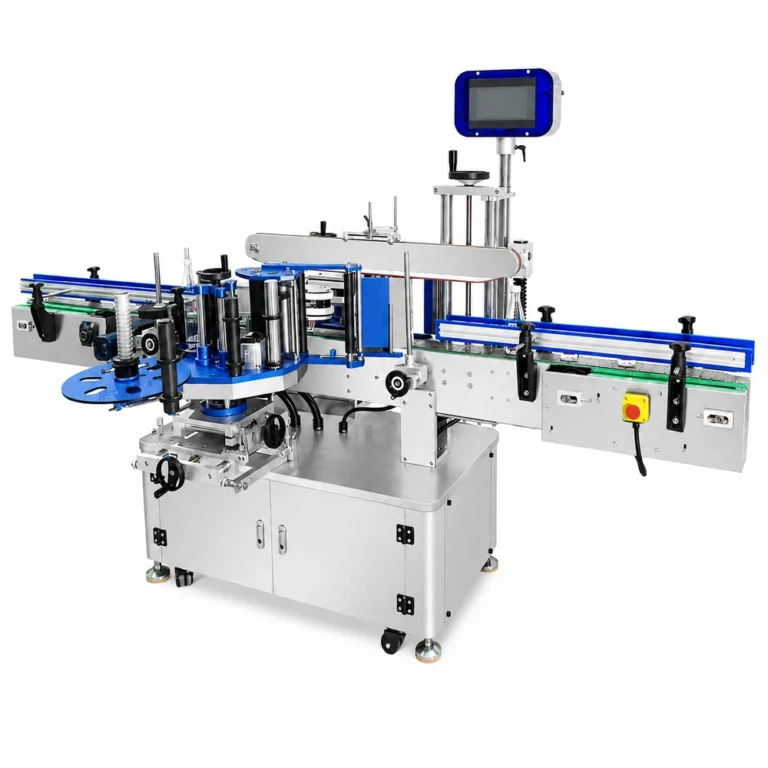
For the screw-cap package, the customer selected automatic cap sorting and cap placement followed by single-head capping. A double-side labeling machine applies the front and back labels and provides a missing-label stop warning.
This configuration was designed for a target output of 5,000 bottles per hour. During a two-hour continuous factory test using 500 ml bottles and the actual lubricant product, the line achieved 5,600–5,800 bottles per hour with a recorded filling accuracy of ±1%.
Complete Line Configuration
The machines and functions included in the proposed packaging process.
| Machine Configuration | Model | Production Use | Project-Specific Requirement |
|---|---|---|---|
| 8-Head Servo Rotary Pump Filling Machine | Project-Specific 8-Head Servo Rotary-Pump Configuration | Meters and fills water-like razor lubricant into irregular PET bottles. | Configured for water-like razor lubricant and the customer's 100 mL–1 L bottle range. The delivered project reached 5,600–5,800 bottles/hour during the two-hour FAT with 500 mL bottles and recorded ±1% filling accuracy. |
| Automatic Cap Sorting, Elevating and Placement System | Project-Specific Cap Handling System | Sorts and elevates screw caps, then places them onto filled bottles. | Configured for the confirmed screw-cap package and connected to the single-head capping station. |
| Single-Head Capping Machine | Project-Specific Single-Head Configuration | Secures the automatically placed screw caps. | Configured for stable bottle transfer and cap tightening with the confirmed irregular PET containers. |
| Double-Side Labeling Machine | LEKA-LB020 | Applies separate front and back self-adhesive labels. | Includes a missing-label stop warning for the confirmed bottle format. |
| Connected Conveyor and Control System | Transfers bottles between filling, cap handling, capping and labeling stages. | Coordinates the connected process for a target output of 5,000 bottles per hour. |
Quality Control and Project Results
Verified factory-test and acceptance information for this packaging line.
500 ml bottles, actual razor lubricant, two-hour continuous test
Recorded during the confirmed FAT conditions
Customer reviewed and confirmed the FAT remotely
Quality Inspection
The connected line was continuously tested for two hours using 500 ml bottles and the customer’s actual razor lubricant product. Filling performance was checked against the recorded ±1% accuracy requirement, while cap placement, capping and front-and-back label application were reviewed during operation.
The labeling machine provides a missing-label stop warning rather than an automatic rejection system. The customer reviewed the FAT remotely and confirmed that the required operating result had been achieved before shipment.
Acceptance Result
The line was continuously tested for two hours using 500 ml bottles and the customer’s actual razor lubricant product.
The customer reviewed the test remotely and confirmed that the required performance had been achieved before shipment.
Project Result Summary
The delivered line replaced the customer’s slower semi-automatic process with connected filling, automatic screw-cap handling, single-head capping and double-side labeling.
During the confirmed two-hour FAT, the line achieved 5,600–5,800 bottles per hour with a recorded filling accuracy of ±1%, exceeding the target output of 5,000 bottles per hour.
Customer Feedback
The line performs as expected and is very easy to operate. It is straightforward to maintain, and the simple machine structure makes setup and adjustment easy.
How the Packaging Line Works
The connected production sequence from container infeed to finished product.
Manual Empty Bottle Loading
Operators place empty irregular PET bottles onto the infeed conveyor. Automatic bottle infeed equipment was not included in this project but can be integrated on request.
Product Supply
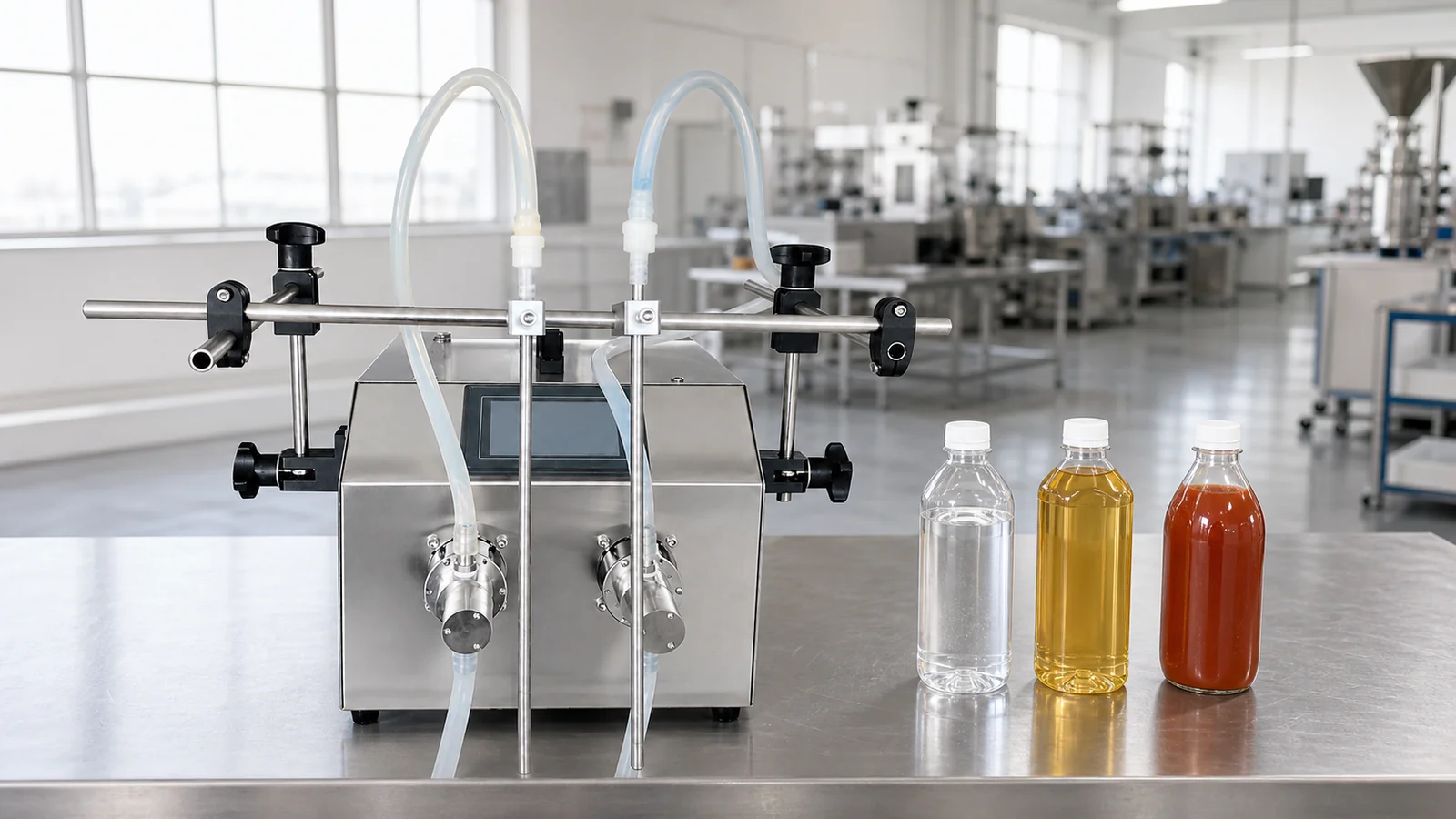
The customer’s material-transfer pump supplies the razor lubricant to the filling system.
Servo Rotary-Pump Filling
Eight servo-controlled rotary pumps dispense the selected filling volume through diving nozzles. No-bottle-no-fill control prevents dispensing when a container is not detected.
Automatic Cap Sorting and Placement
The selected cap-handling unit sorts the screw caps, feeds them to the line and places them onto the filled bottles.
Single-Head Capping
Each positioned screw cap is secured by the single-head capping machine before the bottle enters the labeling section.
Front and Back Labeling
The double-side labeling machine applies separate front and back labels and stops the process with a warning when a label is missing.
Finished Product Discharge
Finished bottles leave the labeling section for manual collection. Automatic bottle collection can be supplied as an optional line integration.
Key Engineering Features
Project-specific functions that improve stability, accuracy, safety and ease of operation.
Eight Servo-Controlled Rotary Pumps
The eight-head filling system supports flexible volume settings across the confirmed 100 ml–1 L range and recorded a filling accuracy of ±1% during FAT.
Diving Filling Nozzles
The filling nozzles enter the bottle during the filling cycle to support controlled product transfer into the irregular PET containers.
No-Bottle-No-Fill Control
The filling cycle is inhibited when a bottle is not detected at the required position.
Automatic Screw-Cap Handling
The customer-selected system combines automatic cap sorting, feeding and placement before single-head capping.
Missing-Label Stop Warning
The double-side labeling machine provides a stop warning if a required front or back label is missing.
Filling-Section Safety Controls
The filling machine is fitted with protective access doors, a door-open stop interlock, emergency-stop controls and fault alarms.
Simplified Filling Changeover
Changing between the confirmed bottle sizes does not require filling-nozzle replacement; operators adjust the bottle-holding mechanism for the selected format.
Packaging Specifications
Container, closure and labeling details considered during line configuration.
Container Type
- Bottle
Container Shape
- Flat Bottle
- Irregular Bottle
Cap Type
- Screw Cap
Labeling Method
- Double Side Labeling
Delivered Equipment and Line Scope
The supplied equipment and integration boundary for this project.
The delivered line included an eight-head servo rotary pump filling machine, an automatic screw-cap sorting and placement system, a single-head capping machine, a double-side labeling machine and the connected conveyor and control system.
The material-transfer pump was supplied by the customer.
Automatic bottle infeed, automatic finished-product collection and batch/date coding were not included in the delivered scope and remain available as optional line integrations.
Operation, Changeover and Site Requirements
Information used to plan cleaning, package changeover, utilities and installation.
Materials, Cleaning and Safety
Product-contact parts are manufactured from SUS304L. The filling machine is equipped with protective access doors and a door-open stop interlock. Emergency-stop controls and fault alarms are provided for operation and troubleshooting.
Changeover and Optional Equipment
The filling station supports the confirmed 100 ml–1 L bottle range without replacing the filling nozzles. Operators adjust the bottle-holding mechanism to match the selected container size.
Available project options include automatic bottle infeed, automatic bottle collection, batch/date coding, storage-tank level control, automatic case sealing and automatic palletizing. These options were not included unless stated in the delivered line scope.
- Electrical Supply
- Three-phase, 415 V, 50 Hz
- Compressed Air Supply
- 0.5–0.9 MPa
- Preliminary Electrical Provision
- Approx. 25 kW site capacity recommended; final load subject to selected equipment and electrical drawings
- Recommended Installation Area
- Minimum 30 m², subject to final layout and service clearances
Delivery and Technical Support
Support available for installation, commissioning, training and continued operation.
Project support included factory acceptance testing, recorded operation videos using the actual product, operating manuals, electrical drawings, commonly required spare parts, free remote operation training, remote video commissioning guidance and continued remote troubleshooting support. On-site installation in Australia is available as an optional service.
Need a Packaging Line Configured for Your Product?
Send your product, container, cap, label, filling volume and target output. LEKA Pack Line will review the details before recommending a practical machine configuration.
Request a Line ProposalRelated Machines and Packaging Projects
Explore equipment and line solutions that can be configured for similar products and packages.