Packaging Line Project
Thailand 3-in-1 Edible Oil Filling Line for 1L/2L Bottles
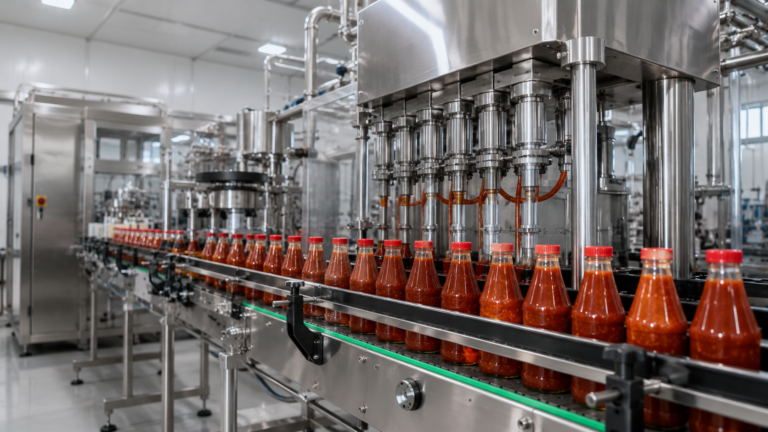
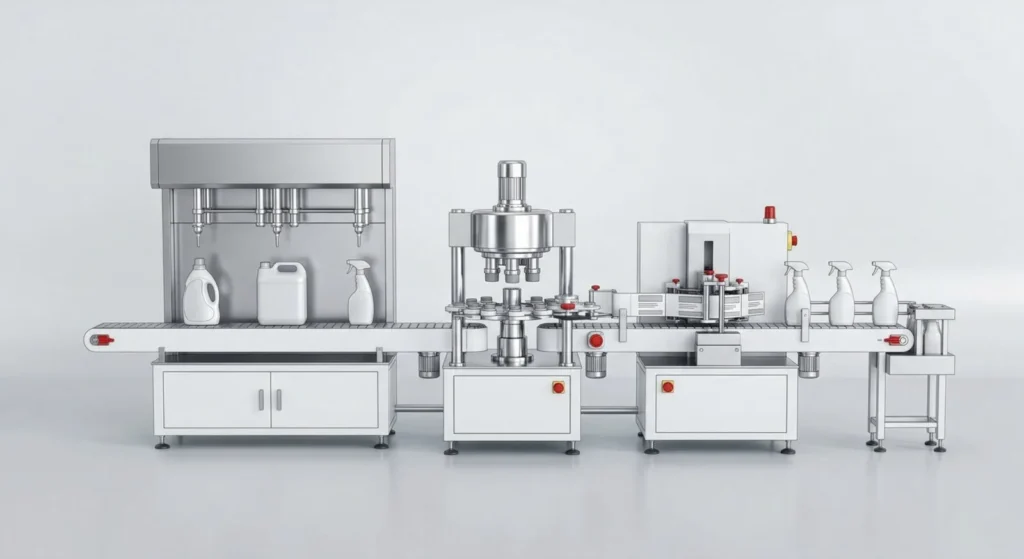
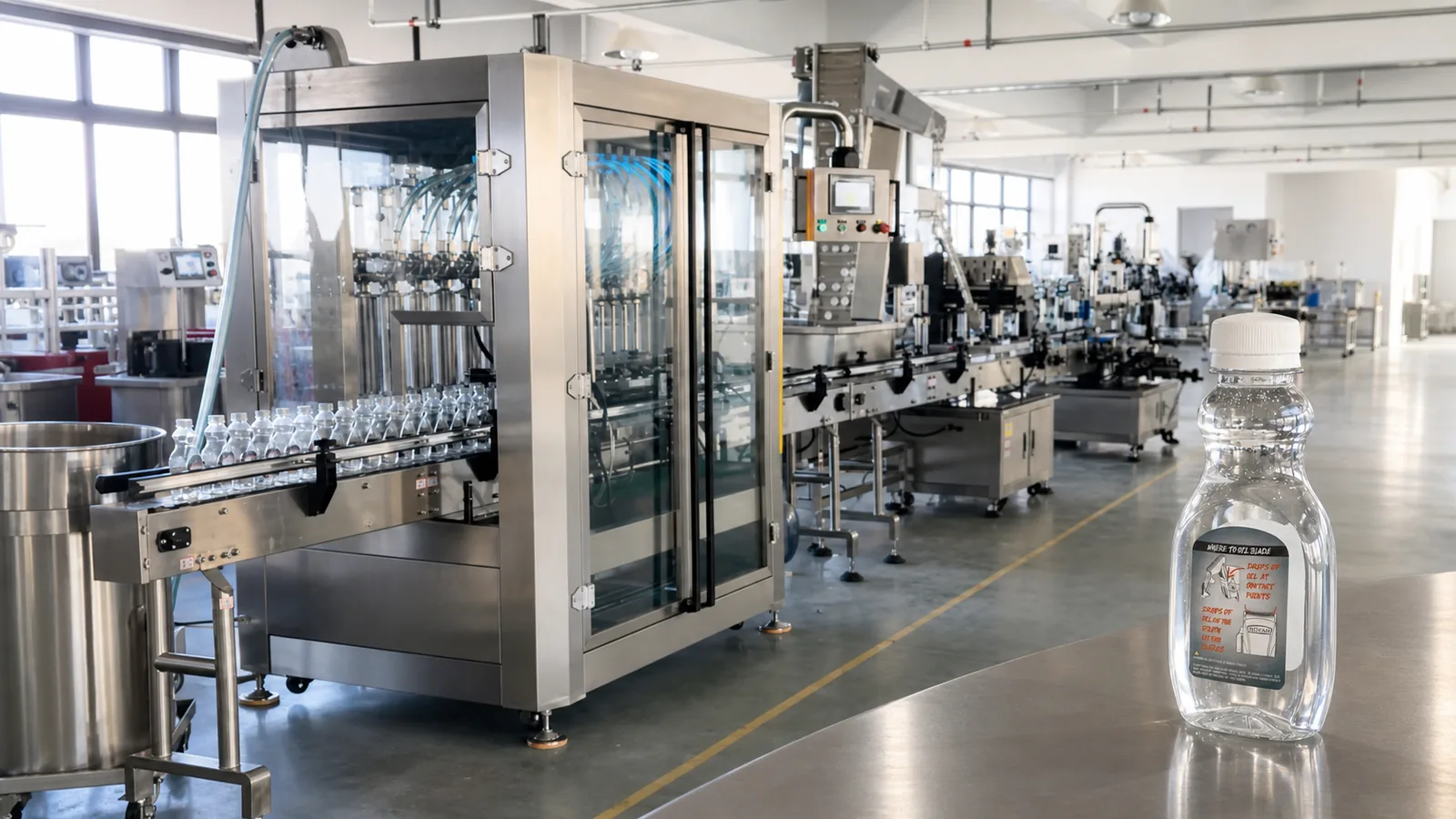
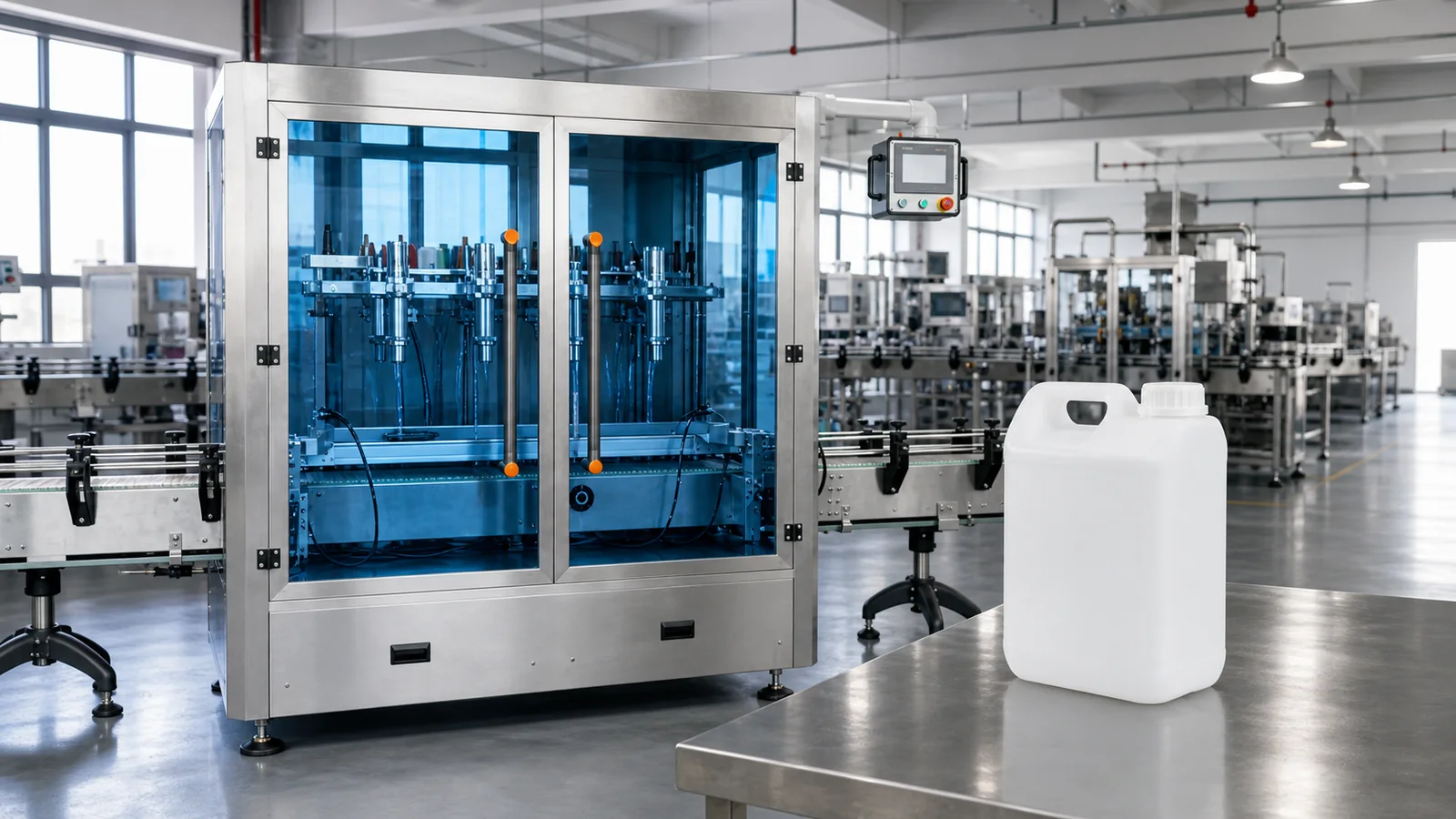
This edible oil bottling project was planned for a customer in Thailand. The primary line combines bottle handling, edible oil filling and capping in a compact 3-in-1 rotary system for 1 L and 2 L bottles.
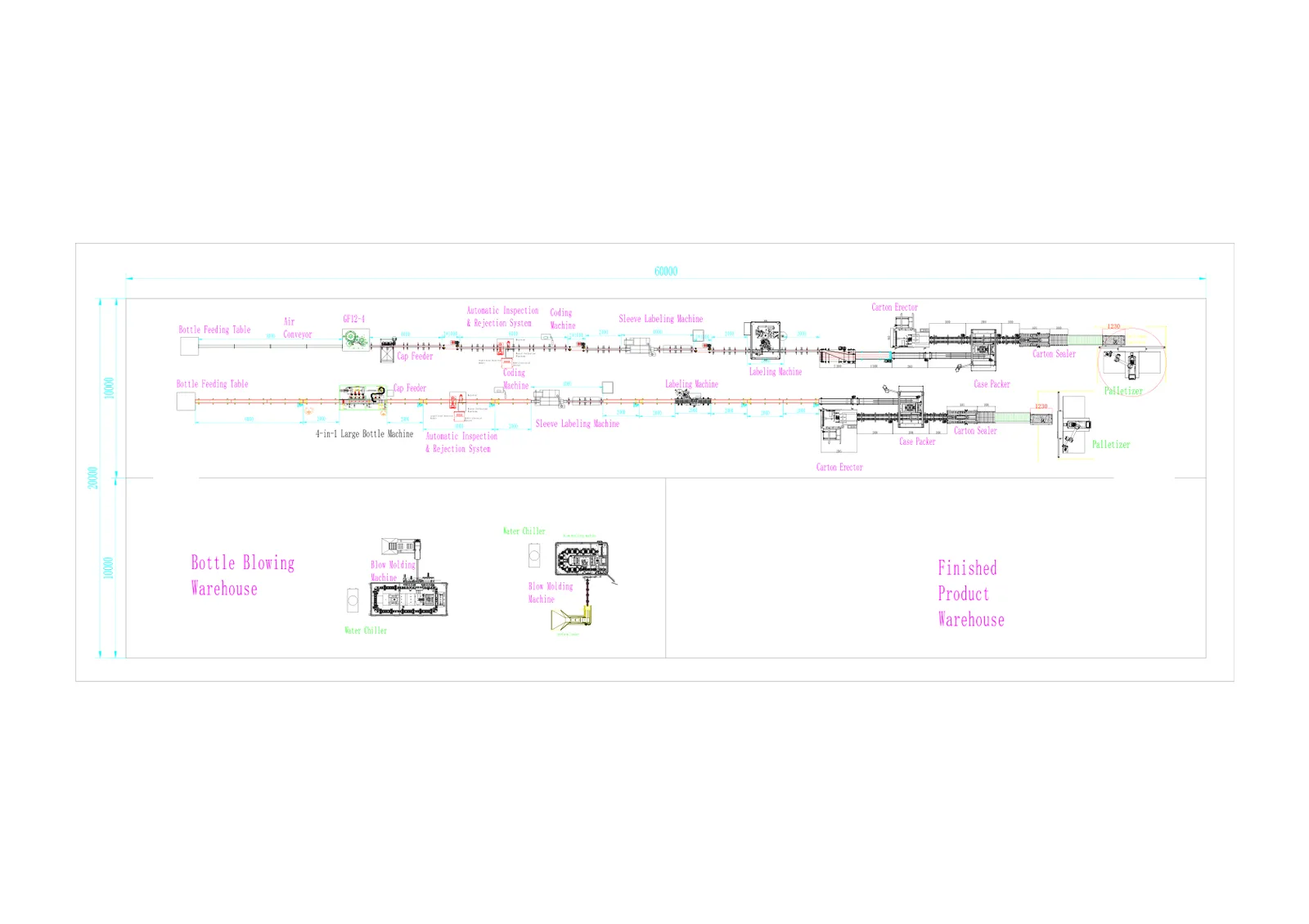
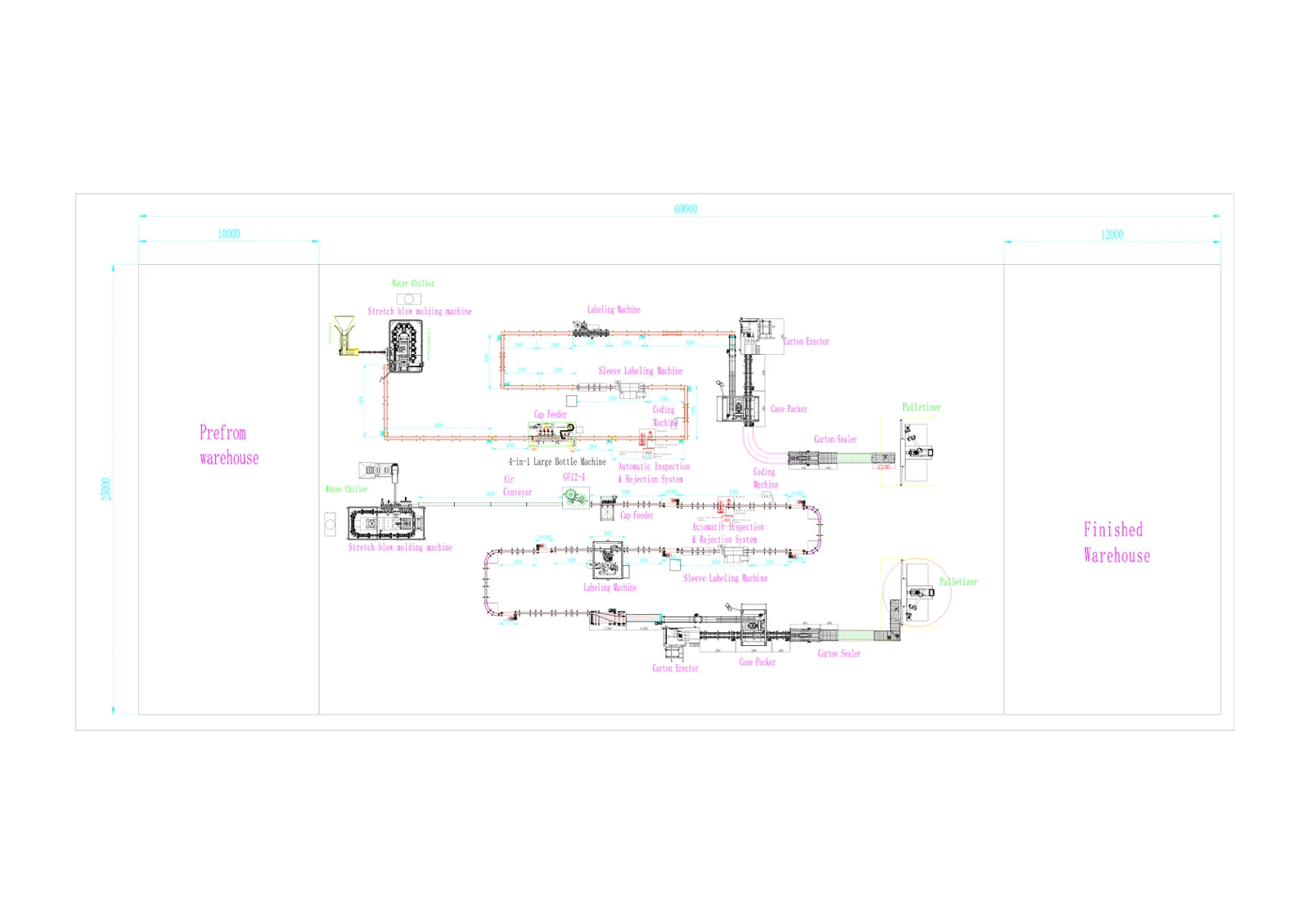
The 1 L configuration is rated at 4,000 bottles per hour. The customer’s target of 20,000 bottles over an eight-hour shift requires an average of 2,500 bottles per hour, so the selected 1 L capacity provides room for practical production planning. LEKA also prepared two full-factory layout concepts covering bottle production, packaging, end-of-line handling and finished-product storage.
- Product
- Edible oil in 1 L and 2 L clear plastic bottles
- Customer Target Output
- 20,000 bottles per eight-hour shift; equivalent to a required average of 2,500 bottles per hour.
- Designed Line Capacity
- 1 L configuration: 4,000 bottles per hour. The 2 L output must be confirmed against the bottle sample, filling recipe and final line settings.
- Country / Region
- Thailand
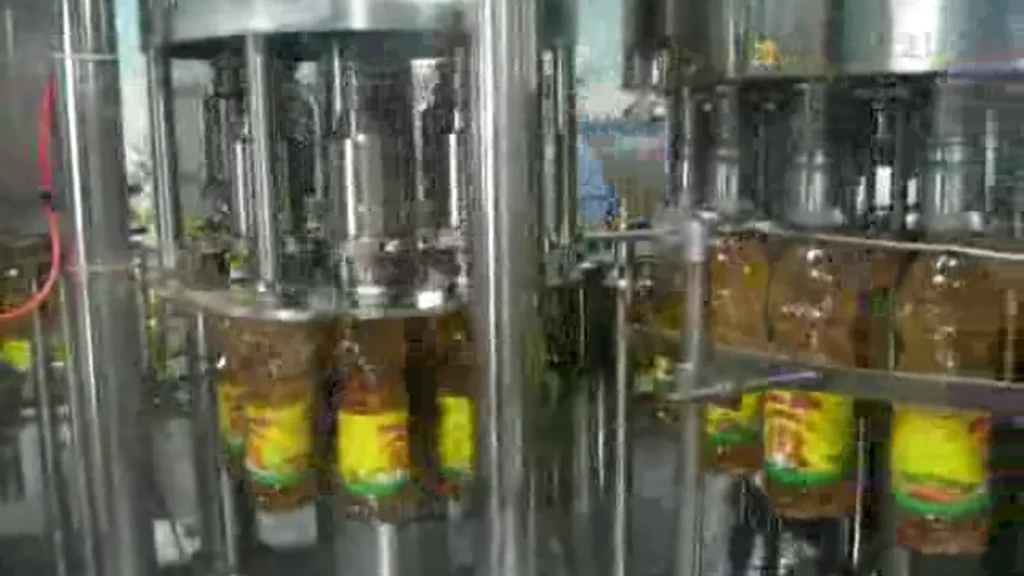
Thailand 3-in-1 Edible Oil Filling and Capping Line
Project Overview
Key project data for equipment selection and line planning.
- Application / Industry
- Edible Oil Production
- Country / Region
- Thailand
- Product
- Edible oil in 1 L and 2 L clear plastic bottles
- Customer Target Output
- 20,000 bottles per eight-hour shift; equivalent to a required average of 2,500 bottles per hour.
- Designed Line Capacity
- 1 L configuration: 4,000 bottles per hour. The 2 L output must be confirmed against the bottle sample, filling recipe and final line settings.
- Project Location
- Thailand
- Bottle Volumes
- 1 L and 2 L
- Primary Line
- Project-specific 3-in-1 rotary filling line
- Rated 1 L Output
- 4,000 bottles per hour
- Shift Target
- 20,000 bottles over eight hours
- Required Average
- 2,500 bottles per hour
- Factory Layout Concepts
- 60 m × 20 m straight arrangement and 60 m × 25 m compact arrangement
The stated 4,000 BPH rating applies only to the 1 L configuration. At that rating, the eight-hour target uses 62.5% of nominal hourly capacity. Actual net shift output depends on operating efficiency, stoppages, bottle and cap supply, product feed, changeovers, cleaning and maintenance.
Customer Requirements
What the customer needed the line to handle and achieve.
Configure one edible oil line for both 1 L and 2 L bottles, achieve a 20,000-bottle target within an eight-hour shift, and plan the complete factory flow from preforms and bottle production through filling, inspection, labeling, coding, case packing, palletizing and finished-product storage.
Customer Challenge and Project Goal
The production constraints that shaped the proposed solution.
Production Challenge
Key engineering priorities included stable handling of 1 L and 2 L bottles, clean edible oil filling, reliable screw-cap placement, simple format adjustment, coordinated downstream inspection and packing, and a factory layout that avoided unnecessary product movement.
Required Improvement
The customer needed more than a standalone filler.
The project had to support two retail bottle volumes, connect filling and cap handling, reserve enough capacity for the daily target, and organize the complete material flow across bottle production, packaging and warehouse areas.
Why This Configuration Was Selected
How the product, package and output target influenced equipment selection.
The 3-in-1 rotary platform keeps the main bottle processing, filling and capping functions in a compact section while supporting the two required bottle volumes.
The stated 4,000 BPH rating for 1 L bottles exceeds the 2,500 BPH average needed to reach 20,000 bottles in eight hours.
The two factory-layout concepts then connect upstream bottle production and downstream inspection, labeling, packing and storage around the available floor plan.
Complete Line Configuration
The machines and functions included in the proposed packaging process.
| Machine Configuration | Model | Production Use | Project-Specific Requirement |
|---|---|---|---|
| Bottle Production and Infeed Area | Factory-layout integration | Provides preform storage, bottle blowing, cooling and controlled transfer of empty bottles to the packaging line. | Arrange preform and bottle production separately from finished-product storage while maintaining clear access for utilities and material movement. |
| 3-in-1 Rotary Edible Oil Filling Line | Project-specific | Handles the main bottle processing, edible oil filling and capping sequence in one compact rotary section. | Planned for 1 L and 2 L bottle formats and screw caps, with a rated output of 4,000 BPH for the 1 L format; final format parts follow sample confirmation. |
| Automatic Cap Feeding | Project-specific | Sorts and supplies screw caps to the capping section. | Match the approved cap dimensions, cap orientation and capping requirements for both bottle formats. |
| Inspection, Rejection and Coding | Line integration | Checks finished bottles at planned inspection points, removes nonconforming packs and applies production coding. | Position inspection and coding after filling and capping without interrupting the required conveyor flow. |
| Labeling System | Format-specific | Applies the selected label format to 1 L and 2 L bottles. | Coordinate bottle guides, label position and change parts with the approved bottle drawings and labels. |
| Case Packing and Carton Sealing | End-of-line integration | Forms cartons, packs finished bottles and seals cases for warehouse transfer. | Match the planned case pattern, carton size, line direction and available end-of-line space. |
| Palletizing and Finished-Product Flow | Factory-layout integration | Transfers sealed cartons to palletizing and the allocated finished-product warehouse zone. | Maintain a direct, safe material route from packaging to finished-product storage in both layout alternatives. |
More Factory Testing and Production Evidence
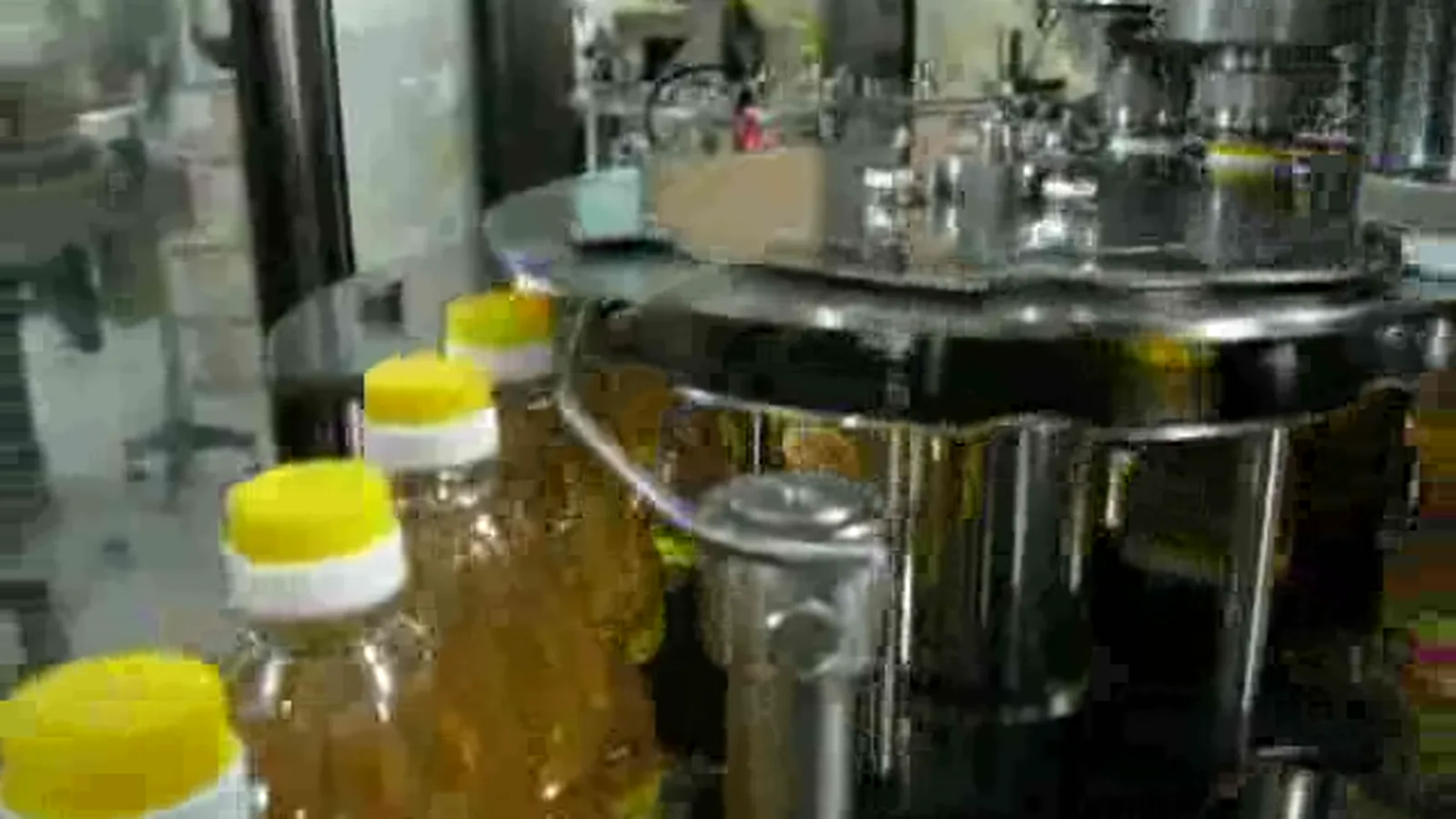
Additional project videos and images show package handling, machine operation and finished-product quality.
Quality Control and Project Results
Verified factory-test and acceptance information for this packaging line.
Project specification
Project specification; not applied to the 2 L format
Customer production requirement
Calculated as 20,000 bottles ÷ 8 hours
Calculated as 2,500 ÷ 4,000 before operating-efficiency allowances
Dimensions shown in the two supplied factory-layout drawings
Quality Inspection
The factory layouts include planned automatic inspection and rejection after the main line. Final inspection points can cover bottle presence, fill condition, cap presence, code legibility, label position and downstream pack quality according to the approved project scope. No numerical accuracy, reject-rate or uptime result is claimed from the supplied video or drawings.
Project Result Summary
LEKA planned a Thailand edible oil project around one 3-in-1 rotary line for 1 L and 2 L bottles.
The stated 1 L rating of 4,000 BPH provides nominal capacity above the 2,500 BPH average needed to reach 20,000 bottles in eight hours.
Two full-factory layouts coordinate bottle production, packaging, end-of-line handling and warehouse flow while preserving a separate confirmation step for the 2 L output and final downstream equipment scope.
How the Packaging Line Works
The connected production sequence from container infeed to finished product.
Preform Storage and Bottle Production
Move preforms from the allocated warehouse area through the planned bottle-blowing and cooling section.
Empty-Bottle Feeding
Feed approved 1 L or 2 L bottles onto the conveyor and transfer them toward the rotary line.
3-in-1 Bottle Processing
Run the main bottle handling, edible oil filling and screw-cap application sequence within the integrated rotary section.
Inspection and Rejection
Check the planned bottle, fill and cap conditions and remove packs that do not meet the selected criteria.
Coding and Labeling
Apply production information and the selected label format for the active bottle size.
Case Packing
Erect cartons, arrange finished bottles in the required case pattern and seal the cartons.
Palletizing
Build transport-ready pallet loads according to the approved carton and pallet pattern.
Finished-Product Storage
Move finished pallets into the allocated warehouse zone using the planned one-way material flow.
Key Engineering Features
Project-specific functions that improve stability, accuracy, safety and ease of operation.
Capacity Matched to the Shift Target
The 20,000-bottle eight-hour target needs a 2,500 BPH average, while the stated 1 L configuration is rated at 4,000 BPH.
Two Bottle Volumes
The project covers both 1 L and 2 L bottles; final format settings and change parts follow bottle and cap sample confirmation.
Compact 3-in-1 Rotary Section
The main bottle processing, filling and capping sequence is concentrated in one rotary line section to support coordinated transfer.
Two Factory Layout Alternatives
LEKA prepared a straighter 60 m × 20 m concept and a compact 60 m × 25 m concept with conveyor turns.
Full Material-Flow Planning
The drawings connect preform storage, bottle production, filling, inspection, labeling, coding, packing, palletizing and finished-product storage.
Expandable End-of-Line Integration
Inspection, coding, labeling, case packing, carton sealing and palletizing can be matched to the approved package and factory plan.
Packaging Specifications
Container, closure and labeling details considered during line configuration.
Container Type
- Bottle
Container Shape
- Square Bottle
- Sample Required
Cap Type
- Screw Cap
Labeling Method
- Wrap-around Labeling
Delivered Equipment and Line Scope
The supplied equipment and integration boundary for this project.
The confirmed project scope includes the 1 L/2 L 3-in-1 edible oil line and full-factory layout engineering.
The layout drawings cover preform and bottle production, filling and capping, inspection and rejection, coding, labeling, carton handling, case packing, carton sealing, palletizing and warehouse allocation.
Final equipment supply for each downstream module should follow the approved commercial and technical scope.
Operation, Changeover and Site Requirements
Information used to plan cleaning, package changeover, utilities and installation.
Materials, Cleaning and Safety
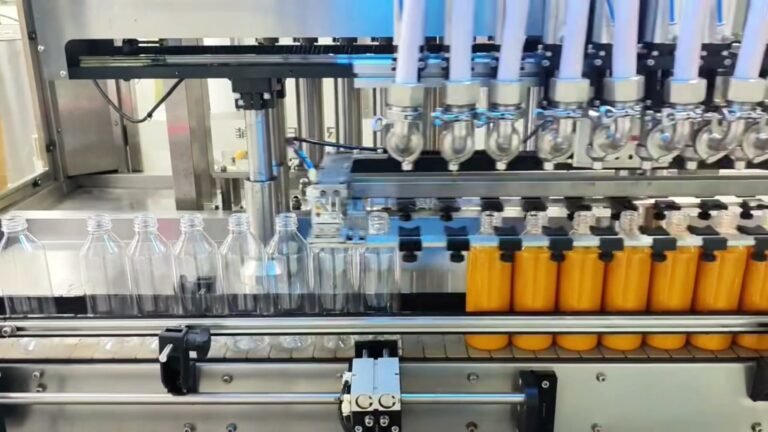
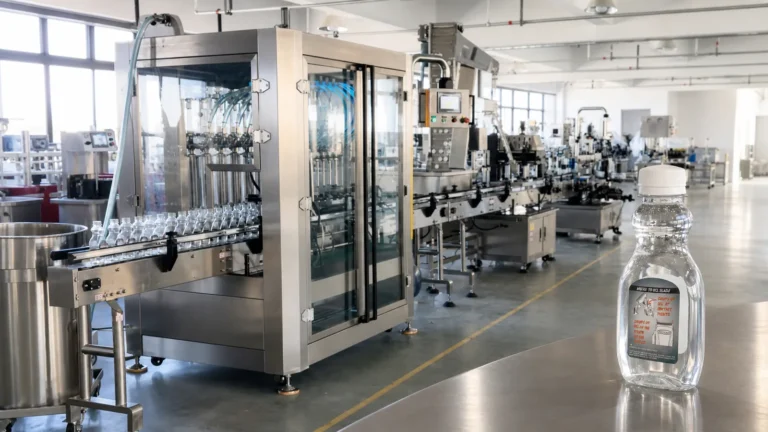
The supplied video shows enclosed stainless-steel rotary equipment handling edible oil in clear plastic bottles. Final product-contact material grade, seals, lubricant compatibility, cleaning method, food-contact documentation and guarding requirements should be confirmed against the customer’s oil specification and local factory standards before manufacture.
Changeover and Optional Equipment
Changeover between 1 L and 2 L bottles can involve recipe selection, bottle guides, star-wheel or format parts, filling settings, cap-feeder adjustment and label setup. The 2 L hourly output should be confirmed after bottle, cap and product samples are approved.
Additional inspection, coding, sleeve labeling, pressure-sensitive labeling, case packing and palletizing modules can be integrated according to the final package and factory layout.
- Layout Option A
- Approximately 60,000 × 20,000 mm; straighter line arrangement
- Layout Option B
- Approximately 60,000 × 25,000 mm; compact arrangement with conveyor turns
- Production Plan
- 20,000 bottles over an eight-hour shift; 2,500 BPH required average
- Electrical and Compressed Air
- Configure to the final Thailand site supply and approved machine schedule
- Bottle-Blowing Utilities
- Coordinate cooling-water and preform-handling requirements with the selected blow-molding equipment
Delivery and Technical Support
Support available for installation, commissioning, training and continued operation.
For this project, LEKA prepared full-factory layout alternatives around the customer’s bottle volumes, shift target and material flow. Similar projects can include bottle and cap sample review, line balancing, electrical drawings, operating documentation, factory testing, remote commissioning guidance and spare-parts planning according to the agreed order scope.
Request a complete edible oil bottling line plan. Send your oil type, bottle and cap samples, filling volumes, hourly target, voltage and factory dimensions.
Need a Packaging Line Configured for Your Product?
Send your product, container, cap, label, filling volume and target output. LEKA Pack Line will review the details before recommending a practical machine configuration.
Request a Line ProposalRelated Machines and Packaging Projects
Explore equipment and line solutions that can be configured for similar products and packages.