Hot Melt vs Pressure-Sensitive Labeling Machine: Which Is Better for Your Bottles?
Start with hot melt when your project uses a wrap-around label and long runs of a stable bottle format. Start with pressure-sensitive labeling when you need separate front and back labels, flexible decoration or frequent product changes. Then compare both options using your actual bottles, label samples and production schedule.
For a factory buying a labeling machine, the decision affects more than appearance. It determines which label stock you order, which parts need changing and how the labeler fits after filling and capping. This hot melt vs pressure-sensitive labeling machine guide helps you turn those requirements into a clear equipment request.
The deciding question: Which system can deliver your required number of correctly labeled bottles across a normal shift, including setup, label changes and cleaning?
Use the comparison below to shortlist a method. Confirm the final configuration with a bottle-and-label trial.
Hot Melt vs Pressure-Sensitive Labeling at a Glance
| Selection Factor | Roll-Fed Hot Melt | Pressure-Sensitive |
|---|---|---|
| Label supply | Continuous label web, cut to length at the machine. | Pre-adhesive labels, normally supplied on a release liner. |
| Application | Glue is applied during labeling; the label wraps around the container. | The label separates from its liner and is pressed onto the container. |
| Layout to consider | A body wrap with a controlled overlap seam. | Body wrap, front and back, or other positions with suitable applicators. |
| Production question | How long can you run each bottle-and-label combination? | How often do you change label designs, positions and bottle shapes? |
| Cost items to compare | Printed label web, glue, heating, setup waste, cleaning and change parts. | Converted labels, liner handling, setup waste, cleaning and change parts. |
| Sample test focus | Cut length, overlap, glue transfer and stable bottle handling. | Label release, alignment, adhesion, clear-label detection and bottle handling. |
This comparison covers conventional roll-fed hot melt and liner-backed pressure-sensitive systems. The basic label constructions and application methods are described by Avery Dennison and KHS. [1] [2]
How the Two Labeling Methods Work
Roll-fed hot melt: cut, apply glue and wrap
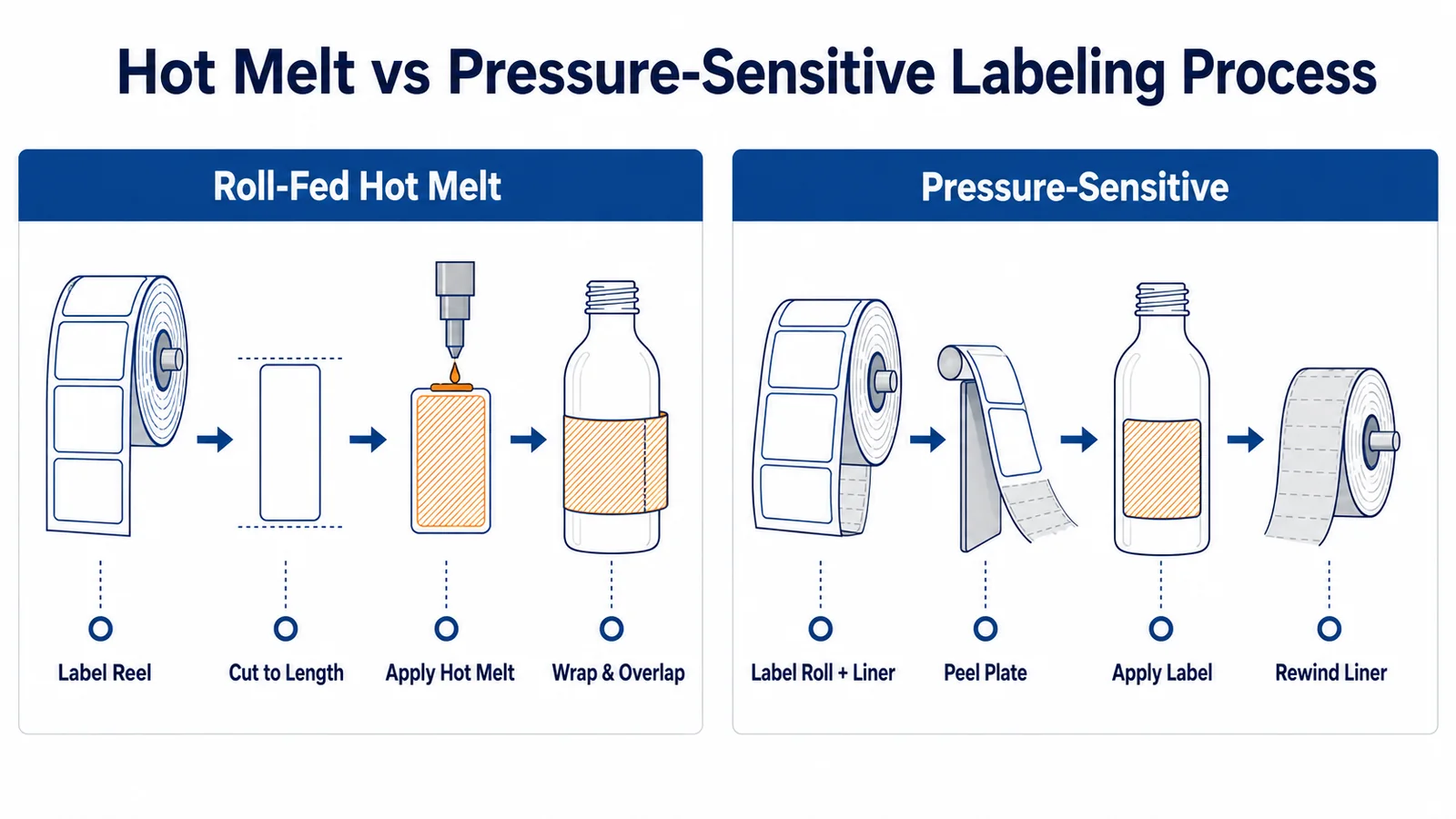
A roll-fed hot melt labeling machine draws printed material from a reel and cuts it to the required length. The machine applies hot melt glue and transfers the label around the bottle. [2]
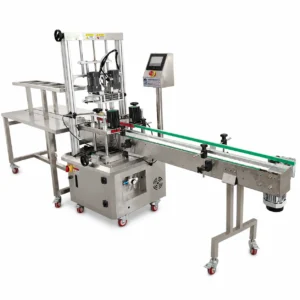
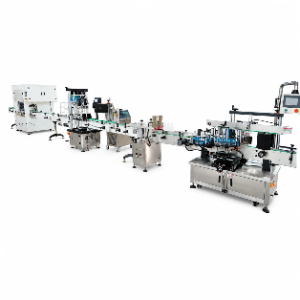
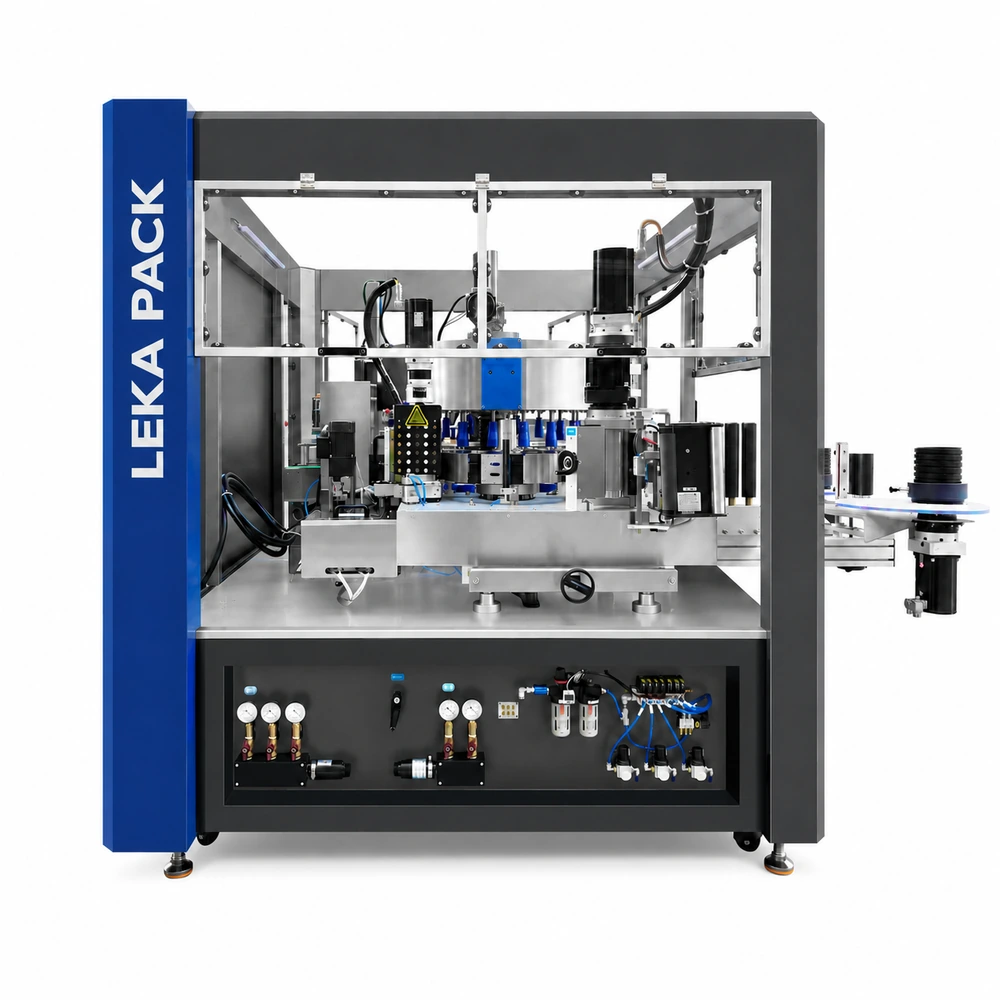
In our hot melt glue labeling machine series, glue is applied at the two ends of the label. The range includes rotary, inline, star-wheel and single-station configurations. The right layout depends on your container and output requirement.
Check the label feed format before ordering. Hot melt equipment can also use pre-cut paper labels; H.B. Fuller documents this application for metal containers. A cut-and-stack label supply is different from a continuous roll, so compatibility must be confirmed for the specific machine. [3]
Pressure-sensitive: peel the label and press it onto the bottle
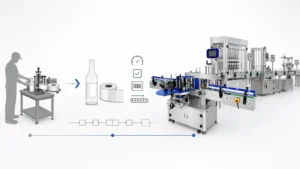
A pressure-sensitive label, also called a self-adhesive label, already carries adhesive. Conventional label stock has a printed face, an adhesive layer and a release liner. The adhesive bonds under pressure without heat or water activation at the labeling step. [1]
The applicator releases the label from the backing and places it on the container. The application arrangement depends on the label position; for example, HERMA describes peel-plate and transfer-pad systems for self-adhesive applications. [4]
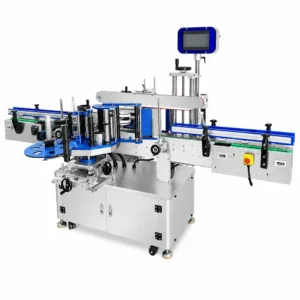
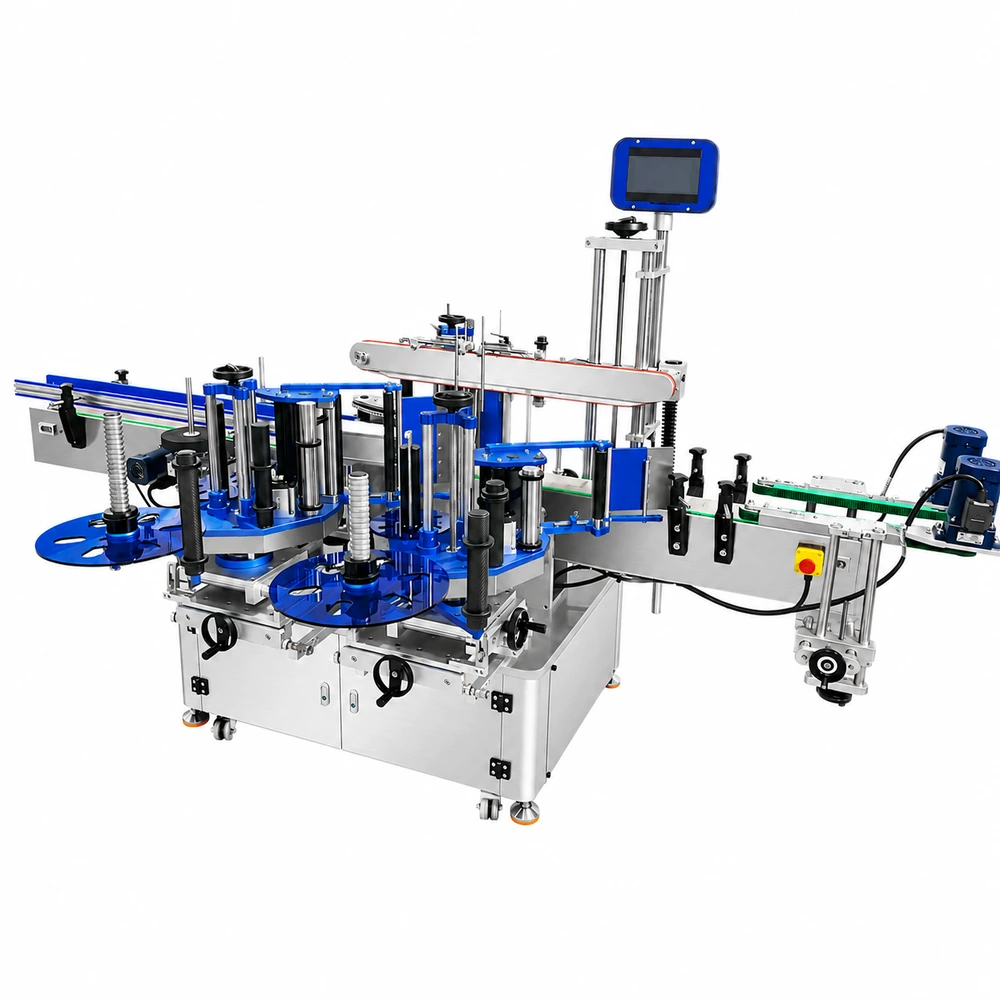
For LEKA projects, compare the round-bottle labeling series for cylindrical containers and the multifunction labeling series for single-side, double-side or three-side arrangements, depending on the model.
Choose by Bottle Shape and Label Position
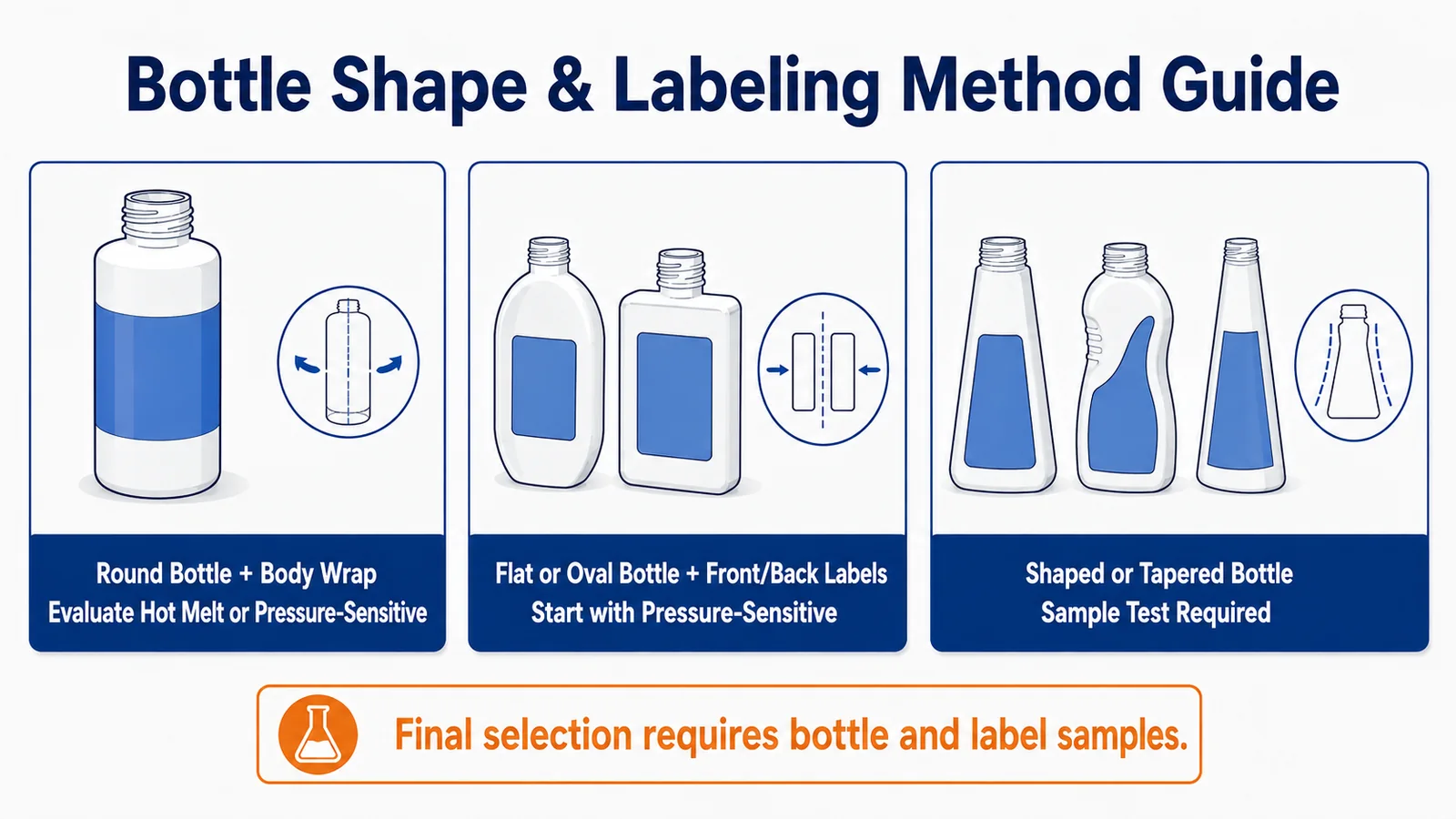
Begin with a drawing of the finished pack. Mark the label area, seam position and any features that must stay visible. A round bottle with one body wrap presents a different task from a flat detergent bottle with two separate labels.
- Round PET bottles with a body wrap: include roll-fed hot melt in the shortlist, then confirm label material and the economics of your batch size.
- Flat or oval bottles with front and back labels: start with a suitable pressure-sensitive configuration and verify bottle alignment between stations.
- Round glass jars with several designs: compare a pressure-sensitive wrap-around setup against your actual order quantities and changeover schedule.
- Square buckets or shaped containers: request an application review. Some hot melt systems support non-round containers, so shape alone should not decide the method. KHS lists cylindrical and rectangular applications for its roll-fed station. [2]
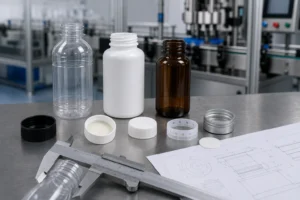
For either method, supply bottle diameter or width and depth, overall height and the usable labeling panel. Include filled samples when filling changes the bottle’s stiffness or shape. Treat tapered panels, handles and deep curves as points to test.
For a broader overview of machine layouts, see our bottle labeling machine types guide.
Match the Machine to Your Production Schedule
Long runs make recurring material and operating costs especially important. Frequent product changes make setup, trial bottles and repeatable adjustments important. Ask each supplier to review the same weekly schedule, including your smallest regular batch.
Speed is a machine specification, not a fixed limit of the adhesive method. Pressure-sensitive systems are available for high-speed production too; Sidel’s modular range includes pressure-sensitive stations for low, medium and high speeds. Compare the proposed models under your conditions. [5]
Request these details with the quotation:
- Continuous output for each bottle and label combination.
- Change parts required when bottle dimensions or label positions change.
- Changeover time measured from the last accepted bottle of one format to the first accepted bottle of the next.
- What happens at the end of a label roll and whether the line must stop.
- Operator tasks during startup, normal running and shutdown.
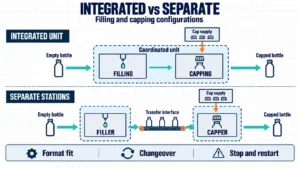
Also separate machine layout from labeling method. An inline labeling machine and a rotary labeling machine describe bottle movement; they do not, by themselves, identify the label adhesive or stock.
Compare Cost per Accepted Bottle
A cheaper label does not automatically produce the cheaper finished bottle. Request label quotations for the same artwork, size, order quantity and required durability, then add the costs of running each proposed system.
Operating cost per accepted bottle = total labeling operating cost for the period ÷ correctly labeled bottles produced in that period.
Include labels consumed, separate glue where used, labor, energy, cleaning materials, waste handling, maintenance and rework. Use the same cost categories and period for both options.
For total ownership cost, add the purchase price, installation, commissioning and required change parts over the same evaluation period. Keep these investment costs separate from operating costs so they are not counted twice.
Give particular attention to:
- Label cost per bottle: compare delivered, usable label stock rather than raw film prices.
- Adhesive consumption: request the expected glue use for your approved hot melt label and application.
- Changeover losses: record setup time and labels used before acceptable production resumes.
- Cleaning and support: include consumables, operator time, wear parts and access to replacement components.
Hot melt may offer an attractive material-cost case on a stable wrap-around project. Pressure-sensitive labeling may offer a better overall case for a varied production schedule. A reliable answer requires supplier quotations and a trial of the proposed configuration.
Check Label Material, Bottle Surface and Storage Conditions
Ask the label supplier to specify the complete label construction. A description such as “OPP film label” names a material, but the machine also needs the correct feed format, dimensions and application characteristics. For self-adhesive stock, include the adhesive, liner and roll winding direction.
Test bottles as they will arrive at the labeler: empty or filled, warm or cold, and dry or exposed to condensation. Avery Dennison’s HDPE guidance identifies trapped moisture, wipe-down conditions and clear-film detection as application considerations for the materials it describes. Use this as a reason to test the package, rather than assume every adhesive behaves the same way. [6]
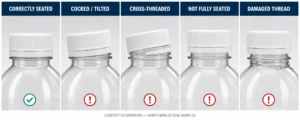
Agree on acceptance checks for alignment, bubbles, wrinkles, edge lift and hot melt overlap. If the pack is squeezed, chilled or exposed to product drips in use, include those conditions in the label supplier’s suitability review.
Verify the Whole Line During a Sample Trial
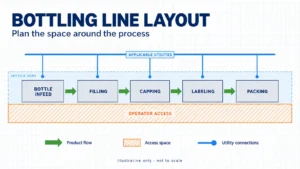
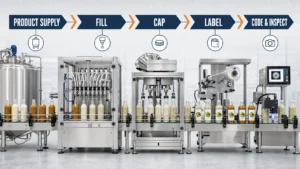
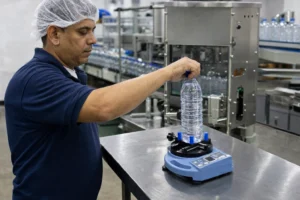
Use a sample run to check the interface with filling, capping and downstream packing. Ask the supplier to show bottle spacing, conveyor transfers, startup and recovery after a planned stop.
For a factory acceptance test, agree on the sample quantities, run duration and acceptance limits before the test. Include:
- Your actual packaging: production bottles and labels, including the most difficult regular format.
- Normal running: count accepted bottles and record rejects, stops and operator interventions.
- A format change: observe mechanical adjustments, settings and startup waste.
- Label supply and restart: check roll replacement and label quality after stopping and restarting.
- Pack appearance: inspect label position, seam or front-to-back alignment immediately and after the agreed storage test.
- Handover: confirm operating instructions, cleaning access, change-part identification, training and the agreed support scope.
Request a video showing the agreed trial conditions together with its results. A short clip of a different bottle provides less information for your purchase decision.
Frequently Asked Questions
Is a self-adhesive labeling machine the same as a pressure-sensitive labeler?
In normal bottle-labeling terminology, yes. Both terms describe a machine applying labels that already carry pressure-sensitive adhesive. Confirm the label stock, applicator arrangement and bottle handling in the quotation.
Can one machine run both hot melt and pressure-sensitive labels?
Some modular platforms accept different labeling stations; Sidel documents this approach. A standard machine should not be assumed to support both. Ask for the modules, conversion work and bottle formats included in the proposed supply. [5]
Does hot melt labeling need a shrink tunnel?
A conventional hot melt wrap-around application bonds the label with glue and does not shrink it onto the bottle. Any separate drying or conditioning equipment should be specified according to the container and production process.
Which labeling method gives better accuracy?
Ask for a demonstrated placement tolerance on your bottle and label. Bottle control, label dimensions and the selected machine configuration all belong in that test. An adhesive method alone is not a placement guarantee.
What should I send to get a useful quotation?
Start with bottle photos and dimensions, a label sample or artwork, and your target bottles per minute or hour. Add your batch sizes, changeover frequency and a photo or drawing of the available line space.
Prepare a Complete Labeling RFQ
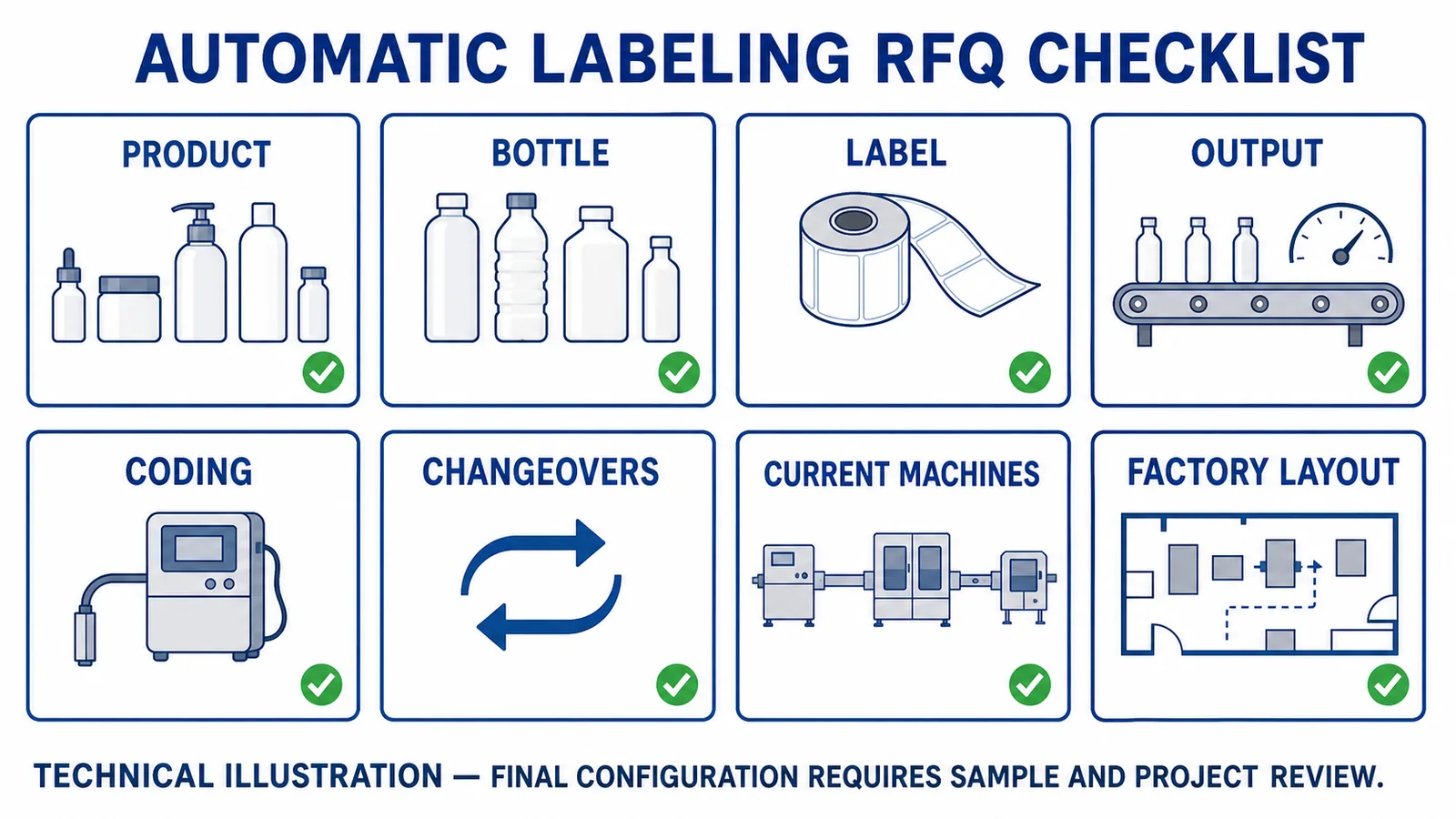
Get a Labeling Recommendation for Your Bottles
LEKA Pack Line supplies labeling equipment and can match it with filling, capping and conveying requirements. Send your project details so we can review a suitable configuration:
- Product, bottle material, dimensions and whether labeling happens before or after filling.
- Label material, width, length, position and roll specifications.
- Required output, batch size and number of product changes.
- Line layout, conveyor height, electricity supply and destination country.
- Coding or inspection needs, budget and requested service scope.
If you are still choosing the label, send a bottle photo and an example of the finished appearance you want.
Send Your Bottle and Label Details
Explore the LEKA labeling machine range for available configurations.
Technical References
- Avery Dennison: Pressure-sensitive label construction and bonding.
- KHS: Innoket Neo RF roll-fed hot melt labeling station.
- H.B. Fuller: Hot melt adhesives for pre-cut can labels.
- HERMA: Self-adhesive application using a movable peel plate.
- Sidel: Modular labeling stations and pressure-sensitive applications.
- Avery Dennison: AD CleanFlake technical guide for HDPE containers, March 2025.