Lubricant Oil Filling Machine Guide: Engine Oil, Gear Oil & Lube Oil Bottling
Quick Reference: Lubricant Oil Filling Machine by Oil Type
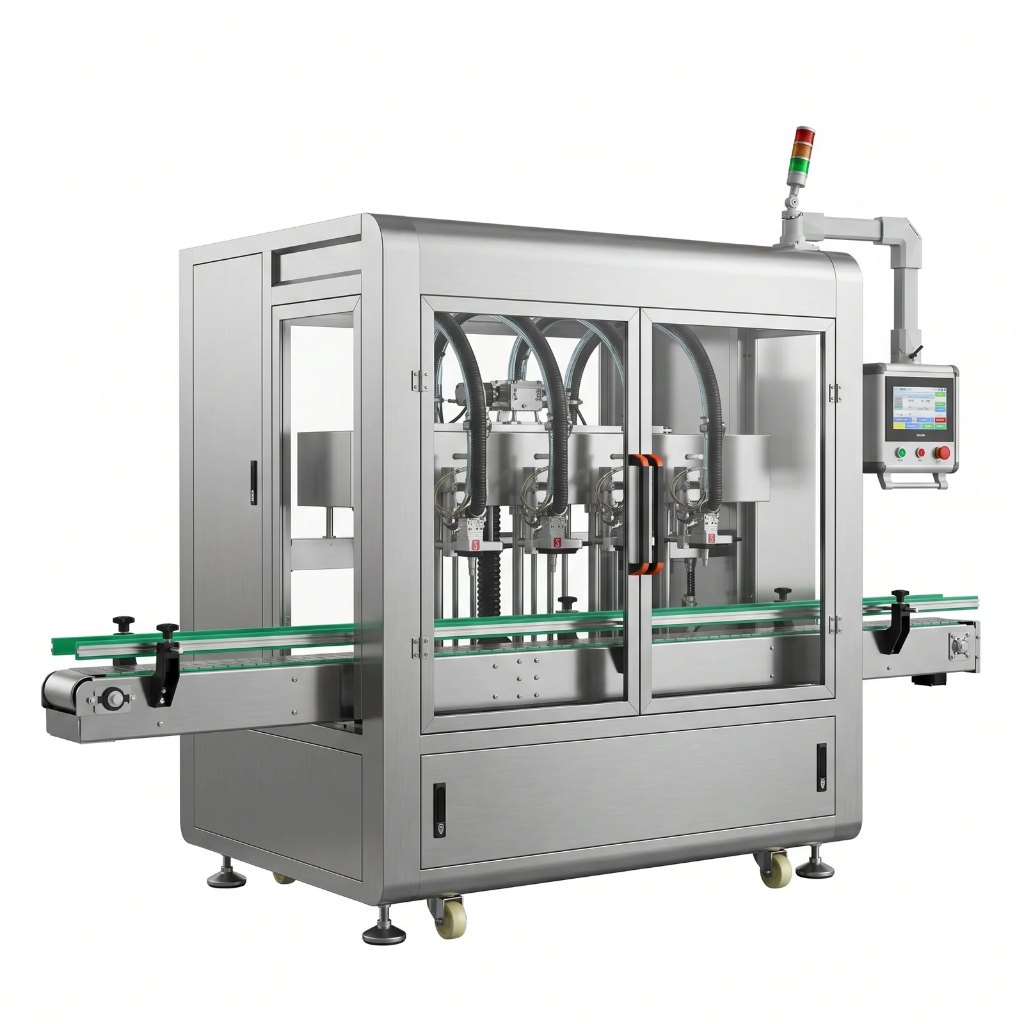
| Oil Type | Viscosity Level | Recommended Filling Method | Suggested Machine Type |
|---|---|---|---|
| Engine Oil | Medium (SAE 5W–40) | Flow meter filling / Servo piston filling | Automatic lubricant oil filling machine |
| Motor Oil | Medium (similar to engine oil) | Flow meter filling / Volumetric filling | Automatic or semi-automatic lube oil filling machine |
| Gear Oil | High (SAE 80W–140) | Servo piston filling / Gear pump filling | Gear oil filling machine with heated pump option |
| Hydraulic Oil | Low to Medium | Flow meter filling | Automatic oil filling machine with high-accuracy meter |
| Lube Oil (General) | Low to High (varies) | Depends on product viscosity | Configurable lube oil filling machine |
Not sure which machine fits your oil type? Check LEKA’s oil filling machine solution or scroll down for a full breakdown.
What Is a Lubricant Oil Filling Machine?
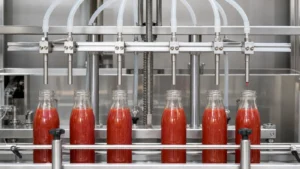
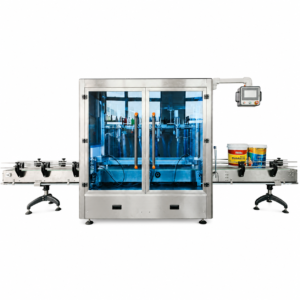
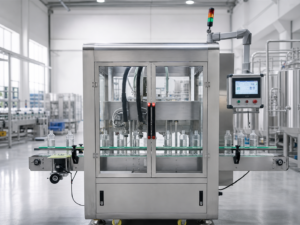
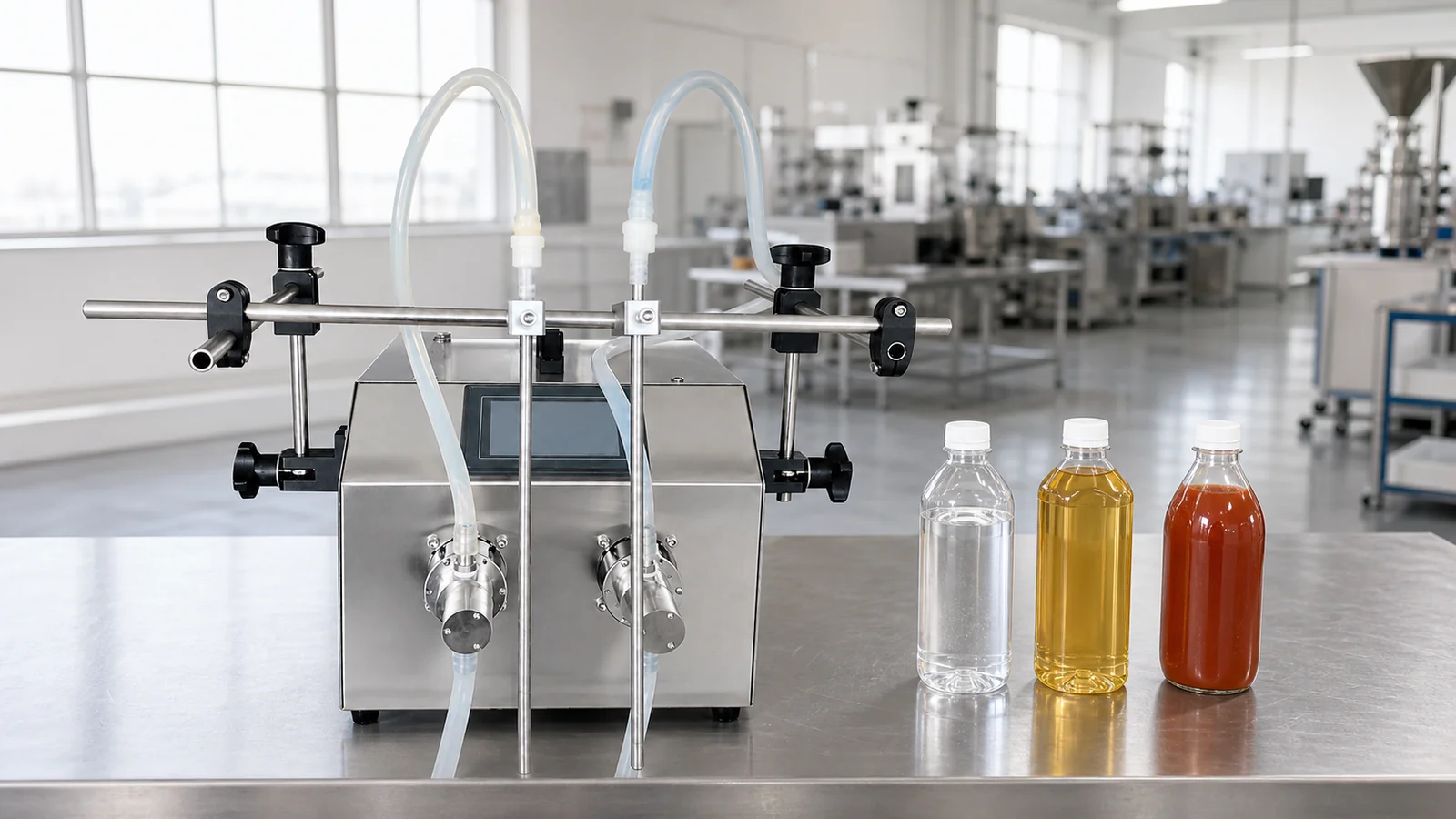
A lubricant oil filling machine is industrial equipment used to fill lubricant oil into bottles, cans, drums, or other containers at a set volume and speed. It is designed specifically for oils that are thick, viscous, or chemically active — making it very different from machines used for water or food liquids.
Why Lubricant Oil Needs Special Filling Equipment
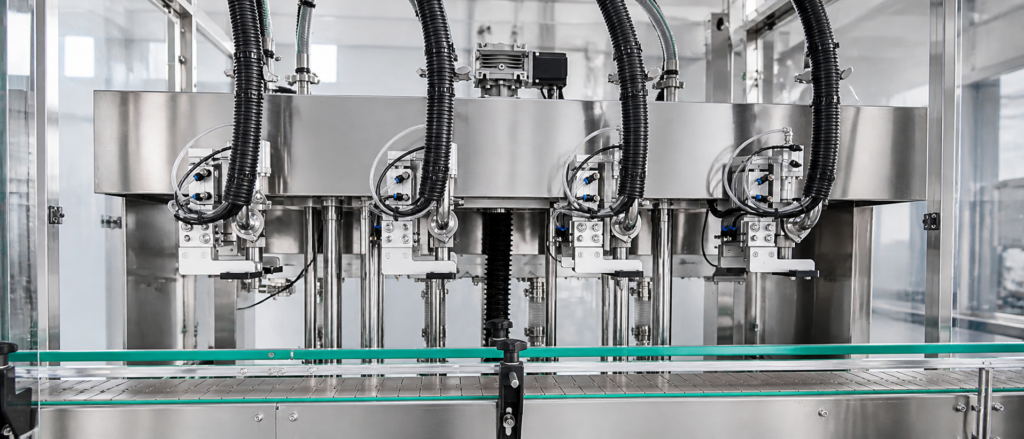
Most people think any liquid filling machine can handle oil. However, that is not true. Lubricant oils have unique properties that standard machines cannot always handle well. Here is why lubricant oil filling requires special equipment:
- High viscosity: Thick oils like gear oil do not flow freely. They need pumps and nozzles built for slow, controlled flow.
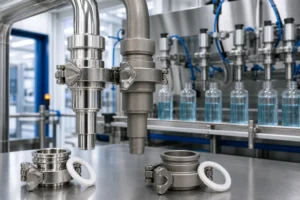
- Anti-drip design: Oil drips easily after filling. A good lube oil filling machine has anti-drip nozzles to keep bottles and the machine clean.
- Corrosion resistance: Some industrial oils contain additives that can corrode standard machine parts. The machine must use compatible materials.
- Filling accuracy: In industrial oil bottling, under-filling or over-filling affects product weight and cost. Accurate filling is essential.
- Temperature sensitivity: Some high-viscosity oils need warming before filling. Machines for gear oil or heavy lube oil may need a heated pump system.
What Does a Lubricant Oil Filling Machine Actually Do?
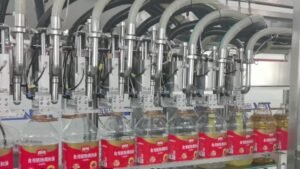
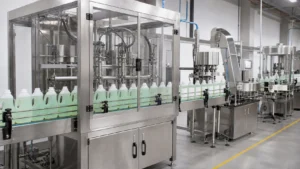
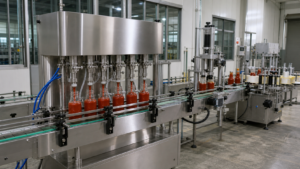
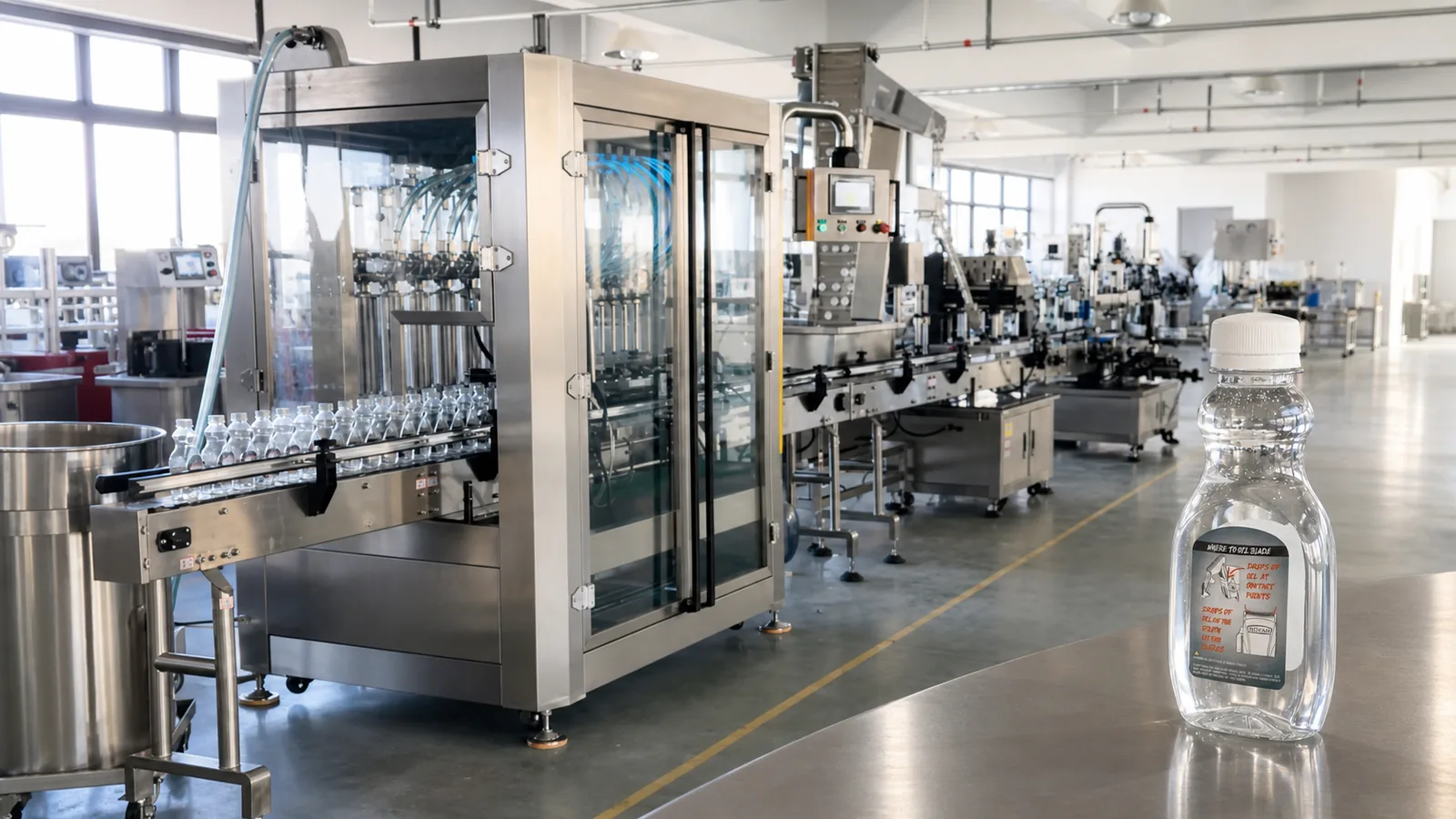
At its core, the machine pulls oil from a storage tank, measures the correct volume, and releases it into each bottle through a filling nozzle. The process sounds simple. However, the engineering behind handling viscous, oily, and sometimes chemically reactive fluids is far more complex than filling water.
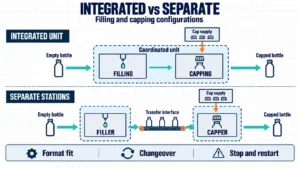
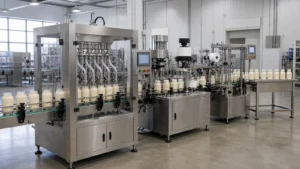
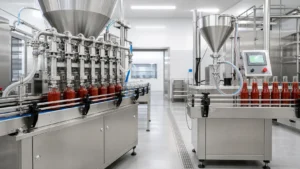
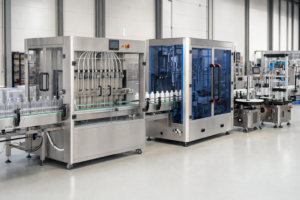
A well-configured lubricant filling machine will also integrate with capping, labeling, and coding equipment to form a complete production line. We will cover that in detail later in this guide.
Key Technical Features to Look For
When evaluating any oil filling equipment, make sure it includes these core features:
- Anti-drip nozzle with back-suction function
- Stainless steel or chemical-resistant contact parts
- Adjustable filling volume and speed
- Compatible pump type for your oil viscosity
- Easy-clean design for product changeover
- PLC control system with touchscreen for easy operation
Before ordering a lubricant oil filling machine: confirm oil viscosity at the filling temperature, material compatibility, pump and nozzle selection, and the required fill check. Ask for sample testing with the intended oil and container before accepting an output or accuracy commitment.
This is exactly why LEKA reviews your oil type, viscosity, and bottle size before recommending a machine — rather than simply listing machine models for you to choose from.
Lubricant Oil vs. Edible Oil — Why They Need Different Filling Machines
This is one of the most common points of confusion for buyers. Many people search for “oil filling machine” without realising that lubricant oil filling machines and edible oil filling machines are built for completely different applications. Using the wrong machine can cause contamination, compliance failures, and equipment damage.
The Core Differences at a Glance
| Factor | Lubricant Oil Filling Machine | Edible Oil Filling Machine |
|---|---|---|
| Material contact parts | Industrial-grade stainless steel or chemical-resistant materials | Food-grade stainless steel (304 or 316) |
| Certifications required | CE, industrial compliance | CE + food safety standards (FDA, EU food contact) |
| Viscosity range | Wide — from light hydraulic oil to heavy gear oil | Low to medium (cooking oils are generally light) |
| Nozzle design | Anti-drip, back-suction, corrosion-resistant | Anti-drip, food-safe seals |
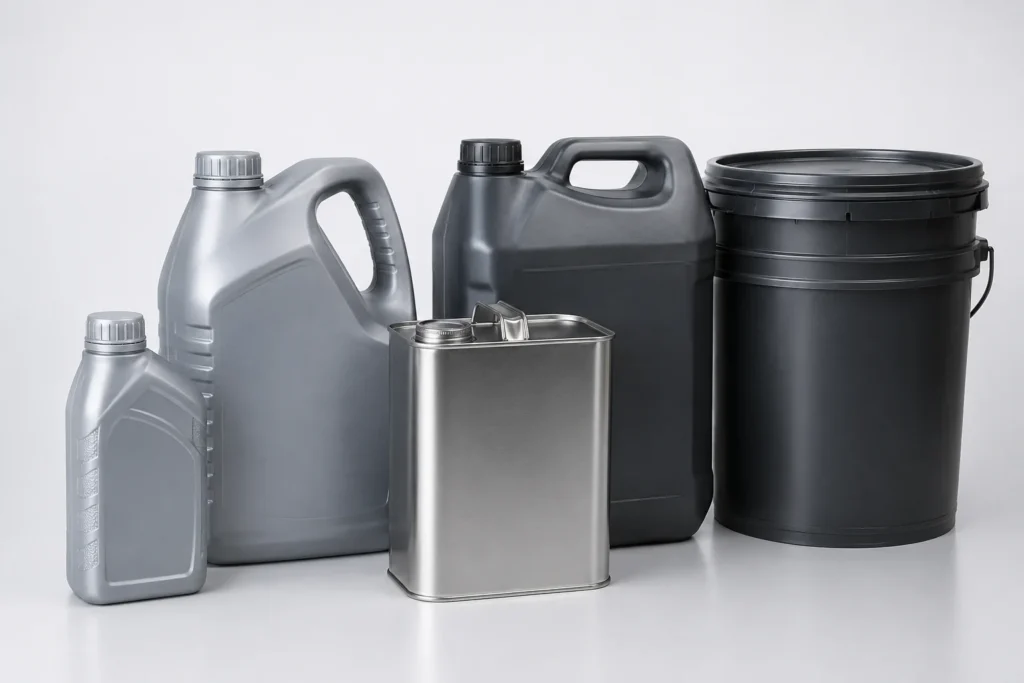
| Container types | HDPE bottles, metal cans, drums, IBC tanks | PET bottles, glass bottles, HDPE bottles |
| Cleaning requirements | Industrial solvent cleaning acceptable | Must meet food hygiene cleaning standards |
| Additive compatibility | Must handle chemical additives in oil | No chemical additives — purely food product |
Why This Separation Matters for Your Factory
If your factory produces engine oil, motor oil, gear oil, or any other industrial lubricant, you need a machine built for industrial use. The seals, pump materials, and nozzle coatings must be compatible with the chemical additives found in most lubricant products.
Furthermore, using a food-grade machine for lubricant oil would likely void its warranty and cause early part failure. On the other hand, using an industrial lubricant filling machine for edible oil would create food safety and compliance issues.
What About Crossover Products Like Some Base Oils?
Some base oils or white mineral oils are used in both food-adjacent and industrial applications. In these cases, you should clearly confirm the end product classification with your machine supplier before choosing. For truly industrial lubricant products — engine oil, gear oil, hydraulic oil, motor oil — the machine should always be specified as an industrial lubricant filling machine, not a food-grade unit.
If your product also involves corrosive chemicals or chemical blends, you may also want to look at a chemical filling machine for handling aggressive or reactive fluids.
Common Applications — Engine Oil, Motor Oil, Gear Oil and Hydraulic Oil
A lubricant oil filling machine is not a single fixed product. Instead, it is a category of equipment that covers a wide range of industrial oil applications. Each oil type has its own viscosity, container format, filling speed, and nozzle requirement. Below is a practical breakdown of the most common applications.
Engine Oil Filling Machine
Engine oil is one of the most widely bottled lubricants in the world. It is used in cars, trucks, motorcycles, and industrial engines. Most engine oil products fall in the SAE 5W-30 to 20W-50 viscosity range, which is medium viscosity — not too thick, not too thin.
Key points for engine oil filling:
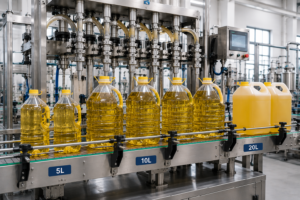
- Container types: 1L, 4L, and 5L HDPE or PET bottles are the most common
- Filling method: Flow meter filling or servo piston filling works well for this viscosity range
- Filling accuracy: Should be within ±0.5% to meet packaging weight requirements
- Cap type: Screw caps with tamper-evident bands are standard
- Line speed: Automatic engine oil filling lines typically run at 20–60 bottles per minute depending on bottle size
An engine oil filling machine must also have a reliable anti-drip system. Engine oil stains are difficult to clean, and any spillage on bottles will affect label adhesion and product appearance on shelves.
Motor Oil Filling Machine
Motor oil and engine oil are often used interchangeably in everyday language. However, in packaging terms, the filling requirements are essentially the same. Both products share similar viscosity ranges and container formats.
What makes motor oil filling slightly more varied is the range of container sizes. Some motor oil products are sold in 500ml bottles for small engines, while others are sold in 20L drums for bulk industrial use. A good motor oil filling machine should be adjustable across this range without requiring major mechanical changes.
- Support for multiple bottle sizes with quick changeover
- Volumetric or flow meter filling for consistent weight
- Compatibility with trigger sprayer caps and pump caps where used
Gear Oil Filling Machine
Gear oil is significantly thicker than engine oil. Products like SAE 80W-140 gear oil are much more viscous and flow very slowly at room temperature. This creates a real challenge for filling machines that are not designed for high-viscosity products.
For a gear oil filling machine, you need:
- Gear pump or piston pump: These pump types handle thick fluids without losing accuracy
- Heated pump or tank option: In cold climates or with especially thick oil, warming the oil slightly improves flow and filling accuracy
- Wider nozzle diameter: Thin nozzles will clog or slow down with high-viscosity gear oil
- Longer filling time per bottle: High-viscosity filling takes more time, so line speed expectations should be adjusted
Gear oil is also commonly sold in 1L, 4L, and 20L containers, as well as IBC totes for bulk industrial customers. Your machine configuration should match your target container range.
Project-matched pump option
GP-075S1 for Compatible Lubricant-Oil Filling Projects
The GP-075S1 is a servo gear-pump option for compatible, particle-free lubricant oils when the product viscosity, operating temperature, target fill volume and required output fit the selected pump and nozzle configuration. It can support digitally controlled volume adjustment without changing a measuring cylinder.
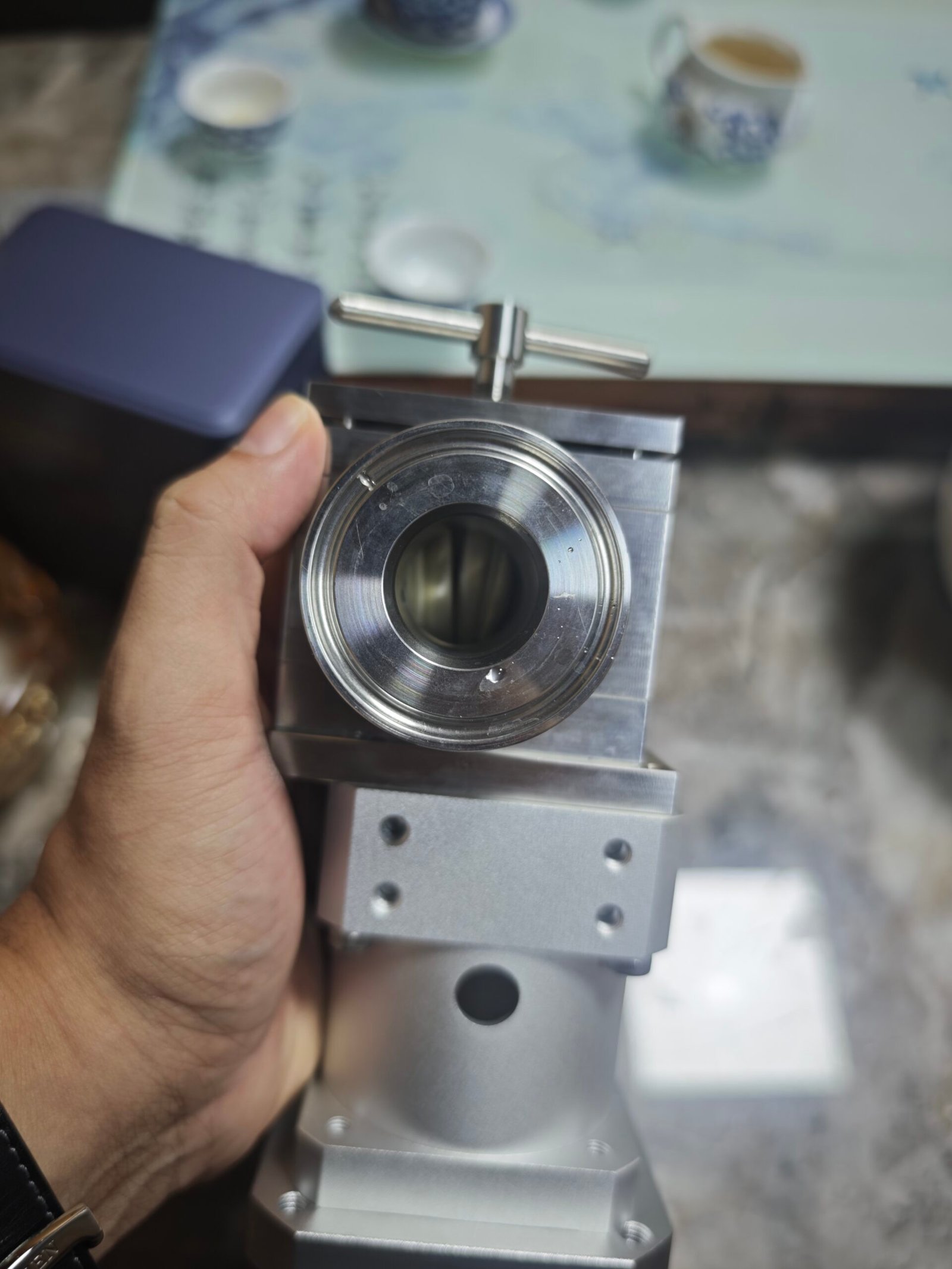
Specified filling accuracy under matched and calibrated operating conditions
Material used for the product-contact gear-pump section
Confirm these points before selection
- Actual viscosity at the planned filling temperature
- Whether additives, abrasive solids or suspended particles are present
- Bottle range, target volume, nozzle size and required output
- Product-change and cleaning procedure
The ±0.3% figure is not a universal result for every lubricant. Final accuracy should be confirmed with the actual oil, container and production settings. Oils with particles, abrasive material, unverified chemical compatibility or grease-like behavior require a separate filling-method review.
Hydraulic Oil Filling Machine
Hydraulic oil is generally lower in viscosity compared to gear oil. However, it requires high filling accuracy because hydraulic systems are sensitive to fluid volume. Over-filling or under-filling can affect equipment performance for end users.
A hydraulic oil filling machine is typically configured with:
- High-accuracy flow meter filling for precise volume control
- Stainless steel or chemical-resistant wetted parts
- Options for large container filling (20L, 200L drums, or IBC tanks)
- Clean-room-compatible design where contamination-sensitive applications are involved
General Lube Oil Filling Machine Applications
Beyond the four types above, lube oil filling machines are also used for:
- Transmission fluid
- Brake fluid
- Cutting oil and metalworking fluid
- Chain oil and industrial maintenance oils
- Two-stroke engine oil
- Compressor oil
Each of these products has its own viscosity and container format. The key is always to start with your product specification — viscosity, density, foaming tendency, and corrosiveness — and match the machine to those properties. This is the approach LEKA takes with every project through our filling machines range.
How to Choose a Lube Oil Filling Machine — 5 Key Factors
Choosing the right lube oil filling machine is not about picking the most expensive model. Moreover, it is not about picking the cheapest one either. The right machine is the one that matches your specific oil product, container format, target output, and factory conditions. Here are the five most important factors to evaluate before making a decision.
Factor 1: Viscosity of Your Oil
Viscosity is the single most important factor when selecting a lubricant oil filling machine. Viscosity determines which pump type, nozzle size, and filling method will work for your product. Getting this wrong means poor filling accuracy, slow output, clogged nozzles, or machine damage.
Here is a simple guide:
- Low viscosity (e.g. hydraulic oil, light lube oil): Flow meter filling works well. The oil flows freely and can be measured accurately by volume.
- Medium viscosity (e.g. engine oil, motor oil): Servo piston filling or flow meter filling. Both methods give good accuracy for this viscosity range.
- High viscosity (e.g. gear oil, heavy industrial grease-like oil): Gear pump or piston pump filling is required. Heated tank or heated pipeline may also be needed in colder environments.
Always provide your oil’s viscosity data — ideally at both room temperature and operating temperature — when requesting a machine recommendation. This single piece of information will narrow down your options significantly.
Factor 2: Bottle and Container Type
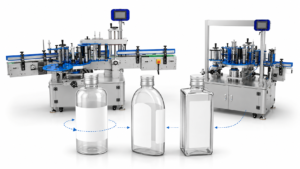
Your container format directly affects the machine’s conveyor design, filling nozzle height, bottle-holding mechanism, and capping compatibility. A lube oil filling machine configured for 1L round HDPE bottles will need adjustment before it can handle 4L rectangular containers or 20L jerry cans.
Key container considerations include:
- Container material: HDPE, PET, metal cans, or glass each behave differently on a conveyor and under filling pressure
- Container size range: If you fill multiple sizes (e.g. 500ml, 1L, 4L, 20L), the machine must support quick changeover between formats
- Container shape: Round bottles are easiest to handle. Square or irregular shapes need custom bottle guides and holders
- Container rigidity: Soft HDPE containers can deform under nozzle pressure. The machine must control fill pressure accordingly
For factories filling into both small bottles and large drums, a flexible oil bottle filling machine with adjustable nozzle height and conveyor width is strongly recommended.
Factor 3: Target Output — Bottles Per Hour
Your required production speed determines whether you need a semi-automatic or fully automatic machine. Additionally, it affects how many filling heads the machine should have.
- Under 500 bottles per hour: A semi-automatic lube oil filling machine is usually sufficient. It is lower cost and easier to operate for small batches.
- 500 to 3,000 bottles per hour: A linear automatic filling machine with 2 to 8 filling heads is the right range.
- Above 3,000 bottles per hour: A rotary automatic filling machine or a high-speed multi-head filling line is needed.
It is also important to plan for future growth. Therefore, buying a machine at exactly your current capacity may leave you no room to scale. Consider choosing a machine that can handle 20–30% above your current output target.
Factor 4: Filling Method — Volumetric vs Weight-Based vs Flow Meter
There are three main filling methods used in automatic lubricant oil filling machines. Each has its strengths and is suitable for different situations.
- Volumetric piston filling: Fills by a fixed volume using a piston cylinder. Good for medium to high viscosity oils. Highly repeatable and does not depend on oil temperature.
- Flow meter filling: Uses an electronic flow meter to measure the exact volume passing through. Best for low to medium viscosity oils. Fast and accurate.
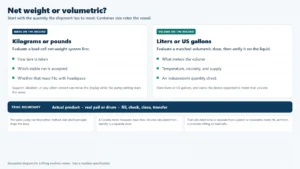
- Weight-based (gravimetric) filling: Fills by weight rather than volume. Ideal when oil density varies or when weight compliance on labels is critical. Common for large container filling.
For bottle projects, flow-meter, servo-piston, or pump filling can be reviewed as candidates; for larger containers, weighing filling may be more suitable. Open pails and bung-top drums are compared in net weight vs volumetric filling for pails and drums. Confirm the final method from oil viscosity at operating temperature, fill range, container opening, required fill verification, clean cut-off, and sample testing. This guide helps select the dosing system; if you need cap handling, conveying, labeling, and layout as one project, review the lubricant oil filling line.
Factor 5: Automation Level — Semi-Auto vs Fully Automatic
The automation level you choose should match your budget, labour availability, and production volume. There is no single right answer. However, here is a practical framework:
- Semi-automatic oil filling machine: Operator places bottles manually under nozzles, triggers the fill cycle, and removes filled bottles. Lower upfront cost. Suitable for small factories or startups testing a new product line.
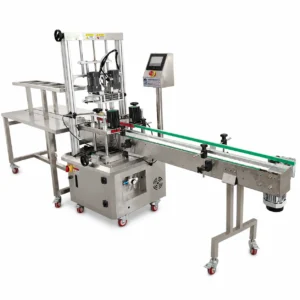
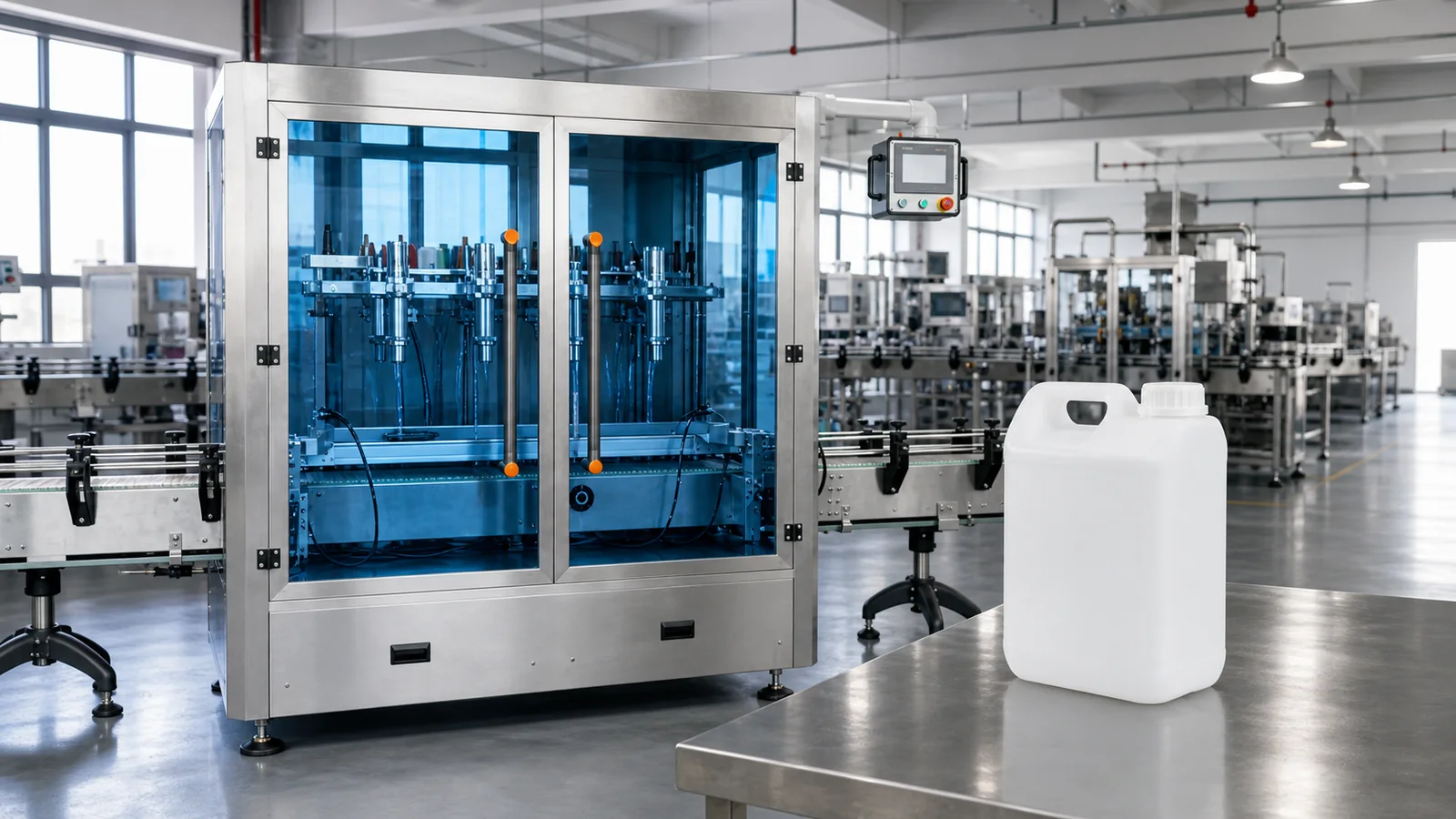
- Automatic lubricant oil filling machine: Bottles are fed automatically via conveyor. Filling, indexing, and bottle transfer are all automated. Higher output, lower labour cost per bottle, more consistent quality.
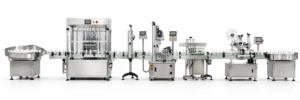
- Complete automatic filling line: Includes automatic bottle feeding, filling, capping, labeling, coding, and end-of-line packing. Best for established factories with stable products and high volume.
For most B2B factories investing in a long-term lubricant oil packaging solution, a fully automatic bottle filling machine line gives the best return on investment over time. It reduces labour dependency and maintains consistent fill quality across every shift.
“The shift from semi-automatic to fully automatic filling is often the single biggest productivity improvement a small manufacturing facility can make. For viscous products like lubricant oil, automation also dramatically reduces spillage, waste, and inconsistent fill weights.”
— James Whitfield, Senior Process Engineer, Process Industry Forum
How to Start a Lubricant Oil Bottling Business
Many new businesses entering the lubricant oil market tend to focus on purchasing a filling machine first. However, without proper planning, this often leads to mismatched equipment, low production efficiency, or costly upgrades later.
Before selecting any equipment, it is essential to clearly define your product type, packaging specifications, and production goals. These factors will directly determine whether you should choose a semi-automatic filling machine, a fully automatic lubricant oil filling machine, or a complete bottling line.
Key Planning Points Before Starting Lubricant Oil Bottling:
- Oil Type: Engine oil, gear oil, hydraulic oil, or other lubricants. Different viscosities require different filling methods. Incorrect selection may cause dripping or poor filling accuracy.
- Container Type: 500ml, 1L, 4L, 5L, 20L bottles, plastic jerry cans, or metal containers. This affects nozzle design, bottle positioning, and conveyor system.
- Production Capacity: Trial production, small batch, or stable mass production. This determines whether a semi-automatic or multi-head automatic system is more suitable.
- Packaging Scope: Filling only, or a complete process including capping, labeling, coding, and carton packing.
- Factory Layout: Available space, workflow direction, power supply, and maintenance access, which influence line design, such as straight, L-shape, or U-shape layouts.
For startups, a semi-automatic lubricant oil filling machine is often a practical and cost-effective choice. It allows flexibility in handling different bottle sizes and product types while keeping the initial investment manageable.
As your orders grow and become stable, the production line can be upgraded step by step with automatic bottle feeding, capping, labeling, coding, and end-of-line packing to improve efficiency and output.
If you are planning to build a long-term lubricant oil bottling business, it is recommended to design your production line as a scalable system from the beginning rather than purchasing standalone machines.
Simply provide your oil viscosity, bottle photos, filling volume range, cap type, label style, target output (bottles per hour), voltage, and workshop layout. LEKA can offer a customized equipment solution, production line layout, and initial investment estimate to help you start efficiently and scale smoothly.
Automatic Lubricant Oil Filling Machine — Line Configuration Options
Once you move beyond a single filling machine, you are thinking about a production line. An automatic lubricant oil filling machine line brings together multiple pieces of equipment that work together in a sequence. This section explains the common line configurations and how to choose the right setup for your factory.
Single Machine Setup vs Full Automatic Line
Not every factory needs a complete automatic line from day one. However, understanding the difference helps you plan your investment wisely.
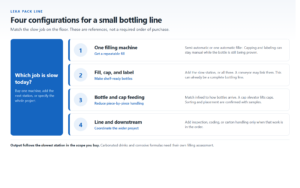
- Single machine setup: One filling machine, operated semi-automatically or with a basic conveyor. Low upfront cost. Good for factories just starting out or running low volumes. Operators handle bottle loading and removal manually.
- Full automatic oil filling line: All steps from bottle feeding to final packing are connected and automated. Higher upfront investment, but dramatically lower cost per bottle over time. Best for factories with stable, high-volume production.
For lubricant oil factories producing engine oil, motor oil, or gear oil at scale, a full automatic oil filling machine line is almost always the more economical choice within two to three years of operation.
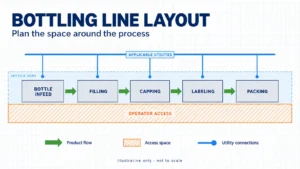
Recommended Line Layout for Lubricant Oil Bottling
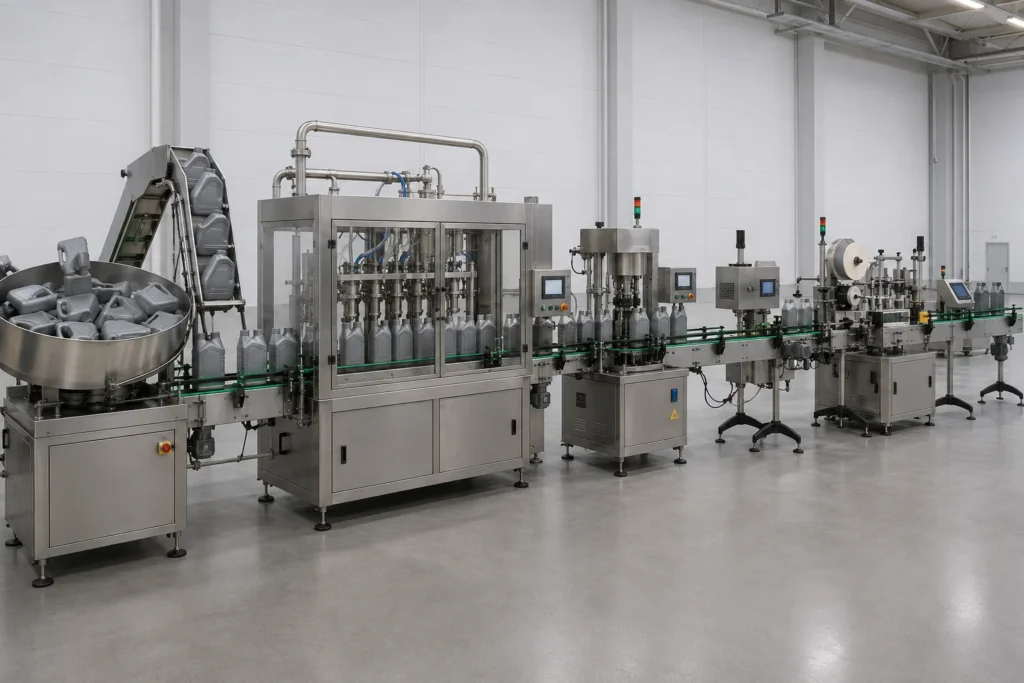
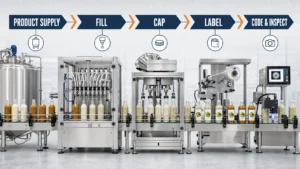
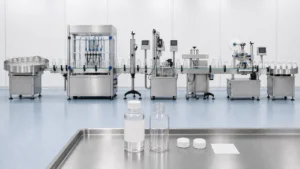
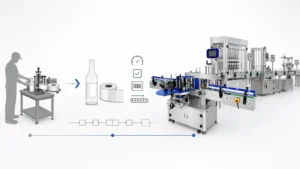
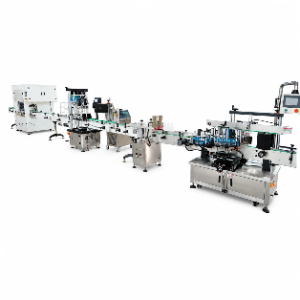
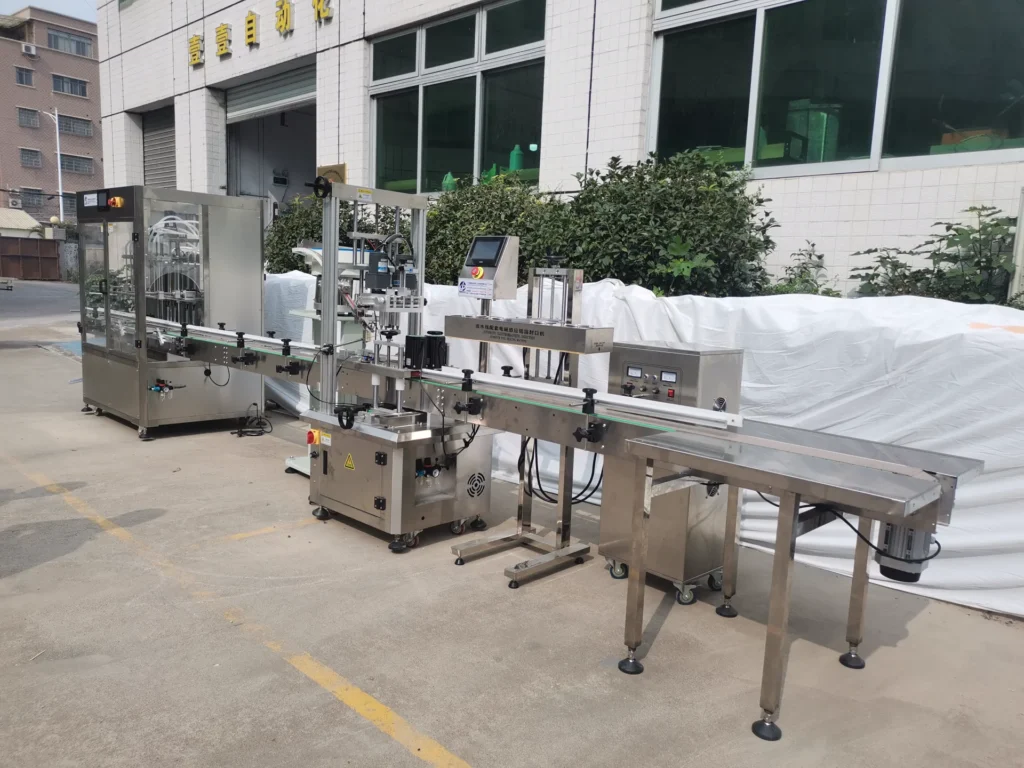
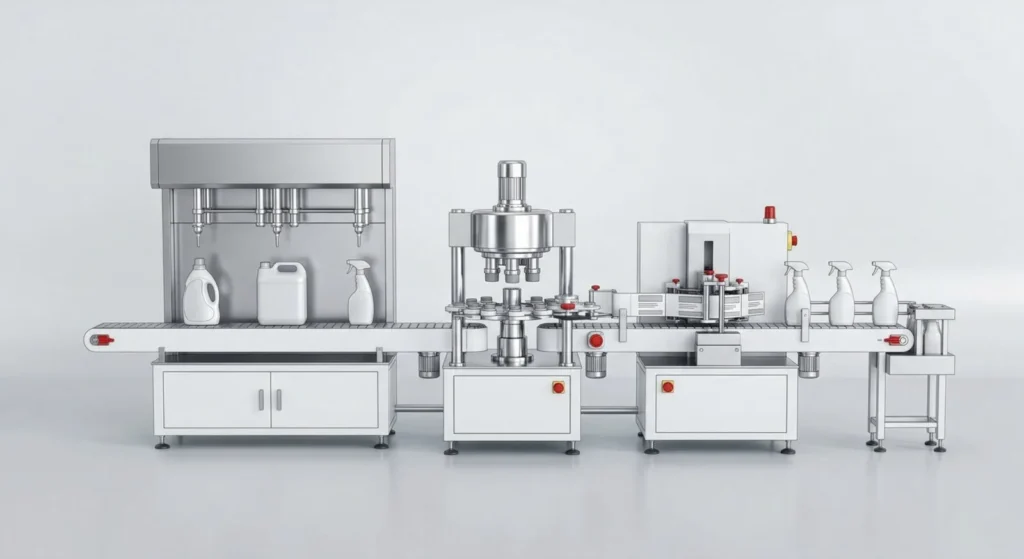
A standard oil filling line for lubricant oil typically follows this sequence:
- Bottle unscrambler / bottle feeder: Automatically sorts and feeds empty bottles onto the conveyor in an upright position
- Bottle rinser (optional): Blows or rinses bottles before filling to remove dust or particles — important for industrial oil quality standards
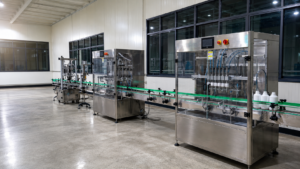
- Lubricant oil filling machine: Fills each bottle to the exact target volume using the appropriate filling method for your oil viscosity
- Capping machine: Applies and tightens screw caps, pump caps, or other closure types with controlled torque
- Induction sealer (optional): Adds a foil seal under the cap for tamper evidence — common for retail engine oil products
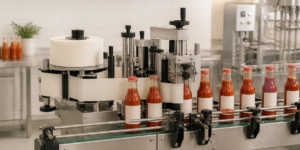
- Labeling machine: Applies front, back, or wraparound labels to each bottle
- Coding machine / inkjet printer: Prints production date, batch number, and expiry date on each bottle
- Conveyor system: Connects all stations and controls bottle flow throughout the line
- Carton packing / shrink tunnel (optional): Groups filled bottles into cartons or shrink-wrapped packs for shipping
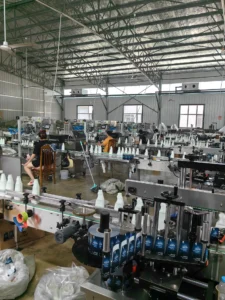
This full sequence turns a standalone lube oil filling machine into a complete bottle filling line equipment solution. Each step adds value, reduces manual labour, and improves the consistency of your finished product.
How to Plan Your Line Layout
Before confirming a line configuration, you need to think about your factory floor layout. The following points will affect how the line is designed:
- Available floor space: A straight-line layout needs more length. An L-shaped or U-shaped layout uses space more efficiently in smaller factories.
- Voltage and power supply: Industrial filling lines in different countries run on different voltage standards. Always confirm your local requirements (e.g. 220V/50Hz, 380V/50Hz, 460V/60Hz).
- Operator access: Leave sufficient space around the line for operators to access machine panels, refill oil tanks, and perform maintenance.
- Later capacity growth: If you plan to add a labeler or coder later, plan the conveyor length and layout to accommodate additional stations.
LEKA can help you work out a suitable line layout based on your floor dimensions, output target, and bottle format. Simply share your factory details and product specifications through our filling machines enquiry page.
Lubricant Oil Packing Machine — Filling, Capping, Labeling and Coding as One Line
When buyers search for a lubricant oil packing machine, they are usually thinking beyond the filling machine alone. They want to know how the entire bottle — filled, sealed, labeled, and coded — comes off the line ready for shipping. This section covers exactly that.
What a Lubricant Oil Packing Machine Actually Includes
A complete lubricant packaging machine solution typically includes four core functions working together as an integrated system:
- Filling: The lubricant oil filling machine measures and dispenses the correct oil volume into each container
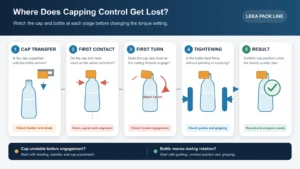
- Capping: A capping machine applies and tightens the bottle closure to a controlled torque, preventing leaks during transport
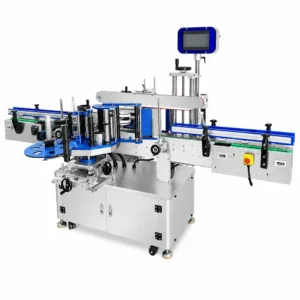
- Labeling: A labeling machine applies printed labels to the bottle — front and back, wraparound, or top label depending on bottle shape
- Coding: An inkjet coder or laser coder prints production date, batch code, and expiry date directly on the bottle or cap
Together, these four functions form a complete bottle filling and capping machine line that takes empty bottles at one end and delivers shelf-ready, labeled, coded, and sealed bottles at the other end.
Capping Options for Lubricant Oil Bottles
Lubricant oil bottles use a wide variety of cap types. The capping machine you choose must match your specific cap and bottle combination. Common cap types for lube oil products include:
- Standard screw caps: The most common closure for 1L, 4L, and 5L engine oil bottles. A four-wheel screw capping machine handles these efficiently.
- Trigger sprayer caps: Used for some maintenance and chain oil products. Requires a specialised trigger sprayer capping head.
- Pump caps: Used for some dispensing applications. Needs a press-down or snap-on capping mechanism.
- Tamper-evident screw caps: Common for retail-packaged engine oil. The capping machine must apply the cap to a precise torque to activate the tamper band without over-tightening.
Getting capping torque wrong is a common problem in lubricant oil packaging lines. Too loose means caps fall off during transport. Too tight means customers cannot open the bottle. A servo capping machine with programmable torque control solves this problem consistently.
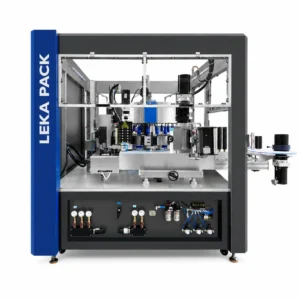
Labeling Machine for Lubricant Oil Bottles
Labeling is a critical step in lubricant oil packaging — especially for retail products competing on shelves. A poorly applied label that bubbles, wrinkles, or skews will reduce buyer confidence and can cause compliance issues if label information is not fully visible.
For lubricant oil bottles, the most common labeling options are:
- Round bottle labeling machine: Applies a single wraparound label to cylindrical bottles. Fast, accurate, and suitable for most standard engine oil and motor oil bottles.
- Front and back labeling machine: Applies two separate labels on opposite sides. Common for larger 4L or 5L rectangular containers with separate front branding and back specification labels.
- Top labeling machine: Applies a label to the top or shoulder of the bottle — sometimes used for batch coding or branding.
You can explore LEKA’s full range of options at our labeling machine for bottles page.
Coding and Date Printing for Oil Products
Every bottle of lubricant oil that leaves a factory must carry a production date, batch number, and usually an expiry date. This is a regulatory requirement in most markets. Furthermore, it is important for traceability in case of a product recall.
The most common coding solutions for lubricant oil lines are:
- Continuous inkjet coder (CIJ): Fast, reliable, and works on HDPE, PET, and metal containers. Most widely used in oil filling lines.
- Thermal inkjet coder (TIJ): Lower maintenance than CIJ. Good for medium-speed lines.
- Laser coder: Permanent marking without ink. Premium option for high-end lubricant brands.
When planning your lubricant oil packing machine line, always include a coder as a standard component — not an afterthought. Retrofitting a coder onto an existing line is more complex and costly than integrating it from the start.
FAQ — Common Questions About Lubricant Oil Filling Machines
What is the best filling method for lubricant oil?
The best filling method depends on your oil’s viscosity. For low to medium viscosity oils like hydraulic oil and engine oil, flow meter filling gives fast and accurate results. For high-viscosity oils like gear oil, servo piston filling or gear pump filling is more reliable. Weight-based filling is best when precise weight compliance is required on your product label.
Can one machine fill both engine oil and gear oil?
Yes, but with conditions. A configurable lubricant filling machine with an adjustable pump and interchangeable nozzles can handle both product types. However, because engine oil and gear oil have very different viscosities, you may need to change pump settings, nozzle diameter, and filling speed when switching products. Always confirm multi-product capability with your supplier before purchase.
What is the difference between a lubricant filling machine and a chemical filling machine?
A lubricant filling machine is optimised for petroleum-based and synthetic industrial oils. A chemical filling machine is designed for corrosive, reactive, or aggressive chemical liquids such as acids, solvents, and industrial cleaners. While there is some overlap — both require chemical-resistant materials — chemical filling machines typically use higher-grade corrosion protection and may include explosion-proof electrical components for flammable liquids.
How fast can an automatic lubricant oil filling machine work?
Speed depends on bottle size, viscosity, and the number of filling heads. As a general reference:
- 1L engine oil bottles: 20–60 bottles per minute on an automatic line
- 4L motor oil containers: 10–30 bottles per minute
- 20L jerry cans: 3–8 containers per minute
High-viscosity gear oil lines typically run slower than engine oil lines at the same machine specification.
What containers can a lube oil filling machine handle?
A well-configured lube oil filling machine can handle a wide range of containers, including:
- HDPE round bottles (most common for 1L–5L engine and motor oil)
- HDPE rectangular jerry cans (common for 4L–20L gear and hydraulic oil)
- Metal cans (used for premium or export products)
- IBC totes and drums (for bulk industrial lubricant distribution)
- PET bottles (less common for oil but used in some markets)
Does LEKA supply a complete lubricant oil filling line?
Yes. LEKA Pack Line supplies complete lubricant oil packing machine lines that include filling, capping, labeling, coding, conveying, and end-of-line packing equipment. Rather than selling individual machines by model number alone, LEKA reviews your oil type, viscosity, container format, target output, cap type, voltage, and factory layout to recommend a line configuration that fits your actual production needs. This approach reduces the risk of buying equipment that does not work together as a system.
Conclusion — Get the Right Lubricant Oil Filling Machine for Your Production Line
Choosing the right lubricant oil filling machine is not a simple catalogue decision. It starts with understanding your oil — its viscosity, its container format, your target output, and how the filling step connects to capping, labeling, and coding downstream. Whether you need an engine oil filling machine, a gear oil filling machine, a motor oil filling machine, or a complete lubricant oil packing machine line, the right solution always starts with matching the equipment to your specific product and production conditions.
At LEKA Pack Line, we do not just quote machines from a price list. Instead, we review your oil viscosity, bottle type, cap format, line speed target, voltage, and factory layout first — and then recommend the most suitable configuration. We have supported buyers in more than 60 countries since 2024, and we understand that a packaging line is a long-term production asset, not just a one-time purchase.
Furthermore, our after-sales support — including remote diagnosis, installation videos, spare parts dispatch, and 365-day warranty coverage — means you are not left alone after delivery.
Ready to get started? Tell us your oil type, container size, and target output, and we will come back to you with a practical machine recommendation — no pressure, no generic catalogue, just a straightforward answer based on your real project needs.
Further Reading and External References
- Packaging Digest — Industry news, filling technology trends, and packaging machinery insights
- Process Industry Forum — Engineering guides for industrial liquid handling and filling systems
- Machinery Lubrication — Technical reference for lubricant oil types, viscosity standards, and industrial oil classifications
- ISO Standard for Lubricants, Industrial Oils and Related Products — Official ISO classification reference for industrial lubricant products
- Engineering Toolbox — Viscosity reference data for common industrial oils and fluids