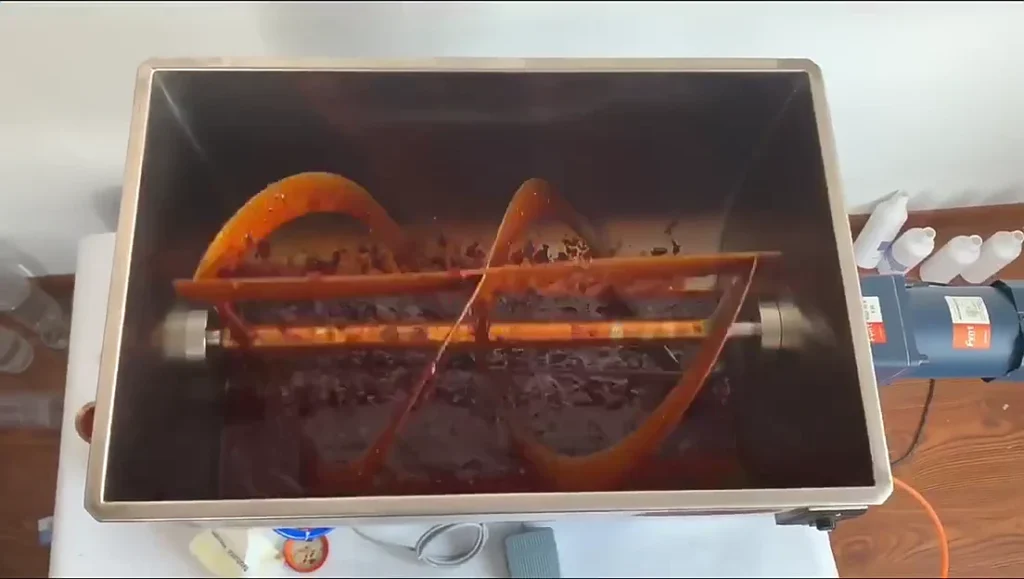
Sauce Filling Machine for Products With Particles: How to Prevent Clogging and Uneven Fills
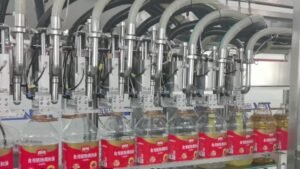
A sauce filling machine with particles must do two jobs at the same time. It must deliver the liquid accurately, and it must carry seeds, herbs, pulp, or food pieces through the hopper, valve, hose, and nozzle without repeated blockage or unacceptable product damage.
Machine selection starts with six variables: filling temperature, largest particle, solids concentration, bottle opening, fill volume, and required output. A piston filler is often a strong starting point for thick or chunky sauces. However, no filling method should be approved from the product name alone.
Quick answer: Focus on the complete product path, not only the nozzle. Measure the largest particle and bottle opening, confirm whether the ingredients settle, and test the real sauce in the real container before ordering equipment.
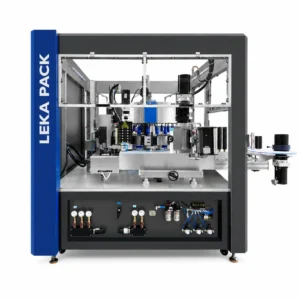
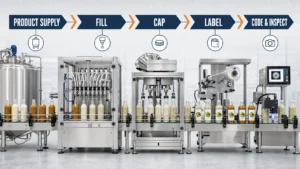
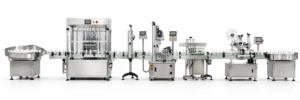
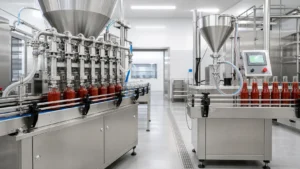
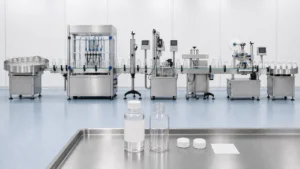
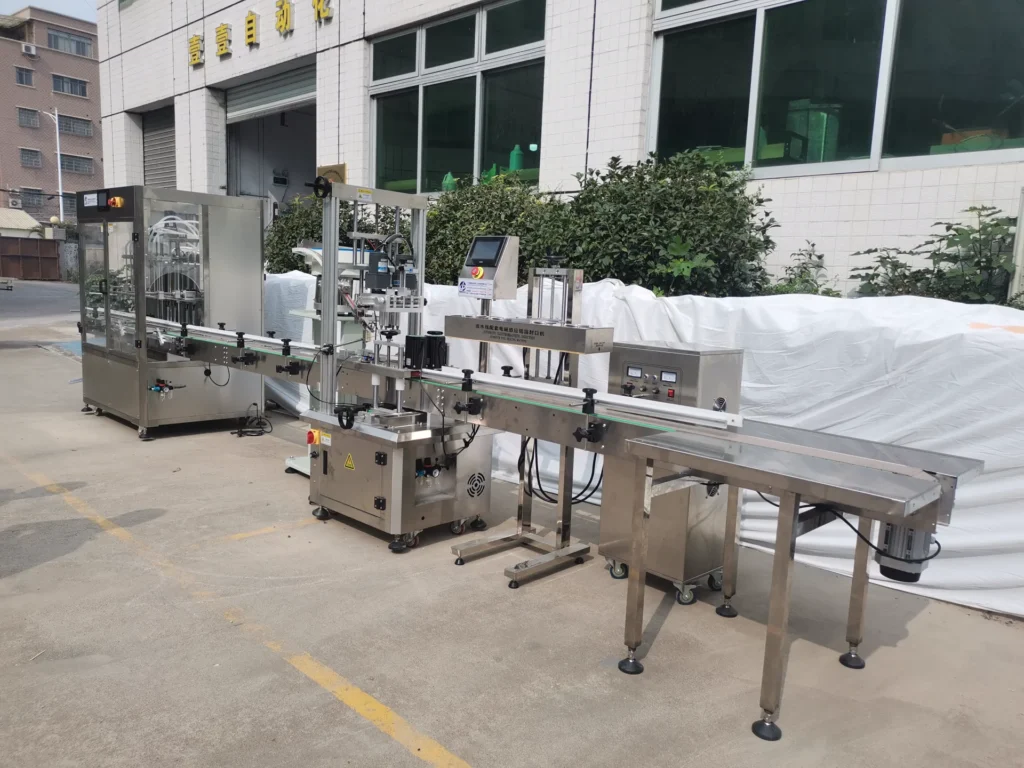
LEKA Pack Line can review these conditions as part of a sauce filling machine project, from a compact semi-automatic filler to a connected filling, capping, and labeling line.
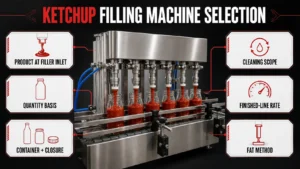
Quick Selection Guide for Sauces With Particles
The following table is a starting point for project discussion. The final solution still requires confirmation with the real product and container.
| Sauce Condition | Main Filling Risk | Possible Filling Solution | Information to Confirm |
|---|---|---|---|
| Smooth sauce without visible particles | Dripping or changing flow at different temperatures | Suitable pump or piston filling system | Viscosity, filling temperature, fill volume and bottle opening |
| Sauce with seeds, herbs or spice flakes | Blockage and uneven distribution | Wide-path piston filler or a pump system confirmed by testing | Largest particle, particle concentration, valve and nozzle path |
| Thick sauce with larger pieces | Clogging, particle damage and slow product feeding | Piston filler with a suitable valve, hopper and nozzle | Particle dimensions, bottle neck, fill volume and product trial |
| Sauce in which ingredients settle | Too many solids in some bottles and too few in others | Mixing hopper with a confirmed filling system | Settling speed, mixing action and particle integrity |
| Sauce that thickens as it cools | Unstable speed and incomplete filling | Heated or water-jacketed hopper where suitable | Real filling temperature and cleaning procedure |
LEKA Test Note: 100 Bottles of Chili Sauce at 27°C
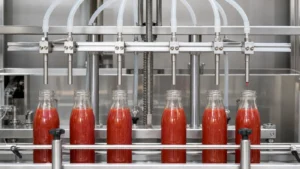
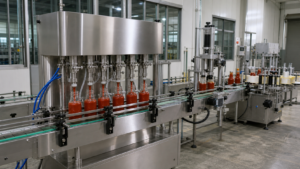
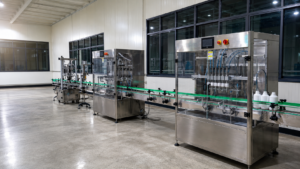
LEKA tested one chili-sauce sample on a LEKA-FLDT-CLB-01 single-head, servo-controlled magnetic-pump configuration. The sauce was not smooth. It contained irregular garlic pieces measuring approximately 1–3 mm, and the pieces settled when the product stood.
The test used chili sauce at approximately 27°C. Each wide-mouth glass bottle received 220 ml, and the bottle opening measured 50 mm internally. The test machine had a 316L stainless-steel hopper, an electromagnetic valve, and an anti-drip nozzle. It was not fitted with heating. Mixing and heating remain optional configurations for products that need them.
| Test Item | Recorded Condition or Observation |
|---|---|
| Product | Chili sauce with settling, breakable garlic pieces of approximately 1–3 mm |
| Filling system | Single-head, servo-controlled magnetic-pump configuration |
| Container | 220 ml glass bottle with a 50 mm internal opening |
| Test run | 100 consecutive bottles |
| Blockage | None observed during this run |
| Particle distribution | Observed to be even across the tested bottles |
| Nozzle behavior | No dripping or sauce stringing observed |
| Particle condition | No visible particle damage observed |
| Operator adjustment | Filling volume adjusted through the touchscreen |
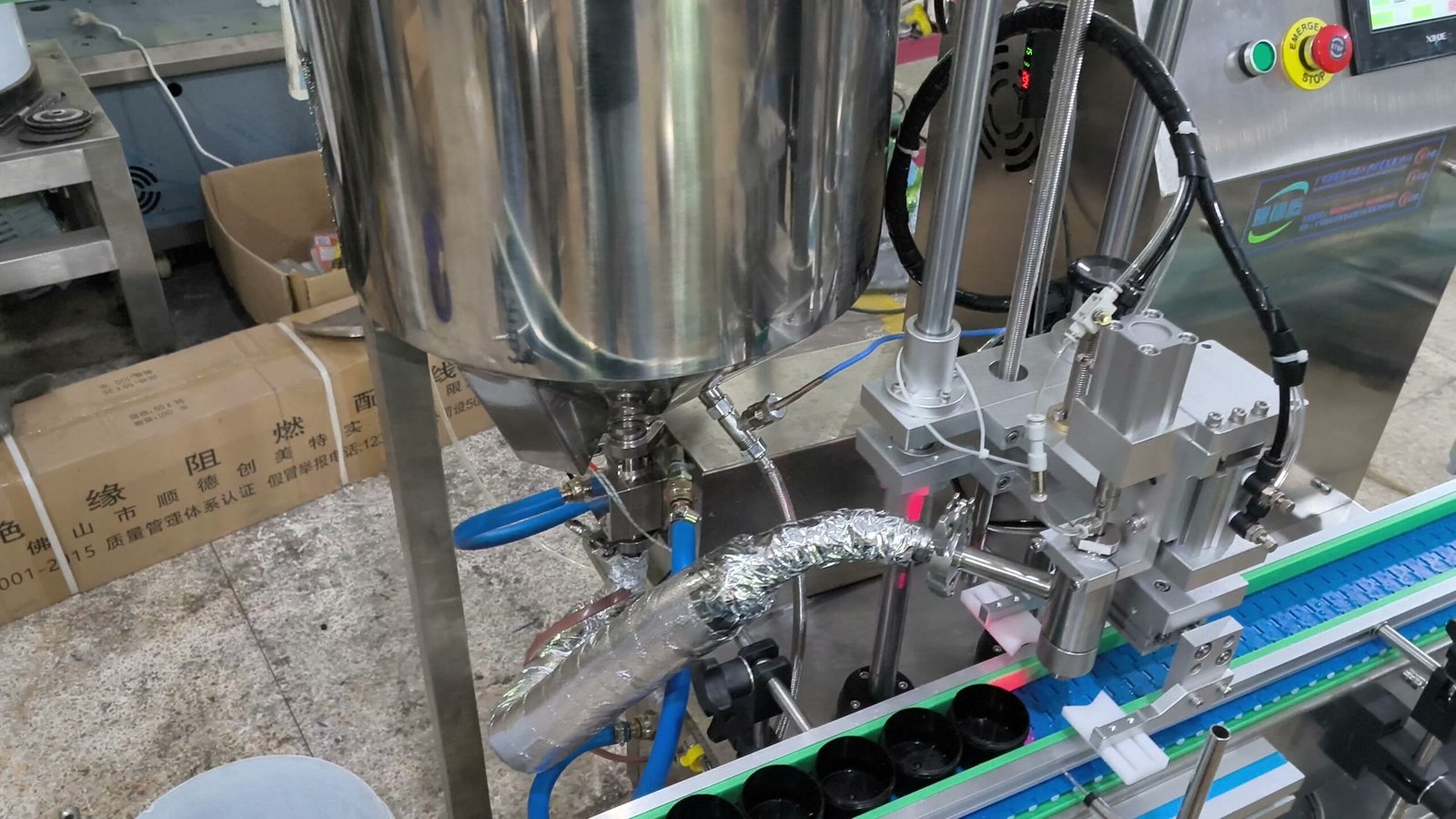
The customer wanted a budget-conscious machine for a small or medium factory. The project target was at least 500 bottles per hour. LEKA selected the servo version because repeatable volume control mattered alongside cost. The supplied test record did not include a timed output measurement, so the output target should still be confirmed during the final acceptance test.
What This Test Proves—and What It Does Not
This result applies to one specific combination: the tested recipe, approximately 27°C, a 1–3 mm particle range, a 220 ml fill, and a 50 mm bottle opening. It does not establish a universal 1–3 mm particle limit for every sauce or every pump. A different garlic shape, solids concentration, temperature, or bottle neck can change the result.
No blockage occurred in the 100-bottle run. If a changed recipe later created a restriction, the LEKA team would inspect the electromagnetic valve and product outlet first, because they are potential narrow points in this configuration.
LEKA has confirmed that this chili-sauce trial used a magnetic-pump configuration. However, the internal pumping element and clearance data were not supplied. The result should therefore not be used as proof that every magnetic-drive pump can handle particles. For any new sauce, the exact pump construction and the complete product path still require confirmation.
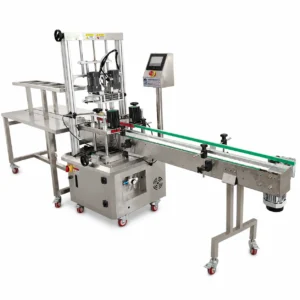
Buyers can review the LEKA-FLDT-CLB01 equipment reference. LEKA has confirmed that the related CLB01 cosmetic filling video uses the same machine configuration. It can be used to review the machine layout and operating motion, but it is not video evidence of the chili-sauce result.
What Counts as a Sauce With Particles?
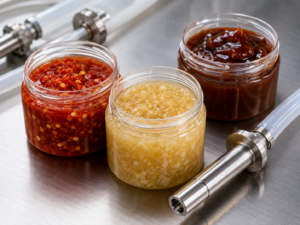
Particles are not limited to large vegetable pieces. A sauce can create filling problems even when the solids look small. Chili seeds, herb flakes, minced garlic, sesame, fruit pulp, and spice fragments can all collect at a narrow valve or nozzle.
It is useful to divide particulate sauces into three practical groups:
- Small suspended particles: Fine spices, pulp, or seeds that remain well mixed for a reasonable time.
- Settling particles: Ingredients that move to the bottom or top of the hopper during production.
- Larger chunks: Visible pieces in salsa, relish, fruit filling, prepared food, or chunky chili sauce.
These groups do not automatically require the same machine. A salad dressing with herbs may need agitation, while a thick salsa may need a wider path. The sauce name alone does not provide enough information for a machine decision.
Why Particles Cause Filling Problems
Blockage at the Valve, Hose or Nozzle
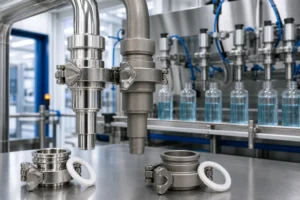
The nozzle is easy to see, but it may not be the narrowest part of the system. A particle can also stop at the hopper outlet, inlet valve, rotary valve, elbow, hose connection, or nozzle shut-off mechanism. Enlarging only the nozzle does not fix a narrow point earlier in the product path.
If a particle prevents clean valve closure, follow this guide to diagnose a particle-related nozzle drip.
Uneven Particle Distribution
A filler can deliver a repeatable liquid volume while still placing different amounts of solids into each container. This happens when particles settle in the hopper or when the product feed does not keep the recipe evenly mixed.
For a sauce producer, this is a product-quality issue. Two bottles may have a similar net weight but a noticeably different texture or ingredient distribution.
Particle Damage
The machine should move the product without changing the texture beyond the agreed limit. High speed, small clearances, or an unsuitable valve can crush soft fruit, cut vegetables, or break ingredients that customers expect to see in the finished sauce.
Trapped Air and Dripping
Thick sauce can hold air. After filling, an air pocket may rise and make the level appear lower. Sticky sauce may also form strings or drops at the nozzle. The project may need controlled filling speed, an anti-drip nozzle, and stable product feeding.
Product Data to Prepare Before Machine Selection
Good machine selection begins with useful product information. Without a viscosity report, provide a pouring video and a real sample.
Sauce Behavior at the Real Filling Temperature
Temperature can change how a sauce flows. Record the temperature at which the product will enter the filler. Do not describe only the temperature used during cooking or mixing.
Largest Particle Size and Shape
Measure the largest expected piece, not the average one. Where possible, record length, width, and thickness. A long chili strip and a round seed can behave differently even if one measurement is similar.
Particle Concentration and Settling
Show how many solids are normally present and whether they settle during a short production stop. A video of the sauce in a clear container can help the equipment supplier understand this behavior.
Container and Production Information
- Bottle or jar photo and dimensions
- Internal neck or opening diameter
- Required filling volume and fill range
- Target bottles per hour
- Semi-automatic or automatic operation
- Cap, label, and coding requirements
- Available factory space and local voltage
Buyers who are still comparing the full range of sauce types can also review this sauce filling machine selection guide.
Which Filling System Can Handle Sauces With Particles?
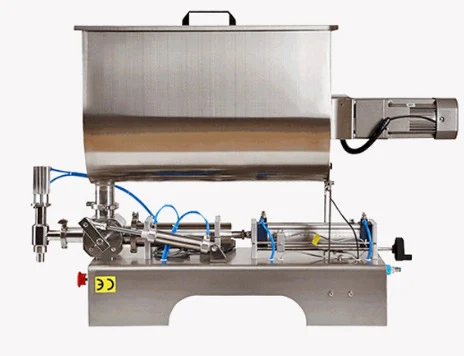
Piston Fillers for Thick and Chunky Sauces
A piston filler draws a measured amount of product into a cylinder and then pushes it toward the container. This principle is widely used for viscous foods and can be configured for selected sauces with particles.
The piston alone does not guarantee success. The hopper outlet, valve design, product passage, and nozzle must all match the sauce. If the product separates, the hopper may also need controlled mixing.
For small-batch trials and flexible production, LEKA offers a semi-automatic chunky sauce filling machine. It is a single-head piston filler with an adjustable-speed mixing hopper and SUS316 product-contact parts. Its chunky sauce filling demonstration shows one tested sample being dispensed into wide-mouth glass jars. This is a separate piston-filler application reference, not the CLB01 magnetic-pump trial described above. A new product still requires its own test.
Rotary Lobe and Other Positive-Displacement Pump Systems
A rotary lobe or other positive-displacement system may be considered for selected viscous products. Its suitability for particles depends on the actual pump geometry, clearances, speed, product path, and cleaning design.
LEKA’s rotary lobe pump filling option is available for project review where a wider product range or higher viscosity makes this method relevant. Particle handling must be confirmed separately with the real product.
Gear Pump Fillers for Smooth, Particle-Free Products
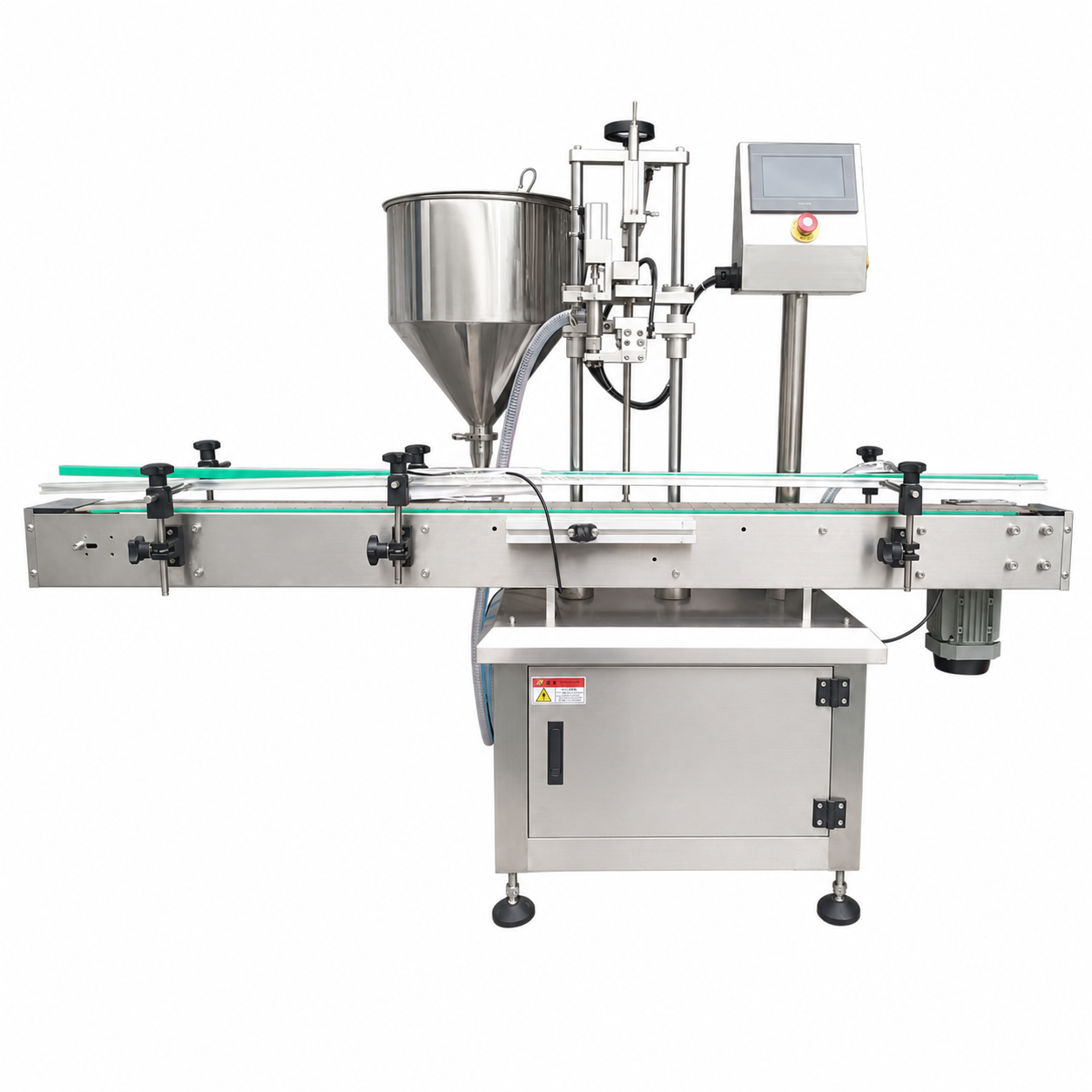
A standard gear pump filling configuration is generally a better starting point for smooth, free-flowing, or medium-viscosity products without visible solid pieces. It can provide controlled dosing in a compact filling setup.
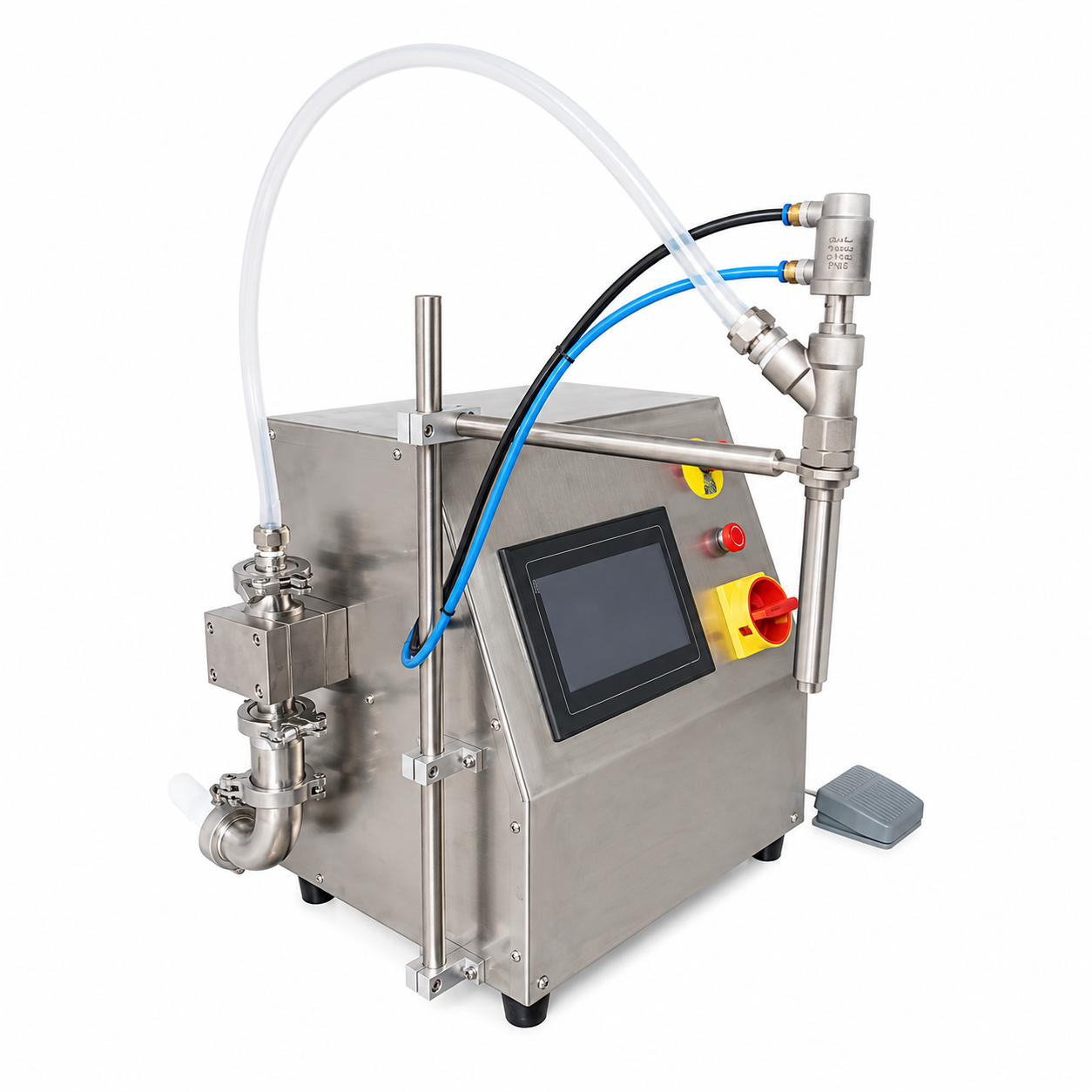
LEKA’s single-head gear pump filling machine is positioned for low- to medium-viscosity liquid filling. A gear-pump option should not be selected for a chunky sauce unless its exact construction and product passage have been reviewed and tested.
Do Not Select by the Pump Name Alone
Terms such as “magnetic pump,” “gear pump,” and “rotary pump” do not always describe the same type of detail. Magnetic drive describes how power can be transferred without a conventional shaft seal; it does not by itself define the product passage. A magnetic-drive gear pump is still a gear pump.
Ask the supplier to identify the actual pumping element, the narrowest clearance, the wetted materials, and the cleaning method. Then confirm the complete system with a product sample.
Use the Particle Path Check
A practical way to review a particulate-sauce project is to follow every ingredient from the hopper to the container. Use this Particle Path Check:
- Hopper: Can the product move toward the outlet without large pieces bridging or settling?
- Agitator: Does mixing keep ingredients distributed without damaging them?
- Outlet and inlet: Are these openings large enough for the expected pieces?
- Valve or pump: Can the internal passage move the product without repeated blockage?
- Hose and connections: Is there a smaller bend, fitting, or reducer in the line?
- Nozzle: Can it pass the product, stop cleanly, and fit inside the bottle opening?
- Container: Is there enough opening and air-release space for a stable fill?
The narrowest or most restrictive point may control the performance of the entire filler.
Filling Accuracy Is Not the Same as Particle Uniformity
Machine accuracy usually refers to the amount delivered under defined conditions. For a chunky product, buyers should also compare visible particle distribution, sauce texture, dripping, trapped air, and product remaining in the system.
If agitation is needed, its purpose is to maintain the recipe during filling. Faster mixing is not automatically better. The correct setting should keep ingredients moving while protecting the intended texture.
Match the Bottle Opening to the Product
A filler cannot solve a package that is too restrictive for the sauce. A wide-mouth jar provides more room for a large nozzle, product flow, and air release. A narrow-neck hot-sauce bottle may require smaller particles, a different recipe texture, or a carefully selected nozzle.
Before approving a bottle, compare:
- The largest expected particle
- The nozzle outside diameter
- The nozzle product passage
- The bottle neck inside diameter
- The space needed for air to escape
Testing the filler with a convenient factory bottle is not enough if the final production container has a different neck.
How to Test a Sauce Filling Machine Before Purchase
A real-product filling test is the most useful way to reduce uncertainty. Agree on the test method before the sample is shipped.
1. Prepare a Representative Sample
The sample should reflect the normal recipe, expected particle concentration, and real filling temperature. If different recipes will run on one machine, identify the easiest and most difficult products.
2. Use the Actual Container
Send the planned bottle or jar, including the correct neck opening and filling volume. If capping and labeling are part of the project, also send the cap and label.
3. Agree on Acceptance Checks
- Blockage or production interruptions
- Fill weight or volume consistency
- Visible particle distribution
- Particle damage and finished texture
- Nozzle dripping and bottle-neck cleanliness
- Stable operation over an agreed run
- Cleaning access and remaining product
The number of test containers, run time, and acceptable variation should be agreed for the actual project rather than copied from an unrelated machine. Use this broader bottle filling machine FAT checklist when preparing supplier acceptance requirements.
Typical Applications and Configuration Questions
| Typical Application | Product Question | Configuration to Review |
|---|---|---|
| Chili sauce with seeds or flakes | Do the solids settle, and what is the largest flake? | Mixing hopper, valve passage, nozzle and bottle neck |
| Salsa or chunky tomato sauce | Can the largest vegetable piece pass without damage? | Piston and valve design, wide product path and jar opening |
| Garlic sauce with pieces | Are the pieces soft, fibrous, or likely to bridge? | Hopper outlet, agitation, hose connections and nozzle |
| Dressing with herbs | How quickly do the herbs separate? | Gentle mixing and repeatable product feeding |
| Fruit sauce or filling with pulp | Must the fruit remain visibly intact? | Low-damage product path and texture inspection during testing |
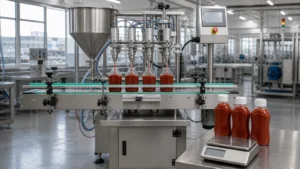
| Smooth ketchup or BBQ sauce | Is the recipe completely free of visible particles? | Piston or suitable pump filler, anti-drip control and temperature review |
What to Send for a Project Recommendation
To receive a practical recommendation, prepare the following information:
- Sauce name, recipe behavior, and filling temperature
- Photos or video showing viscosity and how the sauce pours
- Close-up photos and dimensions of the largest particles
- Information about settling, separation, or foaming
- Bottle or jar photo, dimensions, and neck opening
- Filling volume and required output
- Cap type, label method, and coding needs
- Factory layout, available space, and industrial voltage
- Cleaning, recipe-change, and automation requirements
These details also allow LEKA to explain which items change the sauce filling machine price and whether the project should remain a standalone filler or become a complete sauce packaging line.
Frequently Asked Questions
Can a sauce filling machine handle seeds and fruit pieces?
Yes. Selected filling systems can handle products with seeds, pulp, or pieces. The complete valve, hose, and nozzle path must match the largest particle, and the real product should be tested before the machine is approved.
Is a piston filler suitable for chunky sauce?
A piston filler is often a strong candidate for thick and chunky sauces. Its valve, hopper, cylinder, and nozzle still need to be configured for the product, fill volume, and container.
Can a gear pump fill sauce with particles?
Do not answer from the term “gear pump” alone. LEKA’s standard compact gear-pump fillers are positioned for smooth low- to medium-viscosity liquids. Any product containing visible solids requires a review of the exact pump construction and a sample test.
What particle size can a sauce filling machine handle?
There is no safe universal number. Passage depends on particle shape, concentration, softness, the complete product path, valve design, nozzle, and bottle opening. Ask for a test using the largest expected particles.
Do I need a mixing hopper?
A mixing hopper may be needed when seeds, herbs, pulp, or other ingredients settle during production. Mixing should maintain distribution without damaging the intended product texture.
Can chunky sauce be filled into a narrow-neck bottle?
It may be possible for products with small enough particles. However, the bottle neck must fit the nozzle and allow product and air to move correctly. Test the actual bottle rather than relying on bottle volume alone.
How should I test the machine before buying?
Use the real sauce at its planned filling temperature, the actual container, and an agreed continuous test. Check blockage, fill consistency, particle distribution, texture, dripping, cleaning, and product remaining in the system.
Plan Your Sauce Filling Project With LEKA Pack Line
A successful particulate-sauce project starts with the product, not a standard machine name. LEKA Pack Line can review the sauce, particles, bottle, cap, output target, factory space, and automation level before proposing a configuration.
Send us your sauce video, largest particle dimensions, container drawing or sample, filling volume, and required output. We can then determine what should be tested and whether your project needs a piston filler, a confirmed pump solution, a mixing or heated hopper, or a connected filling and packaging line.