
Piston Filler vs Pump Filler for Sauce: Which Is Right for Your Product?
Ask ten sauce producers how they picked their filler and you'll get ten different reasons — and at least a couple of regrets. The choice of a piston filler vs pump filler for sauce almost never comes down to the machine name on the quote. It comes down to how your sauce actually behaves: how it flows, whether it carries seeds or vegetable pieces, how hot it is when it hits the nozzle, how wide your jar opening is, how many volumes you run, and how you plan to clean the thing at the end of a shift.
For a lot of thick, consistent sauces, a piston filler is the sensible first bet. When you're running several products or changing fill sizes all the time, a well-chosen pump filler can save you real time. But "pump filler" on its own tells you almost nothing — a gear pump and a rotary lobe pump treat a chunky salsa very differently, and one of them will let you down.
The short version: If you're portioning a thick, fairly consistent sauce into a set range of containers, start with a piston filler. If you need to jump between recipes and fill sizes on a touchscreen, or you're a co-packer juggling many SKUs, look hard at a pump filler — but pin down the pump type before you sign anything. And if your sauce is chunky, hot, delicate, or prone to separating, don't decide on paper. Run the real product through the machine first.
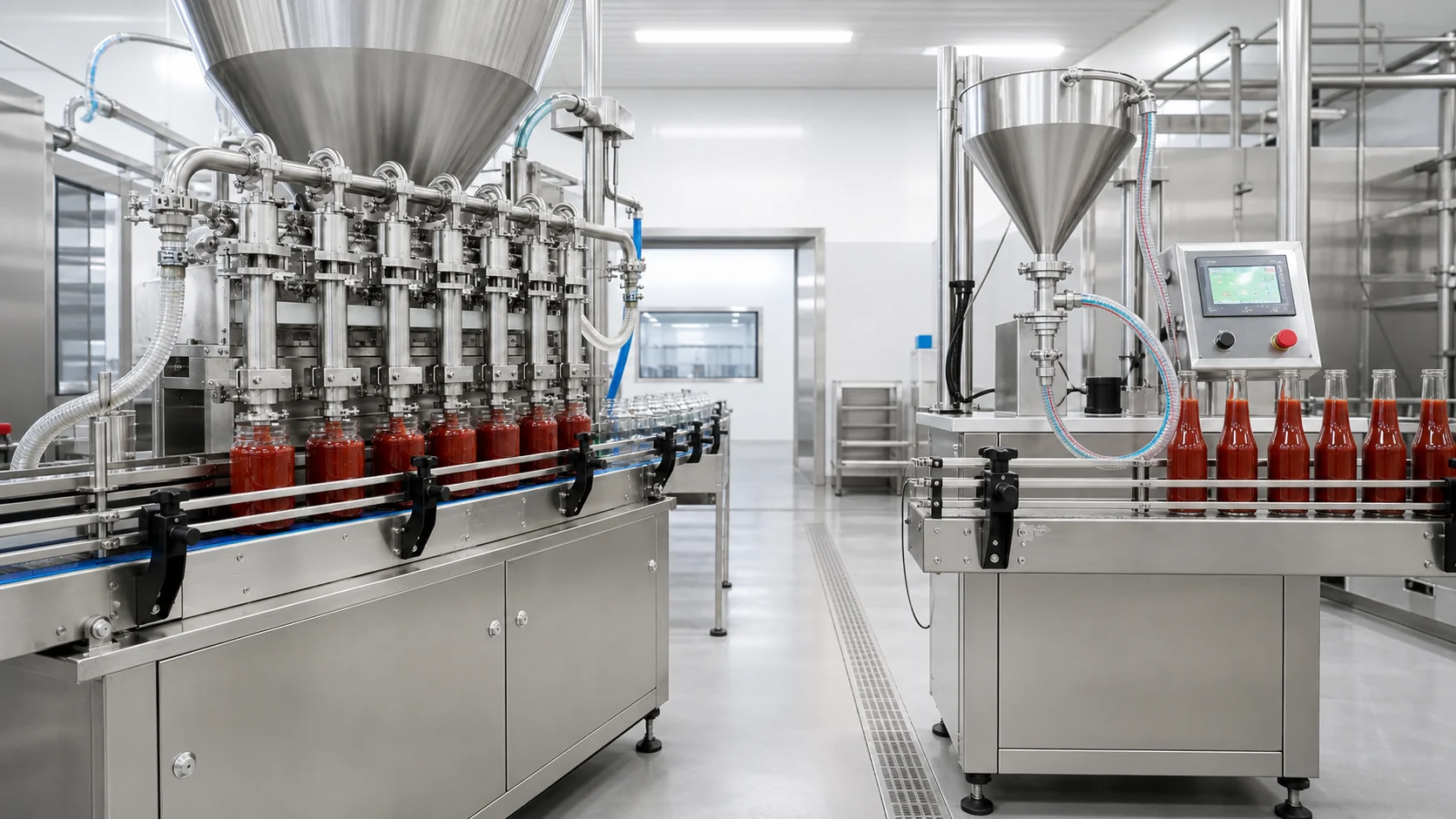
Table of Contents
- Piston filler vs pump filler at a glance
- How a piston filling machine for sauce works
- What a pump filling machine for sauce actually is
- Eight factors that decide the choice
- Which filler fits which sauce
- Product test and FAT checklist
- Frequently asked questions
- Final recommendation
Piston Filler vs Pump Filler for Sauce at a Glance
| Decision factor | Piston filler | Pump filler |
|---|---|---|
| Where it usually fits | Thick, consistent sauces; repeatable fixed-volume portions | Several sauce types, frequent recipe changes, or a project that needs a specific pump characteristic |
| How it doses | Draws product into a cylinder, then pushes a measured slug to the nozzle | A controlled pump moves and meters the product, often by servo-driven rotation |
| Thick sauces | Usually a good match when cylinder, valve, hopper, and nozzle suit the product | Workable with the right positive-displacement pump and motor sizing |
| Particles | Possible with a wide product path, the right valve, and a correctly sized nozzle | Depends heavily on pump type, rotor clearance, particle size, and particle fragility |
| Changing fill volume | May need a recipe, stroke, or cylinder change depending on the design | Electronic recipes are convenient — when the pump and controls actually cover the range |
| Cleaning | Manual strip-down, COP, WIP, or CIP depending on design | Manual, COP, or CIP depending on pump, piping, seals, and drainability |
| Delicate products | Handling has to be proven at the real speed and valve setting | A low-shear rotary lobe or other sanitary pump may suit |
| How to be sure | Test the real sauce, biggest particles, min/max fills, and the actual container | Test the same items, and confirm the exact pump model, seal, and cleaning route |
Read the table as a starting direction, not a verdict. Two machines built on the same principle can behave completely differently once you factor in the product path, the controls, the valve and nozzle design, the seals, and how the whole thing gets cleaned. The datasheet label is where the conversation starts, not where it ends.
How Does a Piston Filling Machine for Sauce Work?
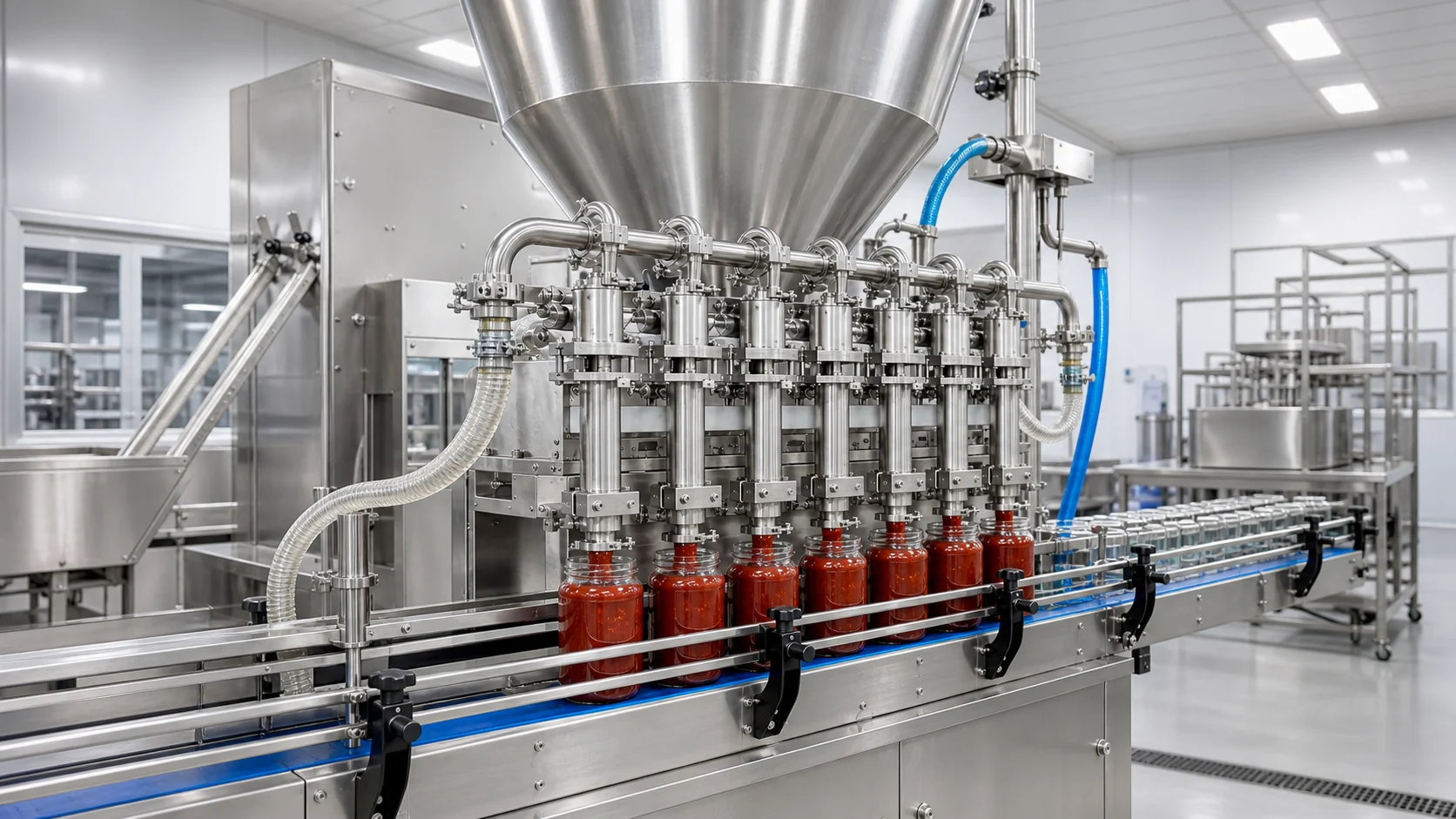
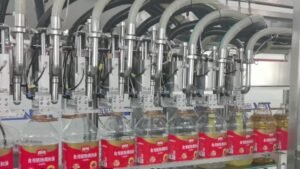
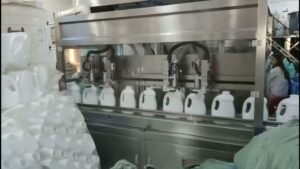
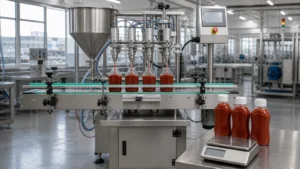
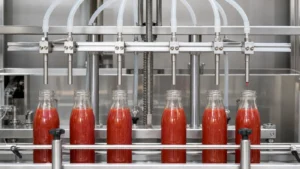
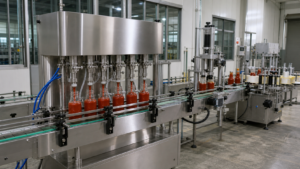
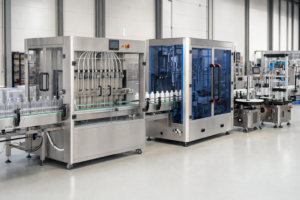
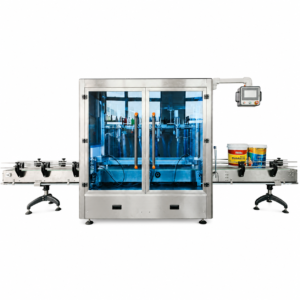
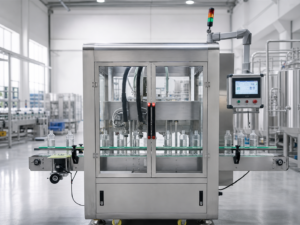
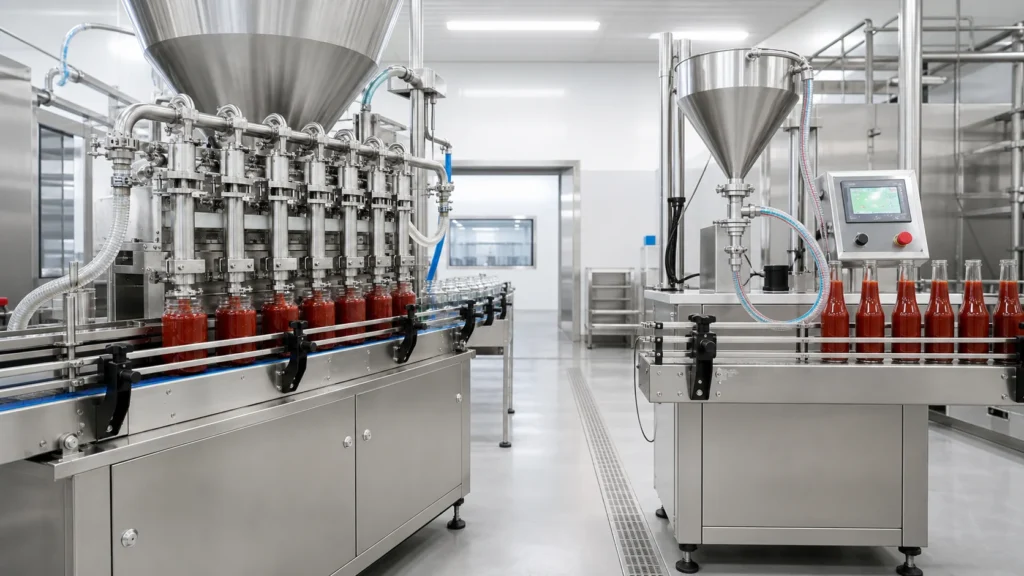
A piston filler works the way a syringe does, just industrialized. Sauce fills a cylinder from the hopper, a valve flips the flow path, and the piston pushes a measured slug of product out through the nozzle into the jar. Draw, switch, discharge, repeat. Unifiller walks through this cycle in its technical explainer, How Does a Piston Filler Work?.
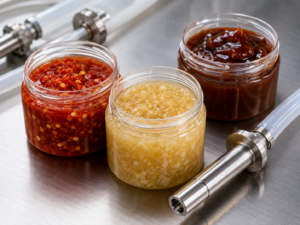
That direct-displacement action is why piston fillers show up on so many lines running ketchup, BBQ sauce, salsa, gravy, and thick pastes. It handles smooth or chunky product — but "piston" by itself guarantees nothing about particles. Every seed, flake, and diced cube has to survive the whole route: the rotary valve, the cylinder inlet, the hose, any elbow in the path, and the nozzle bore. The narrowest point in that chain is what clogs or crushes, and it usually isn't the nozzle.
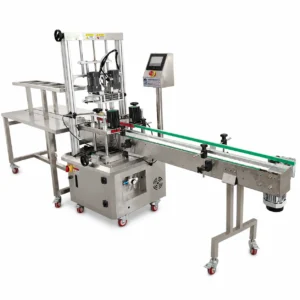
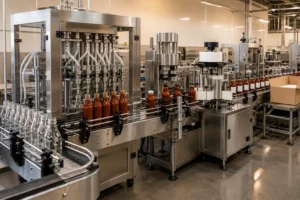
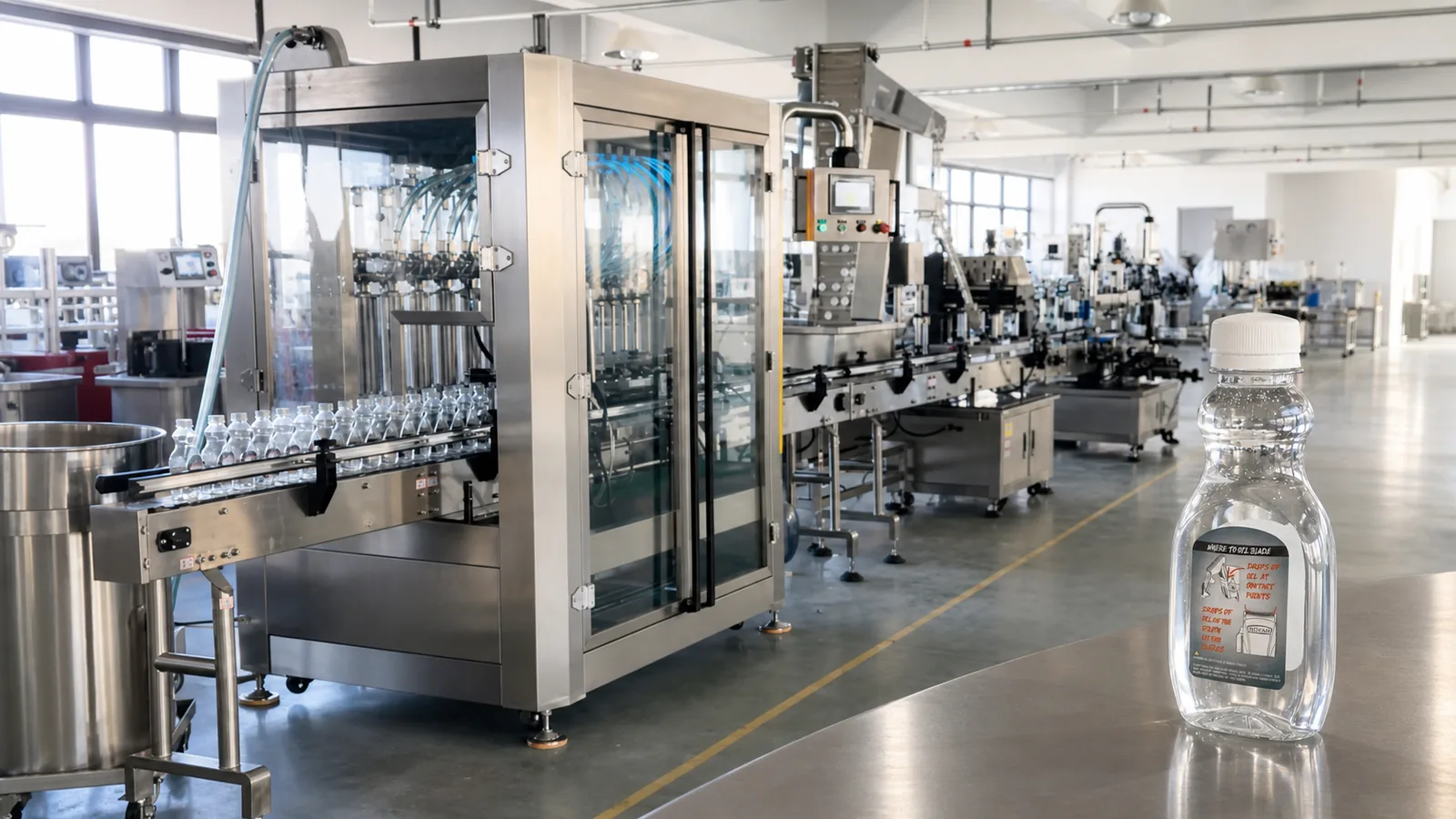
It's also worth clearing up a common misconception: "piston filler" doesn't mean "cheap pneumatic tabletop." Filling Equipment Company lists piston fillers that run from single-station machines up to multi-head lines built for high-viscosity products and large particulates. Those are model-specific capabilities, but the point holds — piston systems scale from a hand-loaded single head all the way to a fully automated multi-head line.
Where a piston filler earns its keep
Give a piston filling machine for sauce priority when:
- Your sauce is thick and won't flow on its own under gravity.
- The recipe stays put through a production run.
- You're filling a defined set of bottle or jar sizes.
- Any particles are soft enough to pass a correctly sized rotary valve and nozzle.
- You want a process operators can actually see and adjust — a slug of product, a stroke, a volume.
- You can feed the filler cleanly from a hopper or a properly sized transfer system.
Before you commit to a piston filler
Don't sign off on "thick sauce" as a spec. Ask the harder questions. Does the viscosity drop as the product heats up? Do the solids settle in the hopper over twenty minutes? Does oil separate out partway through the shift? And does the cylinder range actually cover every fill you need, or are you asking one configuration to work at both extremes of its comfort zone?
If your sauce carries seeds, herbs, diced vegetables, or meat, send the supplier your biggest particle dimensions and a real production sample — not a polished demo batch. Then ask a blunt question: where is the smallest opening in the entire product path? A generous nozzle won't rescue you if the valve, inlet, or hose pinches down somewhere upstream.
What Is a Pump Filling Machine for Sauce?
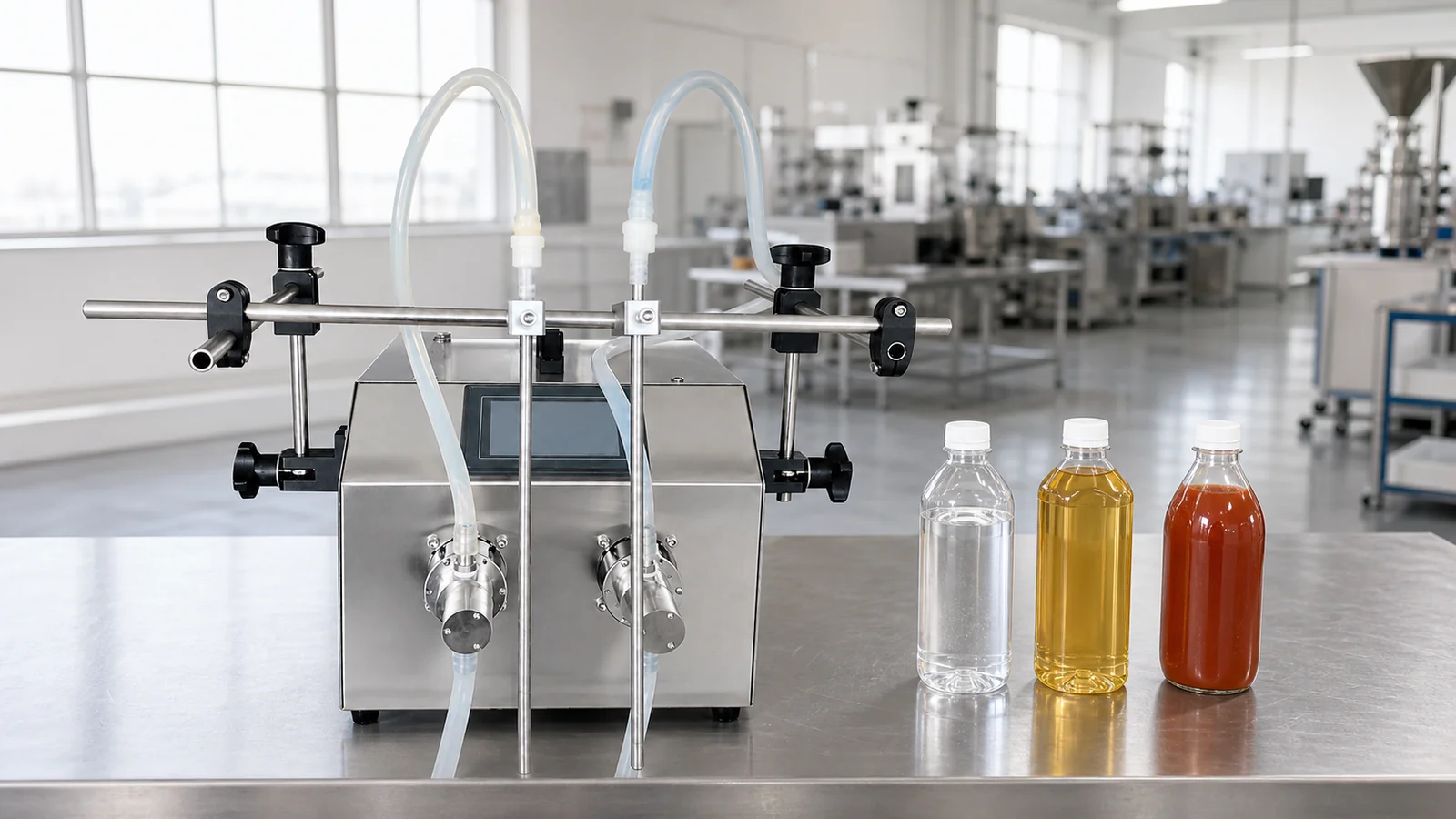
A pump filler does what it sounds like — a pump moves the sauce and meters it into the container. On a servo-driven system, the controller ties pump rotation to the dose you want and stores it as a recipe, which is what makes switching products and volumes so quick. But convenience on the touchscreen doesn't buy you accuracy or gentle handling. Those still ride on the pump design, how the sauce behaves, how it's fed, the nozzle, and how carefully the machine is calibrated.
Here's the part buyers skip: "pump filler" is only half a spec. You need the pump type. The common positive-displacement pump filler options — gear pumps, rotary lobe pumps, circumferential piston pumps, and other sanitary designs — have completely different internal geometry, and each one has to be checked against your viscosity, particles, shear, temperature, cleaning, and maintenance.
Gear pump filler
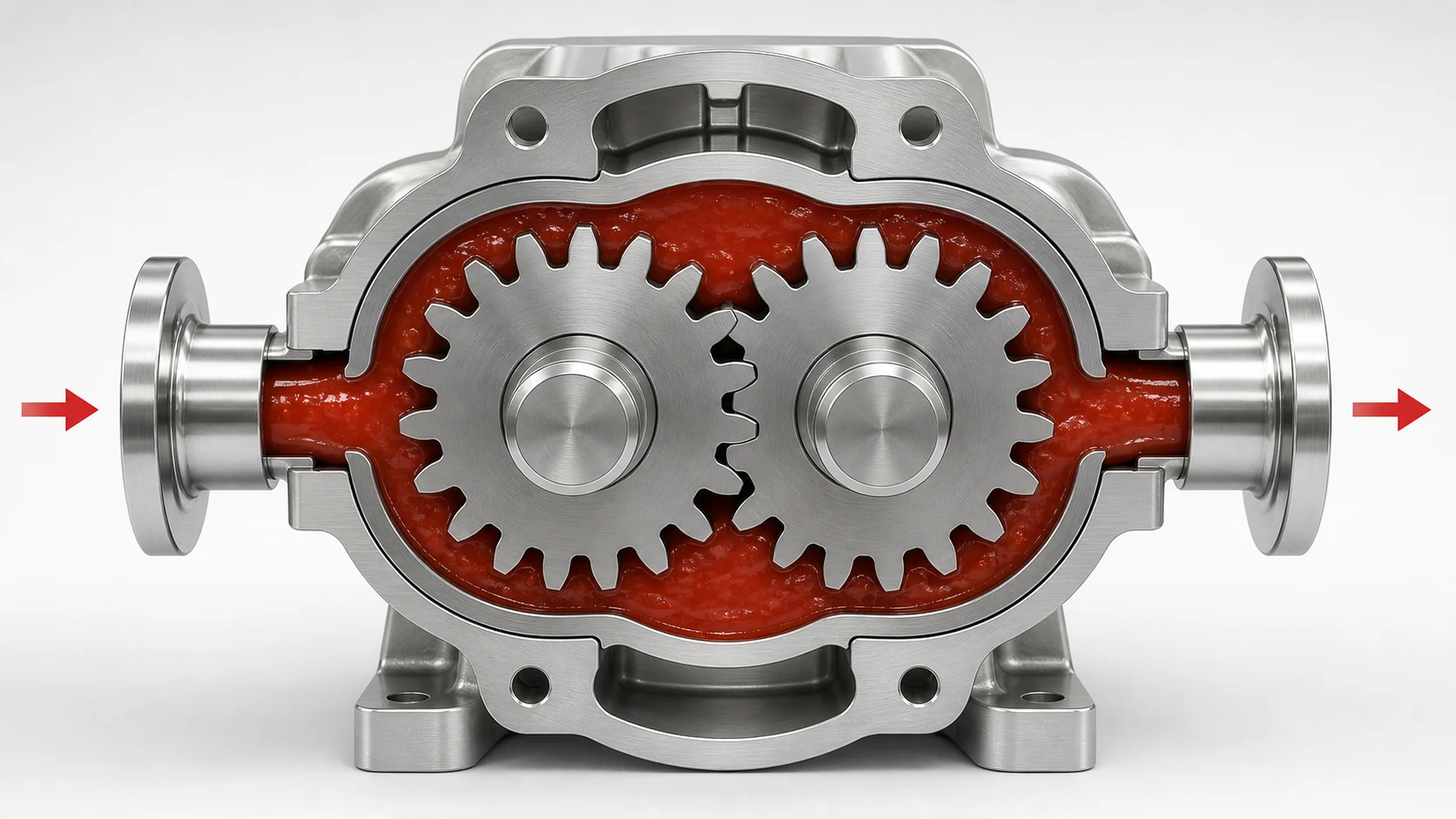
A gear pump suits smooth, reasonably uniform sauces when it's matched properly to the product and the hygiene plan. Its steady rotation makes electronic dose changes across several recipes straightforward. What it won't do reliably is pass large or abrasive particles without taking a toll on the product, the pump, or both — so don't assume it can.
Before you buy, get the supplier to state, in writing, the maximum particle size, the minimum internal clearance, the seal material, the temperature limit, and the cleaning method. And if there are seeds, vegetable pieces, or hard spices in the mix, prove it on the real formula. A water test won't tell you anything useful here.
Rotary lobe pump filler
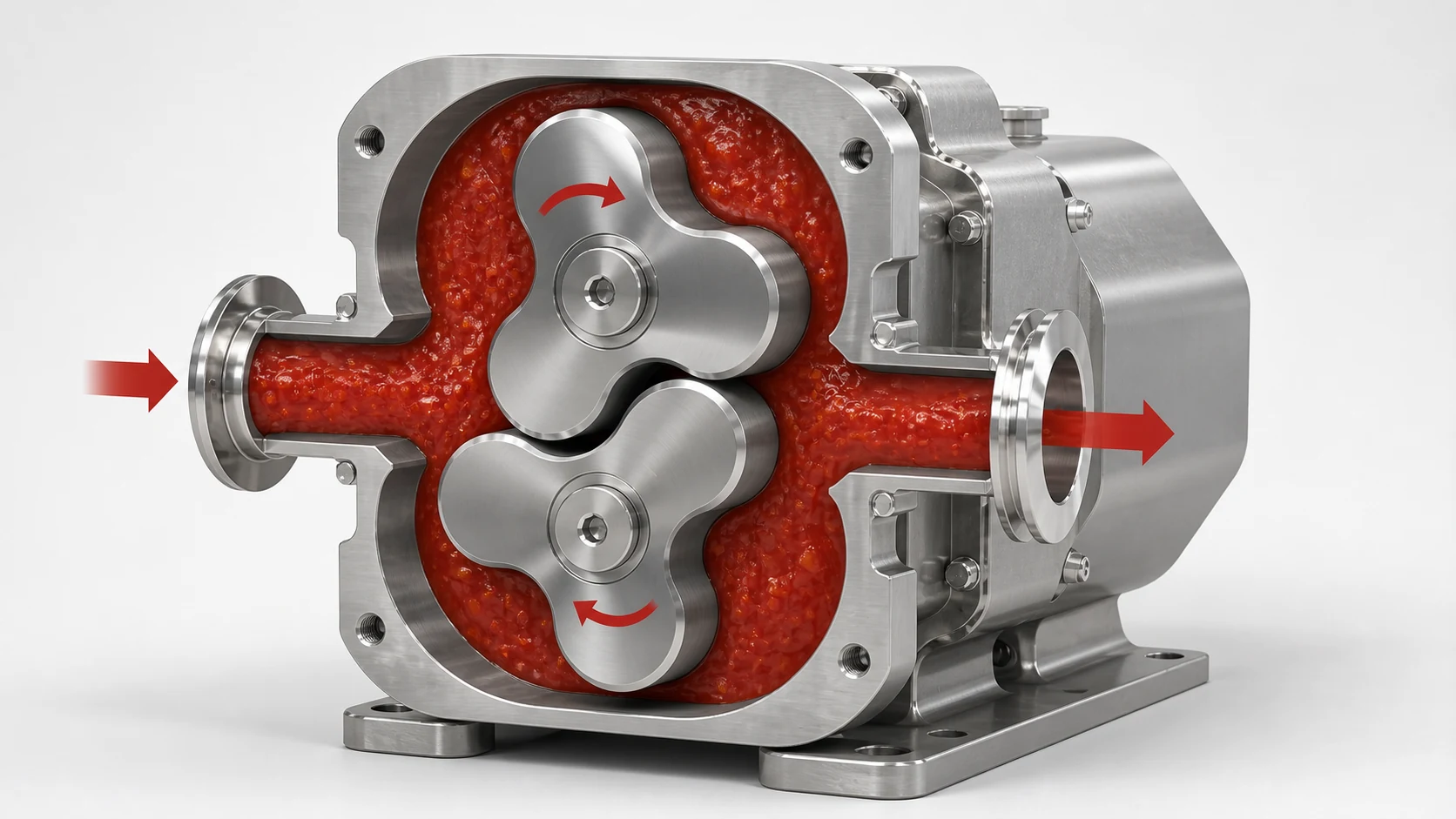
A rotary lobe pump is a positive-displacement pump that carries product through the cavities between two synchronized rotors and the housing. Alfa Laval describes its rotary lobe pumps as suited to hygienic, low-shear handling across low-, medium-, and high-viscosity products. That low-shear character is exactly why the design comes up when a sauce is delicate, thick, or full of ingredients you'd rather not shred on the way into the jar.
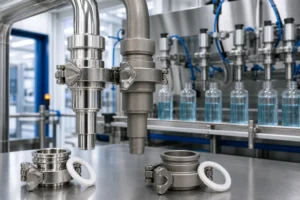
Some sanitary lobe pumps are built for clean-in-place. Fristam, for instance, says its FL2 lobe pump can be cleaned in place with the rotors left in. That's a feature of one specific pump, though — not a promise that every pump filler is CIP-ready. You still have to look at the whole circuit: the filler, the tank, the piping, the valves, and the nozzles all have to clean and drain as one system.
The case for a pump filler
A pump filling machine for sauce is worth leading with when:
- The factory runs several sauces with different flow behavior.
- Fill volumes change often and electronic recipes would genuinely simplify setup.
- The chosen sanitary pump brings a useful trait to the table, like low shear.
- The line needs a controlled feed from a remote tank or a processing area.
- Your sanitation plan favors a validated cleaning circuit built around the selected pump and piping.
- You've tested the product-and-container combination across the range you intend to run.
Eight Factors That Decide Between a Piston Filler and a Pump Filler
1. Viscosity — and how much it moves
Measure viscosity at the temperature you actually fill at, not at whatever the lab bench happens to be. Ketchup, mayo, chili sauce, and vinaigrettes each react to heat, agitation, and dwell time differently. A thick, stable product usually sits well with a piston filler; a well-sized positive-displacement pump gives you more room when the viscosity varies across the range.
Think about the whole batch, not one snapshot. If the first jar fills at one temperature and the last one fills cooler and thicker, either the supplier tests both ends or they explain exactly how the machine setting handles the drift. Don't accept "it'll be fine."
2. Particle size, shape, and concentration
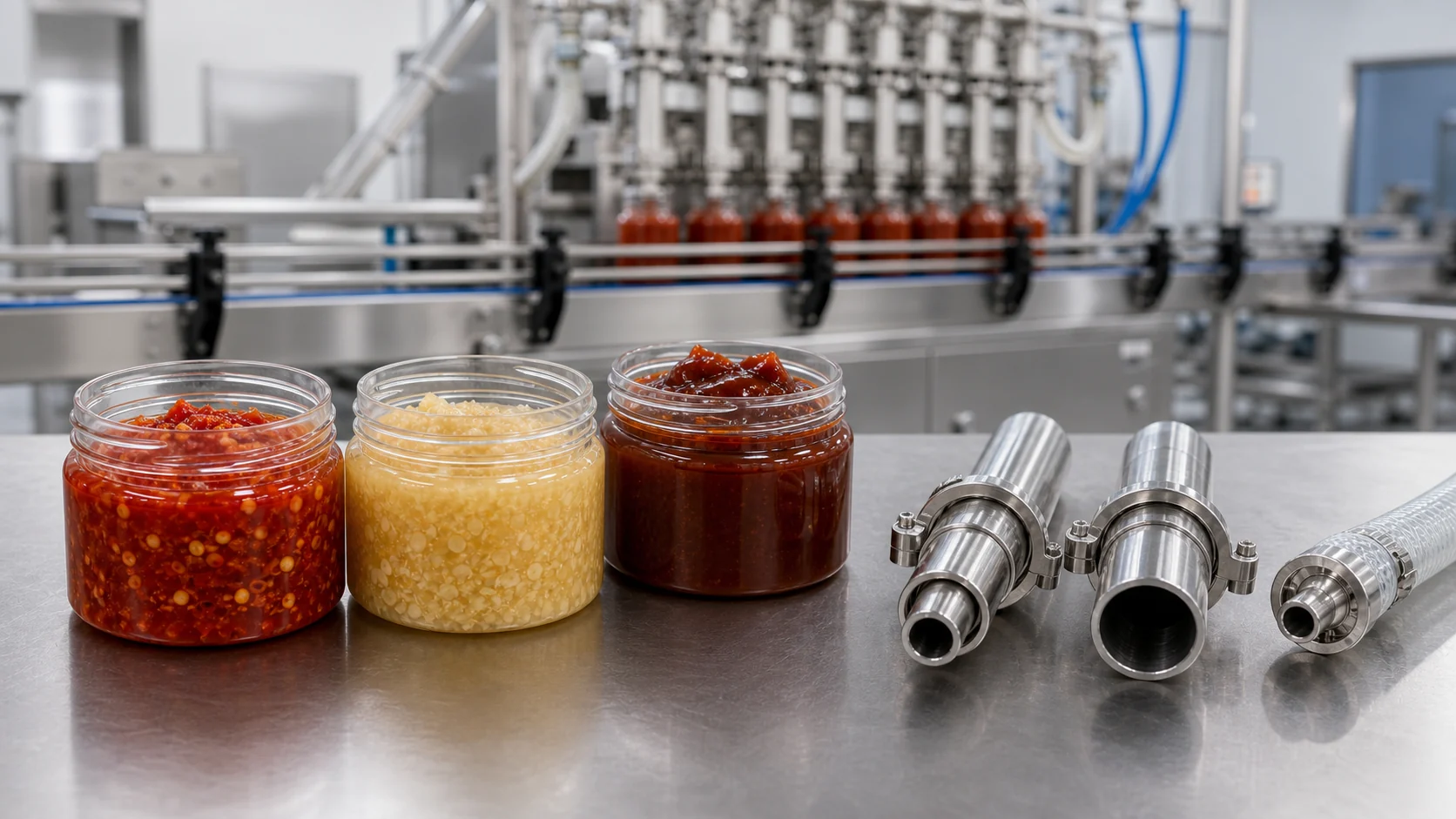
"Contains particles" is not a spec. Fine pepper flakes, soft vegetable cubes, hard seeds, and fibrous bits all behave differently, and a machine that shrugs off one can choke on another. Write down the biggest particle — length, width, and thickness — plus roughly how concentrated they are and whether they settle out.
For a piston filler, find the narrowest opening across the inlet, valve, cylinder, hose, and nozzle. For a pump filler, nail down the exact pump type and the rotor or gear clearance, and confirm the ingredient makes it through without being crushed, jammed, or separated. Our guide to a sauce filling machine for products with particles goes through these checks in more depth. If you're speccing a chunky sauce filling machine, this is the section that decides whether the line works or fights you every shift.
3. The full fill-volume range
Write down your smallest and largest fills before anyone talks dosing systems. A piston filler needs a cylinder or stroke range that covers them; a pump filler has to stay consistent across that whole span of displacement and speed. If you run sample bottles, retail jars, and food-service tubs off the same line, don't assume one setup handles all three gracefully.
Ask, plainly, how volume changes get made — touchscreen recipe, mechanical adjustment, a swapped cylinder, or some mix — and what change parts each container needs.
4. Temperature, and the reality of hot-fill
Hot-fill is never just a heat-rated pump or cylinder. Every product-contact part has to suit the temperature you agreed on — seals, hoses, hopper, valves, nozzles, guards — and so do the bottle, the cap, and everything downstream. On top of that, the sauce loses heat traveling from the kettle to the filler, and that drop changes how it fills.
Give the supplier your normal fill temperature plus the realistic low and high, not one round number. And whenever you can, test with the actual sauce at a representative temperature.
5. Accuracy and cut-off — no free lunch
Neither principle is automatically more accurate. Repeatability gets wrecked by the same culprits either way: entrained air, an inconsistent supply, shifting viscosity, particles wandering into the measuring path, worn seals, pump slip, a dripping nozzle, sloppy calibration. So compare two tested machines, not two words on a brochure.
Nozzle cut-off deserves its own look. A dribble of sauce on the thread is enough to spoil a cap seal, smear a label, and turn a tidy line sticky. Depending on whether your product drips, strings, splashes, or traps air, look at suck-back, positive shut-off, or diving nozzles.
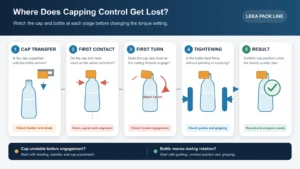
See how to distinguish internal dripping, sauce stringing, and external nozzle wetting before changing the machine recipe.
6. Cleaning and allergen changeovers
Cleaning comes down to sanitary design and the entire product-contact path — not one clever component. In the U.S., 21 CFR 117.40 requires that equipment and food-contact surfaces be adequately cleanable, properly maintained, and corrosion-resistant for the job; wherever you operate, your local rules and your own sanitation plan set the bar too.
Ask which cleaning method the proposed system actually uses — manual strip-down, clean-out-of-place, wash-in-place, or clean-in-place — then check access to the hopper, the pump or cylinder, the valves, hoses, manifolds, and nozzles. A CIP-ready pump means little if one section of the path can't be cleaned and drained the way you need. That gap matters even more when you're switching between allergens and have to prove the line is clean, not just assume it.
7. SKUs and how often you change over
One stable sauce in one jar? A simple piston setup might be all you need. A co-packer cycling through formulas and container sizes all week? Servo recipes and a pump chosen for a wide operating window start to pay off. But note the trap: a servo-driven piston filler also gives you recipe control, so treat the dosing principle and the automation level as two separate questions, not one.
And measure changeover honestly — the whole thing. Stop the line, purge the product, clean, inspect, swap container parts, load the recipe, prime, calibrate, release. The best filler is the one that shrinks that entire validated sequence, not the one with the fewest taps on a screen.
8. How it fits the rest of the line
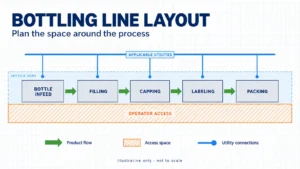
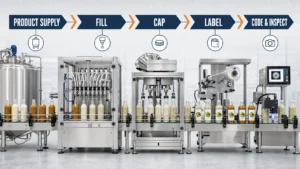
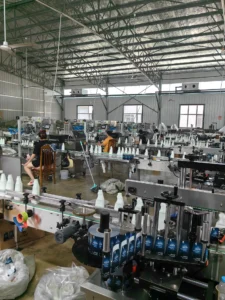
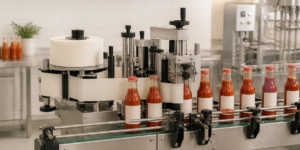
A filler only matters if it keeps pace with bottle feeding, capping, labeling, coding, inspection, and packing. A blazing fill rate is worthless if skinny bottles tip over, caps feed erratically, or labels hit wet glass. Walk the whole line — our sauce packaging machine guide is worth reading before you lock the filler spec.
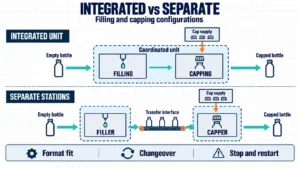
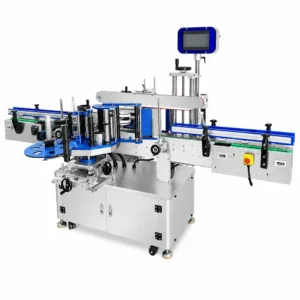
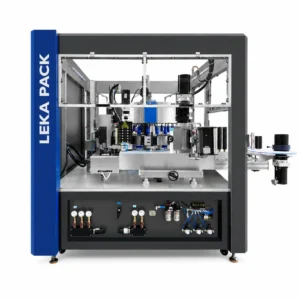
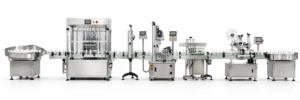
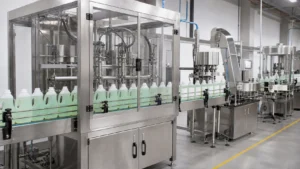
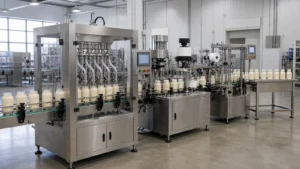
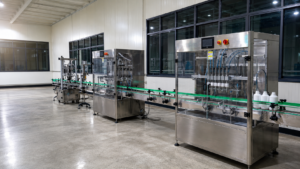
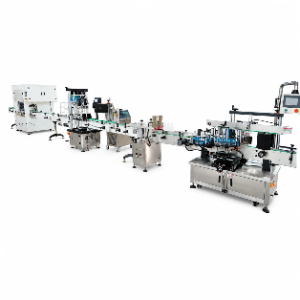
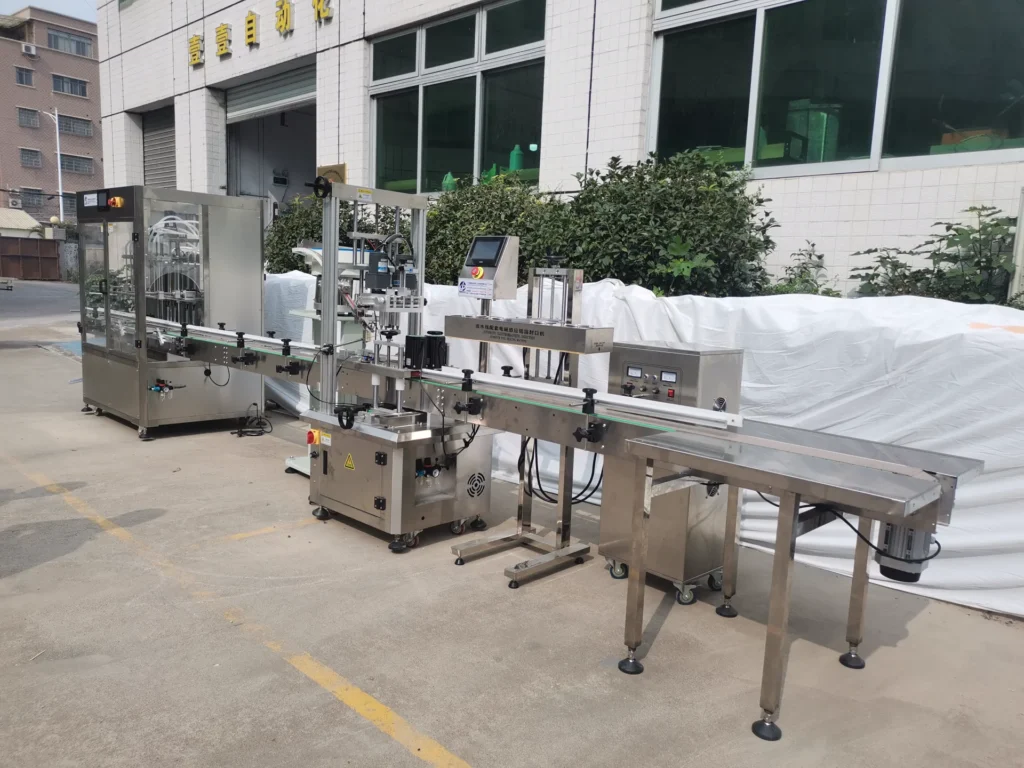
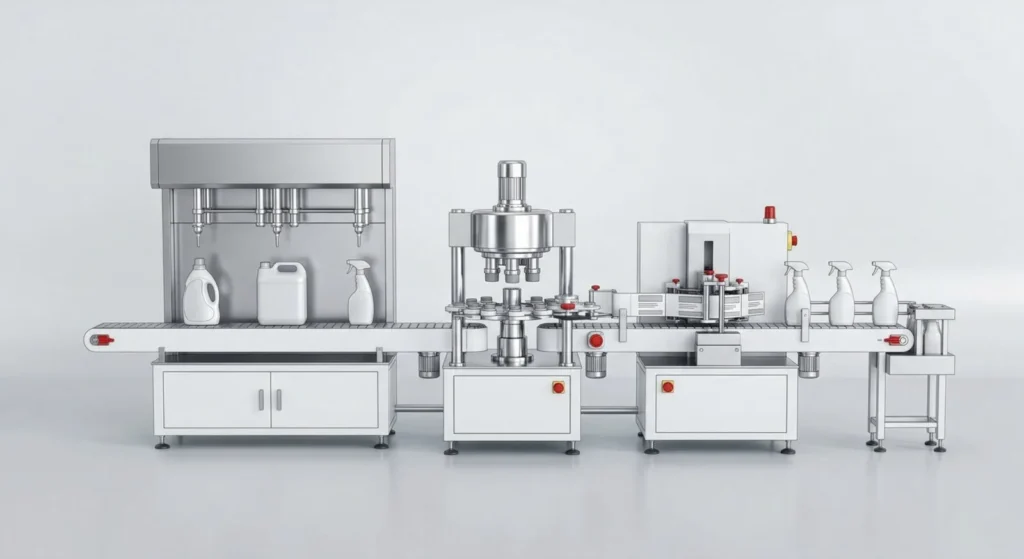
Integration also means the boring, decisive stuff: floor space, operator access, product supply, your electrical standard, compressed air, drainage, cleaning access, and where you want capacity to be in three years. LEKA can supply a single sauce filling machine or tie filling, capping, labeling, coding, conveying, and packing into one line — but only once we know what the line has to do.
Which Filler Fits Different Sauce Products?
Here's where those principles land for specific products. Treat it as a way to narrow the engineering conversation, not as gospel.
| Sauce product | Practical starting direction | What to confirm |
|---|---|---|
| Smooth ketchup or BBQ sauce | Piston filler, or a suitable positive-displacement pump filler | Viscosity at fill temperature, nozzle cut-off, fill range, cleaning method |
| Chili sauce with seeds or flakes | Wide-path piston filler, or a particle-capable sanitary pump | Largest particle, concentration, settling, valve opening, pump clearance, sample test |
| Salsa or pasta sauce with soft pieces | Particle-friendly piston path, or a rotary lobe / circumferential pump | Whether the pieces must stay intact, and whether the container opening takes them cleanly |
| Mayonnaise or emulsified dressing | Controlled piston filling, or a low-shear pump | Shear sensitivity, temperature, air inclusion, separation, sanitation plan |
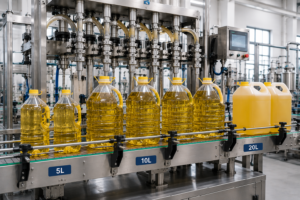
| Thin hot sauce or marinade | Pump or piston, depending on SKU range and line design | Splashing, foam, temperature, fill accuracy, bottle neck, cap/seal process |
| Multiple sauces for contract packing | Servo piston or pump, chosen from the full product range | Changeover sequence, recipe control, cleaning validation, min/max fills |
If one machine has to fill several of these, don't test the average product. Test the easiest one and the nastiest one. The average never causes trouble; the extremes do.
Product Test and FAT Checklist
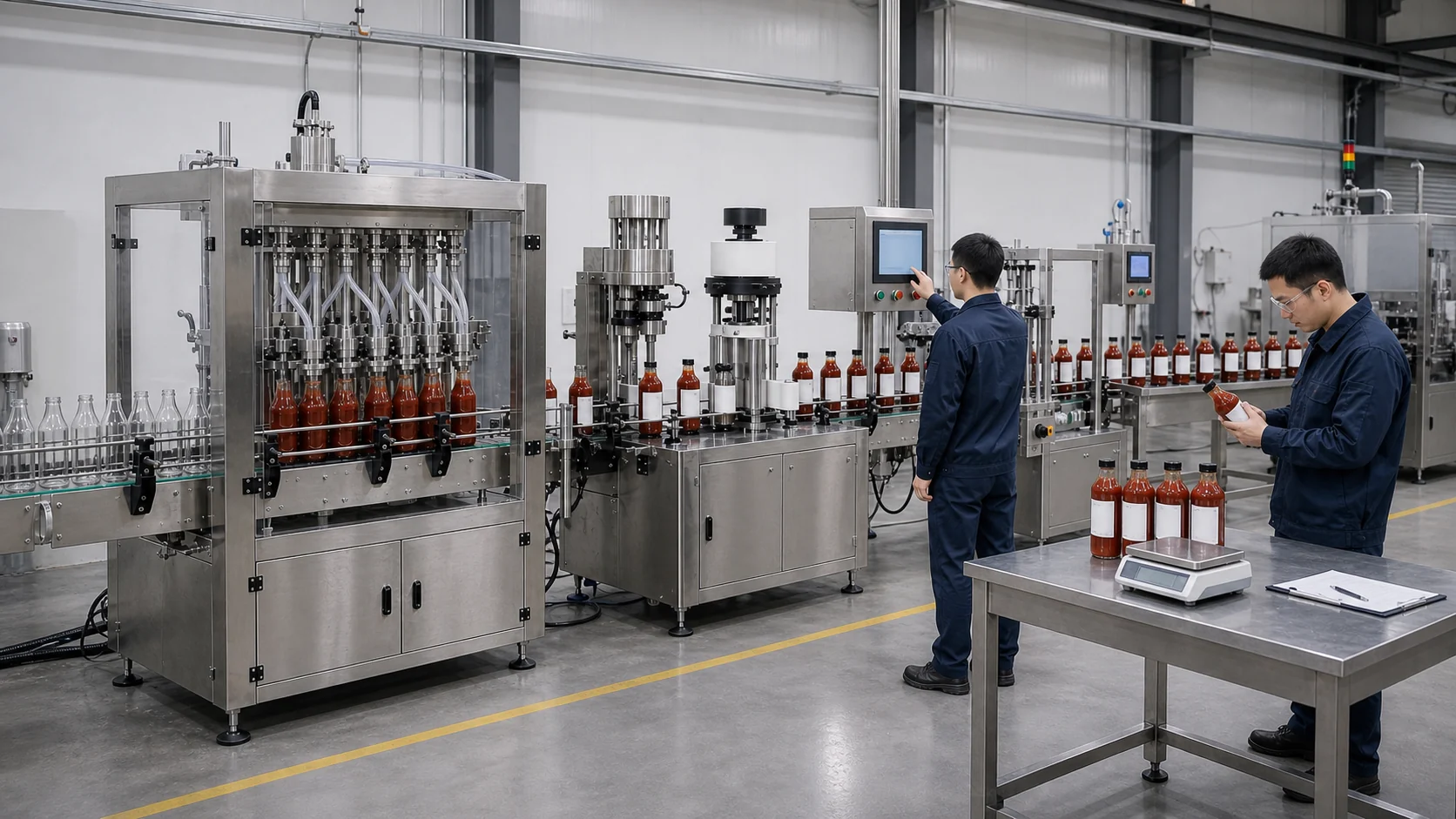
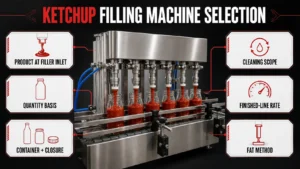
Use the same data set when you compare a piston proposal against a pump proposal — otherwise you're comparing apples to a different orchard. This worksheet gives a supplier enough to spot the hidden risks before anyone cuts metal.
- Product name and behavior: smooth, sticky, foaming, separating, abrasive, shear-sensitive, or particle-laden.
- Viscosity: a measured value and test method if you have them, plus the temperature it was measured at.
- Particles: maximum length, width, and thickness; soft or hard; rough concentration; settling behavior.
- Filling temperature: the normal value and the permitted operating range.
- Fill volumes: minimum, maximum, and every size you run often.
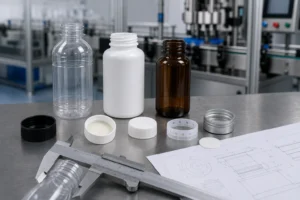
- Containers: material, shape, neck opening, dimensions, plus real samples or drawings.
- Caps and labels: cap style, liner or seal requirement, label method, and coding position.
- Target output: finished containers per hour, not the filler's theoretical cycle rate.
- Cleaning plan: manual, COP, WIP, or CIP; chemicals; allergen-change requirements; drainability expectations.
- Utilities and layout: voltage, frequency, compressed air, floor space, product-tank location, drainage, operator access.
- Acceptance method: agreed fill tolerance, particle condition, bottle cleanliness, nozzle drip, changeover steps, safety checks.
- Samples for testing: production-representative sauce, the biggest particles, bottles, caps, and labels.
To make it concrete, a buyer might line up 150 mL, 500 mL, and 1 L fills at a target of 2,400 bottles per hour, running sauce at 85 °C with particles up to 8 mm. Those are illustration numbers, not LEKA specs — plug in your own real figures and the acceptance limits written into your purchase contract.
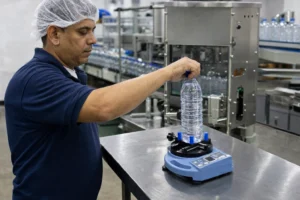
During the trial, it's worth pulling 30 filled containers in a row for a repeatability check at each critical product-and-container combination — a practical sample, not a regulatory mandate. Log the product temperature at the start and end, check the bottle neck for smears, confirm your biggest particles came through intact, and then run it all again after a changeover.
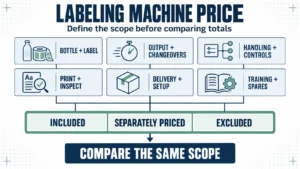
When you're ready to price it out, our sauce filling machine price and RFQ guide helps you define scope before you start comparing quotes side by side.
Frequently Asked Questions
Which is better for thick sauce, a piston filler or a pump filler?
For a thick, consistent sauce, most buyers start with a piston filler — it pushes a measured slug out of a cylinder and does it repeatably. A well-matched positive-displacement pump can handle thick product too. Before you choose, compare the real viscosity, temperature, supply method, fill range, particles, and cleaning plan — not the label.
Can a pump filler handle chunky sauce?
Some can, but it hinges entirely on the pump type and the full product path. Check the rotor or gear clearance, the smallest internal opening, how concentrated the particles are, and whether the pieces need to stay intact. Test it with the actual sauce — a water test proves nothing about chunks.
Can a piston filler handle seeds and vegetable pieces?
Yes, when the inlet, rotary valve, cylinder, hose, and nozzle are all sized for it. Ask the supplier to point to the narrowest passage and the largest particle it'll pass, then run your biggest, most concentrated production sample to check for clogging, crushing, separation, and uneven distribution.
Which filler is easier to clean?
Neither wins automatically. Some piston fillers have quick-release contact parts or WIP/CIP options; some sanitary pump systems clean in place. Compare the entire route from tank or hopper to nozzle — seals, valves, hoses, manifolds, drainability, teardown steps, and your allergen requirements.
Is a pump filler more accurate than a piston filler?
Not inherently. Both dose accurately when they're sized, calibrated, fed, and maintained properly. Accuracy drifts with viscosity, temperature, air, particles, seal wear, pump slip, nozzle drip, and settings. Insist on a test protocol and agreed acceptance limits for your actual sauce and container.
Is a piston filler cheaper than a pump filler?
A basic piston machine can be a simpler scope than a full servo pump system, but there's no universal price rule. The number moves with filling heads, controls, pump type, cylinder range, sanitary design, temperature needs, hopper and agitation, conveyors, capping, labeling, safety, spares, and validation.
Can one sauce filling machine run several products?
Yes — if the fill range, contact materials, seals, valve or pump, nozzles, cleaning procedure, and recipes cover every product. Send the full product matrix and validate the thinnest, thickest, hottest, most particle-heavy, and hardest-to-clean formula before you approve one configuration.
Final Recommendation: Choose From the Sauce, Not the Machine Label
The right answer to piston filler vs pump filler for sauce lives in your production conditions, not in a catalog. For thick, consistent sauces filled into a defined set of volumes, a piston filler is usually a strong place to start. A pump filler buys you flexibility — but only when the pump type, the controls, the product path, and the cleaning design all fit the actual formula.
So don't decide from a datasheet. Send us the details that actually drive the decision: your sauce type and how it behaves, viscosity at fill temperature, particle dimensions, filling temperature, every fill volume, bottle and cap samples, target output, your cleaning plan, voltage, and the space you're working with. We'll weigh the filling principles that genuinely fit and put together a practical proposal — a single machine or a complete line. Send the sauce and the numbers, and we'll test before we recommend.