Hot Sauce Bottling Machine Guide: Match the Sauce, Bottle, Cap, and Complete Line
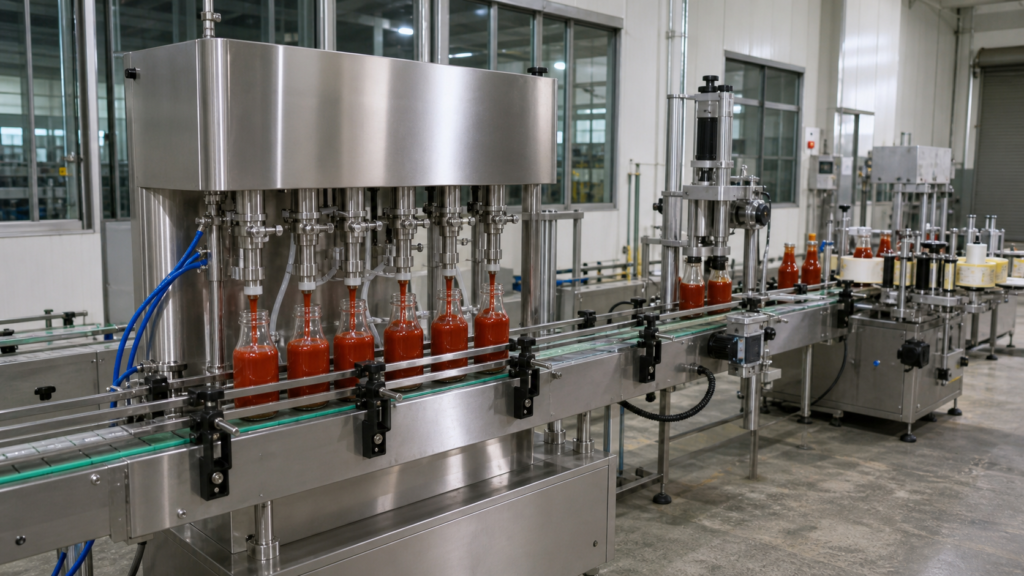
A hot sauce bottling machine can run neatly with one recipe and struggle with the next. The change may be small on paper: a colder batch, more chili seeds, a thicker texture, or a bottle fitted with a narrow restrictor. On the production floor, those details decide whether the sauce fills cleanly or leaves drips, trapped air, inconsistent levels, and extra cleaning work.
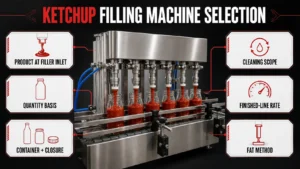
That is why a sensible buying process does not begin with the fastest machine in a quotation. It begins with the sauce as it reaches the filler, then works outward to the bottle, closure, label, and the rest of the line.
If you are comparing a broader range of containers and liquid products, start with LEKA’s bottle filling machine range. This guide focuses specifically on the decisions that shape a hot sauce project.
Start With the Sauce That Actually Reaches the Filler
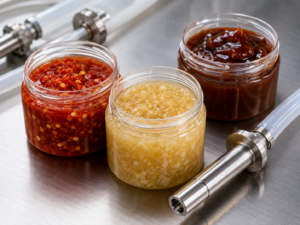
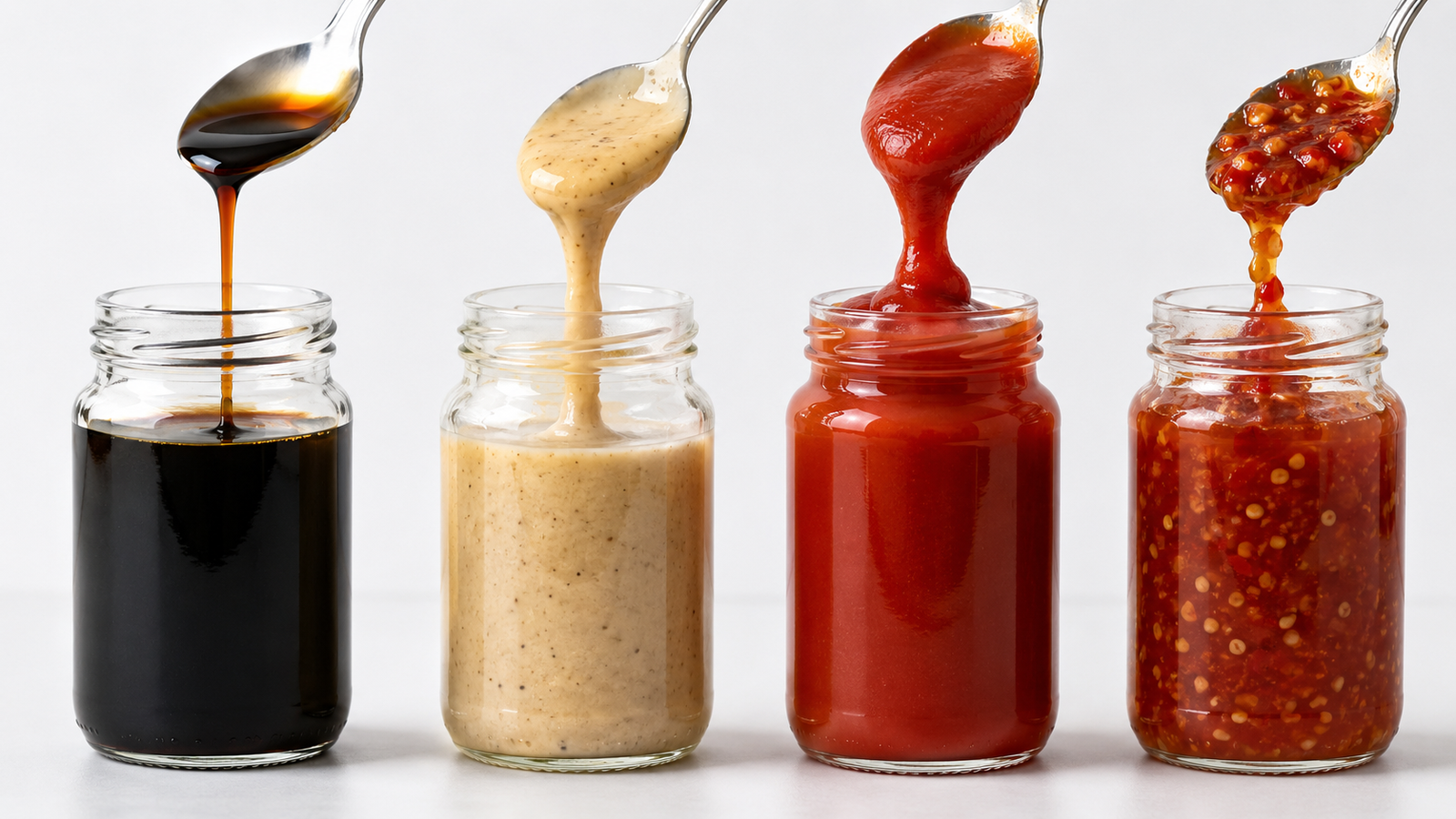
“Hot sauce” is a market category, not one fixed liquid. A thin vinegar-based sauce, a smooth sriracha, and a chunky chili-garlic sauce can require very different product paths. Even the same recipe may flow differently when its temperature changes.
Before discussing a machine, record the following conditions:
- Flow at the real filling temperature: Do not judge the sauce only at room temperature if it will be filled warm.
- Particle type, size, and concentration: A few soft chili seeds are different from a dense mixture of chopped vegetables.
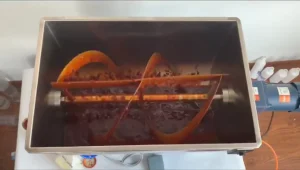
- Texture: Note whether the sauce is smooth, fibrous, stringy, aerated, or likely to separate in a hopper.
- Target fill: Confirm whether production is controlled by volume, weight, or another acceptance method.
- Cleaning expectation: One recipe per day and frequent flavour changeovers place different demands on the product path.
A short product video is useful, but a representative sample is better. It lets the equipment supplier see what happens inside the pump, valve, hose, and nozzle rather than guessing from a description such as “medium viscosity.”
Which Hot Sauce Filling Machine Structure Fits the Product?
There is no honest one-pump answer for every sauce. In practice, the labels “hot sauce filling machine” and “chili sauce filling machine” do not define the pump; the product condition does. The table below is a practical starting point for project discussion, not a substitute for sample review.
| Sauce Condition | Filling Structure to Evaluate | Why It May Fit | What Still Needs Confirmation |
|---|---|---|---|
| Smooth sauce without particles | Servo-controlled gear pump or magnetic-drive pump | Both configurations can be evaluated around the sauce’s flow behaviour and the required dosing conditions | Actual flow, temperature, target volume, bottle neck, material compatibility, and cleaning routine |
| Sauce with seeds or other particles | Rotary lobe pump or piston filling with a suitable product path | The pump, valve, hose, and nozzle can be sized around the reviewed sauce | Flow at filling temperature, largest particle, particle concentration, tendency to bridge, and bottle opening |
| Several recipes on one line | Project review and sample testing | The most demanding recipe often determines the practical configuration | Changeover method, cleaning time, recipe range, and acceptable compromises |
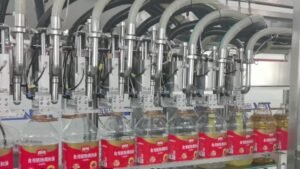
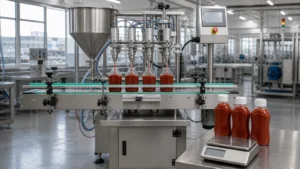
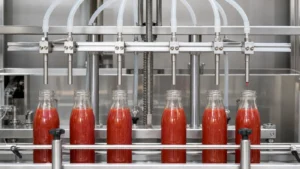
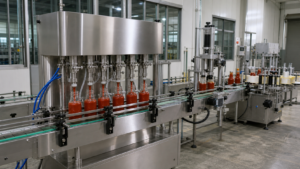
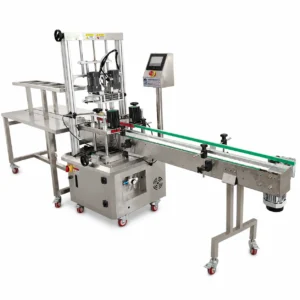
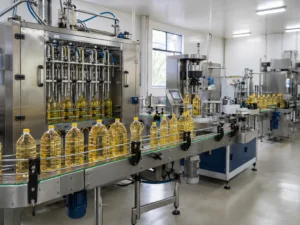
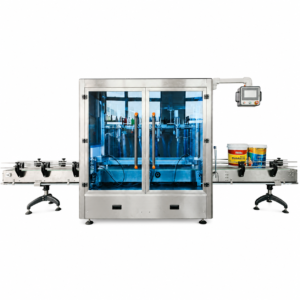
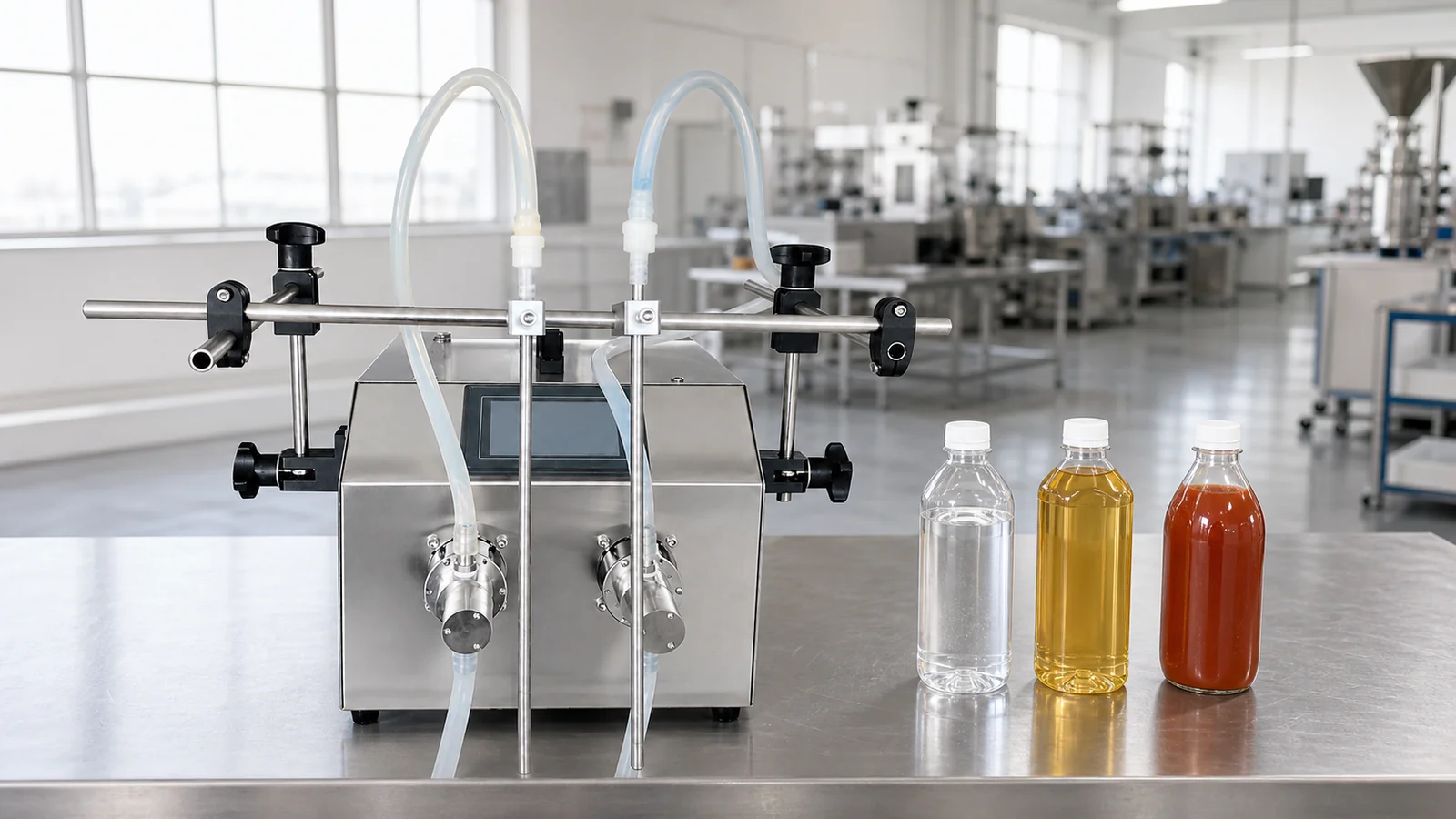
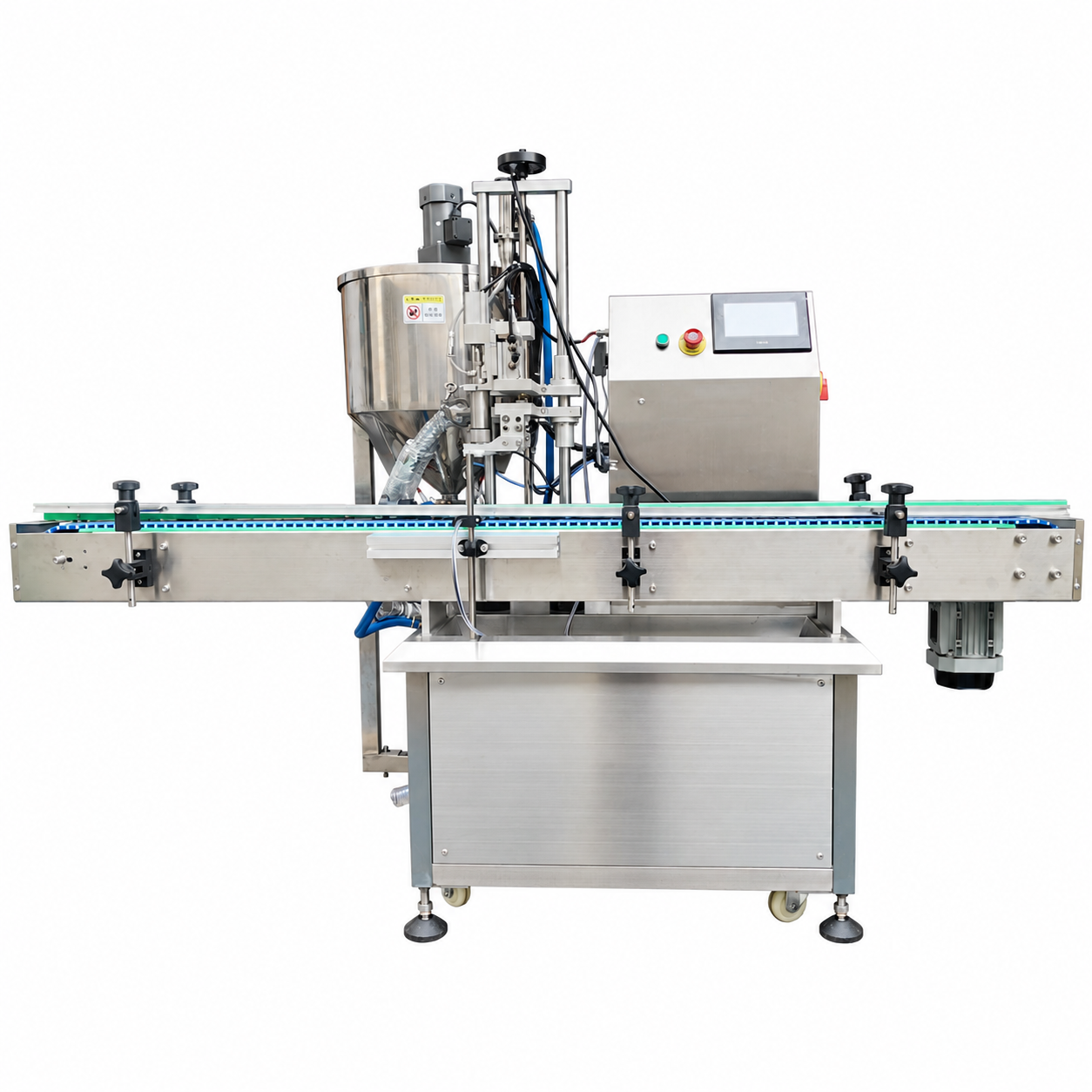
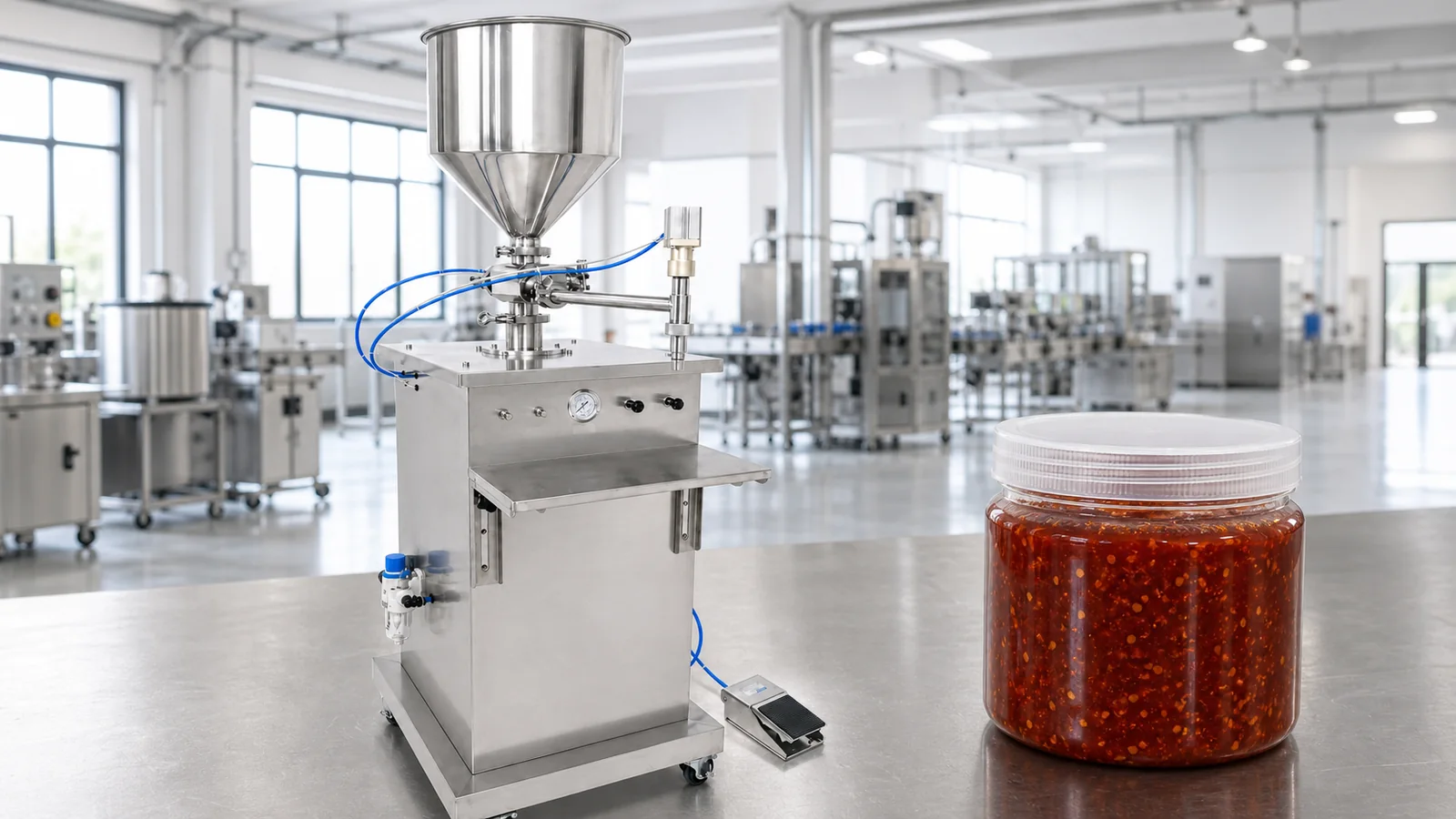
For a smooth sauce without particles, LEKA can evaluate either a gear-pump or magnetic-drive-pump configuration. The main model discussed here is the LEKA-FLDT-HGZ01 servo gear pump filling machine. It is a single-head model with a published reference filling range of 5–5000 ml, accuracy within ±1% under confirmed working conditions, and a reference output of 200–300 bottles per hour. Those figures are starting references. Final performance depends on the sauce, dose, container, nozzle movement, and connected line.
If the recipe contains particles, LEKA will normally review a rotary lobe pump or piston filling solution instead of forcing the sauce through a particle-free pump configuration. A broader comparison is available on the sauce filling equipment page.
A Hot Sauce Bottle Filler Is More Than the Pump
Here is the part buyers often discover too late: choosing the pump does not finish the filling decision. The narrowest or least suitable point may be the valve, hose, nozzle, or bottle mouth.
For a particulate sauce, the complete route should be checked together. Particle size alone is not enough. Concentration matters too. A sauce with occasional 2 mm seeds does not behave like a sauce packed with pieces of the same size.
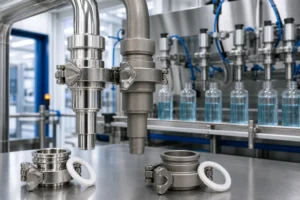
The nozzle arrangement should also match the way the product stops flowing. Depending on the reviewed sauce and bottle, LEKA can configure anti-drip control, suck-back, a shutoff valve, diving filling, or a larger-bore particle nozzle. These are selected around the project; they should not be treated as one universal nozzle package.
Why the bottle opening matters
A large product path cannot solve a small bottle opening. If a sauce contains visible pieces, compare the largest expected particle with the internal route and the actual neck orifice. This simple check can prevent bridging, product damage, and messy deposits around the bottle finish.
Temperature: Separate Machine Capability From Process Validation
Warm sauce usually flows more easily than the same sauce after cooling. That may influence pump choice, hose selection, hopper design, and filling speed. It does not, however, make the filler responsible for validating the food process.
For the standard LEKA-FLDT-HGZ01 configuration, the hopper has a continuous operating upper limit of 60°C. Higher-temperature configurations can be discussed, but they require project confirmation. Heating, mixing, insulation, and automatic product supply are available as additional hopper or feeding options.
This distinction is especially important when the word “hot-fill” is used. The required product temperature and hold conditions depend on the food and its validated process. For products sold in the United States, manufacturers should review the applicable FDA guidance for acidified and low-acid canned foods with a qualified process authority. Requirements differ by product and market.
The container needs the same care. Ordinary PET should not automatically be assumed suitable for warm or hot filling. Confirm the filling temperature, cooling behaviour, vacuum response, and closure combination with the bottle and closure suppliers. Glass, PET, HDPE, squeeze bottles, and glass jars can all be handled in LEKA projects, but the approved container specification still governs the application.
Match the Bottle and Closure Before Finalising the Filler
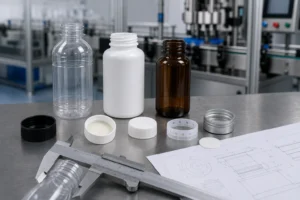
A sauce may fill correctly and still fail as a sellable pack if the closure system was considered too late. A standard screw cap, metal cap, flip-top cap, dispensing spout, restrictor insert, press-in plug, and foil seal each create different handling steps.
| Package Format | Typical Line Considerations | Details to Send for Review |
|---|---|---|
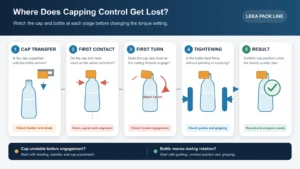
| Glass bottle with screw or metal cap | Bottle stability, cap feeding, thread match, capping control, and label position | Bottle and cap samples, neck drawing, filled weight, and required closure result |
| Squeeze bottle with flip-top or spout | Container handling, cap orientation, dispensing-orifice suitability, and squeeze-panel support | Bottle stiffness, cap assembly, orifice size, and intended sauce texture |
| Bottle with restrictor or press-in plug | Separate insert feeding and pressing may be required before capping | Insert dimensions, fit, bottle neck, and required insertion depth |
| Bottle with foil seal | Cap and liner compatibility, induction-sealing station, and container material | Complete closure set, foil specification, neck finish, and sealing requirement |
For dispensing packs, the closure orifice must suit the sauce. A small restrictor can make a thick or particulate sauce frustrating to use even when the bottle was filled perfectly. It is better to test the filled package as a consumer would: invert it, dispense it, close it, store it, and open it again.
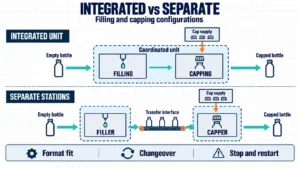
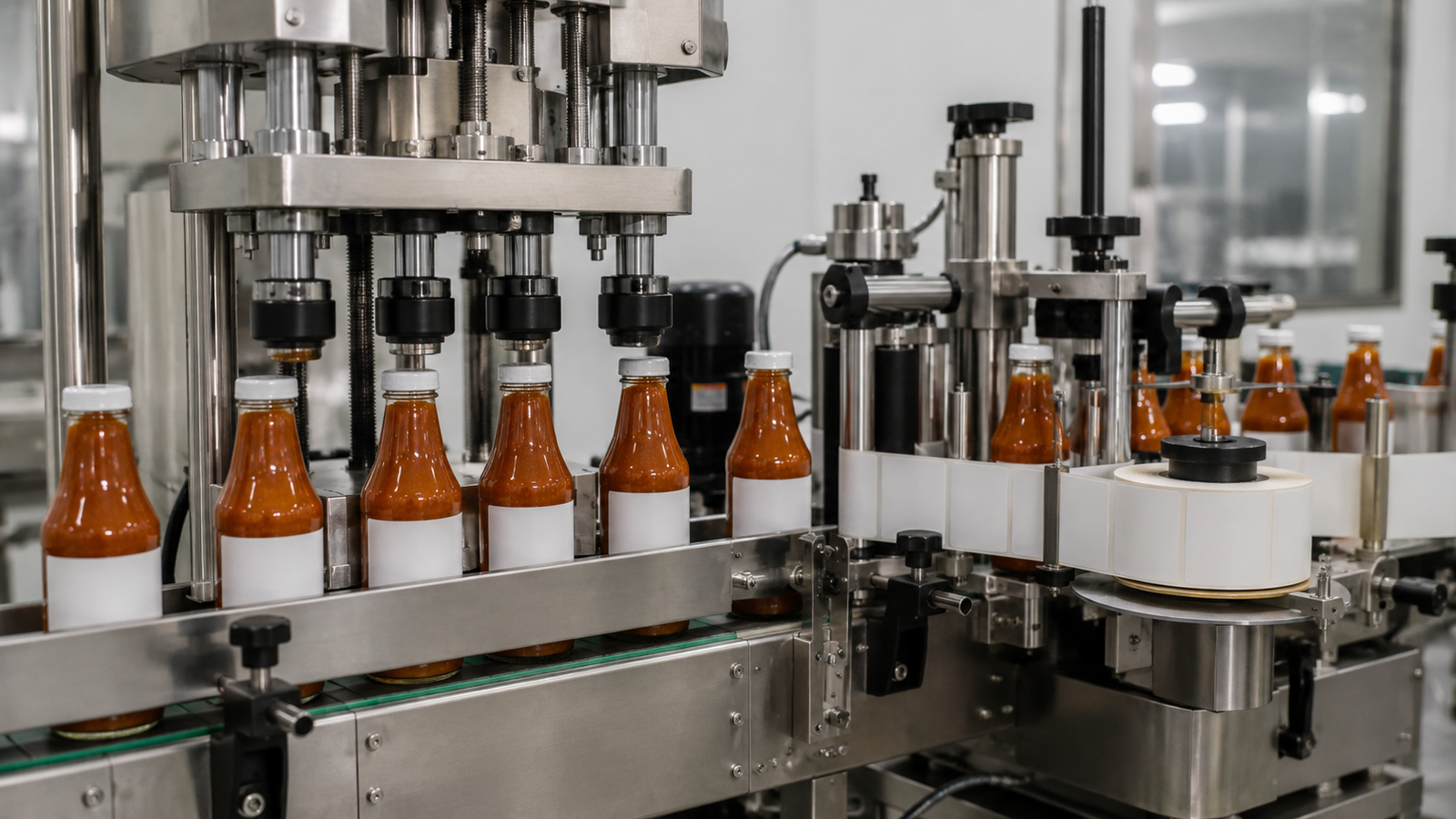
The selected cap also determines the downstream handling method. LEKA’s capping machine solutions cover project-based cap feeding, placement, pressing, and tightening configurations.
Build the Complete Hot Sauce Bottling Line Around the Pack
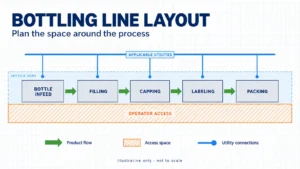
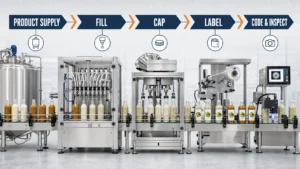
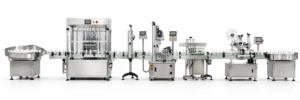
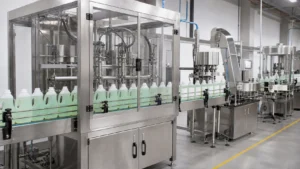
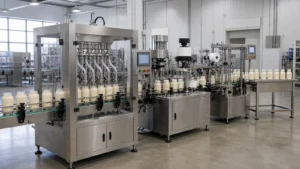
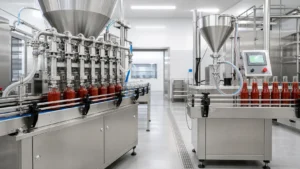
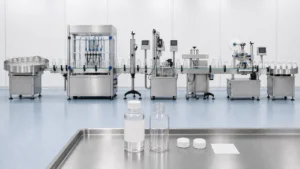
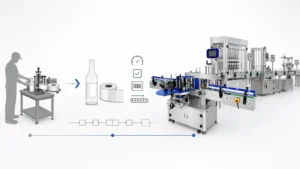
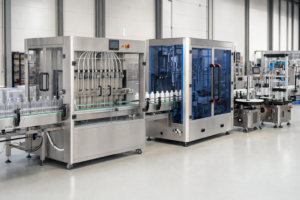
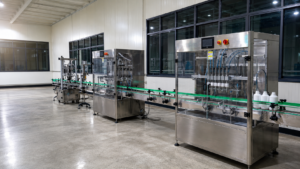
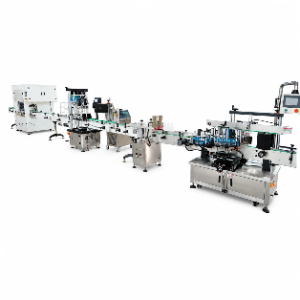
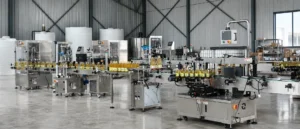
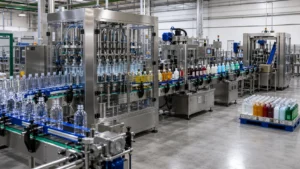
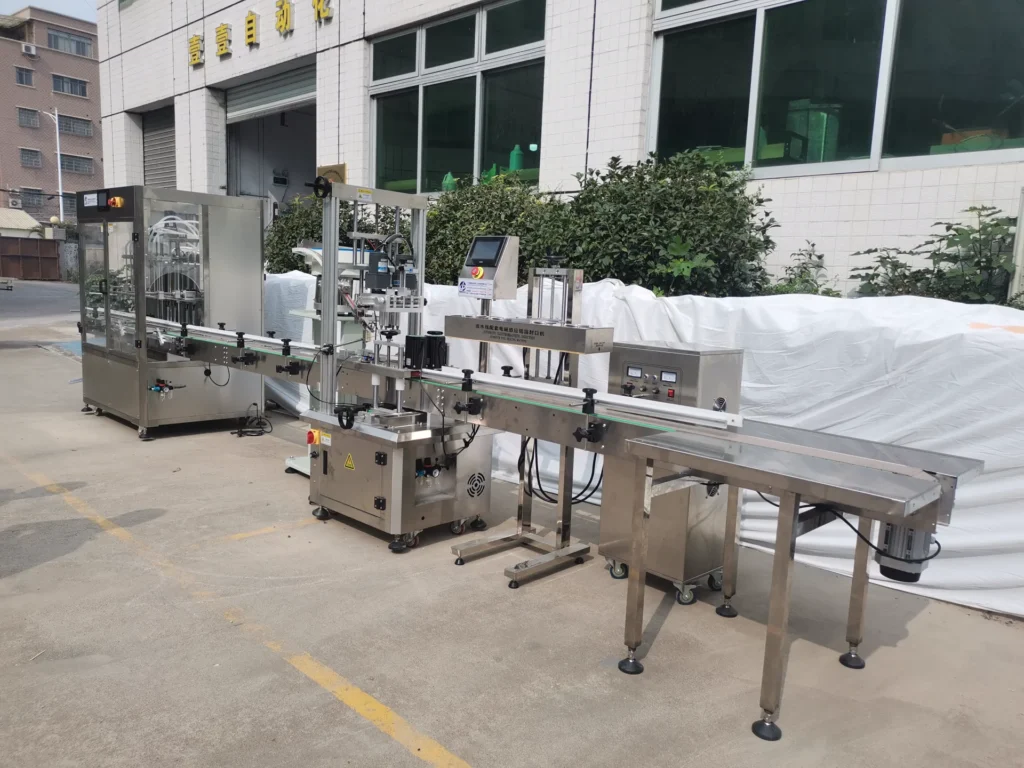
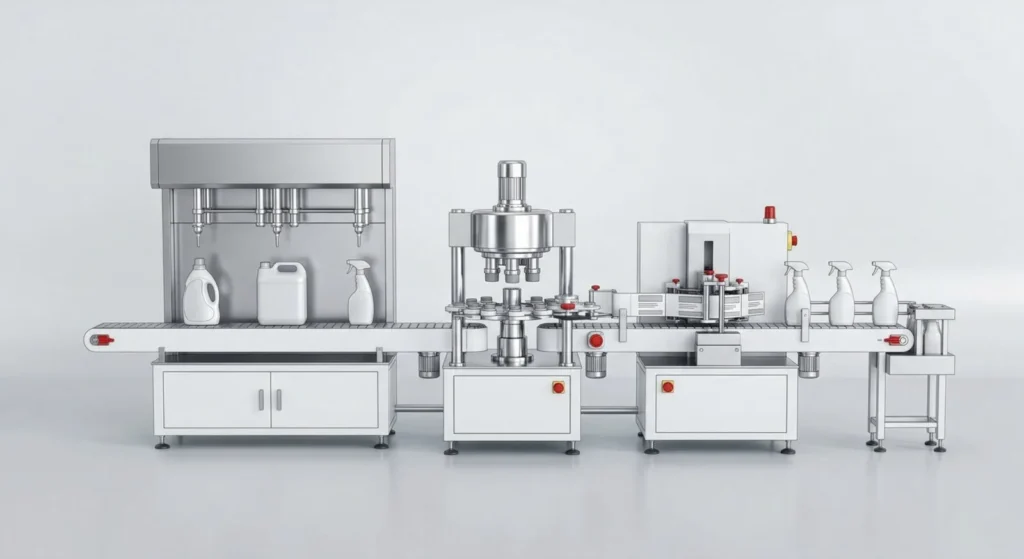
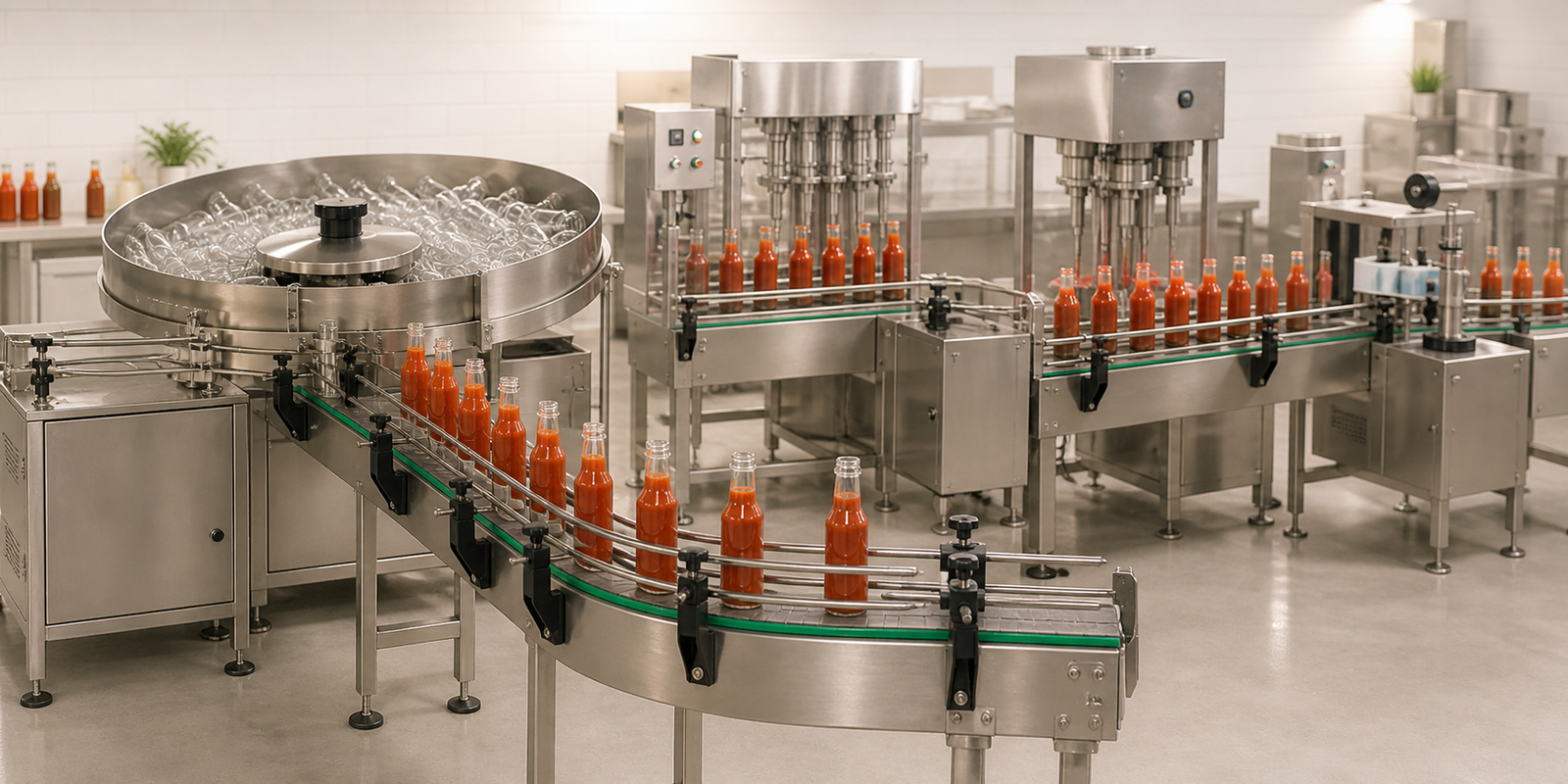
Once the filler, bottle, and closure agree with one another, the rest of the line becomes much easier to define. The right hot sauce bottling equipment may be one filling machine or a connected group of stations. LEKA can supply a single sauce filling machine or integrate the surrounding equipment into a complete sauce filling line.
| Line Stage | Available Equipment | Project Question |
|---|---|---|
| Bottle infeed | Bottle unscrambling, feeding, and conveying | Are the bottles rigid, light, unstable, or supplied in trays? |
| Filling | Gear-pump or magnetic-drive-pump filling for particle-free products; rotary-lobe-pump or piston filling for products with particles | What are the sauce condition, fill range, temperature, and output target? |
| Insert handling | Restrictor, plug, or inner-part feeding and pressing | Does the closure arrive as one part or several separate parts? |
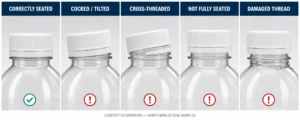
| Cap feeding and closing | Cap sorting, placement, pressing, or screw capping | What result defines an acceptable closed bottle? |
| Sealing | Induction foil sealing where the package is compatible | Are the container, cap, and liner designed to work together? |
| Label and code | Round-bottle self-adhesive, front-and-back, wraparound, wet-glue, or sleeve labeling, plus coding | What are the bottle shape, label material, surface condition, and code content? |
| End of line | Conveying, case packing, and case sealing | How should finished bottles be grouped, checked, and packed? |
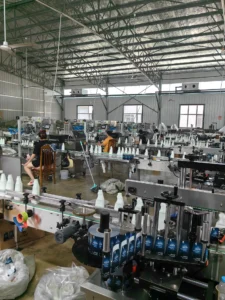
Do not size each station in isolation. A fast filler brings little value if plugs must still be inserted slowly by hand, or if an unstable bottle repeatedly falls before the labeler. The practical output is the output of the complete line.
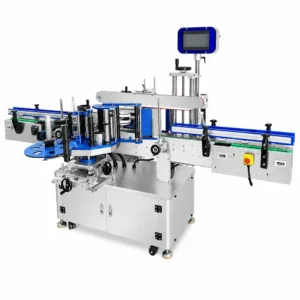
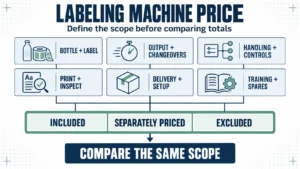
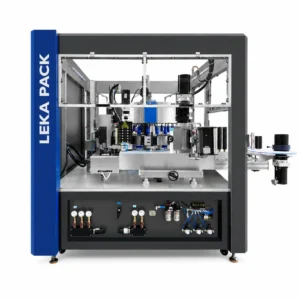
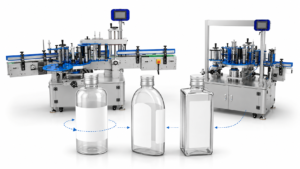
Label choice also affects line layout and bottle handling. Review LEKA’s labeling machine options when deciding between round-bottle, front-and-back, wraparound, wet-glue, or sleeve labeling.
How Much Automation Do You Actually Need?
Speed looks simple on a quotation. On a working line, it rarely is. Sauce flow, fill volume, bottle spacing, nozzle movement, cap handling, label application, and operator loading all affect the final result.
The single-head LEKA-FLDT-HGZ01 is publicly referenced at 200–300 bottles per hour. Use that as an initial planning figure, not a guaranteed rate for every hot sauce. LEKA should confirm the expected output after reviewing the real product and package.
A small producer may gain more from reliable single-head filling and straightforward changeovers than from a larger machine that is difficult to feed or clean. A growing factory may need automatic bottle infeed, filling, insert placement, capping, labeling, coding, and packing connected from the beginning. The right answer depends on the present bottleneck and the next realistic production step.
Cleaning and Changeover Deserve Their Own Discussion
Hot sauce can leave colour, oil, seeds, fibres, and strong flavour in the product path. If the line runs several recipes, cleaning is not a footnote—it is part of the production schedule.
For an agreed LEKA configuration, product-contact parts can be supplied in 316 stainless steel, with a 304 stainless-steel frame, TPU hose, and food-grade silicone seals. Pipework, transfer-pump connections, and filling-pump connections can be arranged for removal and cleaning. Disassembly cleaning and circulation cleaning can be considered.
CIP should be reviewed project by project. It is not sensible to promise CIP from a single word on a specification sheet. The tank, pump, valves, hose routing, nozzle, cleaning solution, temperature, flow, drainability, and plant utilities all need to work as one cleaning system. Food-equipment surfaces should also be suitable for their intended use and cleaning, as reflected in 21 CFR 117.40 for facilities operating under relevant U.S. requirements.
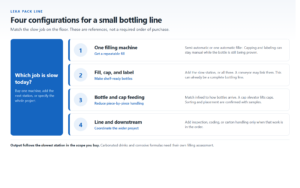
Three Sensible Starting Configurations
These examples are conversation starters. A sample and complete package review should come before the final quotation.
1. Smooth, flowable sauce in a glass bottle
Start by evaluating a servo-controlled gear-pump or magnetic-drive-pump filler, with the exact pump and nozzle control selected around the sauce and dosing requirements. Add cap feeding and screw capping if the closure is a standard threaded cap, then choose labeling around the bottle shape and label material.
2. Thick chili sauce with seeds or soft pieces
Evaluate a rotary lobe pump or piston filling system with a product path and nozzle sized around the reviewed particles. Check the bottle mouth before deciding the nozzle. If the sauce can separate, discuss whether the hopper needs mixing.
3. Squeeze bottle with a restrictor and flip-top cap
Treat the package as a multi-stage closure project. The line may need filling, restrictor feeding and pressing, cap placement, closing, and a final check. Confirm that the sauce can dispense through the selected orifice before ordering closure-handling equipment.
Common Buying Mistakes to Avoid
- Comparing only bottles per hour: A quoted rate has little meaning without the sauce, dose, bottle, and closure conditions.
- Assuming one pump fits every recipe: A particle-free vinegar sauce and a chunky chili sauce should not be treated as the same product.
- Choosing the cap after the filler: Restrictors, plugs, spouts, and foil liners can change the entire line layout.
- Treating every PET bottle as suitable for warm filling: Use a container approved by its supplier for the intended filling and cooling conditions.
- Ignoring the bottle opening: The neck may be the narrowest part of an otherwise suitable particulate filling route.
- Assuming CIP is automatically included: Define the cleaning target, utilities, and product path before deciding the cleaning configuration.
- Sending only a sauce name: Photos, video, samples, dimensions, temperature, particles, and output make a proposal more useful.
What to Send Before Requesting a Proposal
A useful proposal starts with useful production information. Send as much of the following as possible:
- Sauce name, ingredient characteristics, and a short flow video.
- Representative product sample where shipping and customs rules allow it.
- Filling temperature at the filler, plus any required temperature control.
- Largest particle, typical particle size, concentration, and whether pieces are soft or hard.
- Minimum, normal, and maximum fill volume.
- Bottle samples or drawings, including total height, body dimensions, neck finish, and opening diameter.
- Every closure component: cap, restrictor, plug, spout, liner, or foil.
- Label drawings, application position, coding requirement, and finished-pack photos if available.
- Required bottles per hour, working hours per shift, and number of product changeovers.
- Available factory space, line direction, local voltage, compressed air, and cleaning utilities.
If you are still comparing filling methods, the sauce filling machine selection guide provides a wider overview. For a project quotation, the actual sauce and package information should take priority over a generic machine list.
Frequently Asked Questions
What is the best filling machine for hot sauce?
It depends on the sauce at its real filling temperature. For smooth sauces without particles, a servo-controlled gear pump or magnetic-drive pump can be evaluated. For sauces containing particles, review a rotary lobe pump or piston filling system. Confirm the choice with the product, flow behaviour, particle, dose, bottle, and output.
Can a hot sauce bottling machine handle chili seeds and vegetable pieces?
It can be configured for reviewed particles, but there is no useful universal particle limit. The largest piece, concentration, softness, valve and hose route, nozzle bore, and bottle opening must be considered together. Sample testing is recommended.
Can I hot-fill sauce into a PET bottle?
Only use a PET bottle approved by its supplier for the intended filling temperature and cooling conditions. Standard PET should not automatically be treated as hot-fill suitable. The bottle, closure, process, and line handling need to be checked as one system.
What does the 60°C limit on the LEKA-FLDT-HGZ01 mean?
It is the standard hopper’s continuous operating upper limit. It does not validate a food-safety process or define the temperature required by a sauce recipe. Higher-temperature equipment can be discussed and must be confirmed for the individual project.
Can one machine fill several bottle sizes?
Often yes, when the bottle range, fill range, necks, and line handling are compatible. Change parts, guides, nozzles, recipes, or adjustments may be required. Send all planned bottles and caps before the machine layout is finalised.
Can LEKA supply capping and labeling with the filler?
Yes. LEKA can supply bottle feeding, filling, plug or restrictor insertion, cap feeding, capping, foil sealing, labeling, coding, conveying, case packing, and case sealing according to the project.
Is CIP included as standard?
No universal CIP promise should be made. CIP availability and scope need project review because the complete product path, cleaning target, plant utilities, and cleaning method must be compatible.
Choose the Line From the Product Outward
A reliable hot sauce line is not created by putting a filler, capper, and labeler next to one another. It comes from matching the sauce to the product path, the product path to the bottle, the bottle to the closure, and every station to a realistic output.
That approach may lead to a servo-controlled gear pump or magnetic-drive pump for a smooth sauce without particles. It may lead to a rotary lobe pump or piston filler when the recipe contains particles. The important point is that the choice follows the product—not the other way around.
Send LEKA Your Sauce and Package Details
Tell us the sauce texture, filling temperature, particles, fill volume, bottle, closure, label, and target output. LEKA can review a single filling machine, a complete hot sauce filling-capping-labeling line, or other inline automation around your production plan.
Technical note: Machine suitability, output, accuracy, materials, temperature capability, cleaning method, and final line configuration are confirmed against the agreed product and packaging conditions.