Flow Meter vs Net Weight Filling for Edible Oil: Which Is Better for 1–25L Bottles?
Quick verdict: For most automatic 1–25L edible oil filling machine projects, start by evaluating flow-meter filling when continuous output and multi-head automation are priorities. For 25–50L, compare both systems against the actual oil, container, accuracy target, and line speed. For 50L+ containers, drums, or lower-output bulk filling, net-weight filling becomes increasingly attractive because it controls the dispensed quantity directly by weight.
Many edible oil producers assume that a larger container automatically requires a weighing filling machine. That shortcut can exclude a practical option too early. Modern flow-meter systems are used for edible oil filling, while net-weight systems are also available across overlapping container ranges.
The correct question is not simply, “How many litres does the container hold?” It is: Which metering method can meet the required quantity control and repeatability at the target containers per hour, while fitting the bottle, product, changeovers, and complete line? This guide compares the two methods for buyers planning 1L bottles, 5L handle bottles, 18L or 20L jerry cans, 25L containers, and larger packs.
How Are Edible Oil Filling Machines Metered?
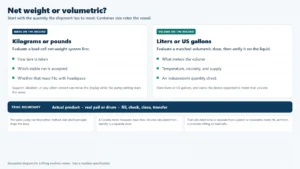
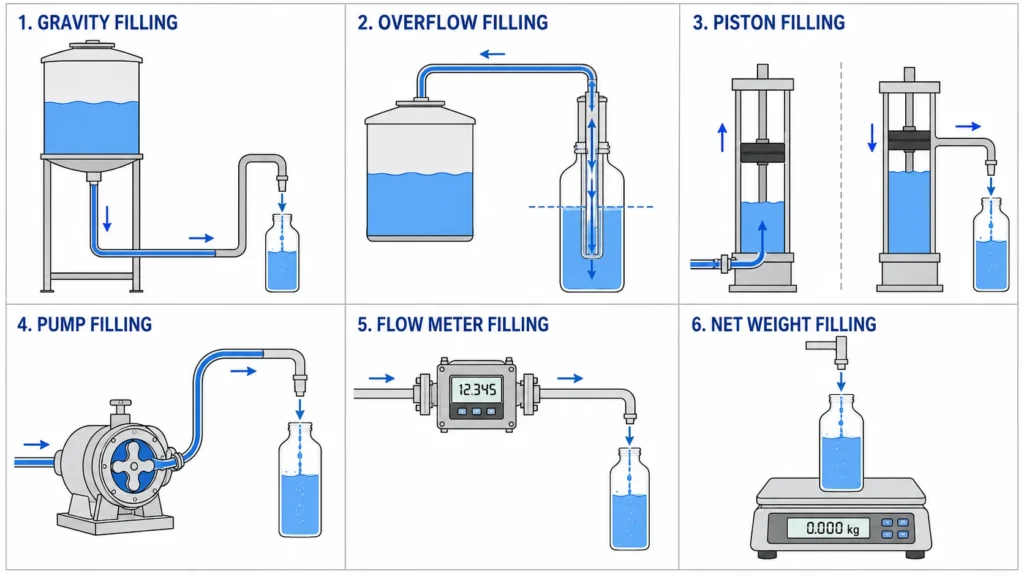
An edible oil filler needs a metering system that tells the filling valve when the target quantity has been reached. Flow-meter filling measures product moving through the line. Net-weight filling measures the increasing weight of the container and its contents. A volumetric or piston system meters a defined displacement. Each method can be suitable when it is correctly matched to the production conditions.
Flow Meter Filling
A typical flow-meter filling path is:
Product tank → pump or controlled product supply → flow meter → filling valve → container
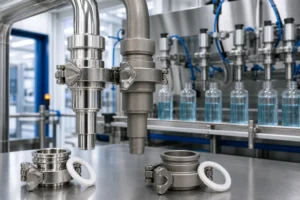
The controller receives pulses or a measurement signal from the meter and closes the valve when the programmed target is reached. The exact measurement is not always the same: some meters measure volume, while a Coriolis meter measures mass flow directly. The meter type must therefore be identified in the quotation instead of treating “flow meter” as one universal specification.
Edible oil is generally non-conductive, so the meter must suit that property. In a documented vegetable-oil filling application, KROHNE used Coriolis mass flowmeters because the product required a meter without conductivity limitations. This proves that flow measurement can be engineered for edible oil; it does not mean every project needs Coriolis technology or that every flow meter performs the same way.
Net Weight Filling
A typical net-weight filling path is:
Container positioned on weighing platform → tare or empty-container reference → fast fill → slow fill → target weight → valve closes → container released
The load cell measures the changing weight and sends the value or cutoff status to the control system. Depending on the design, the load cell or PLC controls the filling valve. METTLER TOLEDO’s filling-control documentation shows both approaches and confirms that container placement, the weighing platform, load-cell feedback, and valve control are part of the filling cycle.
Fast and slow filling stages can help a net-weight filler approach the target quickly and finish with better cutoff control. The actual result still depends on valve response, product feed stability, scale installation, vibration, container positioning, calibration, and the machine’s control logic.
Volumetric Filling
Piston, servo-pump, or other volumetric systems remain practical alternatives for some cooking oil filling projects. They can be useful for stable recipes, smaller bottles, or factories that need a different balance of changeover flexibility, investment, and output.
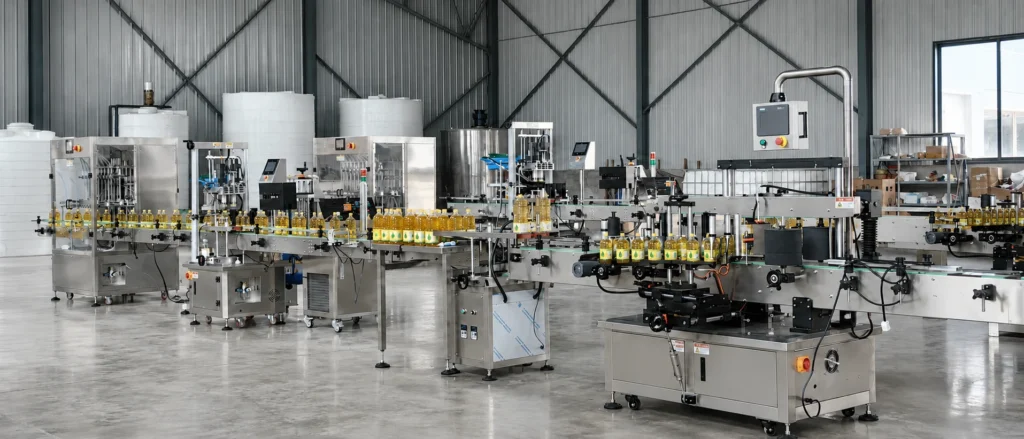
This article focuses on flow meter versus net weight because that decision becomes especially important for automatic edible oil bottling lines and larger retail or food-service packs. For the wider equipment range, review LEKA’s edible oil filling machine options.
Why Edible Oil Does Not Automatically Require Weighing Filling
“It is edible oil, so it must be filled by weight” is not a reliable selection rule. International metrology guidance distinguishes the declared quantity on a prepackage—such as net mass or net volume—but that does not make one machine principle compulsory for every oil package. The applicable local regulation and the required finished-package checks still need to be confirmed for the destination market. See OIML R 87:2016 for the general framework on quantity of product in prepackages.
There is also supplier evidence that capacity ranges overlap. ZT-PACK specifications list both a 5–30L flow-meter filling machine and a 5–30L net-weight filling machine. These listings are supplier specifications, not an independent performance comparison, but they demonstrate an important point: 5L, 18L, 20L, 25L, or 30L capacity alone does not determine the metering method.
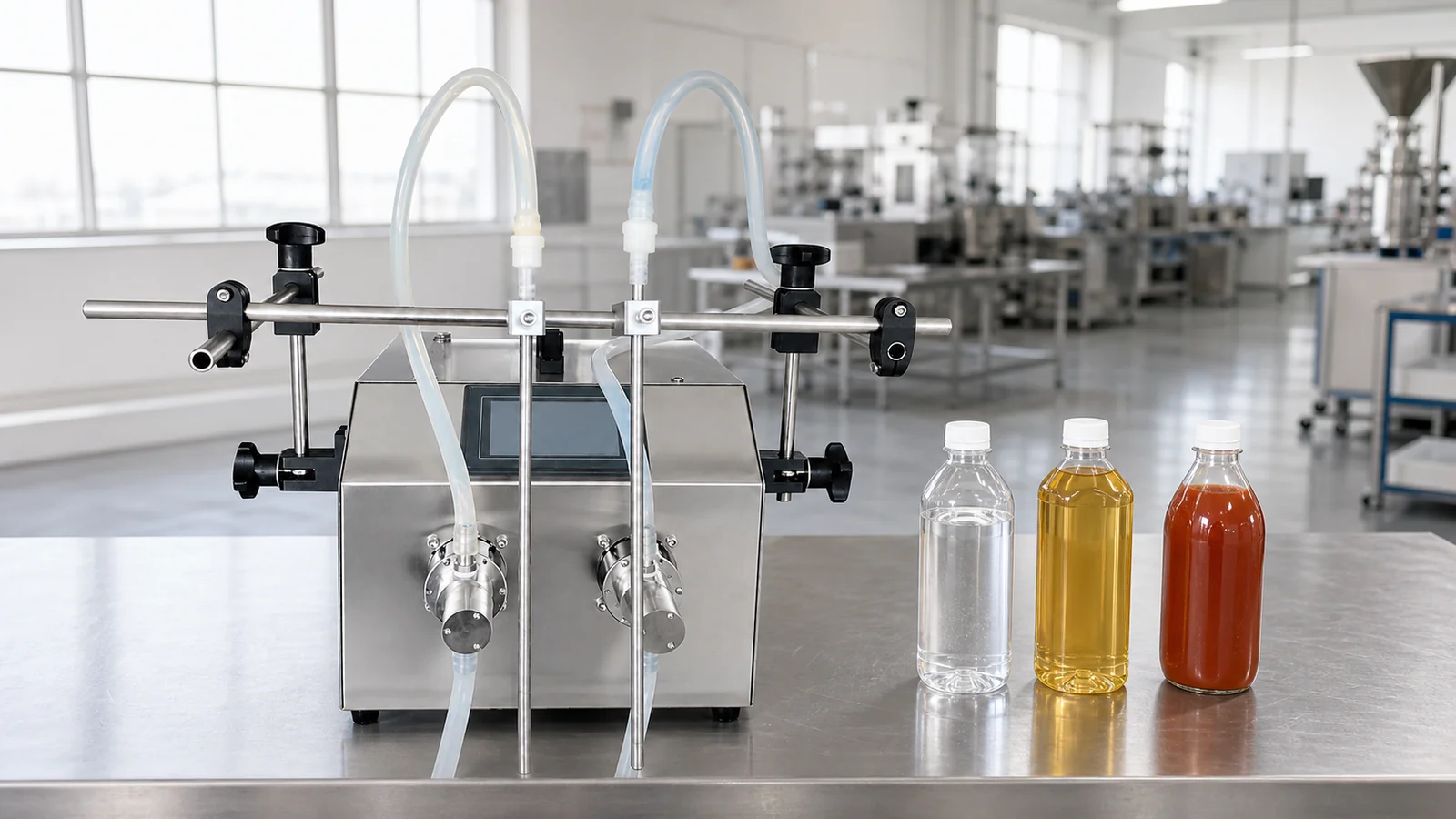
For compatible, particle-free edible oil, a servo gear-pump filler is another option. The GP-075S1 configuration carries a factory specification of up to ±0.3% under matched and calibrated operating conditions. It can be evaluated as a replacement for a traditional net-weight filler when direct mass control is not the contract requirement and a product-and-bottle test confirms the agreed result. The servo gear pump filling accuracy guide explains how pump sizing, oil temperature, product supply, nozzle cut-off, calibration, and the test method affect the final result.
A practical selection should evaluate:
- The oil type, temperature range, viscosity, and product feed conditions
- The declared quantity: volume, mass, or a market-specific requirement
- Container size, rigidity, tare variation, mouth size, and conveyor stability
- Required filling tolerance and how it will be verified
- Target containers per hour and the number of filling heads
- Number of SKUs, changeover frequency, and cleaning method
- Required automation, available floor space, and downstream line balance
- Project budget, maintenance capability, and local service needs
Why Flow-Meter Filling Is Practical for Many 1–25L Edible Oil Projects
For a factory planning automatic production of 1–25L bottles or jerry cans, a suitable flow-meter system is often the first option worth evaluating when throughput matters. That is a project-screening recommendation, not a claim that flow-meter filling will beat net-weight filling in every machine design.
Modern Flow Measurement Can Provide Suitable Accuracy and Repeatability
The old assumption that flow-meter filling is only for rough dosing is too broad. Properly selected modern meters can support repeatable liquid batching, including edible oil. The KROHNE application cited above used multiple Coriolis meters in parallel on a linear vegetable-oil filling machine and describes stable, repeatable batching for a non-conductive product.
However, “flow-meter accuracy” cannot be evaluated from the meter name alone. Buyers should ask the supplier to state:
- The exact meter principle and model proposed
- Whether the target is controlled by mass or volume
- The expected result at the actual fill size and flow rate
- The oil and temperature conditions used for calibration
- The verification method, sample size, and acceptance limits for the factory test
- How the system compensates for cutoff delay and product-feed changes
This is why the machine should be tested with the customer’s product or a technically justified equivalent, using the real container whenever possible.
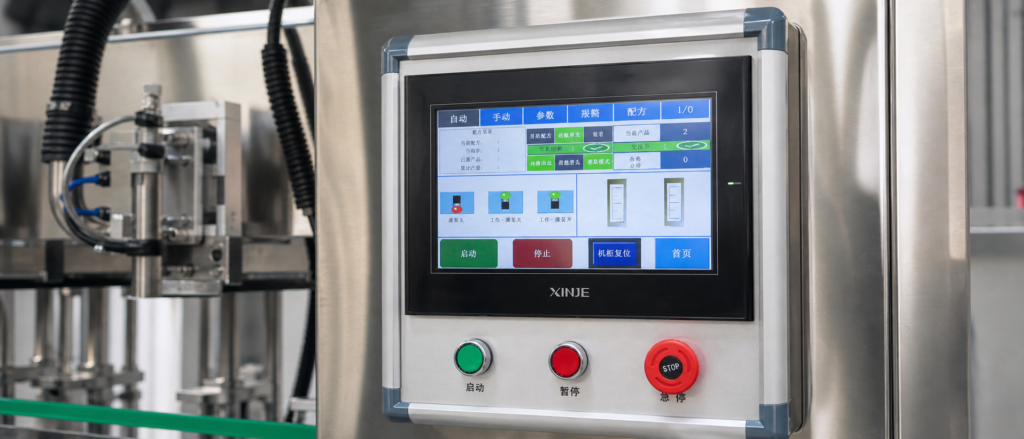
Flow-Meter Filling Can Be Attractive When Throughput Matters
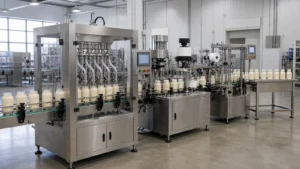
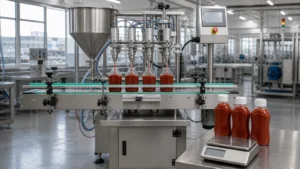
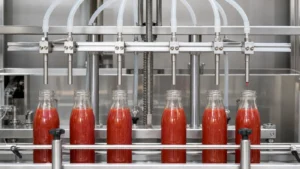
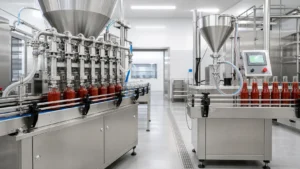
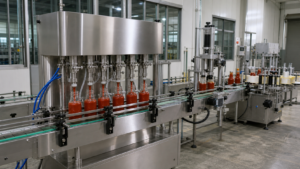
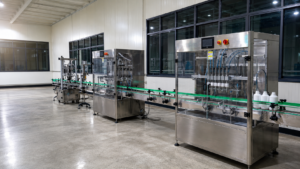
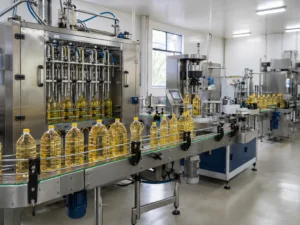
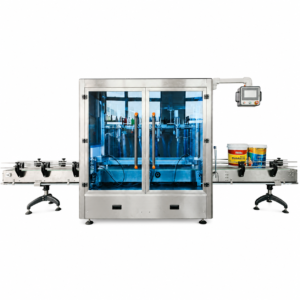
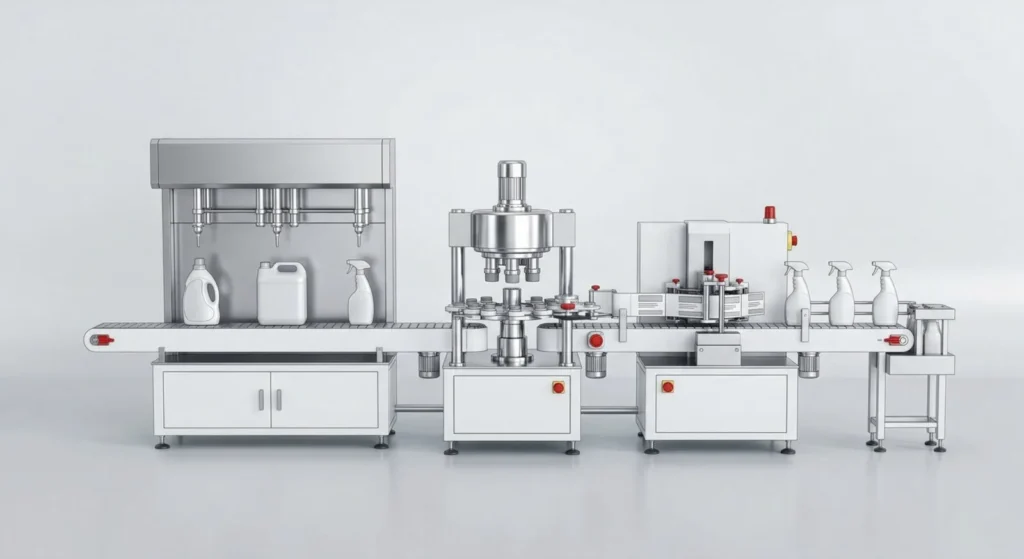
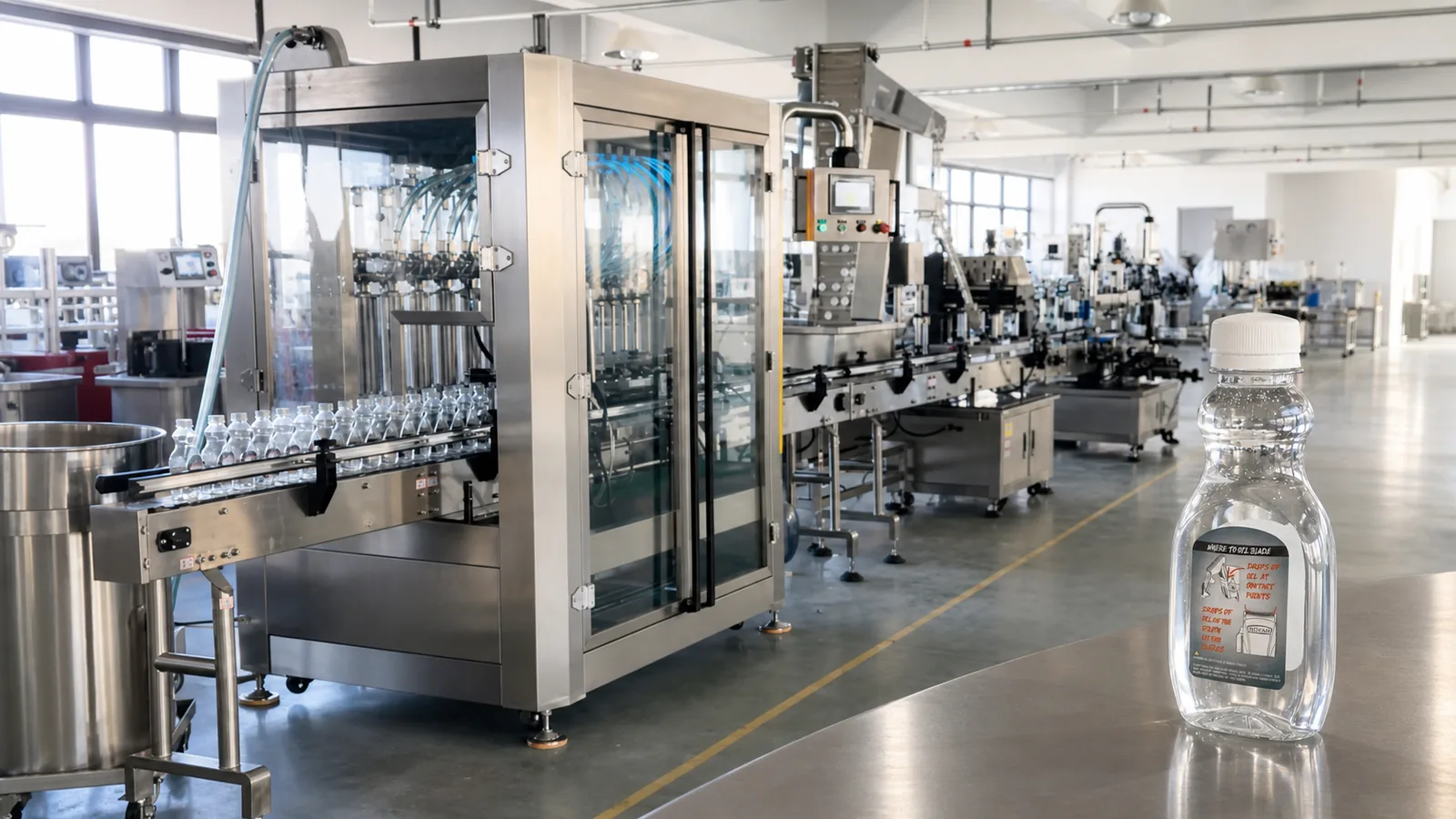
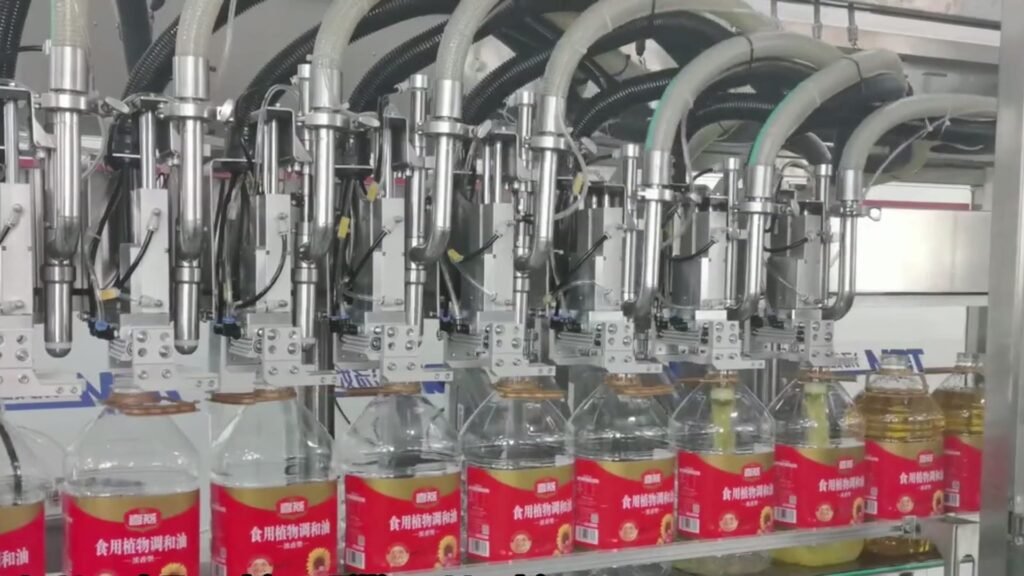
In many inline systems, each filling head has its own metering channel and valve. A supplier can scale the architecture from 4 heads to 6, 8, or 12 heads according to fill time, target output, container pitch, and available line space. The commercial advantage is not simply “flow meters are fast”; it is the ability to design a multi-head filling section around continuous automatic bottle handling.
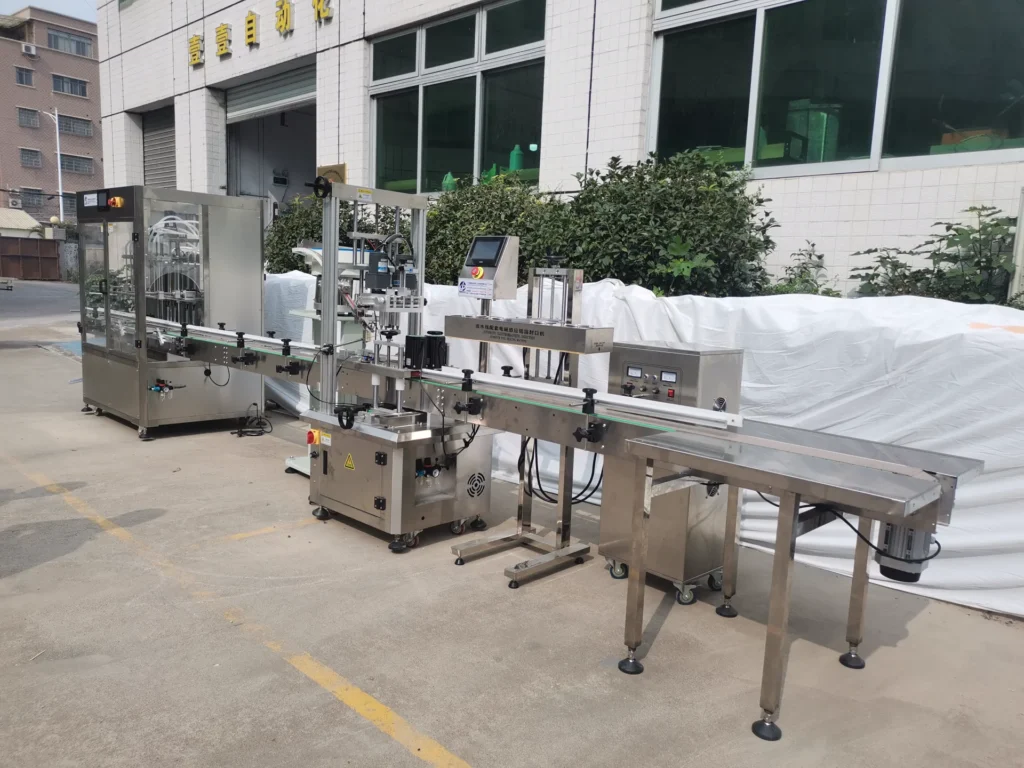
Compare machines using the required containers per hour at the actual fill volume, not a headline bottles-per-hour figure for a smaller reference bottle. LEKA’s bottle filling machine output guide explains why head count, cycle time, product behavior, bottle handling, capping, labeling, and line efficiency must be reviewed together.
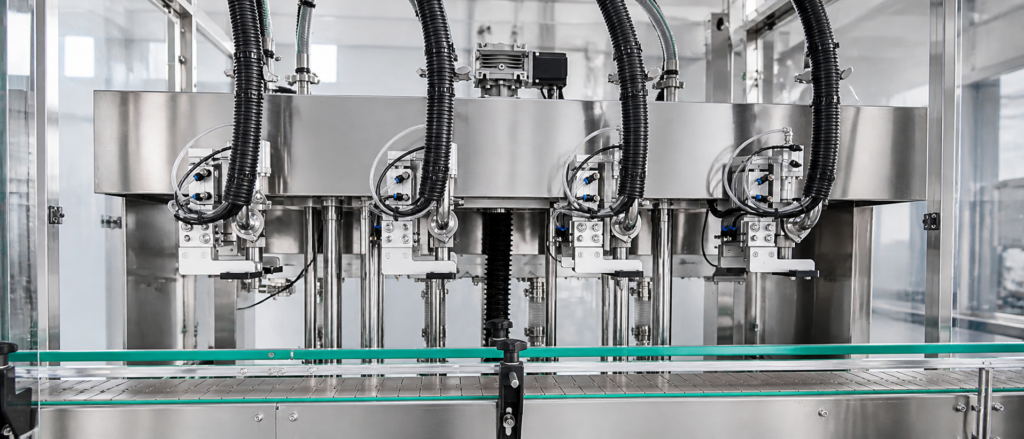
The Container Does Not Need a Dedicated Weighing Platform
Flow-meter filling measures the product in the liquid path, so the container does not need to sit on a load cell during dosing. That can simplify the filling-station layout and remove scale-specific concerns such as platform vibration, off-centre loading, and container placement on the weighing surface.
This difference can support a compact, continuous inline design, but it does not prove that every net-weight machine is slower. Rotary weight fillers and well-designed multi-head net-weight systems can also achieve substantial output. The comparison must use the complete proposed machine architecture, actual filling volume, number of heads, conveyor motion, and guaranteed test conditions.
When Does Net-Weight Filling Make More Sense?
Net-weight filling remains a strong option when the production target is defined directly by the mass delivered into each container. It becomes increasingly attractive as containers get larger, the required containers per hour falls, or the cost of consistent overfill becomes more important than maximum line speed.
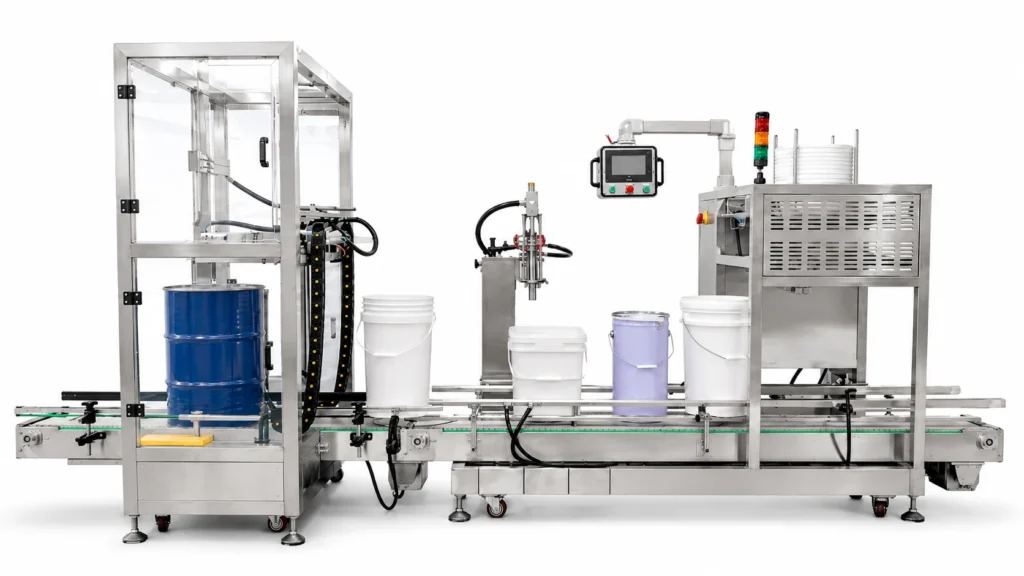
Large Containers, Drums, and Bulk Filling
For 50L+ containers, drums, and other bulk packs, each fill contains more product and individual container cycles may matter less than direct weight control. A weighing platform can provide a clear relationship between the filling target and the mass placed in the package.
This is still not a universal 50L rule. A 50L flow-meter project may be technically feasible, while a 20L net-weight line may be the better commercial choice. The recommendation changes with declared quantity, oil value, container handling, required output, floor layout, and the supplier’s proven machine design. This page stays with edible oil. Industrial liquids in open pails and bung-top drums are compared separately in net weight vs volumetric filling for pails and drums.
When Direct Net-Weight Control Is the Main Requirement
Choose net-weight filling as the starting point when the production specification explicitly requires each container to be dosed by weight. This can be important when the label declaration, internal batch records, or customer quality agreement is written in mass units and the factory wants the filling controller to work in the same quantity.
Do not confuse the machine’s control method with final compliance. A package may still need independent checks under the applicable market rules, and the customer should define how tare, sampling, checkweighing, and record retention will be handled.
When Product Giveaway Matters More Than Maximum Throughput
Small overfills become material when repeated across a production day. Consider an illustrative calculation:
- Extra oil per container: 50g
- Daily production: 2,000 containers
- Calculated giveaway: 50g × 2,000 = 100kg per day
This is a calculated example, not a measured LEKA customer result. It shows why a buyer should compare the expected distribution of actual fills—not just a stated “accuracy” percentage—and translate overfill into product cost. A net-weight system may be attractive where direct mass feedback helps the project control that risk, but the decision should still be supported by sample test data from the proposed machine.
Flow Meter vs Net Weight Filling: Side-by-Side Comparison
| Selection Factor | Flow Meter Filling | Net-Weight Filling |
|---|---|---|
| What is measured | Product flow; mass or volume depending on meter type | Weight on a load cell or weighing platform |
| Main project strength | Attractive combination of metering and multi-head inline automation | Direct control of the quantity by weight |
| 1–25L application | Recommended starting point when continuous output is important | Suitable when direct net-weight control is preferred |
| 25–50L application | Evaluate against fill time, meter type, and line design | Evaluate against required output, tare handling, and weight target |
| 50L+ and drums | Technically possible in suitable designs | Increasingly attractive, especially at lower output |
| Container support during fill | Standard conveyor or positioning system; no weighing platform required | Container must be correctly supported and positioned for weighing |
| Multi-head automation | Well suited to parallel metering channels | Available; performance depends strongly on scale and machine architecture |
| Key questions | Meter principle, mass or volume target, calibration conditions, cutoff control | Tare method, load-cell capacity, vibration control, fast/slow fill, settling time |
| Best suited for | Projects balancing repeatability, throughput, and automatic line integration | Projects prioritizing direct weight control and overfill management |
No row has a universal winner. Ask each supplier to quote the same oil, container, fill size, tolerance, target output, and factory acceptance test so the two proposals can be compared on equivalent conditions.
Recommended Filling Method by Edible Oil Container Size
| Container Size | Practical Recommendation | Why |
|---|---|---|
| Up to 1L | Evaluate flow meter, piston, or other volumetric methods | Retail-bottle output, changeovers, and clean cutoff usually drive the decision |
| 1–5L | Start with flow meter when higher automatic output is required | Multi-head inline filling is attractive for retail and handle bottles |
| 5–25L | Start with flow meter when throughput matters; compare net weight when direct mass control is central | Both methods are commercially available across this range |
| 25–50L | Evaluate both systems case by case | Fill time, container handling, declared quantity, and project output become decisive |
| 50L+ | Net weight becomes increasingly attractive | Direct weight control often carries more value at lower container counts |
| Drum or bulk pack | Start with net weight, then verify alternatives against the project | Large dose size and direct mass control are commonly more important than maximum BPH |
Container size alone should never be the only selection criterion. Use this table to choose which technology to evaluate first, not to approve a machine without product and package testing.
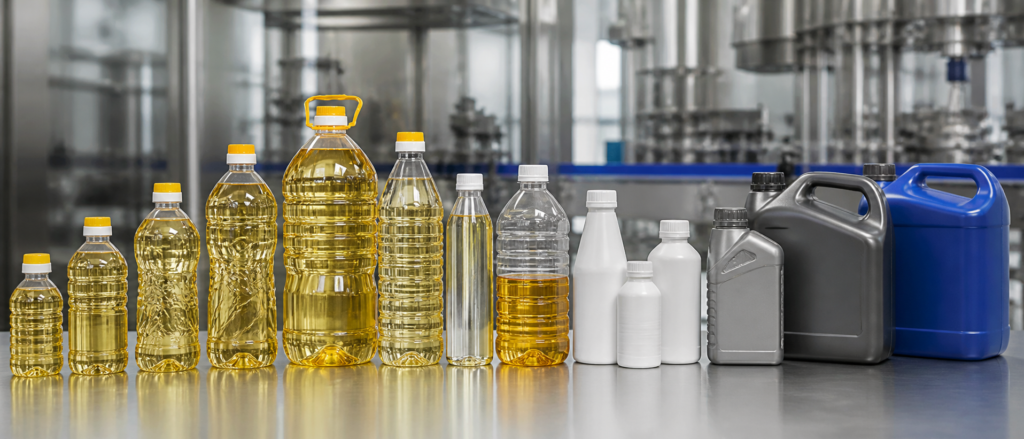
Is an 18L Edible Oil Container Better Filled by Flow Meter or Net Weight?
An 18L edible oil container does not automatically require net-weight filling. For an automatic line where daily output, continuous conveying, and line integration are priorities, a correctly selected flow-meter filler should be evaluated first. The supplier should confirm the meter principle, fill time, number of heads, repeatability, cutoff performance, and factory-test method for the actual oil and container.
Net-weight filling becomes the stronger starting point when the factory specifies direct mass control, has a moderate output target, accepts the required weighing-station layout, or places exceptional value on controlling the fill distribution by weight. The same logic applies to many 20L and 25L jerry-can projects.
For either method, an 18L container introduces handling questions that a metering comparison alone cannot answer:
- Is the full container stable during conveying and stopping?
- Does the handle interfere with bottle guides, filling nozzles, or cap placement?
- Is the mouth large enough for the required flow rate without splashing or residue?
- Can the conveyor, filling frame, capper, and accumulation area support the filled weight?
- How many 18L containers per hour must the complete line deliver after changeovers and normal stops?
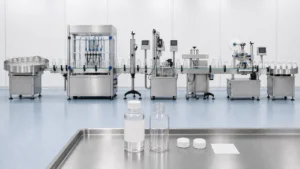
LEKA can review these points as part of an edible oil filling line configuration rather than selecting the filler in isolation.
What Information Is Needed Before Choosing the Filling Method?
Send the following information before asking a supplier to choose between flow meter and net weight:
- Edible oil type: soybean, sunflower, canola, palm, peanut, olive, blended oil, or another product
- Product conditions: expected temperature range, viscosity information, and supply method to the filler
- All filling volumes: for example 1L, 5L, 18L, 20L, and 25L
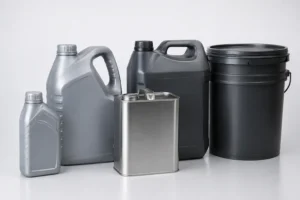
- Container details: material, dimensions, mouth diameter, handle position, tare variation, and photos or drawings
- Declared quantity: volume or mass, plus the applicable destination-market requirement
- Target output: required containers per hour for each fill size
- Acceptance target: filling tolerance, test sample size, test product, and measurement method
- Cap and seal: cap type, cap feeding, torque or pressing requirement, and induction-seal needs
- SKU plan: number of oils and containers, batch sizes, and changeover frequency
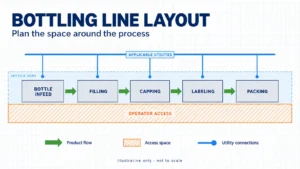
- Automation scope: container feeding, filling, capping, labeling, coding, inspection, packing, and palletizing
- Factory conditions: available dimensions, conveyor direction, power, air, product-tank position, and cleaning access
- Support requirements: installation, training, spares, documentation, and remote or on-site assistance
This checklist turns a general machine comparison into a quote that can be tested. It also helps the supplier identify whether the filling station will become the line bottleneck or whether capping, labeling, manual feeding, or packing will limit the real output.
Frequently Asked Questions
Is weighing filling more accurate than flow-meter filling?
Not in every application. Net-weight filling measures the package contents directly by weight, while flow-meter performance depends on the meter principle, calibration, flow conditions, and control system. Compare repeatability and fill distribution from tests using the actual oil, container, target quantity, and production speed; do not decide from the metering label alone.
Can a flow meter fill 20L edible oil accurately?
Yes, a suitable flow-meter system can be engineered for 20L edible oil, and commercial 5–30L flow-meter machines exist. Approval should depend on the proposed meter type, oil conditions, fill time, valve cutoff, number of heads, and verified test results. A 20L label alone is not enough to guarantee or reject the method.
Is a weighing filler necessary for 18L edible oil?
No. An 18L container can be evaluated for flow-meter filling when automatic output and continuous line operation matter. Net weight may be preferred when direct mass control, lower output, or overfill management dominates the project. Test both against the same container, oil, acceptance target, and required containers per hour.
Which filling method is faster for edible oil?
For many inline 1–25L projects, flow-meter filling offers an attractive route to multi-head automatic production. It is not universally faster. Head count, actual fill volume, product supply, valve size, container movement, scale design, capping, labeling, and packing all affect real line output. Compare guaranteed performance under the same test conditions.
What type of flow meter is suitable for edible oil?
The meter must suit non-conductive edible oil, the required flow range, temperature, viscosity, hygiene needs, and target quantity. Coriolis mass flowmeters are one proven option for edible-oil batching, but they are not automatically required. Ask the supplier to identify the exact meter principle, model, measurement unit, and calibration plan.
When should I choose a net-weight filling machine?
Start with net weight when each container must be controlled directly by mass, when larger 50L+ or drum packs are involved, or when overfill control matters more than maximum containers per hour. For 25–50L, compare both technologies because container size, tare variation, output, line layout, and test results can change the recommendation.
Conclusion: Choose by Output and Quantity Control, Not Container Size Alone
For 1–25L edible oil, start by evaluating flow-meter filling when production speed, continuous automation, and multi-head line integration are priorities. For 25–50L, compare flow meter and net weight using the real oil, container, declared quantity, tolerance, and target output. For 50L+ containers or drums at lower output, net-weight filling becomes increasingly attractive because the system controls the dose directly by weight.
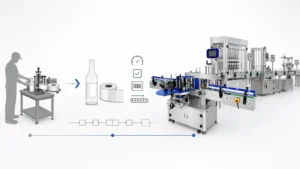
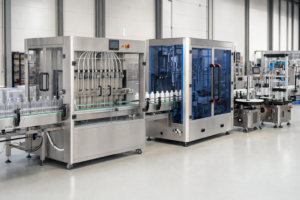
The final decision should come from a like-for-like technical proposal and factory test—not a capacity shortcut. Send LEKA your oil type, container drawing or photos, filling volumes, declared quantity, required containers per hour, cap type, label method, and workshop layout. We can compare the two metering approaches and plan the surrounding capping, labeling, conveying, and packing equipment as one bottle packaging line.
Request an edible oil filling method and line review
Sources
- International Organization of Legal Metrology (OIML), R 87:2016 — Quantity of product in prepackages, accessed 2026-08-17.
- KROHNE, High accuracy batching of edible oil, accessed 2026-08-17.
- METTLER TOLEDO, SLP85xD Load Cells Installation Manual, pp. 17–18, accessed 2026-08-17.
- Jiangsu Zhongtai Packing Machinery, Flow Meter Filling Machine (5L–30L), accessed 2026-08-17. Supplier specification; used only to establish commercial availability in an overlapping capacity range.
- ZT-PACK, Fully Automatic Drum Jerry Can Net Weight Filling Machine (5L–30L), accessed 2026-08-31. Supplier specification; used only to establish commercial availability in an overlapping capacity range.