EU PPWR Starts Applying on August 12, 2026: What Bottle Packaging Lines Need to Check
This guide answers only three questions: What is the Packaging and Packaging Waste Regulation (PPWR)? How can it affect a bottle factory? What should the factory do now?
If your packaged products are sold in the European Union (EU), start with the decisions below. You do not need to study the whole regulation before you can protect your packaging-line project.
The Short Answer: Three Things Factory Managers Need to Know
Start with these three decisions before assigning work to production, purchasing or engineering.
- Your factory may be affected even if it is outside Europe. What matters is whether the packaged product is placed on the EU market and what role your company plays.
- A packaging change can become a production problem. A lighter bottle, different cap, revised label or smaller outer pack may change how the package moves, fills, closes or leaves the line.
- Do not replace the whole line just because PPWR is coming. First identify the packaging changes, collect final samples and prove how they run before freezing equipment, tooling or output commitments.
What Your Factory Should Do Now
The immediate job is to control packaging changes before they reach production.
- Build one packaging list. Record every EU product format and its bottle, neck, cap, label, adhesive, sleeve and secondary pack. Give each approved version a revision number.
- Ask suppliers what will change and when. Request written information on material, weight, dimensions, artwork, closure design and expected implementation timing.
- Reserve final samples and a test window. Run production-representative components before approving machine settings, change parts, tooling or the promised line speed.
The PPWR Timeline in One Table
Use these five milestones to plan packaging decisions and line trials.
| Date | What happens | Factory action |
|---|---|---|
| February 11, 2025 | PPWR entered into force. | Identify packaging formats, suppliers and responsible economic operators. |
| August 12, 2026 | PPWR generally applies under Article 71. The Article 5 restriction on per- and polyfluorinated alkyl substances (PFAS) in food-contact packaging also applies from this date. | Match the applicable duties and documents to each packaging format, then schedule trials for revised components. |
| August 12, 2028 or later | The Article 12 harmonised material and sorting label applies from this date or 24 months after the relevant implementing acts enter into force, whichever is later. | Reserve artwork and data space while the final label format is being completed. |
| 2029 | By January 1, 2029, Member States must meet the PPWR separate-collection objective for specified beverage containers, normally through a deposit-return system where the Regulation’s conditions require it. On February 12, 2029, the Article 12 reusable-packaging label applies, or 30 months after the relevant implementing act enters into force, whichever is later. | Prepare national registration, marking and reusable-packaging variants for testing. |
| January 1, 2030 or later | Article 10(1) and (2) packaging minimisation applies on January 1, 2030. Article 6 design-for-recycling applies from that date or 24 months after the relevant delegated acts enter into force, whichever is later. Article 7 recycled-content targets apply from that date or three years after the relevant implementing act enters into force, whichever is later. Selected reuse targets and restrictions also start from 2030, subject to scope and exemptions. | Reassess package weight, material, reuse format and decoration against the final measures. |
Status as of 2026-08-04: the European Commission PPWR implementation hub still described some labelling, recycled-content and design-for-recycling measures as being prepared. Where a date depends on a future act, check the final official document before releasing a packaging specification.
PPWR in Plain English
PPWR is one EU-wide framework for packaging from design and use through collection and recycling.
Officially, it is Regulation (EU) 2025/40. It covers packaging design, material use, labelling, reuse, recycling and waste collection. For a bottle factory, “packaging” means more than the bottle. Caps, labels, sleeves and secondary packaging also form part of the finished pack.
This matters to production because a legal packaging change can alter bottle stiffness, surface friction, neck geometry, cap orientation, label behaviour or pack stability. The regulation does not create a special certified filling machine. It can, however, lead to component changes that must run reliably on the real line.
Your responsibilities can depend on who designs, fills or seals, brands and places the packaging on the market. The Commission implementation notice gives additional guidance on those roles.
One Reminder for the Whole Project
Keep legal approval, packaging approval and line approval as three separate decisions. The responsible team establishes the legal and material evidence. The packaging supplier freezes the component specification. The factory proves line performance with representative samples and written acceptance criteria. Passing one step does not automatically pass the other two.
How Packaging Changes Affect the Line
This table is a quick risk map, not a test procedure. It points the project team to the first station where a packaging change may appear.
| Packaging change | Possible line symptom | First stations to review |
|---|---|---|
| Lightweight bottle or reduced material | Tipping, panel deformation, unstable spacing or poor accumulation | Infeed, conveyors, guides, filler and transfers |
| Bottle made with post-consumer recycled plastic or recycled polyethylene terephthalate | Lot-to-lot variation in stiffness, colour, friction or dimensions | Handling, filling, sensors, labelling and inspection |
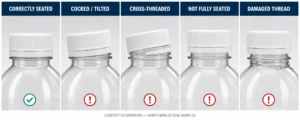
| New neck, cap or tethered cap that stays attached after opening | Poor feeding, wrong orientation, cross-threading or inconsistent closure result | Cap feeder, chute, capper tooling and inspection |
| New label, sleeve, adhesive or artwork | Wrinkles, lifting, poor position, unreadable marks or false rejects | Labeler, coder, camera and reject system |
| Reusable format or reduced secondary packaging | Scuffed containers, different pack stability or weaker end-of-line control | Inspection, case packing, wrapping, palletising and return handling |
Walk the Line: Five Stations to Review
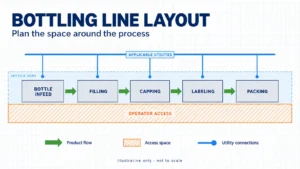
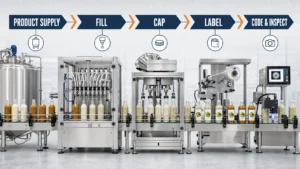
Follow the bottle’s real path through the factory and observe each transfer under normal starts, stops and accumulation.
1. Conveyor, Infeed and Accumulation
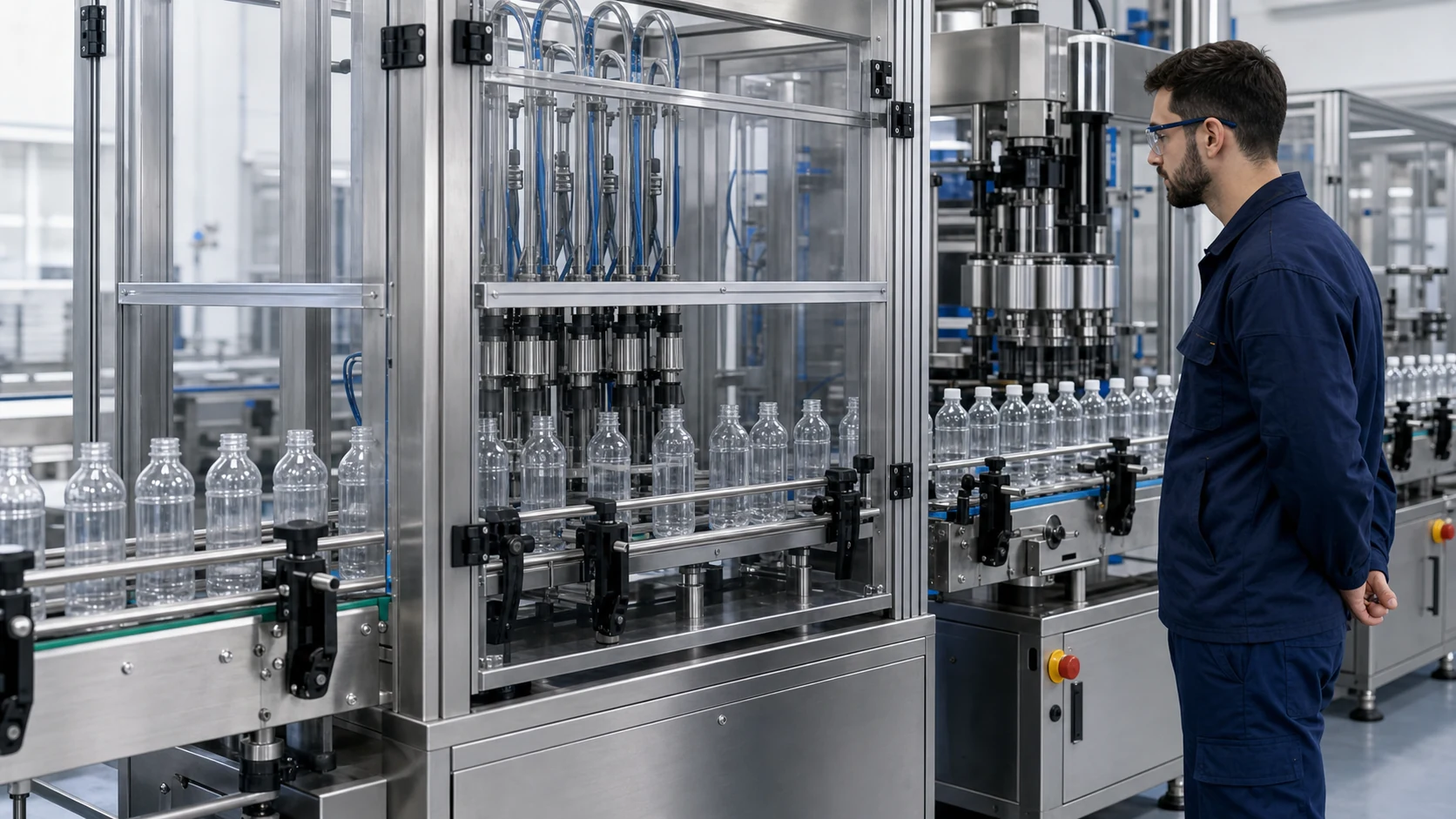
Run the actual bottle through starts, stops, transfers and normal accumulation. Record tipping, guide pressure, unstable gaps and sensor errors alongside the operating speed.
2. Filling and Bottle Support
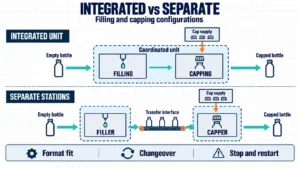
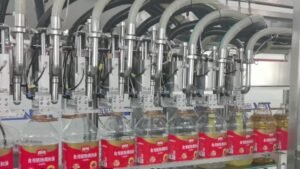
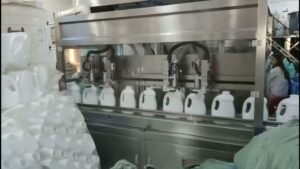
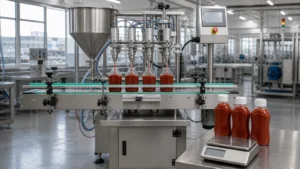
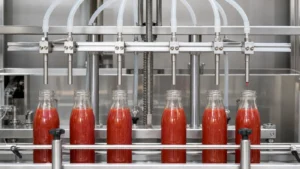
Observe whether the bottle stays stable below the nozzles and recovers after handling pressure. Product viscosity, fill temperature, foaming behaviour and filling method also affect the result; match the format to the intended bottle filling machine.
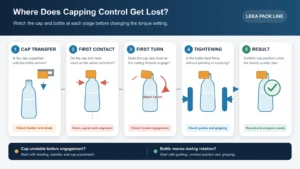
3. Capping and Closure Control
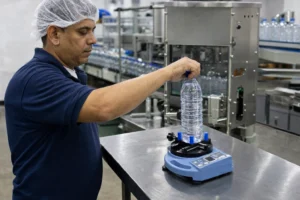
Treat the bottle, neck and cap as one system. Record feeding, orientation, pick-up and thread engagement, then measure the buyer-approved torque or seal criteria on the proposed capping equipment.
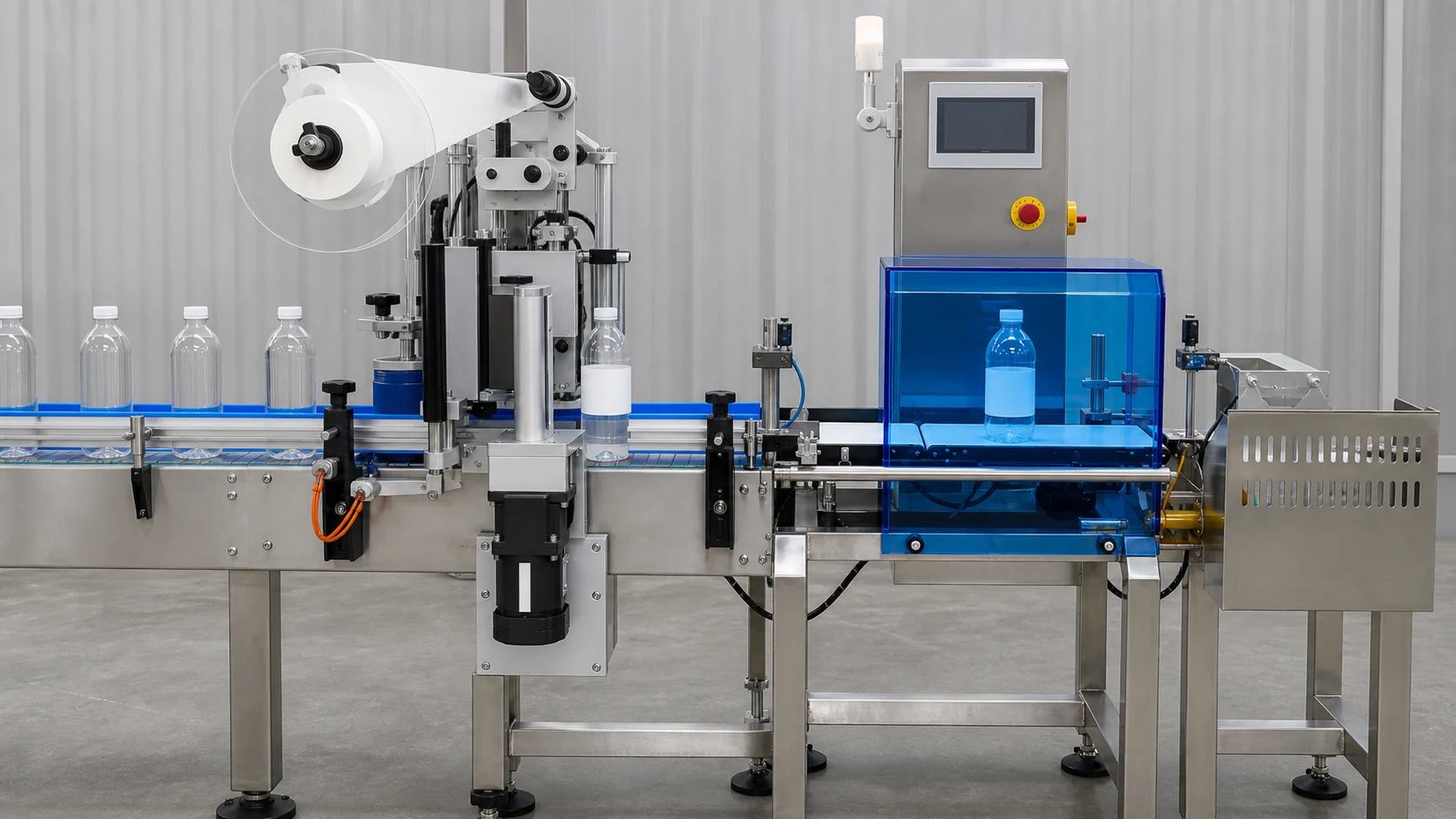
4. Labeling, Coding and Inspection
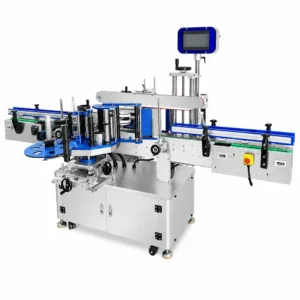
Use the final bottle surface, label stock, liner, adhesive and artwork. Assess application position, adhesion after the agreed dwell period, print quality, camera readability and reject challenges on the labeling machine and downstream inspection system.
5. End-of-Line Packing
Follow the finished pack through case packing, wrapping and palletising. Reduced secondary packaging can save material, but the revised pack must remain controlled during handling, storage and transport.
What to Send Before a Quote or Factory Acceptance Test
A useful Request for Quotation (RFQ) and Factory Acceptance Test (FAT) start with controlled packaging information, not a machine name alone.
- Product type, viscosity, foaming, particles, temperature and cleaning needs where applicable.
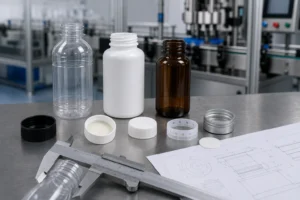
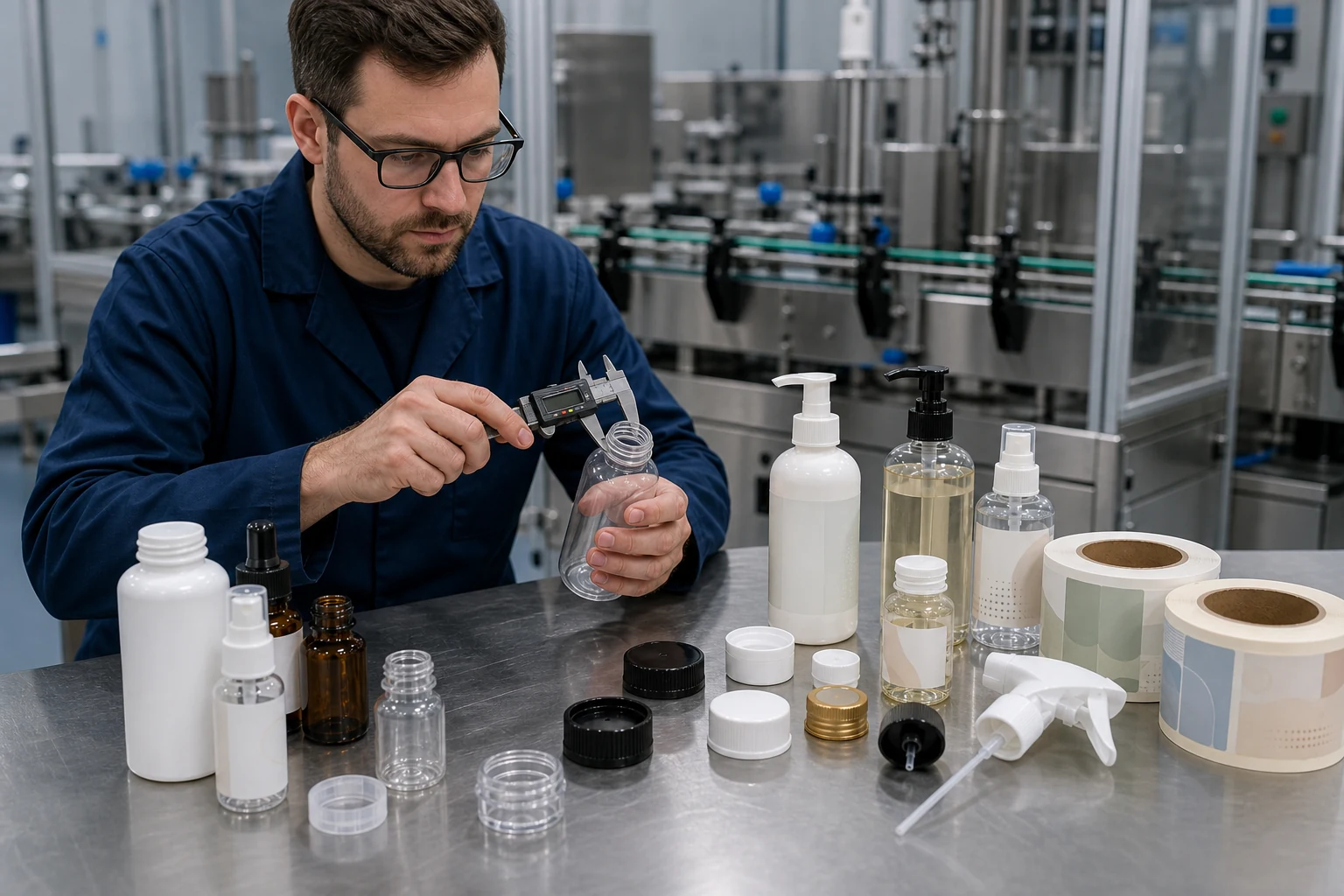
- Bottle material, drawings, weight, dimensions, neck finish, handling method and revision-controlled samples.
- Cap and neck drawings, liner or tamper feature, orientation and supplier application limits.
- Label or sleeve die-line, stock, liner, adhesive, artwork variants and required position.
- Target output by format, layout, conveyor height, utilities, voltage and frequency, automation level and written acceptance criteria.
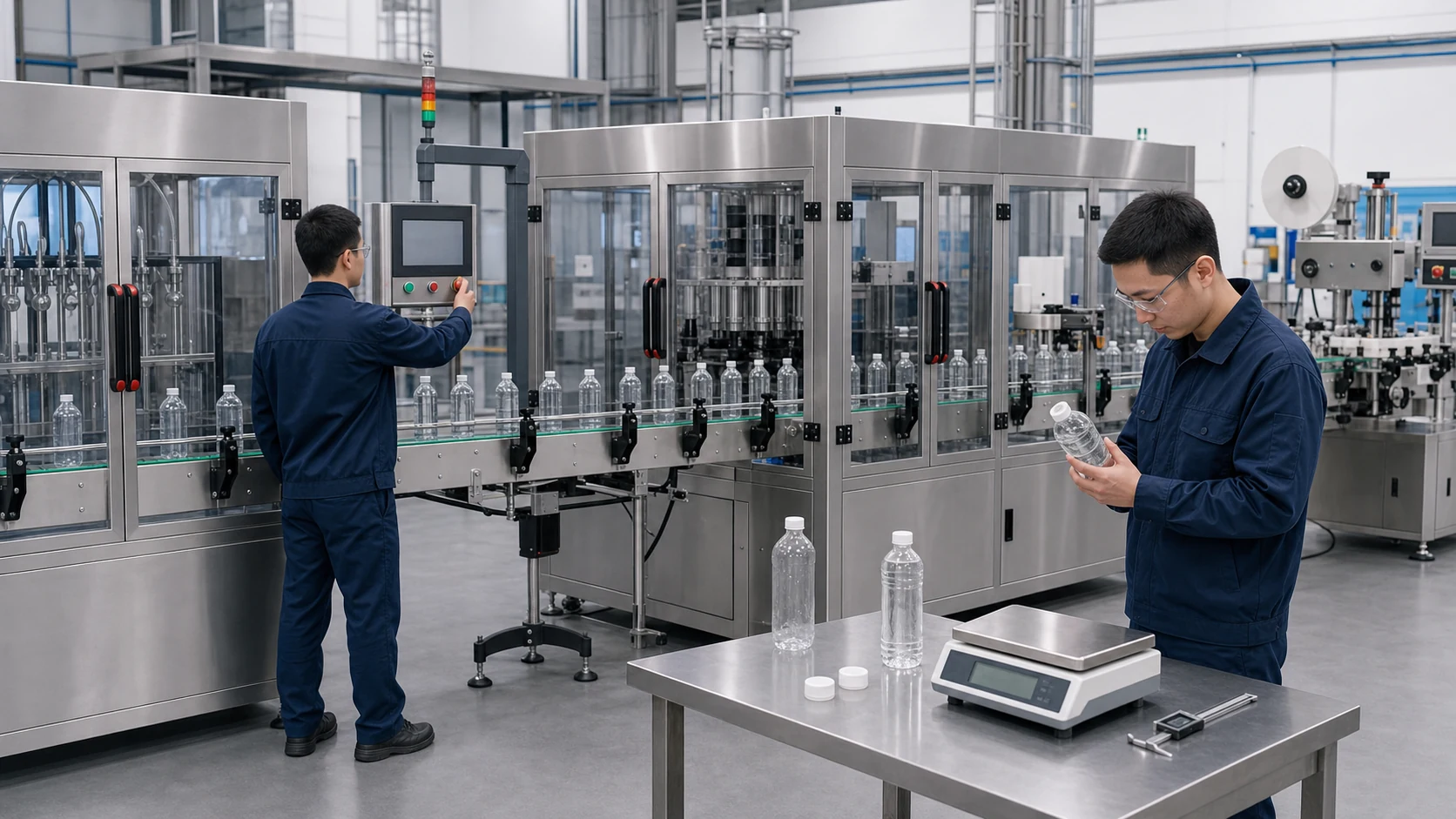
Before FAT, agree the sample status, run conditions, measurement method, acceptance limits and signatories. During the test, record actual output, interventions, settings, measurements and deviations. At the end, separate accepted results from open actions and state what will be repeated during the site test.
For a fuller procurement worksheet, use LEKA’s 15-point bottle filling machine RFQ and FAT checklist.
Three Packaging Changes Most Likely to Affect Line Testing
These changes may look acceptable as individual components but behave differently during a continuous production run.
1. Lightweight Bottles
Reducing bottle material can change wall stiffness, base stability and recovery after pressure. A bottle that stands on a table may still lean under guide pressure, deform below a filling nozzle or lose spacing during accumulation.
Use filled and empty samples from the intended design. Include normal starts, stops, transfers and accumulation, then record settings and any physical damage by packaging revision.
2. Recycled Plastic Content
Post-consumer recycled plastic (PCR) is plastic recovered after consumer use. Recycled polyethylene terephthalate (rPET) is recycled PET material used in a new PET packaging format.
Article 7 sets category-specific recycled-content targets. Subject to its conditional timing, the 2030 values include 30% for contact-sensitive PET packaging other than single-use beverage bottles, 10% for other contact-sensitive plastic packaging other than single-use beverage bottles, 30% for single-use plastic beverage bottles and 35% for other plastic packaging.
Qualify the finished bottle rather than the percentage alone. Wall distribution, base geometry, neck dimensions, colour and surface friction can vary between designs and lots. Record the exact bottle revision and representative production lots used in the trial.
3. Caps, Labels and Secondary Packaging
For covered single-use plastic beverage containers, the tethered-cap requirement has applied since July 3, 2024 under the EU Single-Use Plastics Directive. It is not a new PPWR requirement starting on August 12, 2026. A tethered design can change cap orientation, bridge geometry and the cap-neck relationship, so the final components establish the feeder, chute and capping setup.
A deposit-return system (DRS) collects a deposit when the product is sold and returns it when the empty container is brought back. Market-specific DRS marks can create additional artwork and inspection variants. Test the final label, sleeve, adhesive, bottle surface and printed mark as one applied system.
Guidance from the European PET Bottle Platform and RecyClass can support packaging-design review. The factory trial supplies the separate evidence for machine performance. For reduced secondary packaging, run the completed pack through case packing, wrapping, palletising and normal handling.
How LEKA Can Help
LEKA turns a packaging revision into a practical equipment and test scope.
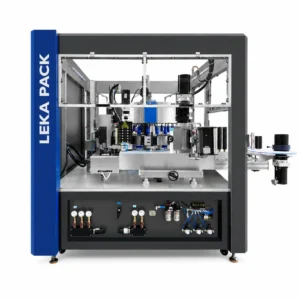
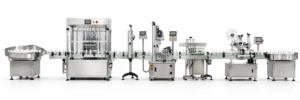
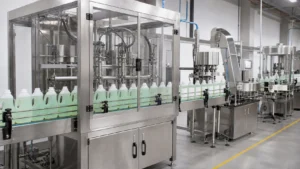
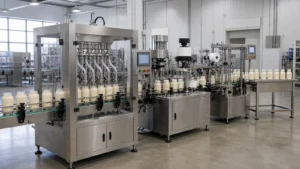
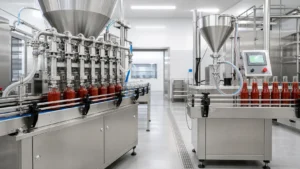
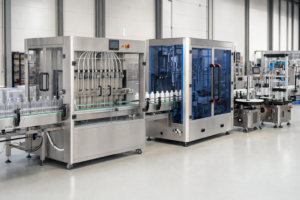
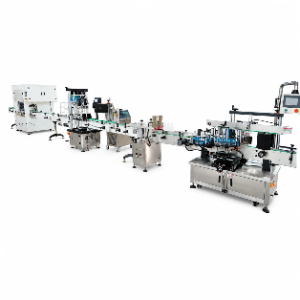
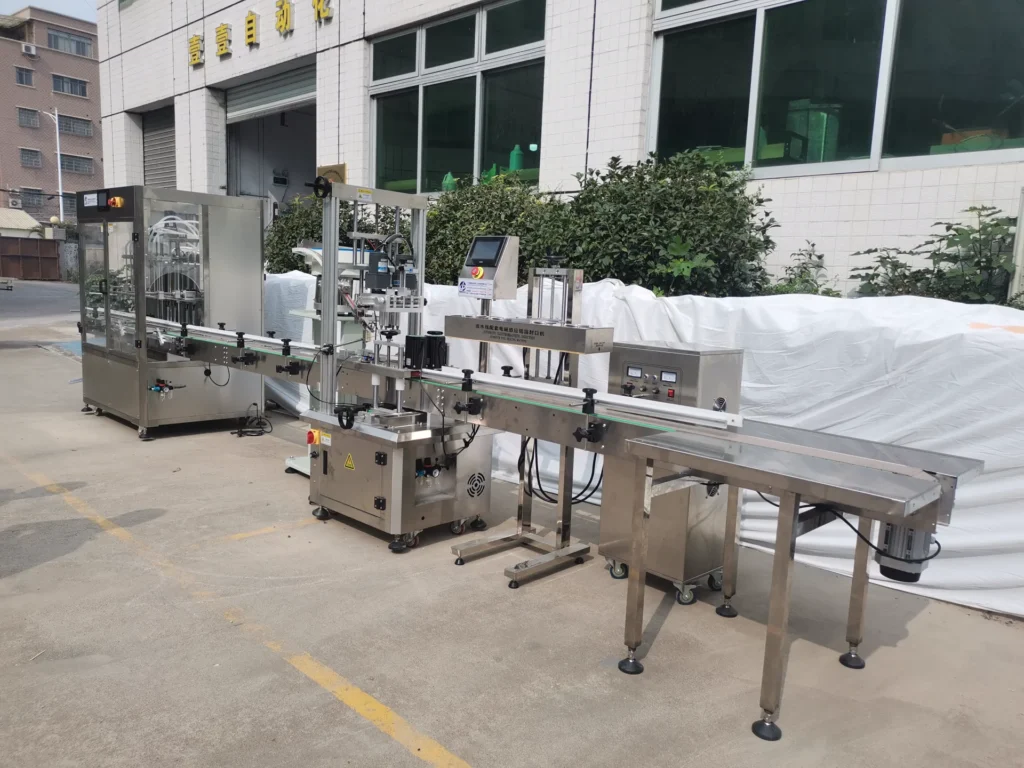
LEKA Pack Line can discuss filling, capping, labeling, conveying and line integration around the product, package, target output, automation level and factory layout. Start with the controlled specifications and representative samples described above, then define the equipment scope and FAT plan. See LEKA’s bottle packaging line solutions.
Frequently Asked Questions
These five answers cover the decisions most factory teams face first.
Does PPWR affect a factory outside the EU?
It can. The key question is whether the packaged product is placed on the EU market and what role the factory, brand owner, importer and other parties play.
Does PPWR require a certified filling machine?
No. PPWR regulates packaging and the responsibilities of economic operators; it is not a filling-machine certification scheme. A FAT proves only the production criteria included in the agreed test plan.
Must an existing bottle line be replaced?
Not automatically. Trial the final package first. The result may require settings, guides, tooling or change parts, but a packaging revision alone does not prove that the complete line must be replaced.
Which packaging samples should be tested first?
Start with revision-controlled, production-representative bottles, caps, labels, sleeves and adhesives. Add representative lots where material or dimensional variation may affect handling, and identify any prototype limitation.
What if the final implementation measures are not yet published?
Treat the affected specification as an open project input. Keep artwork, change parts and test plans adjustable until the relevant official measure is final, then release the approved packaging revision through normal change control.
Plan the Packaging Revision Before You Freeze the Line
Send LEKA your product information, bottle and cap drawings, label specification, target output, layout, local voltage/frequency, available utilities, intended project timeline and representative samples. We can discuss the equipment configuration and a written RFQ/FAT scope for the packaging format.
Official and Technical Sources
These are the official and technical references used for the facts and project guidance above.
- Regulation (EU) 2025/40 on packaging and packaging waste
- European Commission: Packaging waste
- European Commission: PPWR implementation
- European Commission: PPWR FAQ, August 2026
- Commission Notice C/2026/3084 on PPWR implementation
- Directive (EU) 2019/904 on single-use plastics
- European PET Bottle Platform design guidelines
- RecyClass design-for-recycling guidelines
Sources and official implementation status checked on August 4, 2026. This article provides production-planning information and is not legal advice.