Ketchup Filling Machine Guide: How to Choose the Right Filler and Bottling Line
Ketchup can look straightforward until it reaches the filling line. It is thick, changes how it flows when pumped, and can leave strings or residue at the bottle neck if the product feed and nozzle are not working together. A ketchup filling machine therefore needs to be selected around the ketchup as it arrives at the filler—not around a single viscosity figure or a headline bottles-per-hour number.
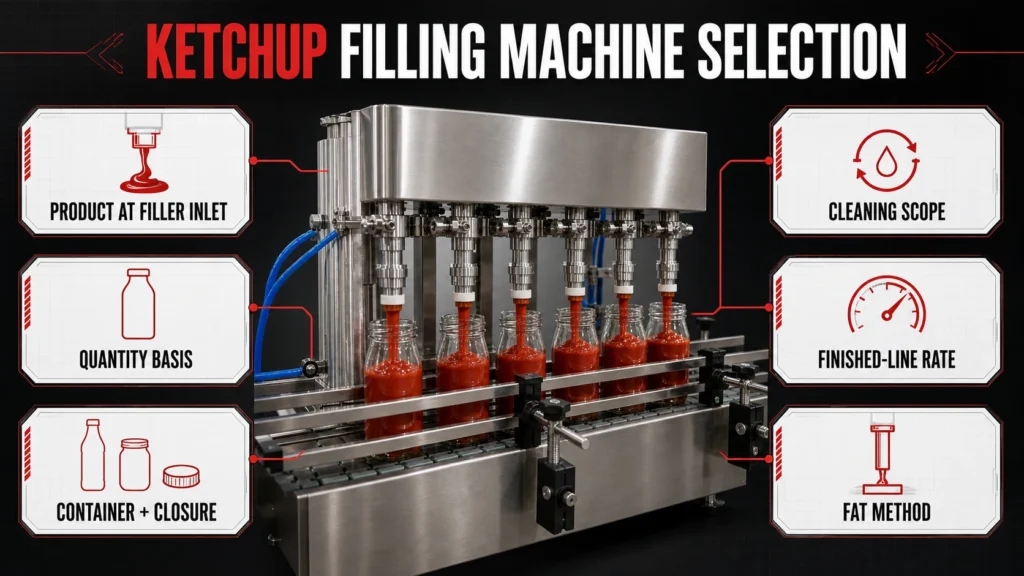
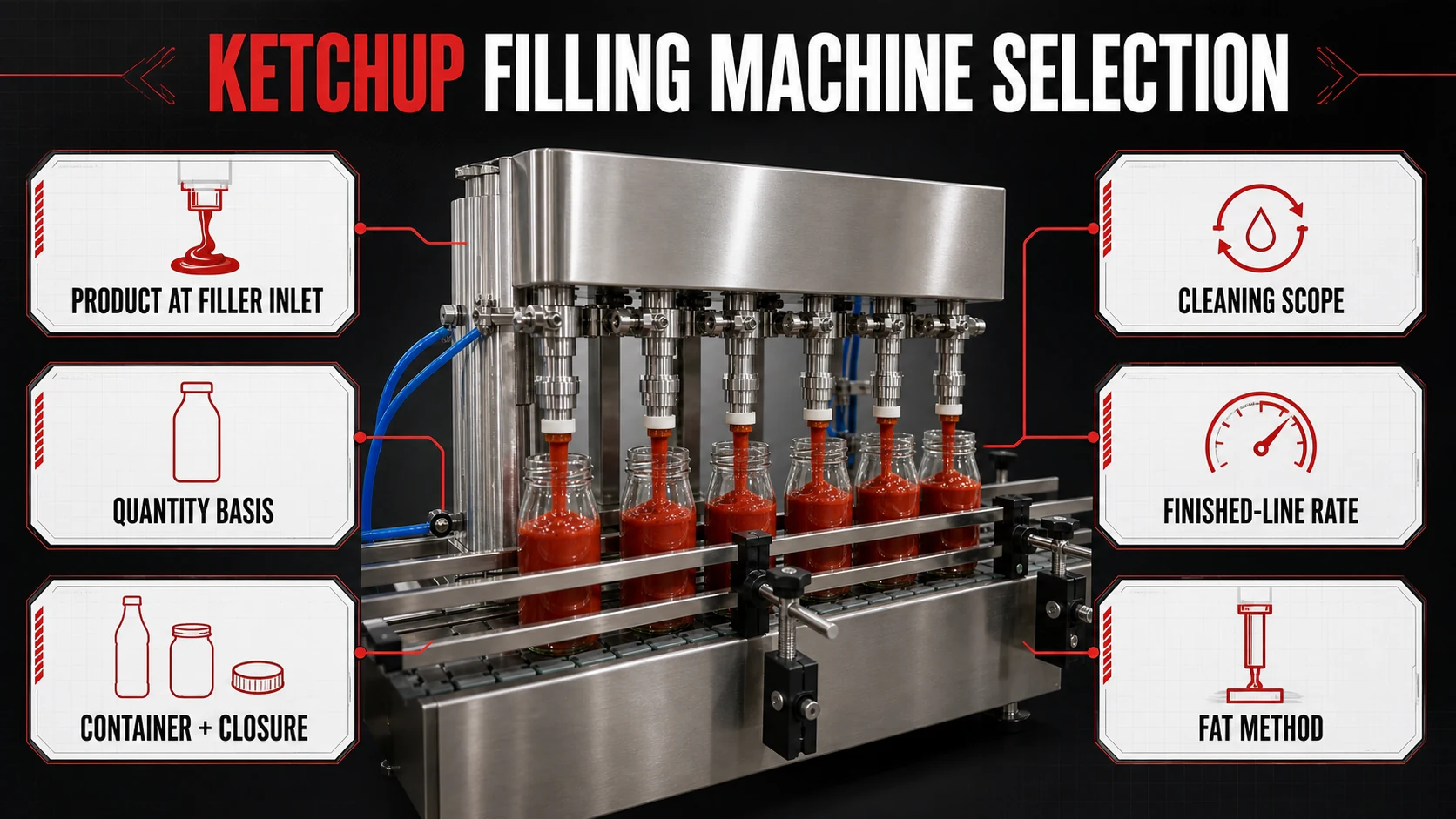
For most smooth bottled ketchup projects, the conversation starts with the product condition at the filler inlet, the fill size, the bottle and cap, cleaning requirements, the required finished-line output, and the way performance will be checked. Positive-displacement filling is often evaluated for this type of product, but the right setup still depends on the real product, package, and production conditions.
This guide is for food manufacturers, production managers, purchasing teams, engineers, and packaging-line integrators planning a new ketchup filling machine or updating an existing bottling line. It applies to smooth ketchup in bottles or jars. If the recipe includes diced vegetables, seeds, or other pieces, the complete product path needs a separate particle-handling review.
Buyer’s Summary
- Describe the ketchup at the filler inlet: temperature, tank level, feed pressure or static head, pump arrangement, agitation, recirculation, and any tendency to entrain air.
- Agree how fills will be checked—by volume, net weight, or another method—before comparing machine proposals.
- Prepare a format matrix covering every product, container, closure, label, fill quantity, and required line rate.
- Include neck cleanliness, changeover, sustained output, and cleaning access in the FAT plan.
- Keep machine acceptance separate from the manufacturer’s responsibility for sanitation, package performance, process validation, and shelf life.
What Is a Ketchup Filling Machine?
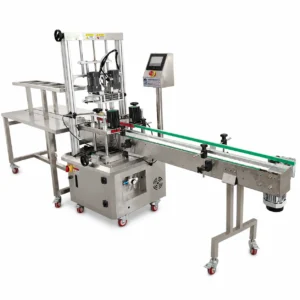
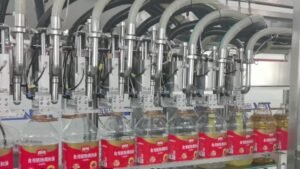
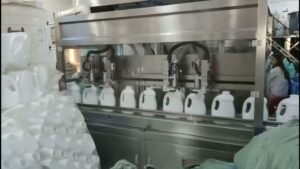
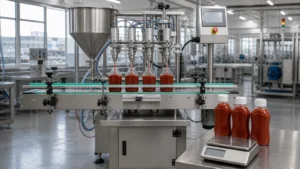
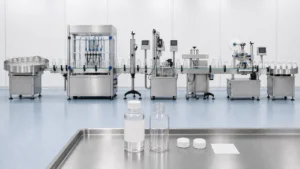
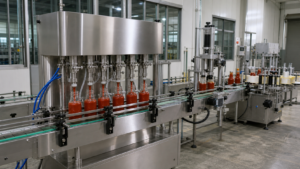
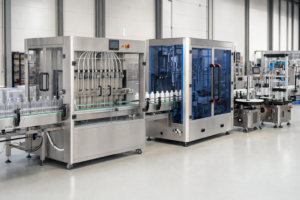
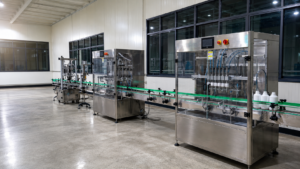
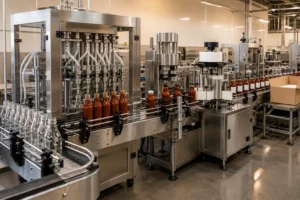
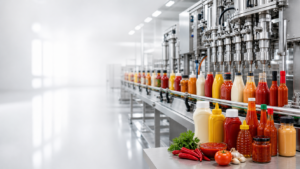
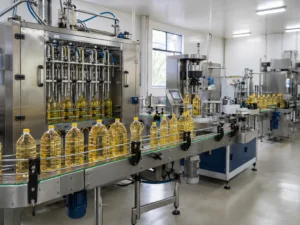
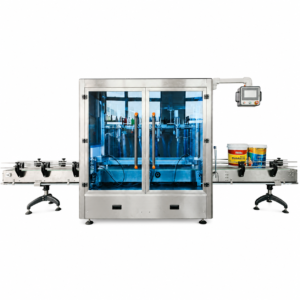
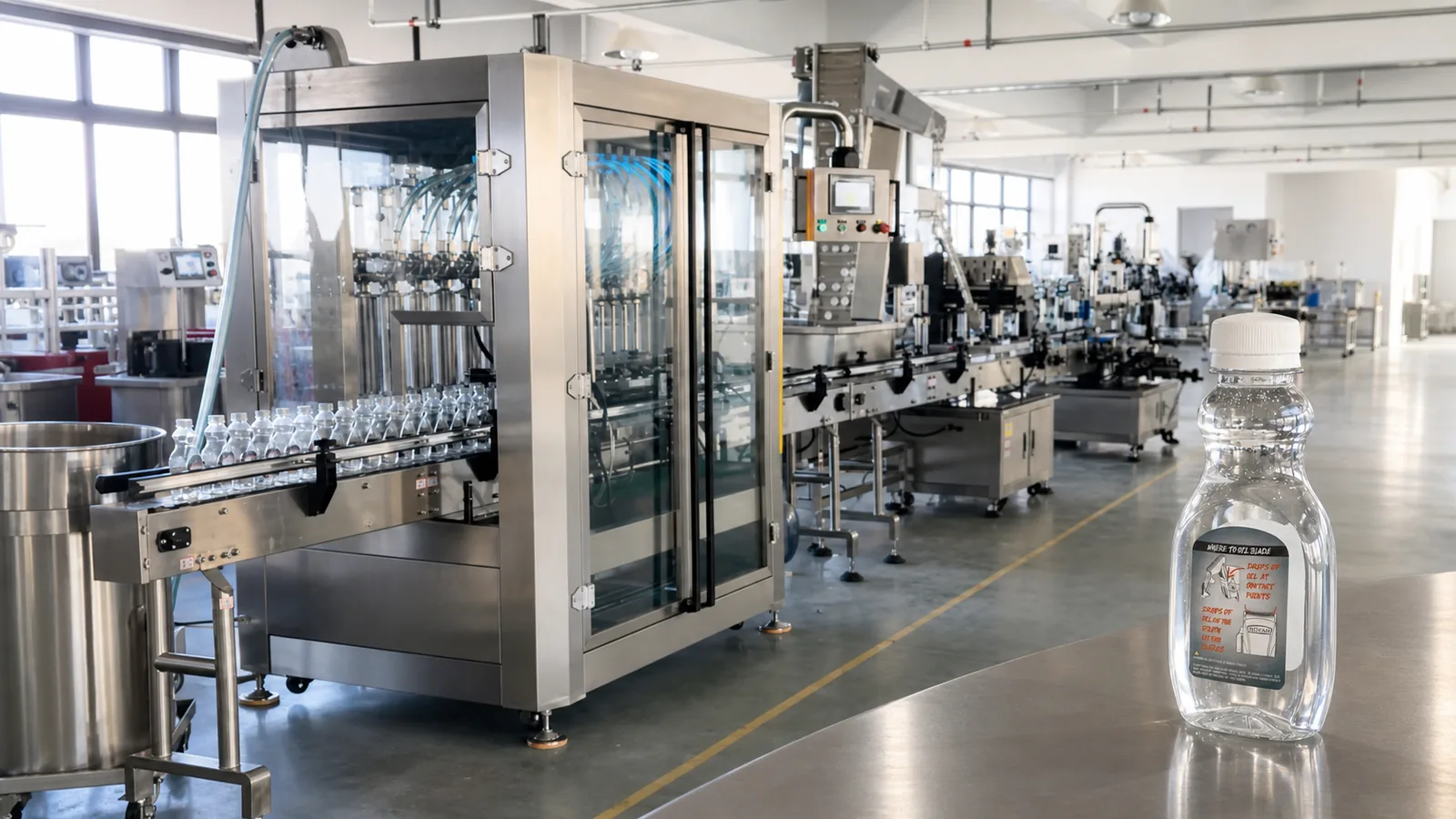
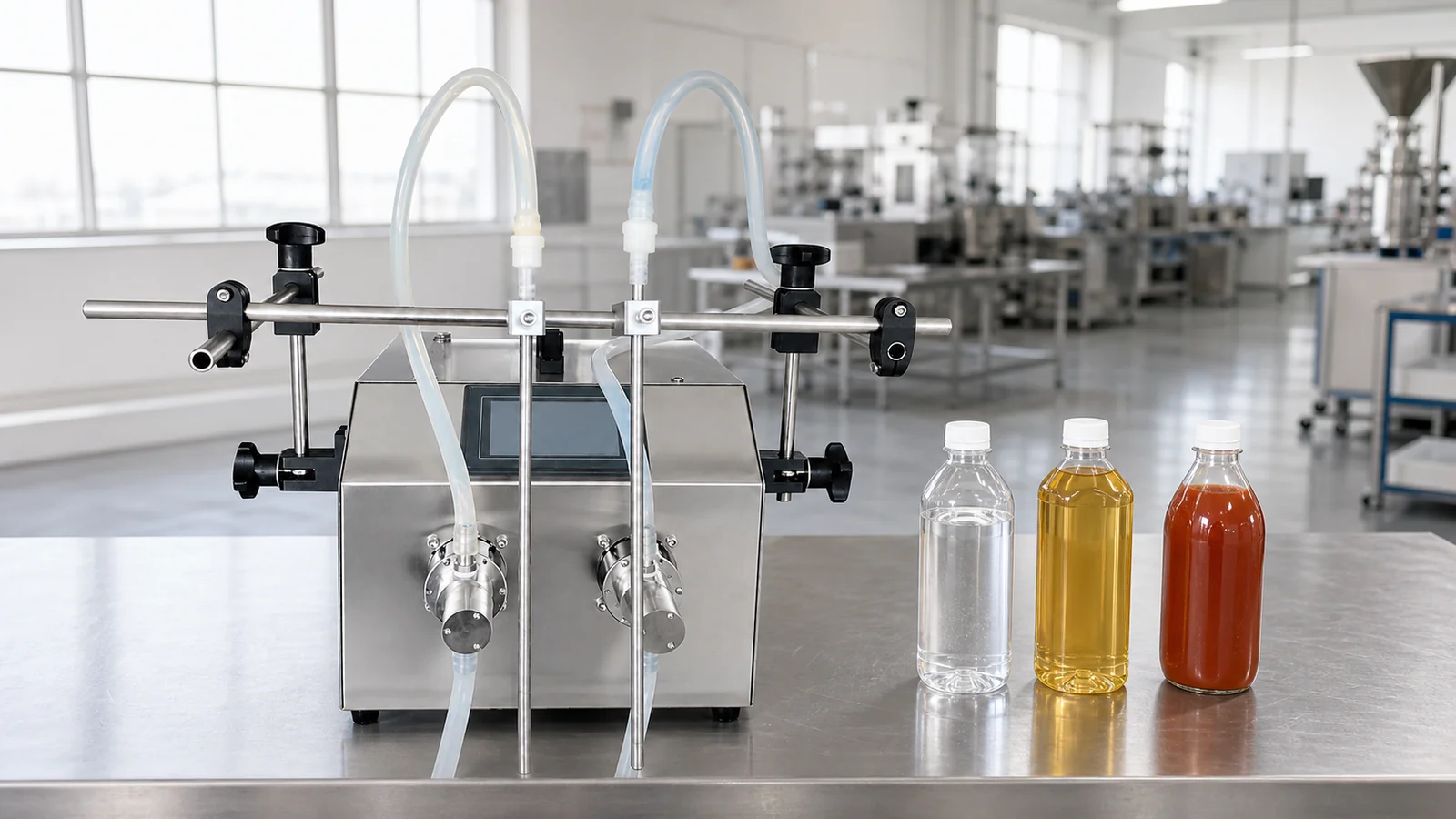
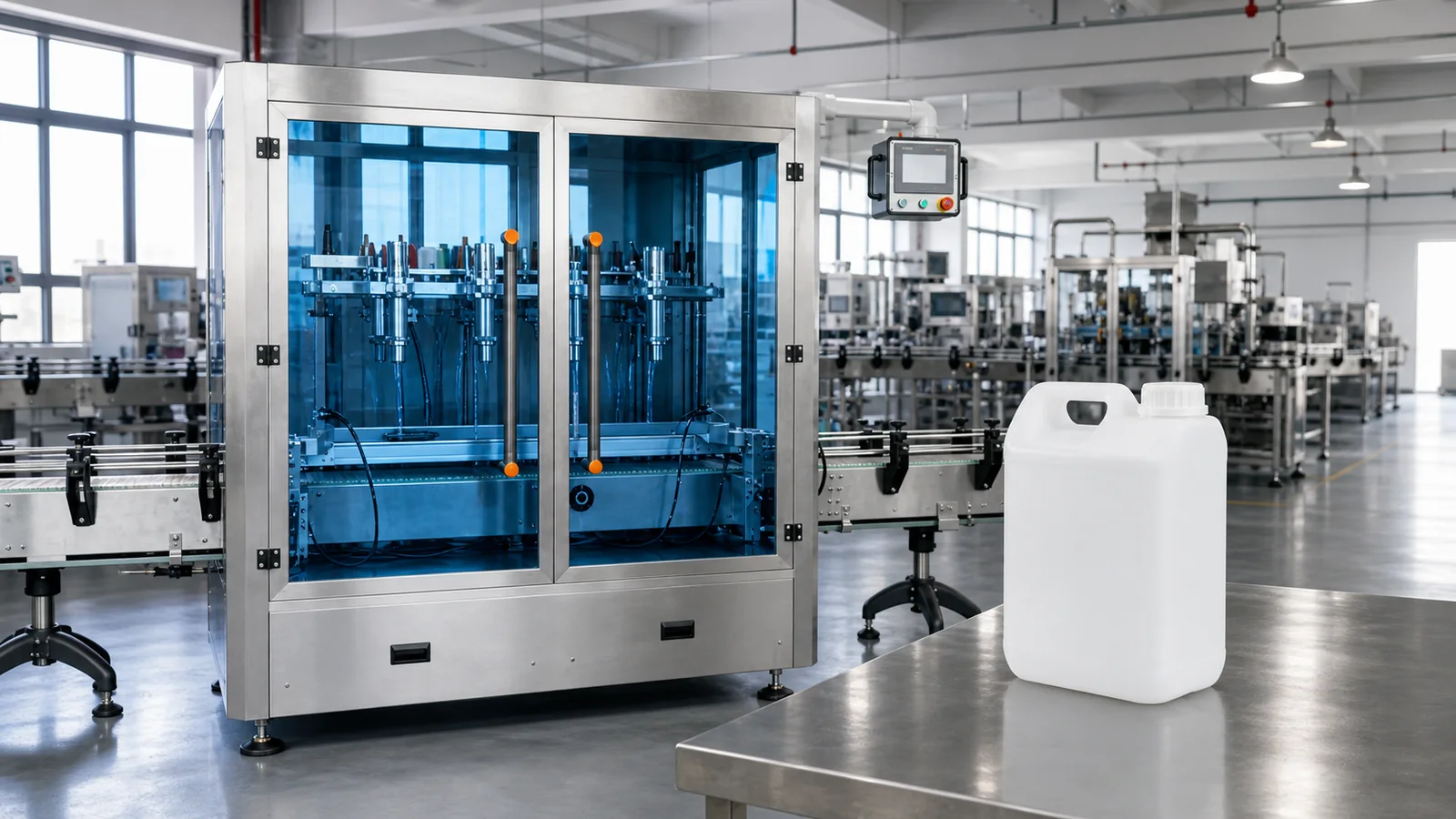
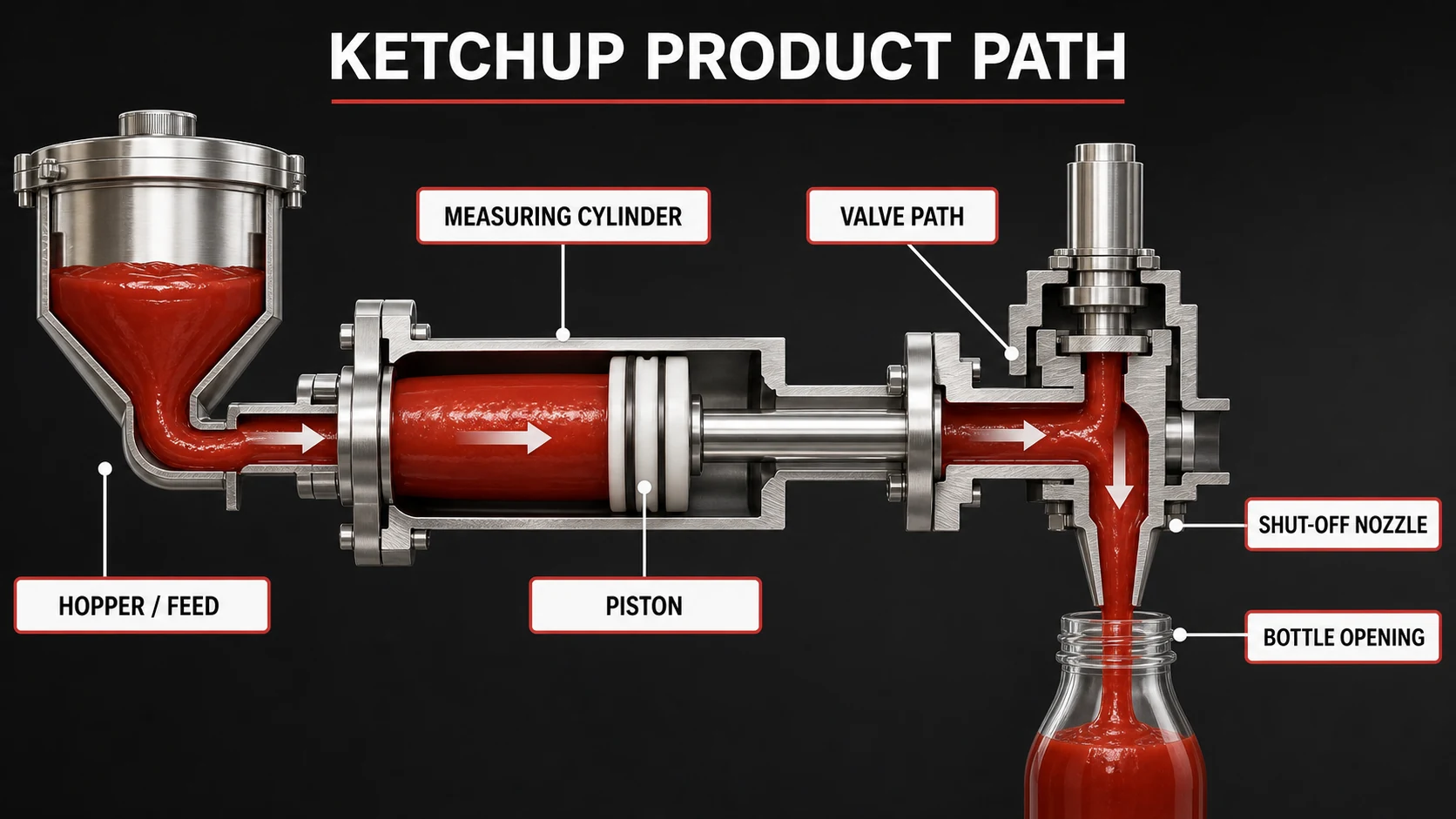
A ketchup filling machine doses a set amount of ketchup into a bottle or jar, then passes the container to capping, labeling, coding, and packing equipment. In practice, the filler is more than a set of nozzles. It includes the product feed connection, dosing components, valves, nozzles, bottle handling, controls, and the access needed for cleaning and maintenance.
Those parts have to work as one system. A well-sized dosing unit cannot fully compensate for unstable product feed, a bottle neck that does not suit the nozzle, or a capper that cannot keep up with the filler.
Why Ketchup Behavior Affects Equipment Design
Thick does not mean predictable
Published studies describe ketchup as a non-Newtonian, shear-thinning product. Put simply, it does not behave like water: its apparent viscosity changes with temperature, test method, and the forces applied while it is pumped or pushed through a valve and nozzle. A product may flow more readily while moving through part of the system, yet still resist flow at restrictions or during cutoff.
That is why a viscosity value by itself is not enough to design the product path. It should always be paired with the test method and temperature. A 1991 laboratory study measured particular ketchup samples between 30°C and 80°C, but that range should not be treated as a universal filling-temperature recommendation. The relevant number for a project is the normal operating range at the filler inlet, as defined by the manufacturer’s own process.
Product feed can change the result at the nozzle
The filler responds to what reaches its inlet, not simply to the product name on the specification. A falling tank level, pump pulsation, aggressive agitation, unstable recirculation, temperature drift, or a vortex in the hopper can all change the condition of the ketchup entering the dosing system.
Air is especially important. If air becomes entrained in the product, a dosing system may repeat the same displacement but deliver a different settled quantity or net weight. The same instability can show up as inconsistent cutoff, splashing, or a changing product tail at the nozzle.
Neck residue can become a line problem
Ketchup on the sealing surface, threads, or outside of the neck can affect cap application and spoil the appearance of the finished pack. It can also transfer to guide rails and belts. During the FAT, do not inspect only the fill result inside the bottle. Agree in advance where neck cleanliness will be inspected and what is acceptable for drips, strings, splash, and product on the closure area.
If dripping or stringing is already a problem on an existing line, see this guide to diagnose sauce filling nozzle dripping.
How to Specify a Ketchup Filling Machine
Good projects start with one consistent set of conditions. The information submitted in the first inquiry should match the basis used in the quotation, the factory acceptance test, and the final acceptance record. This avoids a common problem: a line is quoted on one set of assumptions and judged later under another.
| Project Input | Why It Matters | What to Provide |
|---|---|---|
| Product condition | It influences feeding, dosing, valve selection, nozzle behavior, and cutoff. | A production-representative sample; product category; any available consistency data with its test method and temperature; and notes on separation, air, or inclusions. |
| Filler-inlet condition | Changes in head, pressure, temperature, or air content can affect the fill result. | Normal and allowable temperature; tank-level range; static head or inlet pressure; transfer pump; agitation; recirculation; pipe route; and expected hold time. |
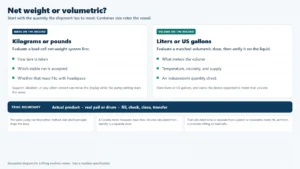
| Fill quantity | It determines the dosing range and how the result should be measured. | Every required fill size, plus whether acceptance is by volume, net weight, or another agreed method. Include tare and any density or temperature basis where relevant. |
| Bottle or jar | The package affects nozzle clearance, guides, sensors, indexing, capping, and labeling. | Production-representative samples, drawings, dimensions, material, opening size, wall flexibility, and expected manufacturing tolerances. |
| Closure and seal | These determine cap feeding, placement, tightening, pressing, or sealing requirements. | Cap and liner samples, neck finish, application method, torque or other acceptance requirement, and details of any separate seal. |
| Required line rate | It affects dosing time, number of filling positions, container handling, and downstream balance. | The sustained finished-bottle rate required for each product and format, plus shift pattern, test duration, and planned stops excluded from the calculation. |
| Cleaning scope | It changes the product-path layout, drainage, access, utilities, and documentation. | Which parts are intended for CIP, COP, or manual cleaning; proposed cleaning chemistry and conditions; inspection method; and allergen-control requirements. |
| Factory conditions | They define the line direction, access, conveyor arrangement, controls, and utility interfaces. | Floor plan, available space, columns, doors, drains, voltage, frequency, phase, compressed air, and preferred container flow. |
Dosing, Feed, and Nozzle Decisions for Smooth Ketchup
Start with the duty, not a machine label
Piston fillers are one type of positive-displacement system often considered for smooth ketchup. Other positive-displacement arrangements may also be suitable. The machine label alone, however, does not determine whether a configuration will perform well. The product feed, valve geometry, fill size, cycle speed, temperature, air content, nozzle design, and cleaning plan all matter.
For a more detailed comparison of common approaches, see piston filler versus pump filler for sauce. A useful quotation should clearly state the proposed dosing arrangement, the product path, the assumptions behind it, and the method used to verify performance.
Review the feed system before sizing the filler
Look upstream at the holding vessel, outlet geometry, tank-level range, transfer method, elevation changes, pipe restrictions, pump behavior, and any agitation or recirculation. This is where many filling problems begin. Too much mixing or turbulence can introduce air, while an unstable inlet can affect cutoff and fill consistency.
Where possible, the FAT should reproduce the intended feed condition. If the test setup is different from the planned installation, record the difference so that everyone understands what still needs to be checked during site acceptance.
Choose the nozzle with the bottle, not in isolation
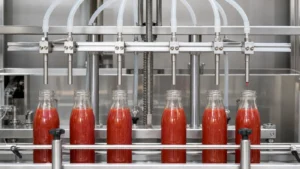
Nozzle bore, restrictions, valve dead space, fill velocity, cutoff timing, and nozzle position all influence pressure drop, stringing, trapped air, splash, and neck residue. A suck-back function may help shorten a product tail, but excessive retraction can draw air into the tip or disturb the next dose. The nozzle should be tested over the specified production-rate range using the submitted ketchup and real containers.
Products with pieces need another review
This guide assumes smooth ketchup. If the product contains diced vegetables, seeds, or other pieces, inspect the route from tank outlet to nozzle as one continuous passage. Restrictions in the tank outlet, pump or piston path, valves, hoses, manifold, or nozzle can become a blockage or damage point. See the separate guide to a sauce filling machine for products with particles.
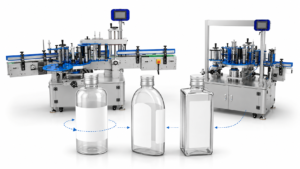
Ketchup Bottle Filling Machine Setup by Container Type
Before ordering, build a format matrix. For every SKU, list the product, nominal fill quantity, measurement basis, container, opening, closure, label, required rate, common parts, change parts, adjustment points, operator tasks, and cleaning steps. This makes it easier to see where a “multi-format” claim is realistic and where it depends on extra tooling or a longer changeover.
| Container Type | Configuration Elements to Review | Main Format Checks |
|---|---|---|
| Rigid PET or HDPE bottle | Guides, stops or indexing, nozzle position, cap application, and label handling. | Opening clearance, bottle stability, panel strength, cap alignment, and usable label surface. |
| Squeezable bottle | Controlled side contact, bottle transfer, and the specified closure arrangement. | Deformation under guides and during capping, center of gravity, cap orientation, and any restrictor components. |
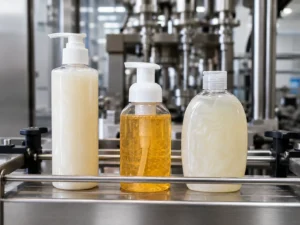
| Glass bottle | Stable transport, accumulation control, nozzle clearance, and closure handling. | Bottle tolerances, contact and impact points, neck cleanliness, and closure application. |
| Wide-mouth jar | Jar guides, nozzle position, lid feeding or placement, and label format. | Opening size, headspace requirement, rim cleanliness, lid fit, jar height, and accumulation behavior. |
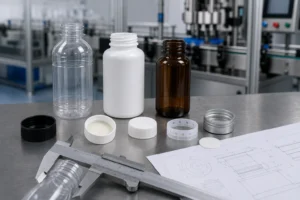
A photo is useful for a first discussion, but it is not enough to approve a ketchup bottling machine. Real samples reveal wall flexibility, mold variation, cap fit, label-panel shape, and how the container behaves at infeed, filling, capping, transfer, and accumulation points.
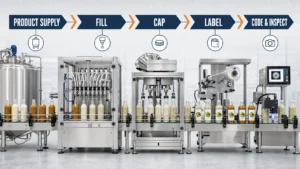
Planning an Automatic Ketchup Filling Machine and Complete Line
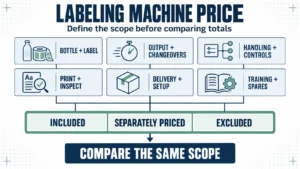
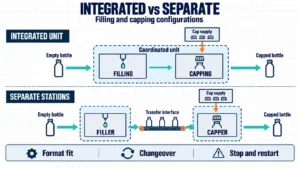
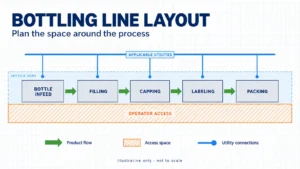
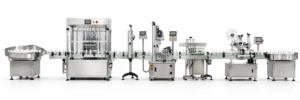
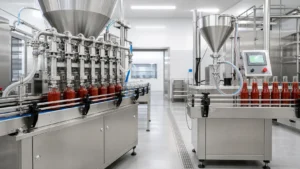
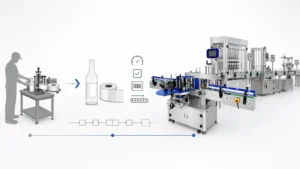
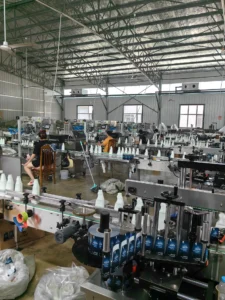
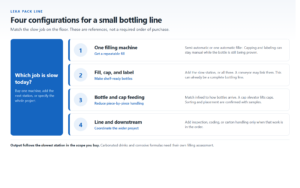
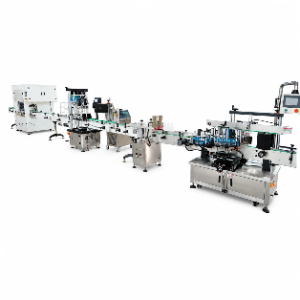
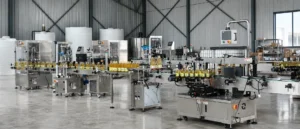
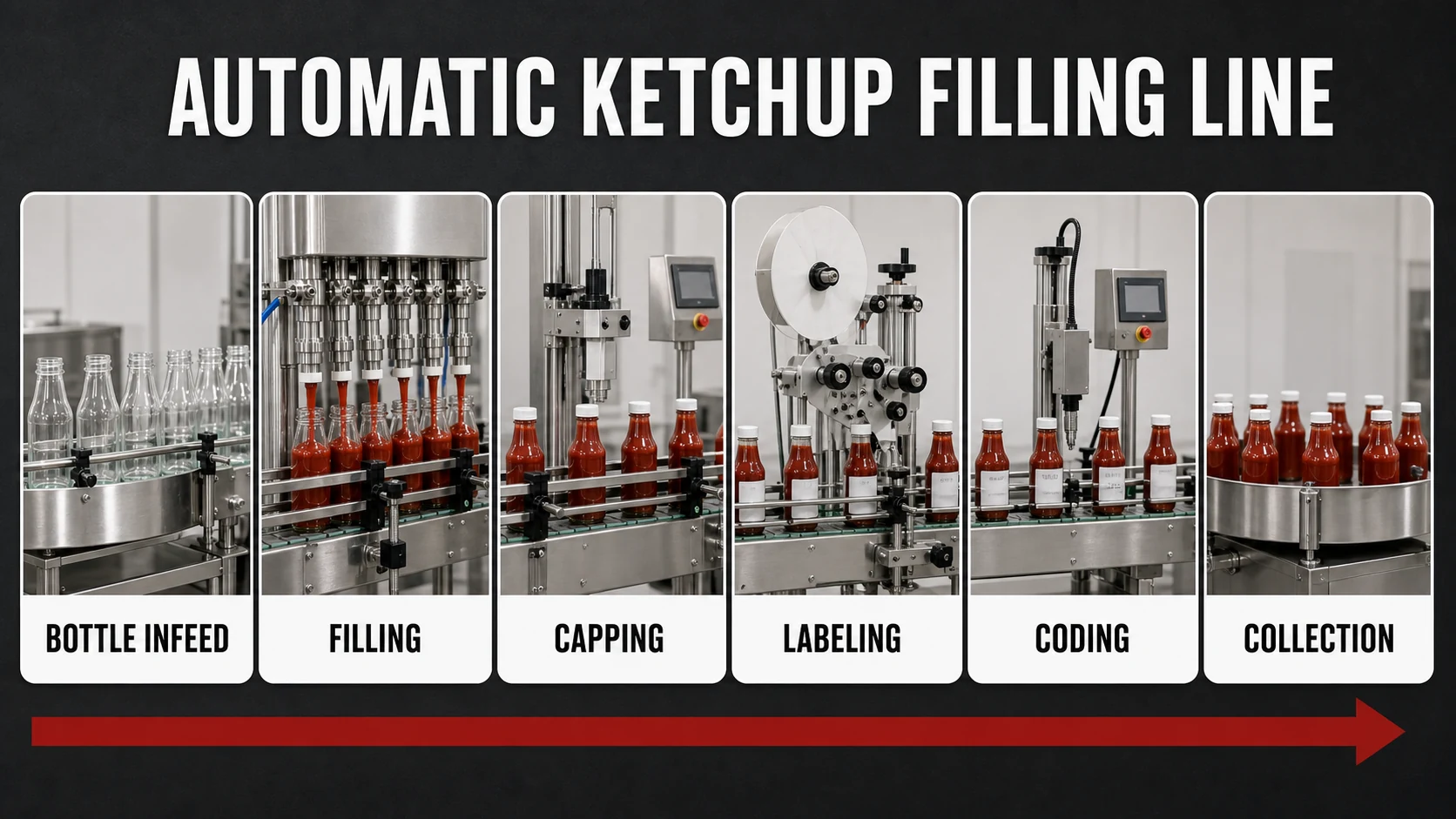
An automatic ketchup filling machine is part of a packaging line, not an isolated island. LEKA Pack Line supplies filling, capping, labeling, coding, and conveyor equipment and can review how these elements may be arranged for an agreed project. The quotation should make the scope clear: included machines, interfaces, utilities, documents, tests, assumptions, and exclusions.
| Project Scope | Configuration Elements to Review | Boundary to Record |
|---|---|---|
| Filling-section project | Product feed connection, dosing system, nozzles, controls, container handling, and discharge interface. | Existing upstream and downstream equipment, interface signals, container transfer, and work retained by the buyer. |
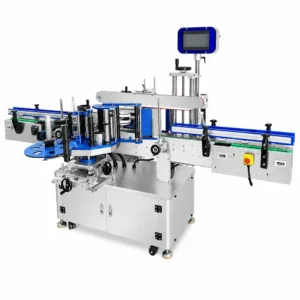
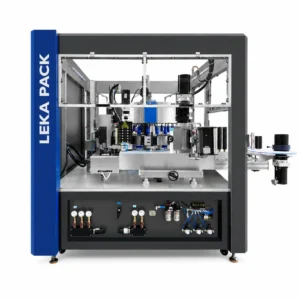
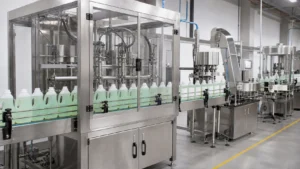
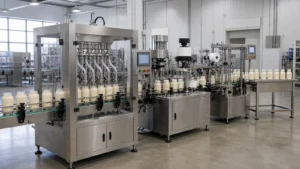
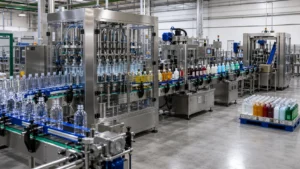
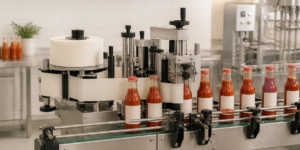
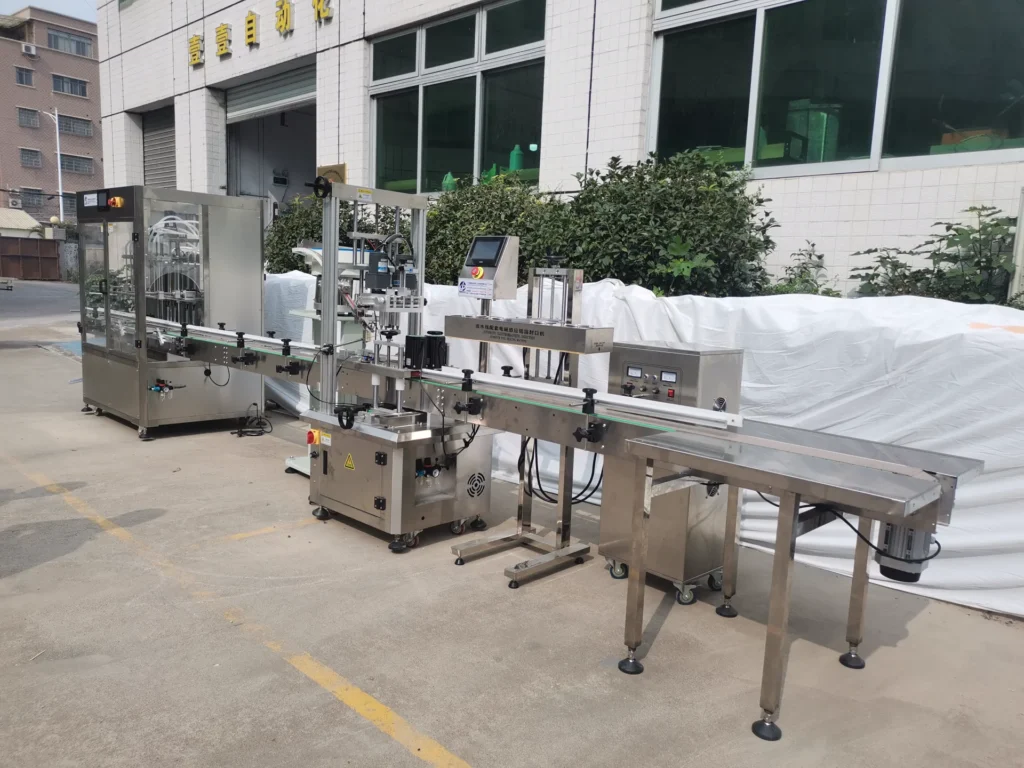
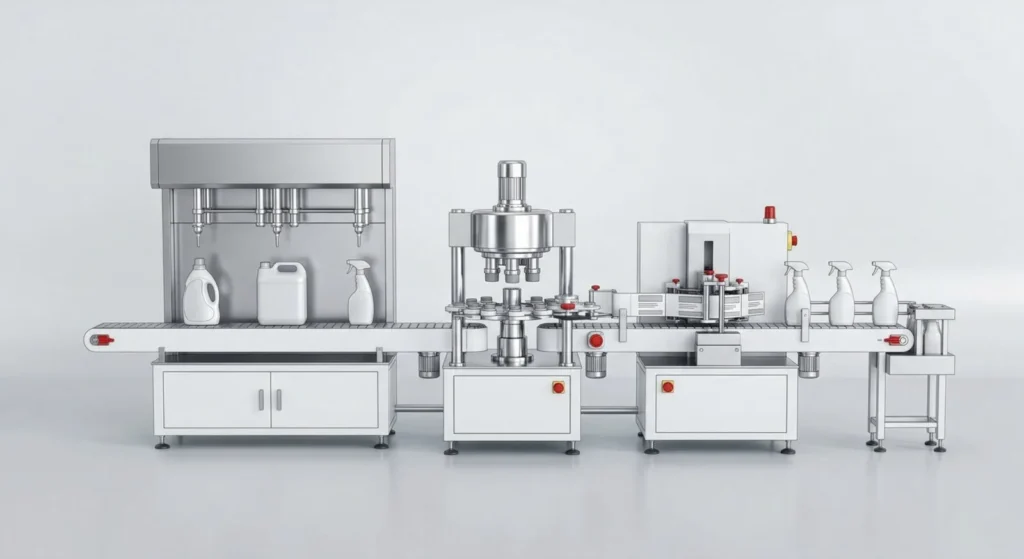
| Automatic ketchup bottling line | Filling, cap feeding and application, labeling, coding, and conveyors. | Format rates, interface responsibility, accumulation, reject handling, and the equipment included in the written scope. |
| Wider packaging-line project | Container entry, filling, closing, labeling, coding, conveyors, and any other equipment listed in the quotation. | Included equipment, third-party interfaces, utilities, installation work, documentation, tests, and exclusions. |
Plan around sustained output
The filler’s short-cycle speed is not the same as finished-line output. In normal operation, the line runs at the sustainable rate of its slowest step. A cap feeder, capper, labeler, coder, inspection station, or packing operation that cannot keep up will limit the whole line, even if the filler itself can cycle faster.
Accumulation is useful for short interruptions, but it is not a cure for a permanent downstream bottleneck. Ask how the proposed line rate is calculated and which machines are active during the test.
Make room for people as well as equipment
A compact layout is not automatically a workable one. Operators need room to load materials, inspect containers, remove rejects, clean product-contact areas, change formats, and reach routine maintenance points. Share columns, walls, drains, doors, traffic routes, and service clearances before equipment positions are finalized.
For a broader overview, see the sauce packaging machine guide for bottled lines and the available sauce filling equipment.
Hygiene, Cleaning, and Documentation Boundaries
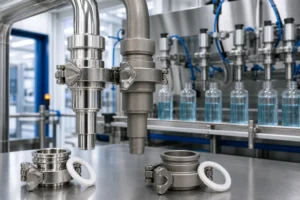
Hygienic design, material suitability, certification, regulatory compliance, and process validation are related, but they are not the same thing. FDA food-contact resources address substances and stated conditions of use; they do not approve an entire filling machine or production line. Likewise, 3-A standards provide hygienic-design criteria, while conformity or authorization to display the 3-A Symbol requires separate, machine-specific evidence.
The purchase specification should state the intended market, ketchup and cleaning conditions, required documents, and any exact standard, certification, or symbol-authorization requirement. Depending on the project scope, the requested package may include a product-contact parts list, material declarations, hose and seal specifications, cleaning and disassembly instructions, maintenance guidance, cleaning-boundary drawings, and specifically contracted certificates or inspection records.
- Check metals, hoses, seals, gaskets, lubricants, and other product-contact components against the product, operating temperature, contact time, and cleaning chemicals.
- State which surfaces are intended for CIP, COP, or manual cleaning, including the required disassembly, drainage, inspection, and reassembly steps.
- Identify hold-up points, removable parts, required tools, replacement seals, and the access needed for inspection and maintenance.
- Keep the supplier’s equipment and documentation scope separate from the food manufacturer’s sanitation, allergen-control, and routine-verification procedures.
A filler alone does not create a validated hot-fill process, establish required lethality, guarantee commercial sterility, prove package performance, or set product shelf life. Those outcomes depend on the product and process, package and closure, time-temperature history, cooling and handling, facility controls, and applicable market requirements. The food manufacturer should obtain the appropriate qualified review and validate the installed process.
Ketchup Filling Machine FAT Checklist
A useful FAT should show more than empty bottles moving through the machine. It should test the agreed product, package, and operating conditions, and it should state clearly how results will be measured. Any quoted rate or fill-performance figure only has meaning when those test conditions are known.
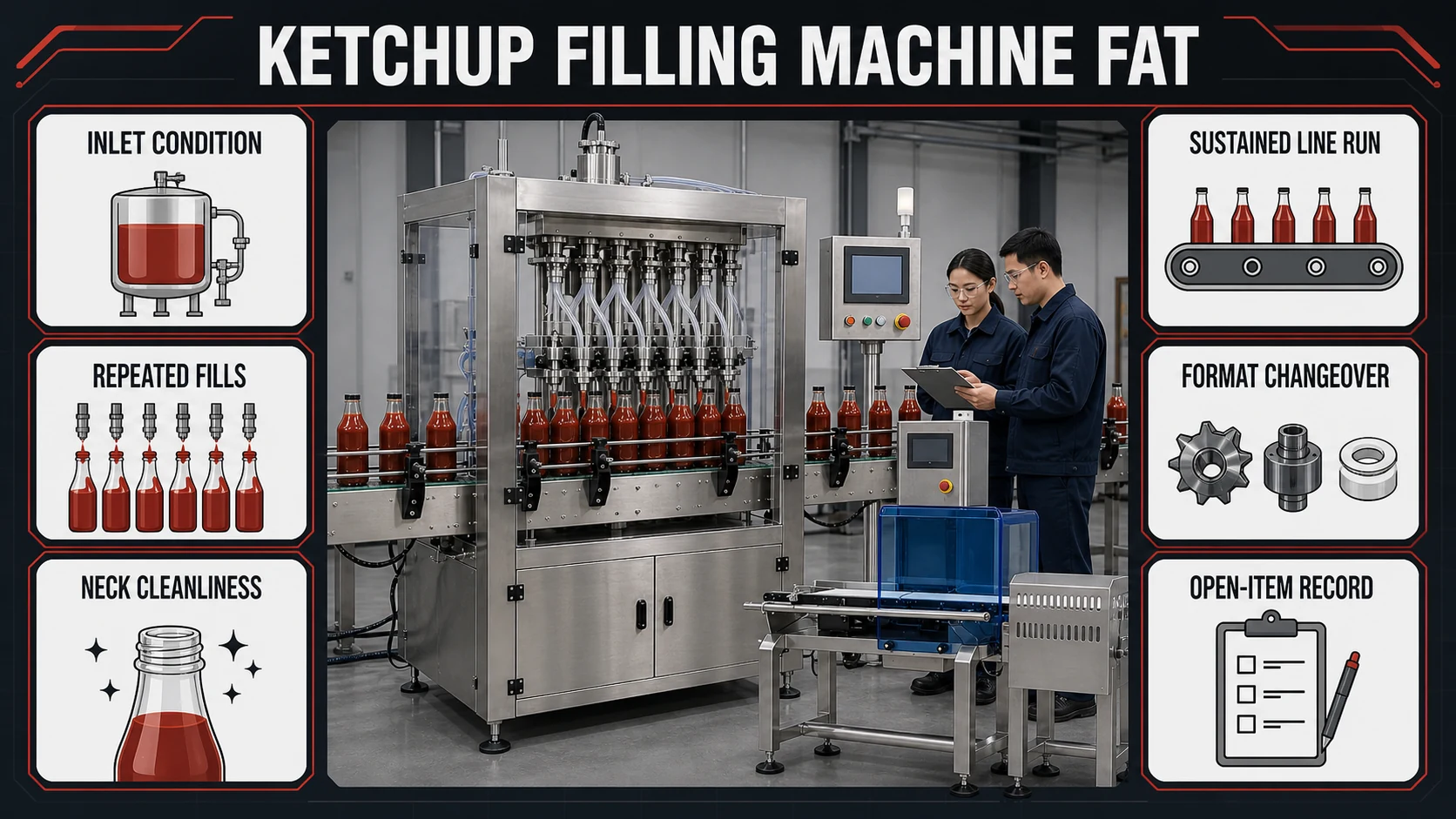
- Use production ketchup where practicable. If a substitute is needed, agree what properties and inlet conditions it represents, how equivalence will be assessed, and which points still need a site test.
- Use production-representative formats. Include the bottles or jars, caps, liners, and labels in the project scope. Record which formats are actually covered by the FAT.
- Control the inlet condition. Record product temperature, tank level, static head or inlet pressure, transfer-pump setting, agitation or recirculation status, and hold time. Note any difference from the planned installation.
- Measure repeated fills. Agree whether acceptance is based on volume or net weight, how tare is handled, the sample sequence, and any density or temperature conversion. Keep individual readings rather than reporting only an average.
- Inspect cutoff and neck cleanliness. Define the inspection area and the acceptance rule for tails, drips, splash, and product on threads or sealing surfaces.
- Demonstrate the agreed line rate. Run the equipment included in scope under the agreed product and package conditions. Define the run duration, startup exclusions, stoppage recording, rejects, and calculation method before the test starts.
- Perform representative changeovers. Record common parts, change parts, adjustments, stored settings, tools, operator steps, and any cleaning required between formats.
- Review cleanability and documents. Inspect access, drainage, removable parts, seals, hold-up points, and the proposed cleaning boundary. This is a design and access review, not validation of the installed sanitation or allergen-control procedure.
- Assign responsibilities. State who supplies and conditions the product and packaging, records measurements, approves deviations, handles test material, closes open items, and performs any agreed repeat test.
- Record open items before shipment. Give every deviation or incomplete deliverable an owner, due date, and required closure evidence.
Also separate supplier-FAT items from site-acceptance items. Utility checks, production feed conditions, installed access and drainage, operator procedures, and buyer-owned cleaning, process, and package validation may need to be confirmed after installation.
What to Send for a Ketchup Filling Machine Quotation
A detailed RFQ gives the supplier a better basis for a practical proposal and reduces late-stage assumptions. Include the following:
- Product and feed: product description, smooth or containing pieces, representative sample, filler-inlet temperature range, tank arrangement, pressure or static head, pump, agitation, recirculation, and hold time.
- Quantity basis: every nominal fill size, volume or net-weight basis, proposed measurement method, tare treatment, and any density or temperature conversion.
- Format matrix: container drawings and samples, opening, material, tolerances, cap and liner, label, coding requirement, required rate, and all SKUs.
- Line scope: filler only or connected filling, capping, labeling, coding, and conveyor equipment; existing machines; interfaces; accumulation; and equipment supplied by others.
- Cleaning and documents: CIP, COP, and manual-cleaning boundaries; proposed cleaning conditions; allergen requirements; material evidence; drawings; manuals; certificates; and test records required by contract.
- Factory conditions: layout, line direction, available access, drains, voltage, frequency, phase, compressed air, and other utilities.
- Acceptance: FAT and site-test scope, samples, target rate, test duration, measurement plan, neck-residue rule, changeovers, responsibilities, and open-item closure method.
Frequently Asked Questions
What type of filling machine is used for ketchup?
Piston fillers are one type of positive-displacement system commonly evaluated for smooth ketchup. Other arrangements may also be considered. The choice depends on the product at the filler inlet, fill range, container opening, cleaning requirements, and required line rate. The proposal should state the recommended configuration and how it will be tested.
Can one ketchup filling machine handle several bottle sizes?
It can when the dosing range, nozzle layout, guides, sensors, capping equipment, and labeling system are designed for the formats involved. Use a format matrix to identify shared parts, change parts, adjustment points, stored settings, tools, operator tasks, and cleaning steps for every SKU.
Can the same filler handle smooth tomato sauce?
Possibly, if the tomato sauce has compatible product behavior, inlet conditions, fill range, and package requirements. A sauce containing vegetable pieces needs a separate review of every restriction from the tank outlet through the valves and nozzles. Product names alone do not prove that two products are equivalent.
Can ketchup be hot-filled into PET bottles?
PET may be used only when the selected bottle, neck finish, cap, liner, and filling equipment have documented operating limits that cover the intended conditions. The food manufacturer must validate the complete product, time-temperature, closing, cooling, handling, and shelf-life process. A machine trial alone does not establish package integrity or food-process safety.
How should ketchup filling line output be specified?
Specify the sustained finished-line rate for each product and package combination, not only the filler’s short-cycle rate. Ask the supplier to state the inlet condition, fill quantity, container and closure, active equipment, test duration, planned exclusions, reject treatment, and calculation method behind any proposed output.
What should be tested during the FAT?
Test the agreed product and formats under recorded inlet conditions. Measure repeated fills, inspect neck residue, run the equipment included in scope, perform representative changeovers, and review cleaning access. The FAT protocol should also assign responsibility for samples, measurements, deviations, open-item closure, and any repeat test.
Build the Ketchup Filling Line Around Real Operating Conditions
The right ketchup filling machine is not chosen from viscosity or headline speed alone. It should match the way the product reaches the filler, the quantity being filled, the package formats, the finished-line rate, cleaning needs, and the acceptance criteria that matter to the project. Keep those same conditions consistent from RFQ through quotation, FAT, installation, and final acceptance.
Discuss a Ketchup Filling Line Project
Send LEKA Pack Line your product and inlet conditions, format matrix, nominal quantities, measurement basis, target finished-line rate, cleaning scope, utilities, and layout. The team can review the submitted information and discuss an appropriate project scope for quotation, including the equipment, assumptions, samples, documentation, tests, and exclusions to be confirmed.
Technical References
These sources provide background on ketchup rheology, food-contact considerations, and hygienic design. Project-specific materials, process conditions, and certification requirements should be confirmed in the purchase specification.
- Bottiglieri, P., De Sio, F., Fasanaro, G., Mojoli, G., Impembo, M., and Castaldo, D. “Rheological Characterization of Ketchup.” Journal of Food Quality, 14(6), 1991, pp. 497–512. View the research article.
- Berta, M., Wiklund, J., Kotzé, R., and Stading, M. “Correlation between in-line measurements of tomato ketchup shear viscosity and extensional viscosity.” Journal of Food Engineering, 173, 2016, pp. 8–14. View the research article.
- U.S. Food and Drug Administration. “Inventory of Food Contact Substances Listed in 21 CFR.” View the FDA resource.
- 3-A Sanitary Standards, Inc. “3-A SSI Updates Foundational Hygienic Design Standard.” View the 3-A SSI resource.