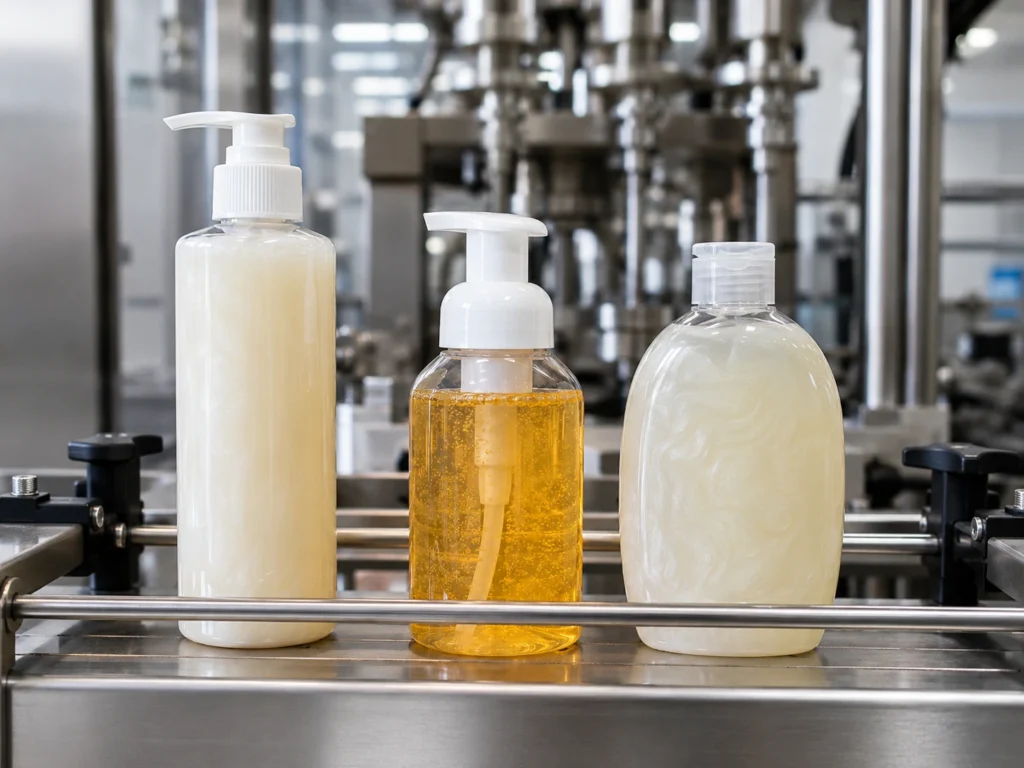
Liquid Soap Filling Machine for Foamy Hand & Body Wash
Most buyers who contact us about a liquid soap filling machine have already been burned once — either by foam overflowing the bottle neck and ruining the fill level, or by a machine that fills accurately for thin hand soap but underfills the moment they switch to a thicker body wash. These two problems trace back to the same root cause: the machine was chosen by model number, not by the actual product going into the bottle.
At LEKA Pack Line, we do not quote a model before we understand your soap. We look at viscosity, foam behavior, bottle shape, cap style, and target output first — because those are the factors that decide whether your line runs clean or fights you every shift. This guide walks through that selection logic so you can see how a practical soap filling machine is actually specified.
Why Liquid Soap Is Harder to Fill Than It Looks
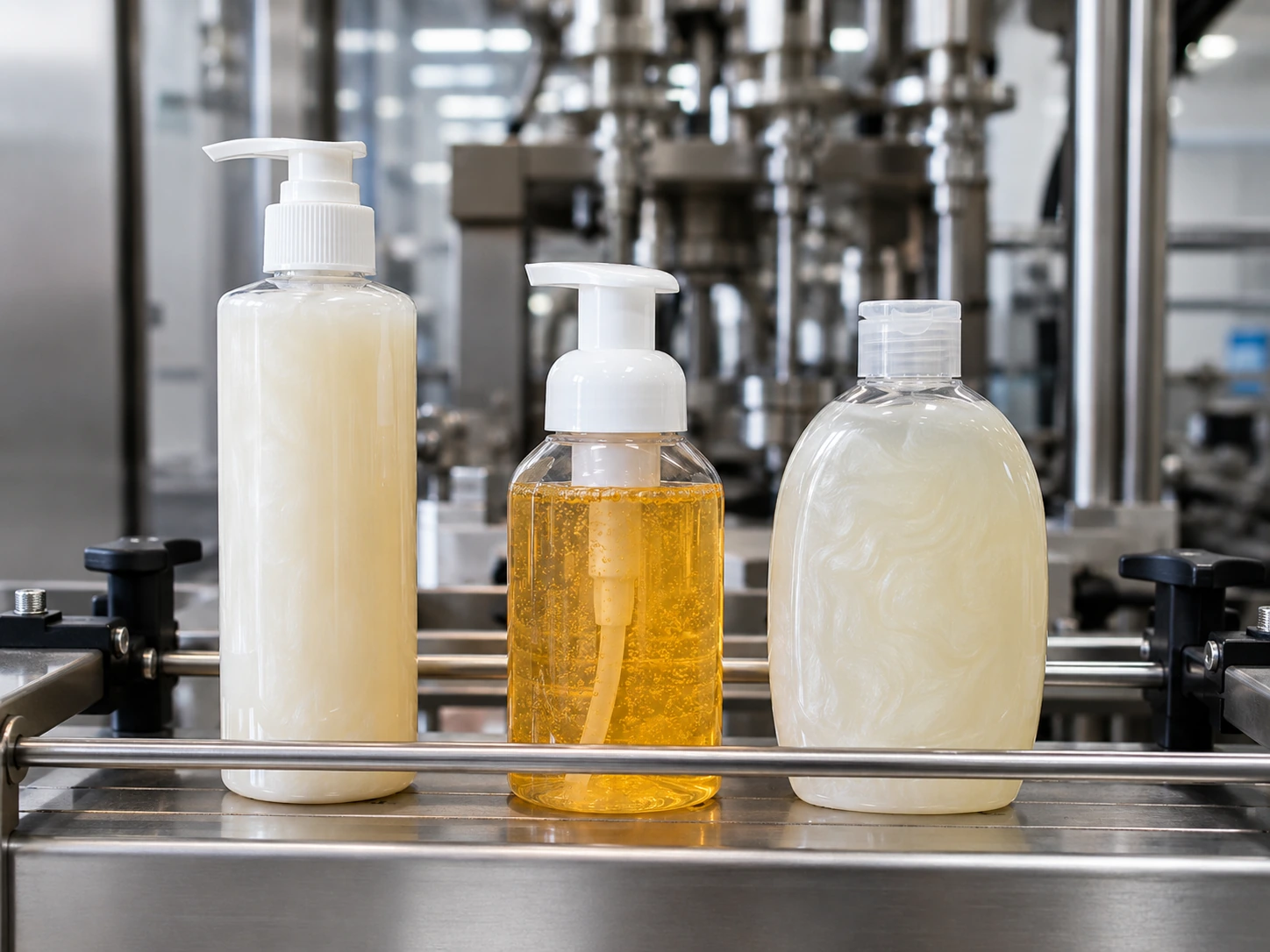
Liquid soap is not one product. It is a category that spans a huge viscosity range, and that range is exactly what makes filling difficult. A foaming hand wash behaves almost like water, while a pearlized body wash behaves more like a thin gel. Published formulation data shows just how wide the gap is.
Foaming liquid hand soap sits at roughly 25 centipoise (cP) — barely thicker than water, which sits at about 1 cP. Standard pump-dispenser hand soap typically runs between 100 and 2,500 cP, and thicker body washes and detergents can climb to around 3,000 cP. When one bottling line has to cover that whole spread, a single fixed filling method will always compromise somewhere. For larger household packs, compare the 1–5 L laundry detergent bottling line before confirming the filler and cap-handling setup.
The three challenges we see most often on a liquid soap bottling line:
- Foam and surface agitation. Surfactant-heavy products foam the instant they are disturbed. Top-down filling drops product through air, whipping foam that overflows the neck and corrupts the visible fill level.
- Viscosity drift. A volumetric setting tuned for 500 cP hand soap will short-fill a 2,500 cP body wash because the thicker product flows slower in the same cycle time.
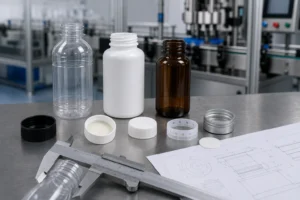
- Bottle and cap variety. Pump bottles, foaming pumps, flip-tops, and narrow-neck bottles each need different nozzle reach and different capping tooling.
How LEKA Matches a Filling Method to Your Soap
This is the part most suppliers skip. There are four filling technologies in common use, and each has a viscosity band where it performs best. The table below reflects the consensus across packaging engineering sources, and it is the same framework our engineers use when reviewing a new project.
| Filling method | Best viscosity range | Foam handling | Typical soap products |
|---|---|---|---|
| Overflow filling | 1–1,000 cP (thin) | Excellent — fills to a level, excess recirculates | Foaming hand soap, thin hand wash, clear bottles |
| Gear / lobe pump filling | 500–5,000 cP (medium) | Good with diving nozzle | Standard hand soap, shampoo, conditioner |
| Piston filling | 1,000 cP and above (thick) | Good with bottom-up nozzle | Body wash, pearlized soap, cream wash |
| Gravity filling | 1–200 cP (very thin) | Needs anti-drip / foam nozzle | Water-thin sanitizing soap |
Foam control is a nozzle decision, not a speed decision
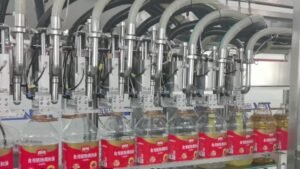
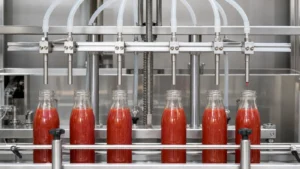
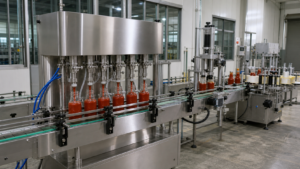
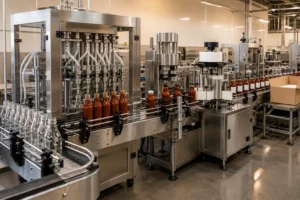
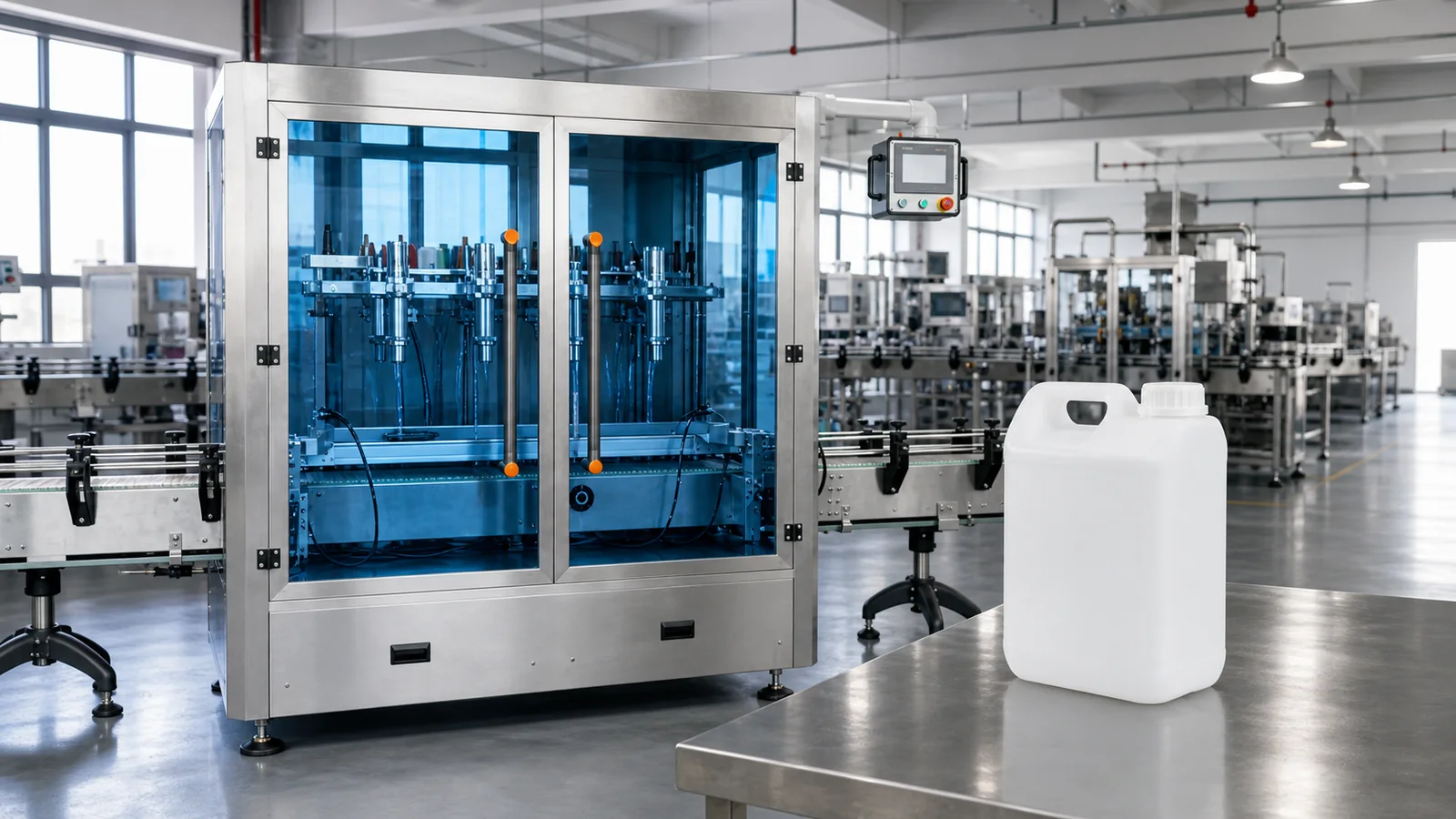
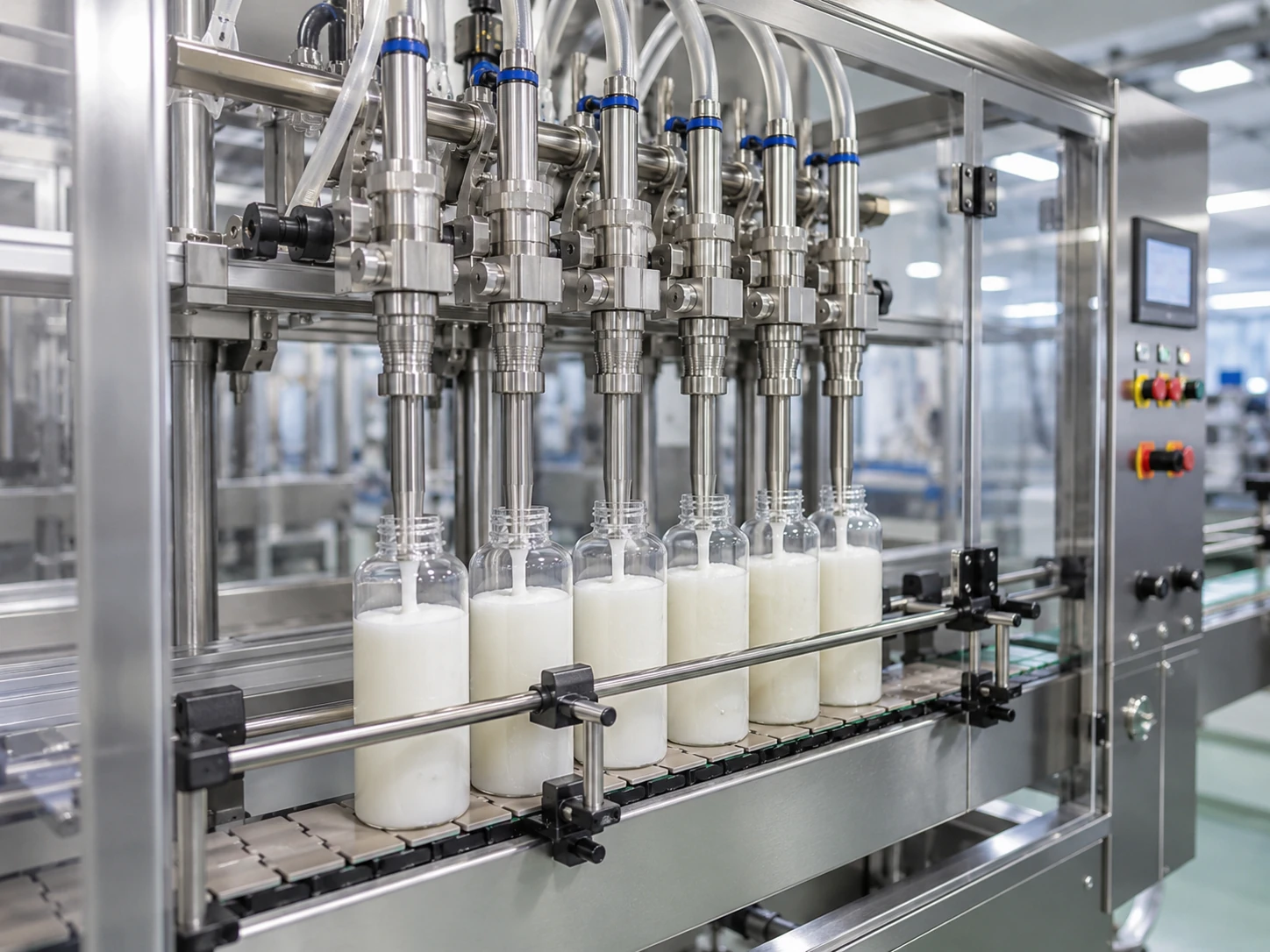
The most common mistake we correct is buyers trying to fix foam by slowing the whole line down. That kills output without solving the problem. Foam is controlled at the nozzle. A diving (bottom-up) nozzle descends into the bottle and fills from the bottom as it retracts, so product flows under the rising surface instead of splashing onto it. This single change reduces air entrainment far more effectively than reducing speed, and it is the reason a properly configured liquid soap filling machine can run foamy product at full rate without overflow.
Why we ask for your product sample first
Viscosity charts get you to the right family of machine, but they do not tell you everything. Two soaps at the same labeled viscosity can behave differently under shear — one thins out as it is pumped, the other holds. Foaming tendency, suspended beads, and temperature sensitivity all change the answer. That is why our intake always asks for the real formula or a physical sample before we lock a configuration. It is cheaper to test than to retrofit.
Liquid Soap Filling Machine Configurations
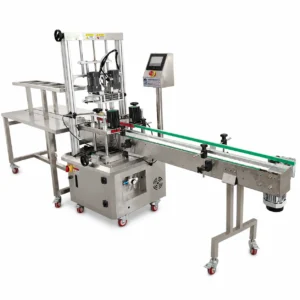
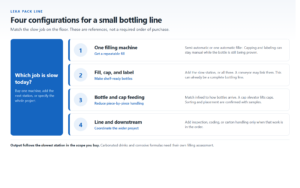
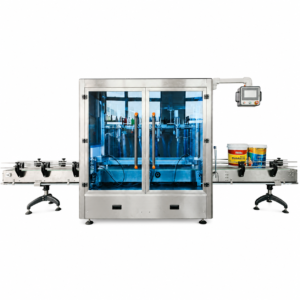
Once the filling method is set, output requirement decides the machine class. You do not need a 12-head inline system to fill 800 bottles a day, and you cannot hit 6,000 bottles an hour with a 2-head semi-automatic. The configuration ladder below maps real production targets to machine type.
| Machine class | Filling heads | Typical output | Fill volume range | Best for |
|---|---|---|---|---|
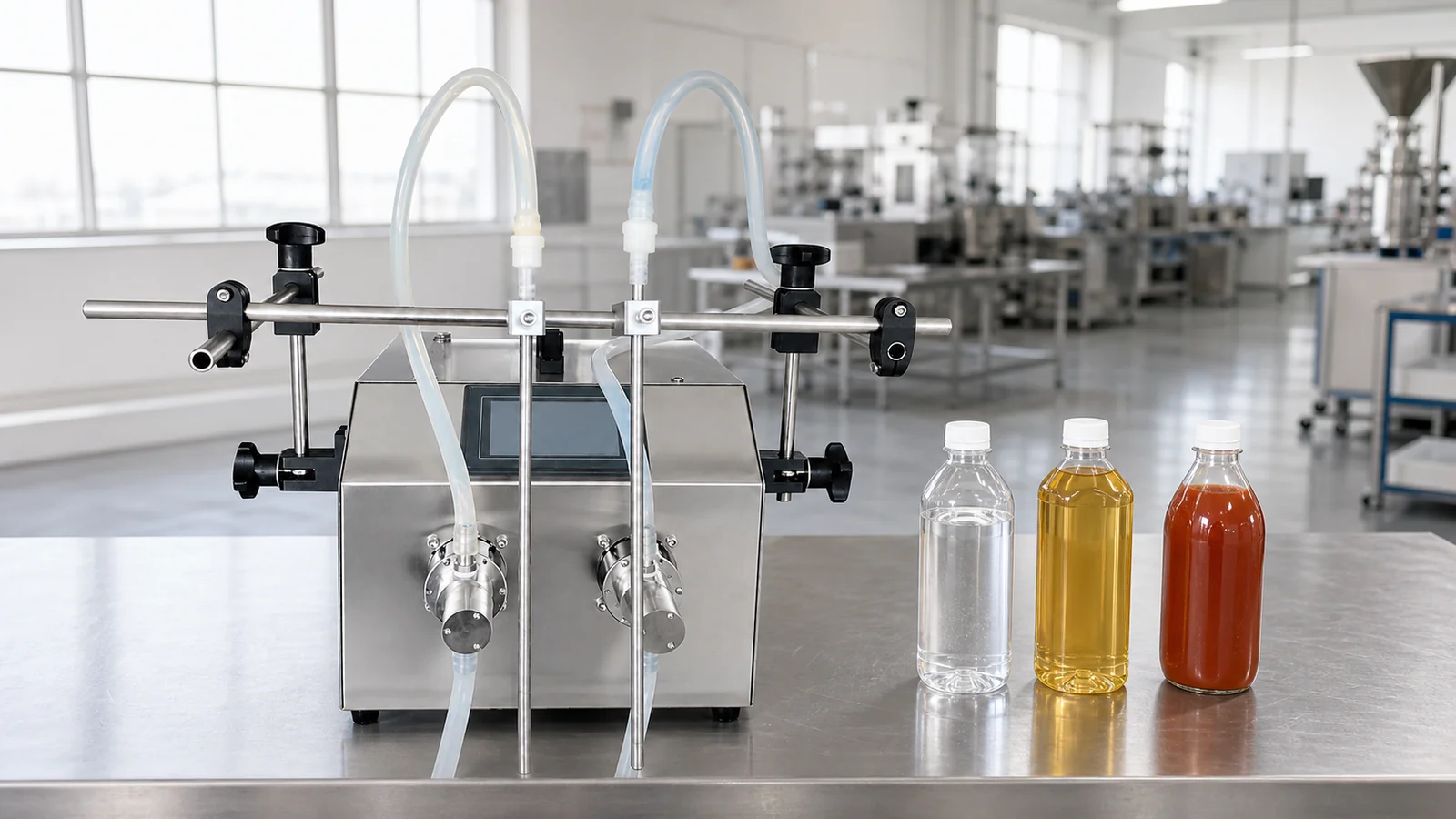
| Semi-automatic | 1–2 heads | 300–1,200 bottles/hr | 50–5,000 ml | Startups, sampling, small batches |
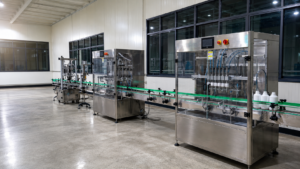
| Automatic (compact) | 4–6 heads | 1,500–3,000 bottles/hr | 50–2,000 ml | Growing brands, mid volume |
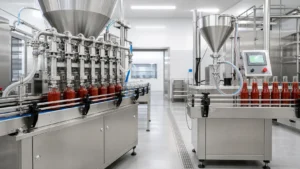
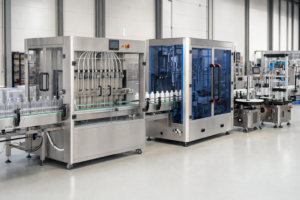
| Automatic (inline) | 8–12 heads | 3,000–6,000+ bottles/hr | 50–2,000 ml | Established manufacturers, scale-up |
If you are just starting out, a semi-automatic filling machine keeps your investment low while you validate the market, and the same filling logic scales up cleanly when you are ready for an automatic line.
Capping and Labeling for Soap Bottles
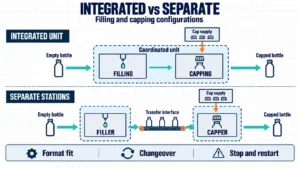
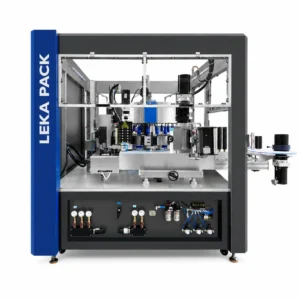
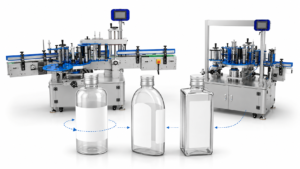
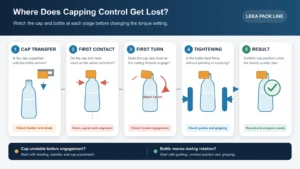
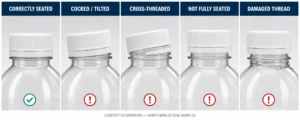
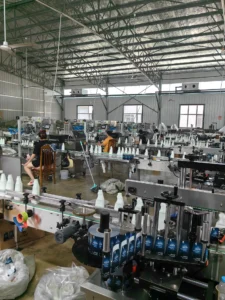
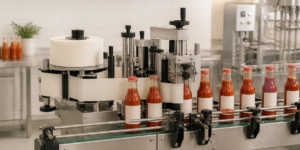
Filling is only one station. A foaming pump or flip-top cap that the capper cannot reliably place will bottleneck the whole line, so capping tooling has to be matched to your exact closure. LEKA integrates the capping and labeling stations around your bottle and cap, not the other way around.
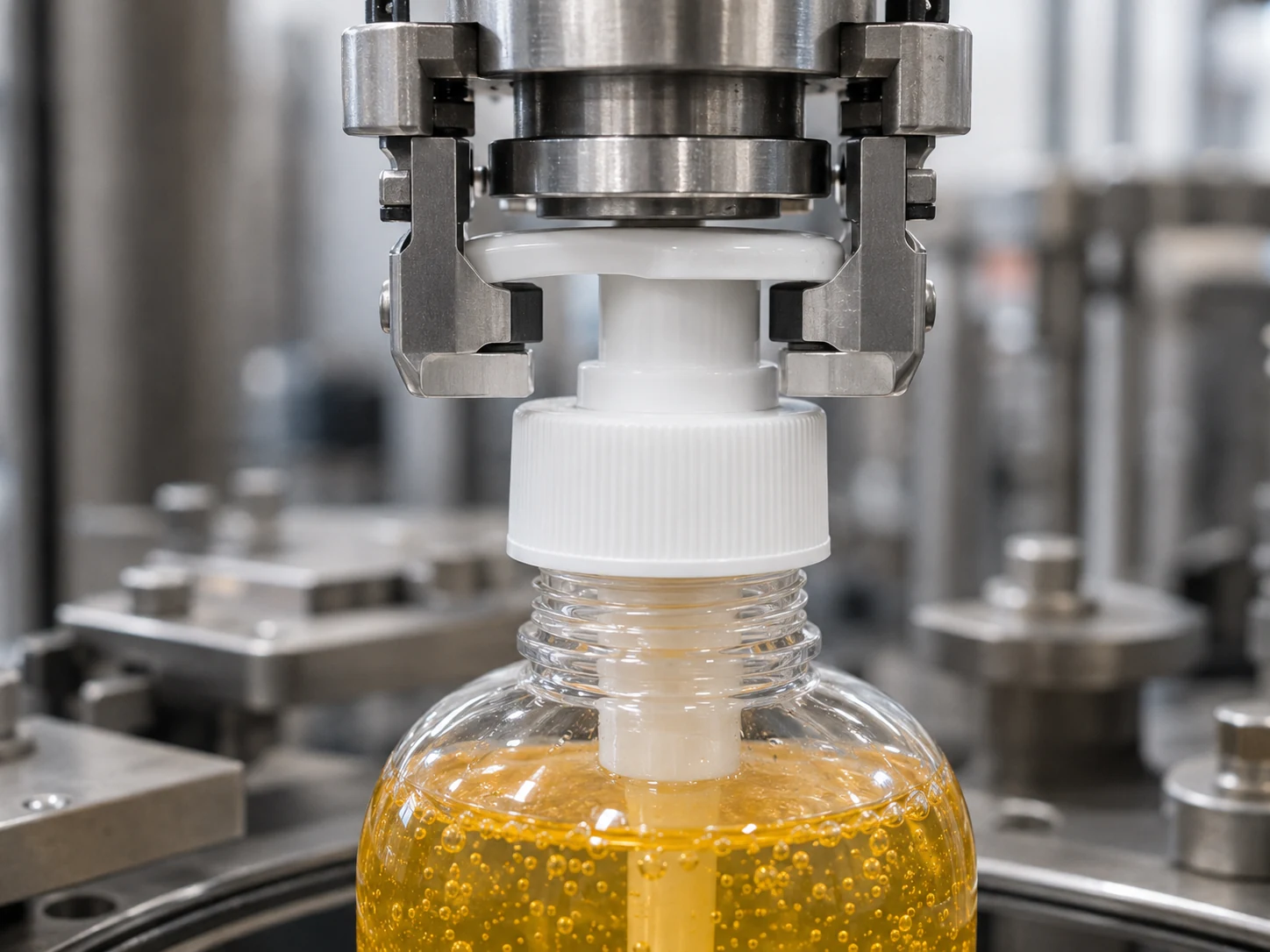
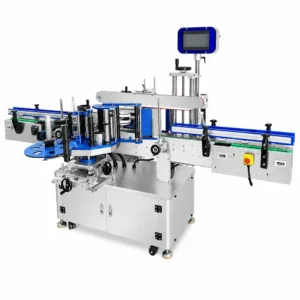
Common closures we handle for liquid soap include screw-on pump caps, foaming pump heads, flip-top (disc-top) caps, and standard screw caps. Labeling is typically wrap-around for cylindrical bottles or front-and-back for flat oval bottles, with date/batch coding added inline. Because foaming hand soap and shampoo share so much filling and capping logic, the same line often runs both — see our shampoo filling line for a closely related setup.
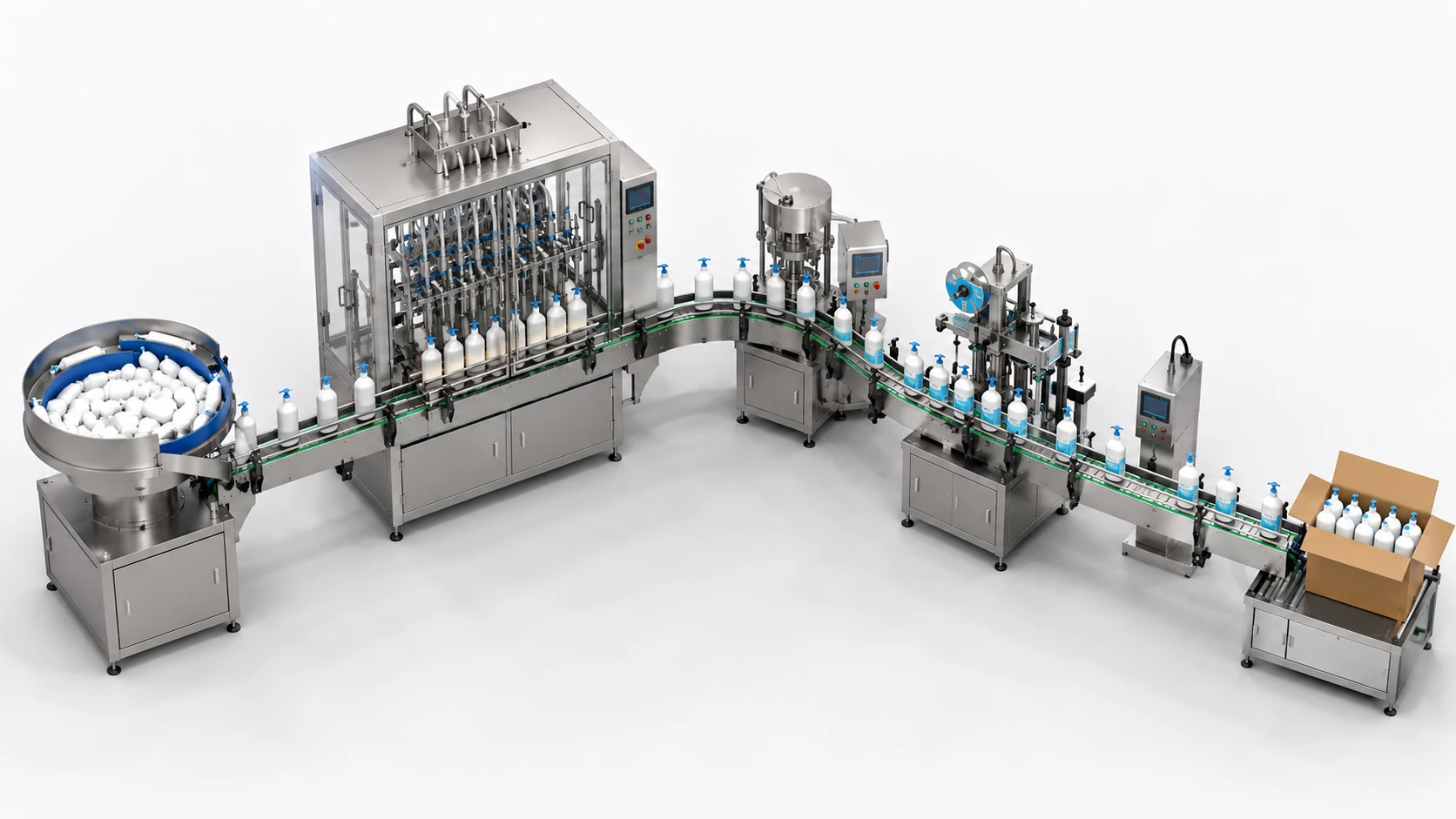
Complete Liquid Soap Bottling Line
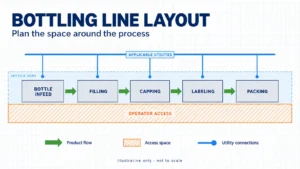
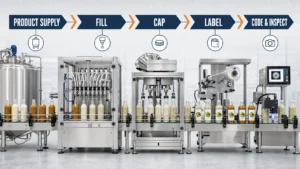
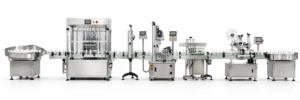
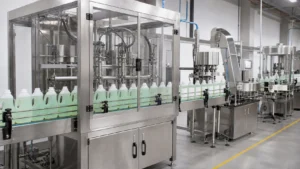
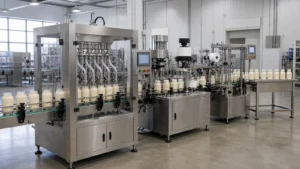
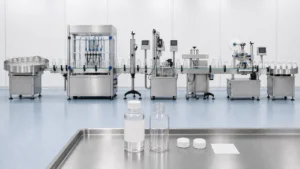
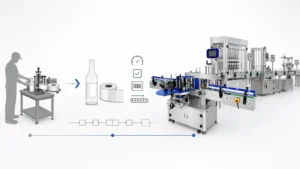
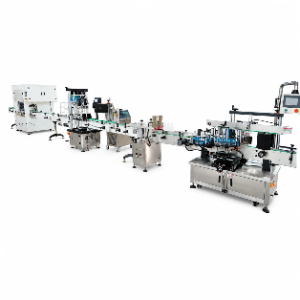
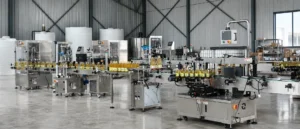
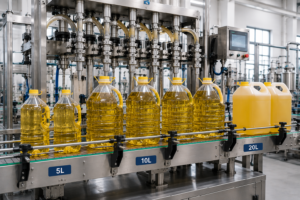
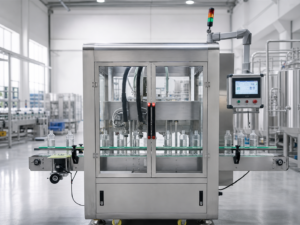
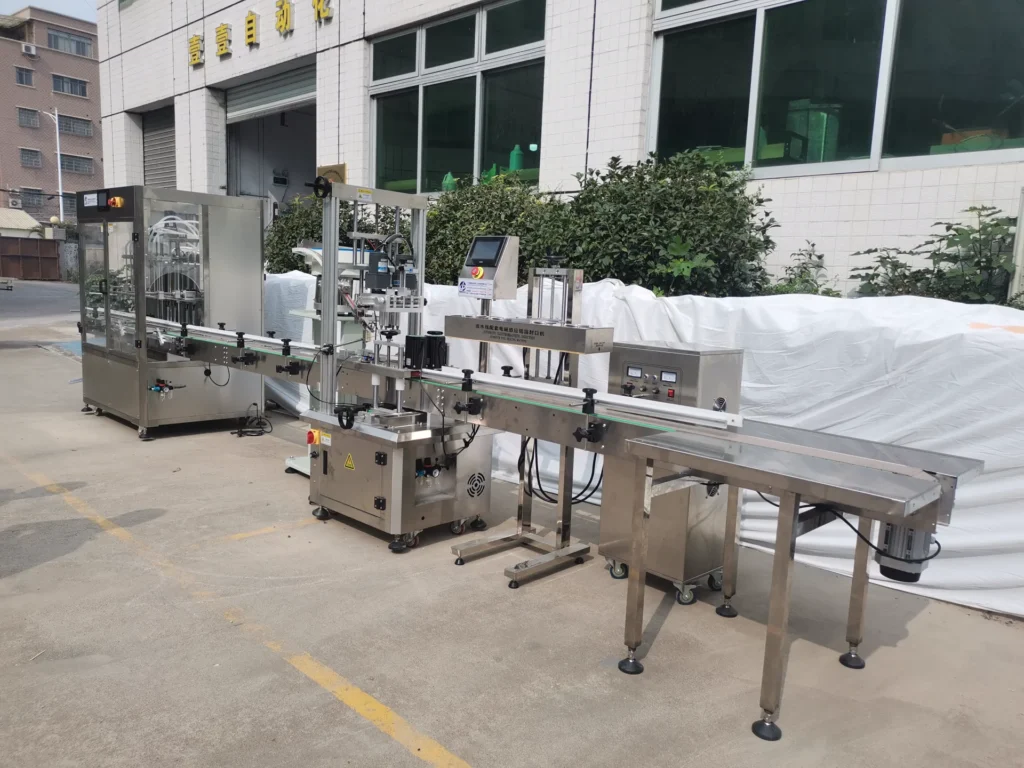
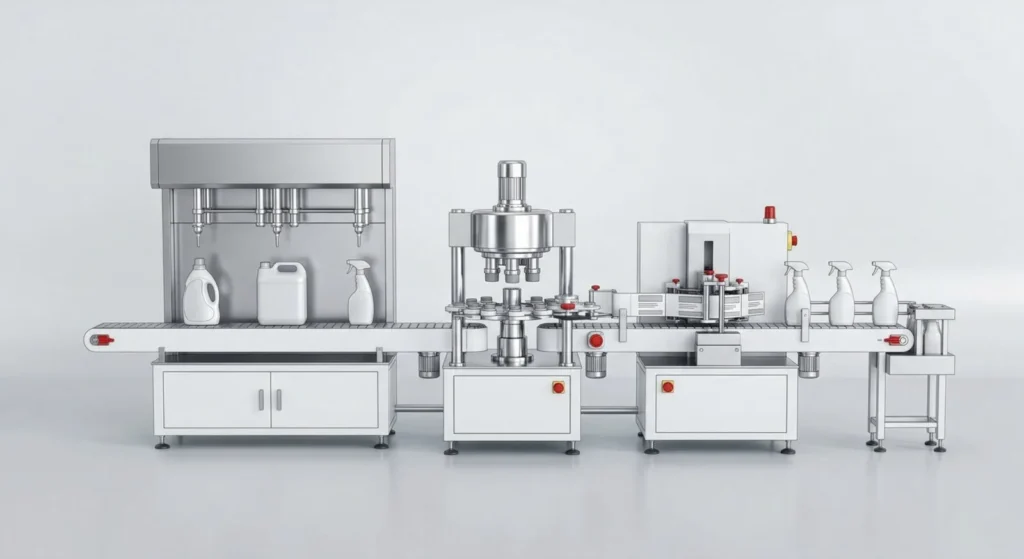
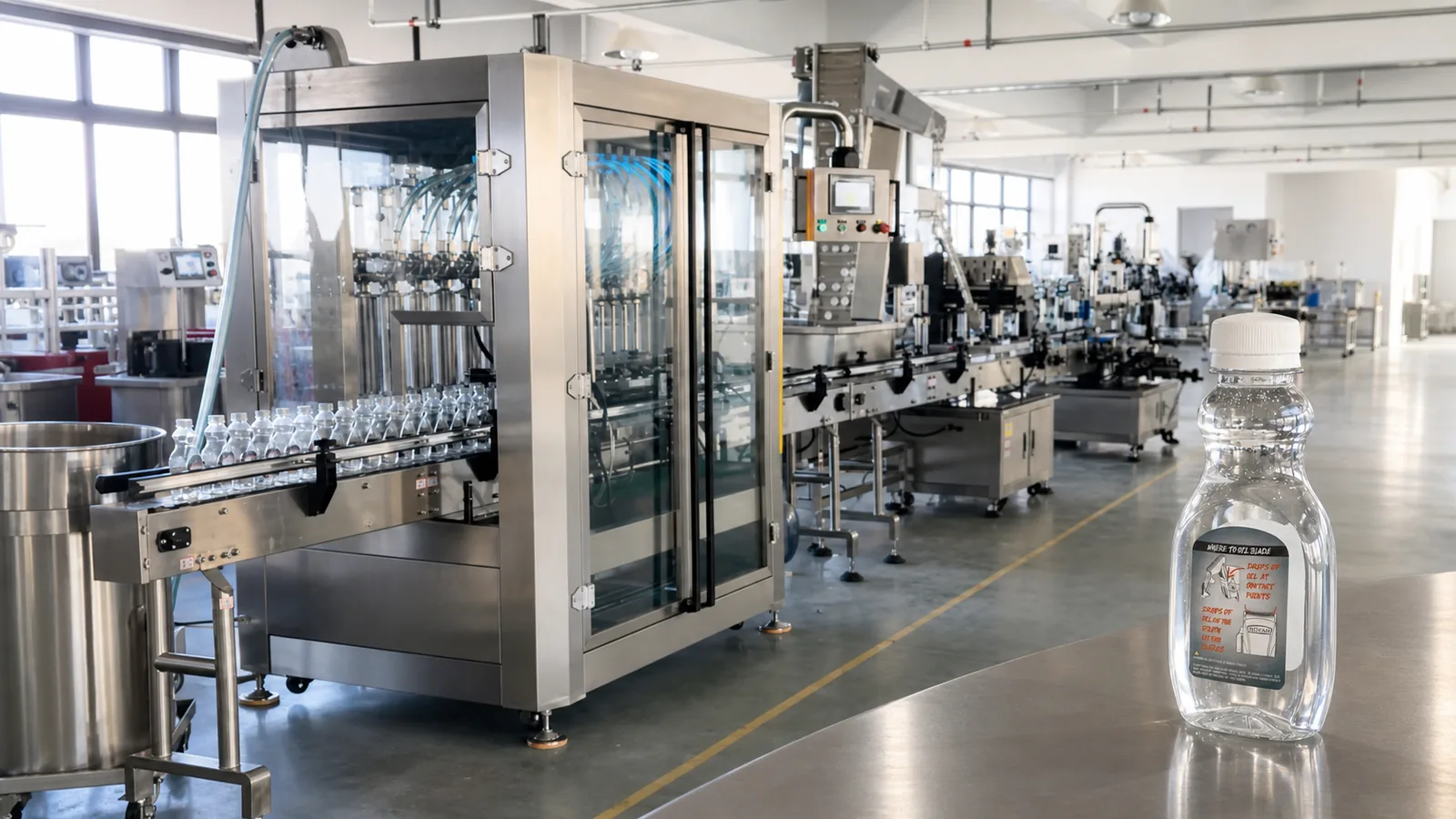
A full liquid soap bottling line connects every station into one continuous flow, so empty bottles go in one end and finished, coded, labeled product comes out the other. A typical line layout runs in this sequence:
Bottle unscrambler / feeding → filling → capping → labeling → date coding → packing.
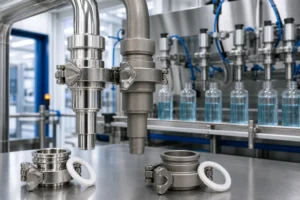
For corrosive or high-pH cleaning products that sometimes share a facility with soap, the contact parts may need upgrading — that is a different material conversation, covered on our anti-corrosion filling machine page. If your facility also packs cleaners, additives, or industrial liquids, LEKA can review the wider chemical liquid filling line requirements before choosing contact materials. For everyday surfactant-based soaps, standard stainless and food-grade contact parts are usually sufficient.
What to Send Us Before We Recommend a Line
Because the right soap filling machine depends entirely on your product and packaging, the fastest way to an accurate quote is to send us the details that actually drive the design. The more of this you can provide, the more precise our recommendation:
- Product type and approximate viscosity (or a sample) — hand soap, body wash, foaming soap, etc.
- Foam tendency and whether it contains beads or particulates
- Bottle size, shape, and neck diameter (a photo helps)
- Cap type — pump, foaming pump, flip-top, screw cap
- Label format and whether you need date/batch coding
- Target output (bottles per hour or per day)
- Destination country and any voltage requirement
This same consultative approach applies across detergents, cleaners and disinfectants. Compare our cleaning products filling machines for machine-level selection. For factories packaging liquid soap together with detergents or household cleaners, explore our home care and cleaning products filling line solutions. If hand dish soap is one of the SKUs, use the dish soap filling line guide to review foam control, nozzle cut-off, bottle and cap requirements.
Frequently Asked Questions
What filling method works best for foamy liquid soap?
For thin, foaming hand soap, an overflow filler with a foam-control or diving nozzle usually performs best because it fills to a consistent level and lets excess recirculate. For thicker body wash above roughly 1,000 cP, a piston filler with a bottom-up nozzle gives more accurate volume control.
Can one machine handle both thin hand soap and thick body wash?
Often yes, with the right configuration. A pump-based filler with adjustable parameters and an interchangeable nozzle can cover a wide viscosity band, but the practical range depends on how far apart your products sit. We confirm this against your actual formulas before recommending a single line versus separate setups.
How do you prevent foam overflow during filling?
Foam is controlled primarily at the nozzle, not by slowing the line. A diving (bottom-up) nozzle fills from the base of the bottle as it retracts, so product flows beneath the surface instead of splashing onto it, dramatically reducing foam and air pockets.
What output can a liquid soap filling line reach?
It ranges from around 300 bottles per hour on a semi-automatic 2-head machine to 6,000+ bottles per hour on an 8–12 head automatic inline system. The right class depends on your production target and bottle size.
Can the line handle pump bottles and flip-top caps?
Yes. Capping tooling is selected to match your specific closure — screw pump caps, foaming pumps, flip-tops, and standard screw caps are all standard. Send a cap sample or photo so the capping station is specified correctly.
Do you offer semi-automatic options for small brands?
Yes. A 1–2 head semi-automatic filler is a common starting point for startups and small batches, and the filling logic scales cleanly to an automatic line as your volume grows.
Get a Line Configuration for Your Soap
Tell us your soap formula (or send a sample), your bottle and cap details, and your target output, and our engineers will review them before suggesting a practical filling, capping, and labeling configuration — not just a model number. We design the line around your product, then quote. Send us your product and bottle details to get started.