
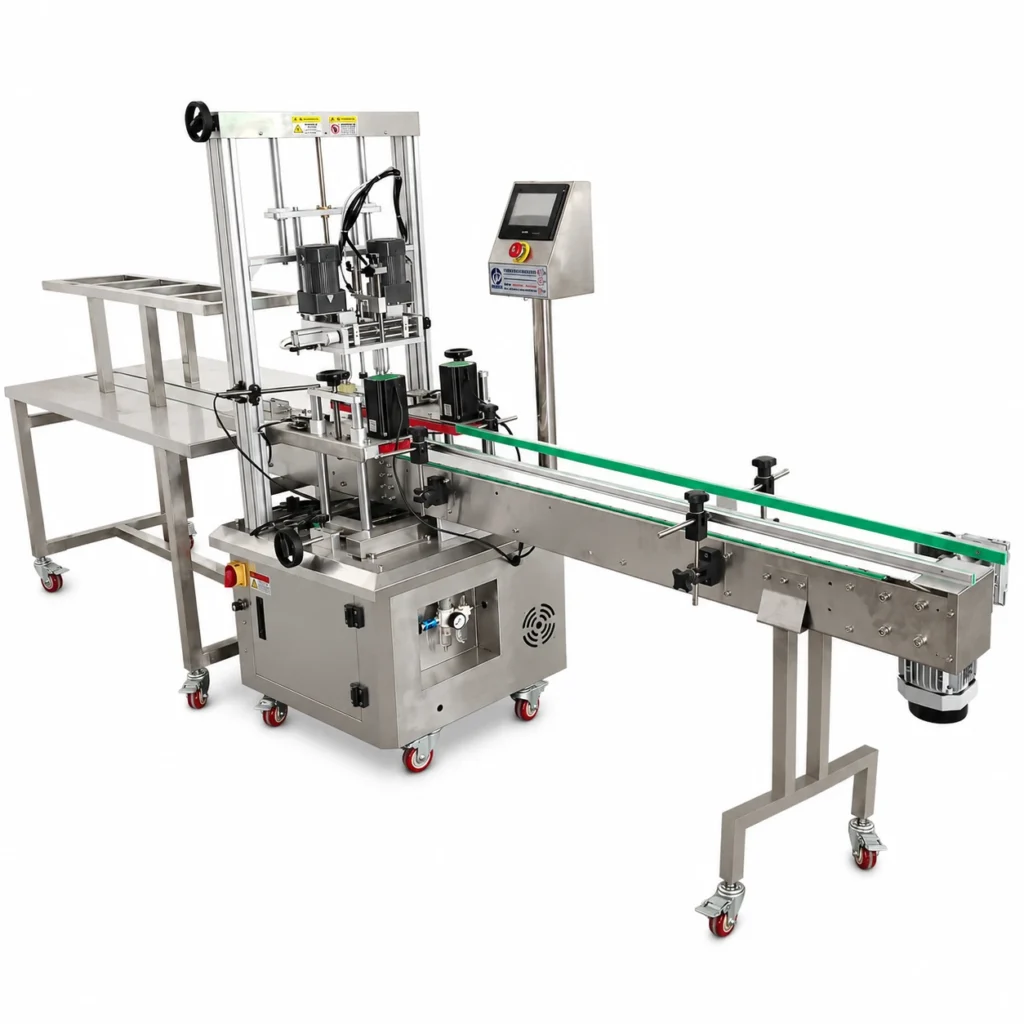
Bottle Capping Torque: Why the Same Setting Does Not Work for Every Cap
A cap may feel tight as it leaves the capping machine, yet become easier to open after some time. Likewise, two caps with the same diameter can respond differently under an identical machine setting. In practice, this variation in bottle capping torque is not, by itself, evidence that the capper is malfunctioning.
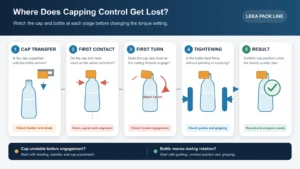
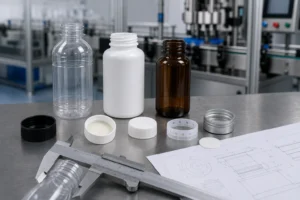
What consistently holds up in real production is that capping performance depends on the full bottle-and-cap combination, not on cap diameter or machine parameters alone. The bottle, neck finish, thread geometry, closure liner, tamper-evident band, product, and even the test conditions all play a role in shaping the outcome.
This discussion is limited to continuous-thread closure systems used on plastic or glass bottles. Other formats—such as ROPP closures, crown caps, snap-on caps, pumps, triggers, or inner plugs—follow different application principles and need to be assessed separately.
Bottle Capping Torque: The Short Answer
- There is no universal torque value. Even caps sharing the same diameter may require different settings.
- The closure specification comes first. General torque charts are not a substitute for package-specific data from the closure supplier.[1]
- A machine setting is not automatically measured closure torque. It is better understood as a control input, whether mechanical or servo-based.
- A torque test alone does not prove seal integrity. Leakage performance and broader package behavior need separate verification.
The goal in practice is not to search for a single setting that fits every scenario. It is to define—and then confirm—a suitable operating window for each specific bottle-and-cap combination with its product.
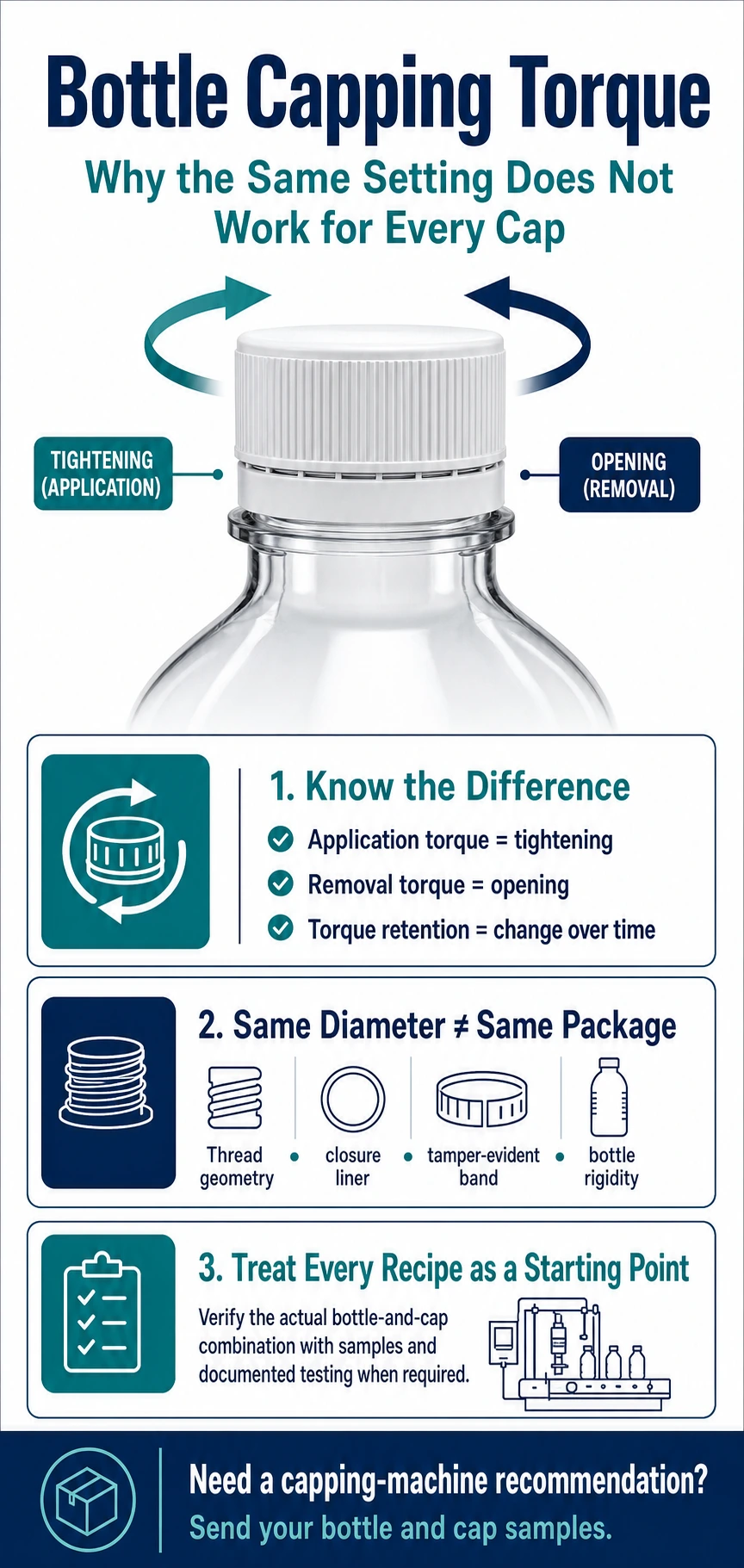
Application Torque vs Removal Torque
| Term | What It Means | Typical Measurement Point |
|---|---|---|
| Application torque | The rotational input used to tighten a closure onto a bottle. | While the closure is being applied. |
| Removal torque | The rotational resistance measured while loosening or removing the closure. | At a defined opening event under stated test conditions. |
| Torque retention | How the package’s opening-torque characteristics behave over time. | After a defined period and under stated storage and test conditions. |
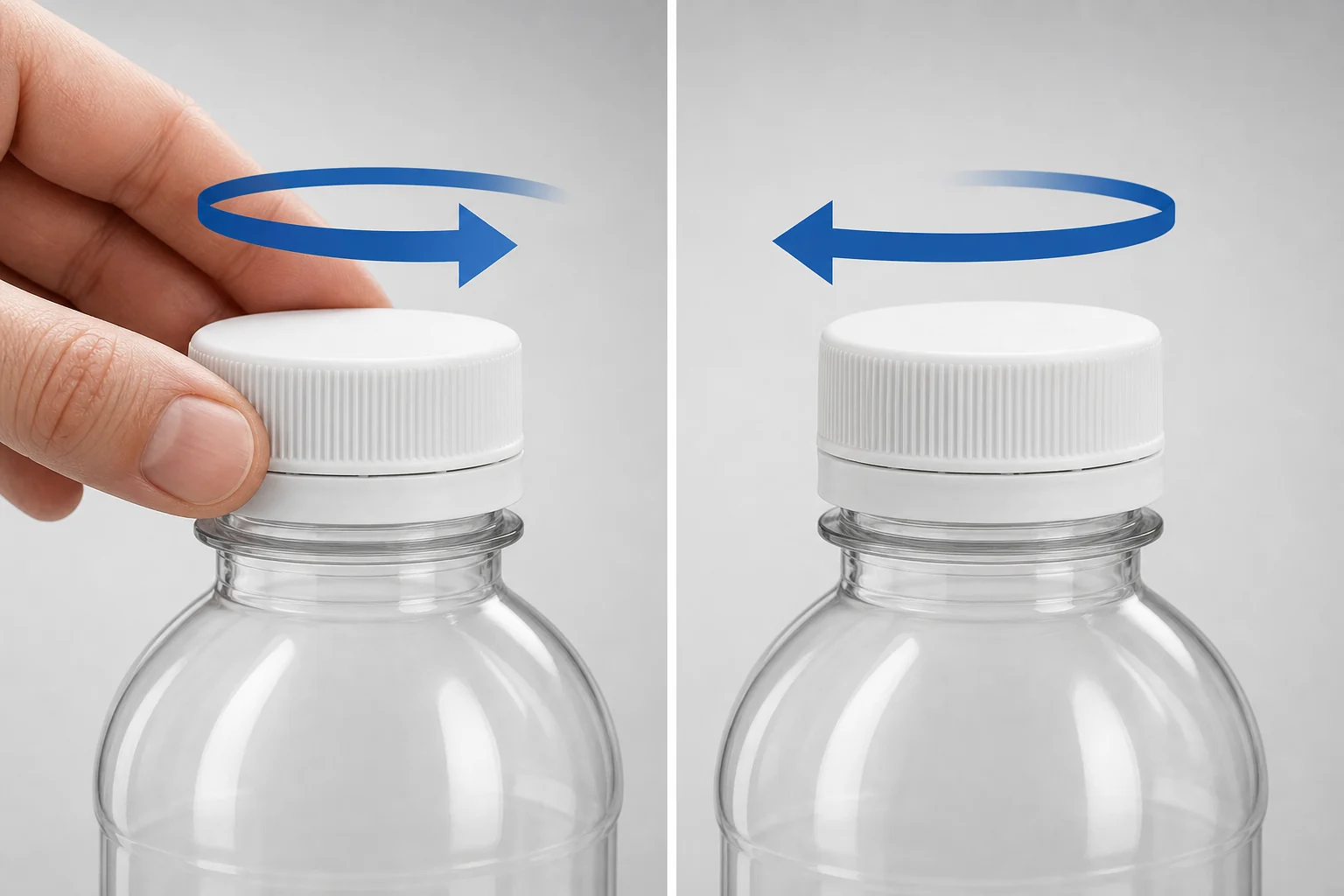
Application torque functions as a process input. It influences how the closure travels along the threads and whether the sealing feature or closure liner engages the bottle’s sealing surface as intended.
Removal torque reflects how the package behaves during opening under defined conditions. Depending on the method, the recorded value may represent initial release, peak resistance, or another specified point. For production checks, bottle cap removal torque should always be tied to a clearly defined measurement condition.
Although application torque and removal torque are connected, they are not interchangeable. Removal torque is not simply application torque in reverse; each bottle-and-cap combination establishes its own relationship.[2]
This also explains why there is no fixed ratio in application torque vs removal torque. Factors such as closure liner compression, plastic relaxation, top load, and storage conditions can all shift the result after capping.[2]
Torque Retention and “Residual Torque”
Torque retention describes how opening behavior evolves over time under defined conditions. It belongs to the tested bottle-and-cap system rather than to any single capping-machine adjustment.
ASTM D2063 and ASTM D7860 both address torque retention for continuous-thread closure systems, under manual and automated torque testing setups respectively.[3][4]
Their public scopes describe package-specific torque-retention evaluation under predetermined conditions; they do not provide a universal bottle capping torque value.
The term “residual torque” can be ambiguous. When used, it should always be tied to a defined measurement—such as removal torque after a specified time and storage condition. A record stating only “residual torque passed” is typically insufficient for comparison or replication.
Publicly Documented Bottle Cap Torque Examples
These examples illustrate the range of bottle cap torque values seen in published package data. They are specific to particular bottle-and-cap combinations and should not be treated as universal settings or direct capping-machine presets.
| Package / Closure Example | Application Torque | Removal Torque | How to Use This Example |
|---|---|---|---|
| Carbonated soft drink PET bottle; 28 mm PCO 1881 HDPE CSD closure | 12–18 in-lb (approximately 1.36–2.03 N·m) | 8–14 in-lb (approximately 0.90–1.58 N·m) | Supplier-published PCO 1881 example; removal torque reported after 24 hours. Not a universal specification. Final validation should be done with the actual bottle-and-cap combination.[10] |
| Published capping-machine calibration demonstration: 8 oz modern round bottle and demonstrated 28 mm closure | 13–17 in-lb (approximately 1.47–1.92 N·m) | 8.6–12.5 in-lb (approximately 0.97–1.41 N·m) | The relationship shown applies only to the demonstrated bottle-and-cap combination, not to all 28 mm closures.[11] |
| Documented laboratory-bottle example: Thermo Scientific Nalgene bottle and 38-430 closure | 27–33 in-lb (approximately 3.05–3.73 N·m) | No universal removal-torque range was published in the cited brochure | Illustrates that torque scales vary by package. Values should be determined on the actual filling line, correlating application torque with removal torque.[12] |
Important: These values come from specific documented systems. They are not universal bottle capping torque settings, brand-wide specifications, or machine presets. Always confirm the closure specification and validate under actual production conditions.
Why the Same Machine Setting Gives Different Results
Bottle and Neck Finish
The neck finish involves more than diameter. Its thread geometry and dimensional tolerances can influence how the closure engages and seats.[2] ASTM D2911 covers thread configurations, dimensions, and tolerances for plastic bottles with threaded closures.[5]
Even with a suitable cap, variations or damage in the bottle finish can lead to inconsistent outcomes.
Closure, Liner and Tamper-Evident Design
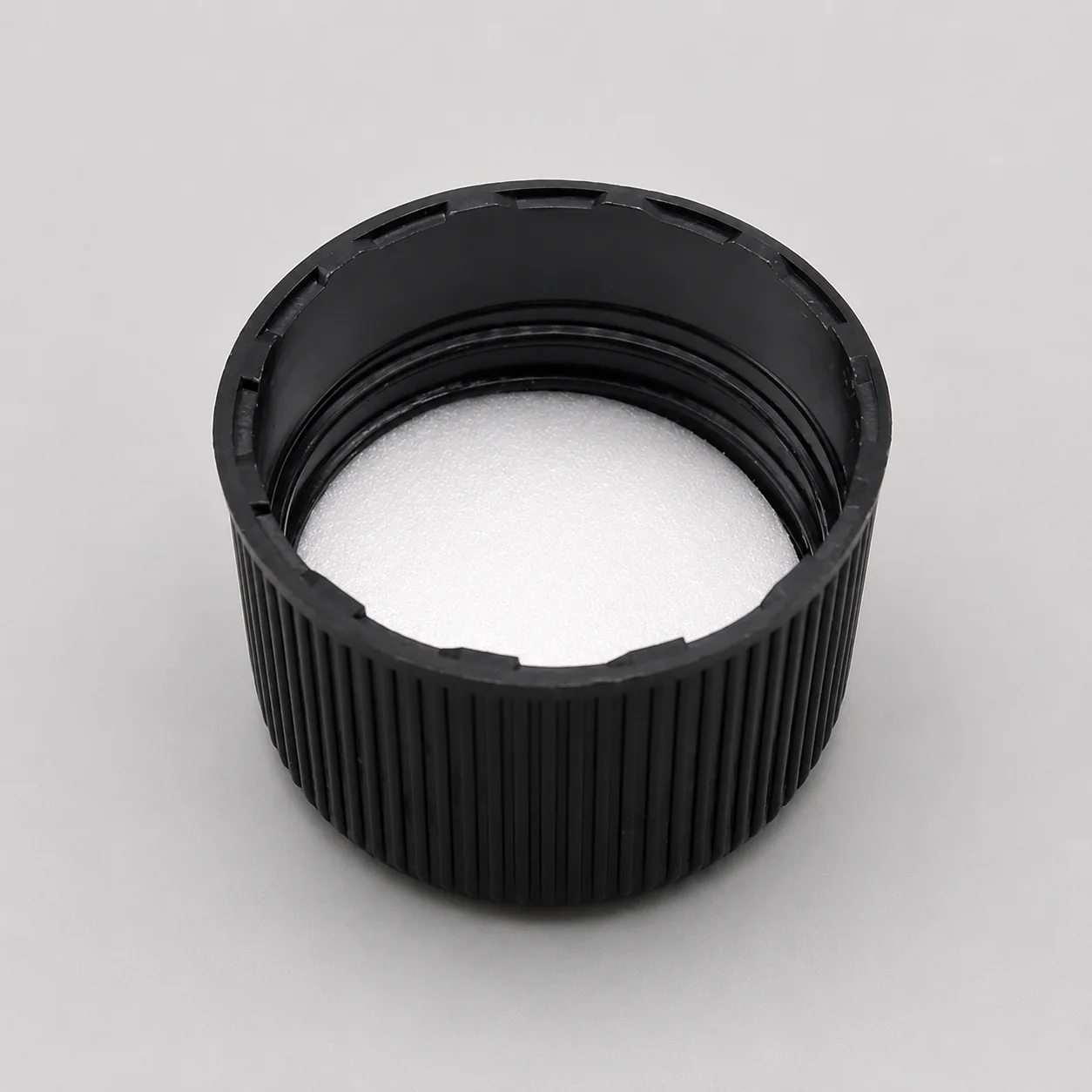
Caps that appear similar may differ in closure material, thread profile, or internal design. Their closure liner types—such as foam, pulp, pressure-sensitive, induction, or vented—also behave differently.[6]
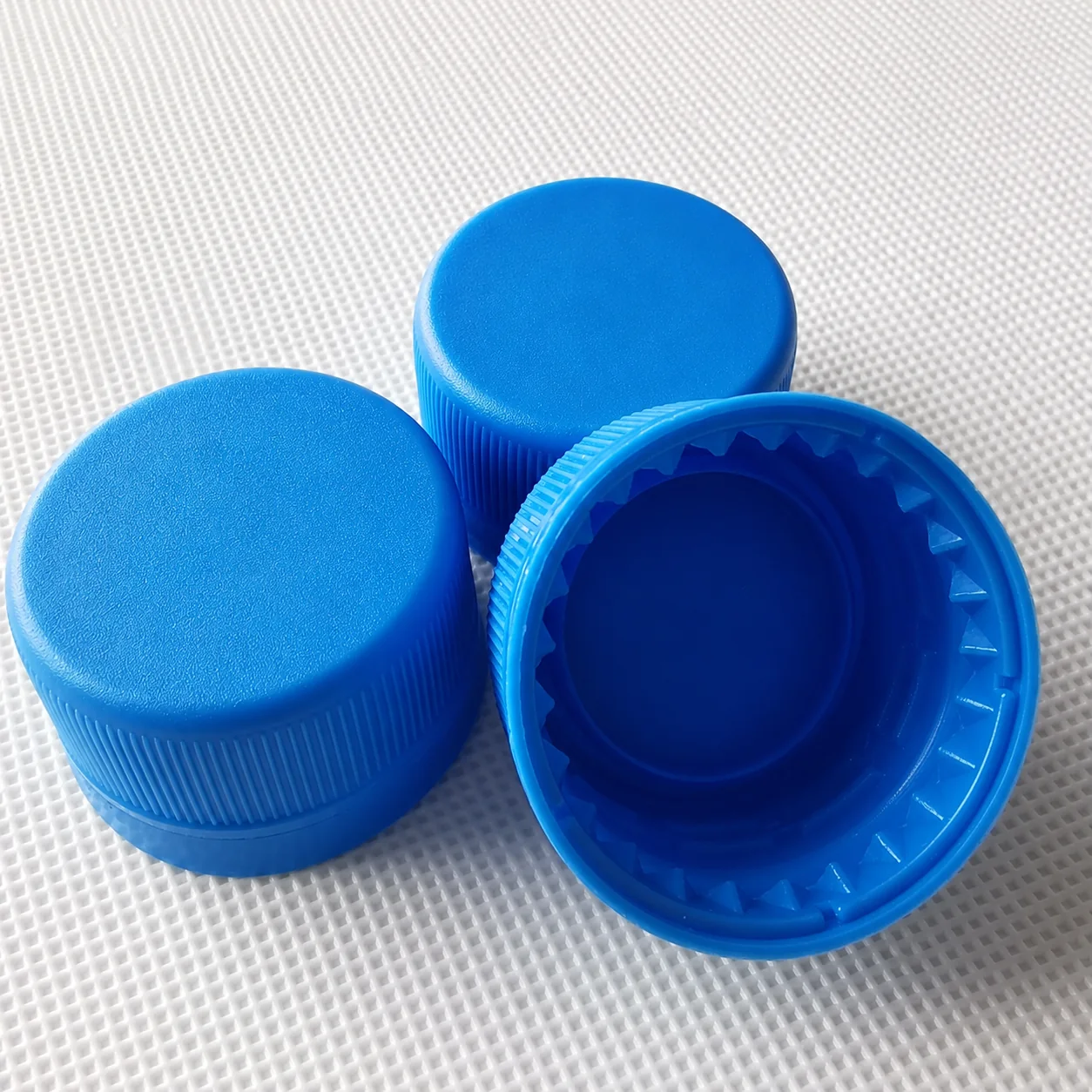
A tamper-evident band adds another variable. During opening, it introduces a separate event when bridges break or disengage. Depending on the torque tester, this may appear as an additional peak, so the measurement point needs to be clearly defined.[7]
Because of this, switching cap supplier, liner type, or tamper-evident design should be treated as a change in the bottle-and-cap combination, even if the cap diameter remains the same.
Product, Temperature and Test Timing
Filling temperature, product residue on threads, storage time, and environment all influence results. This closure-supplier guidance highlights these variables.[1]
Liquid on the threads can alter friction and skew readings. Also, comparing immediate and delayed removal torque without recording conditions can be misleading.[2]
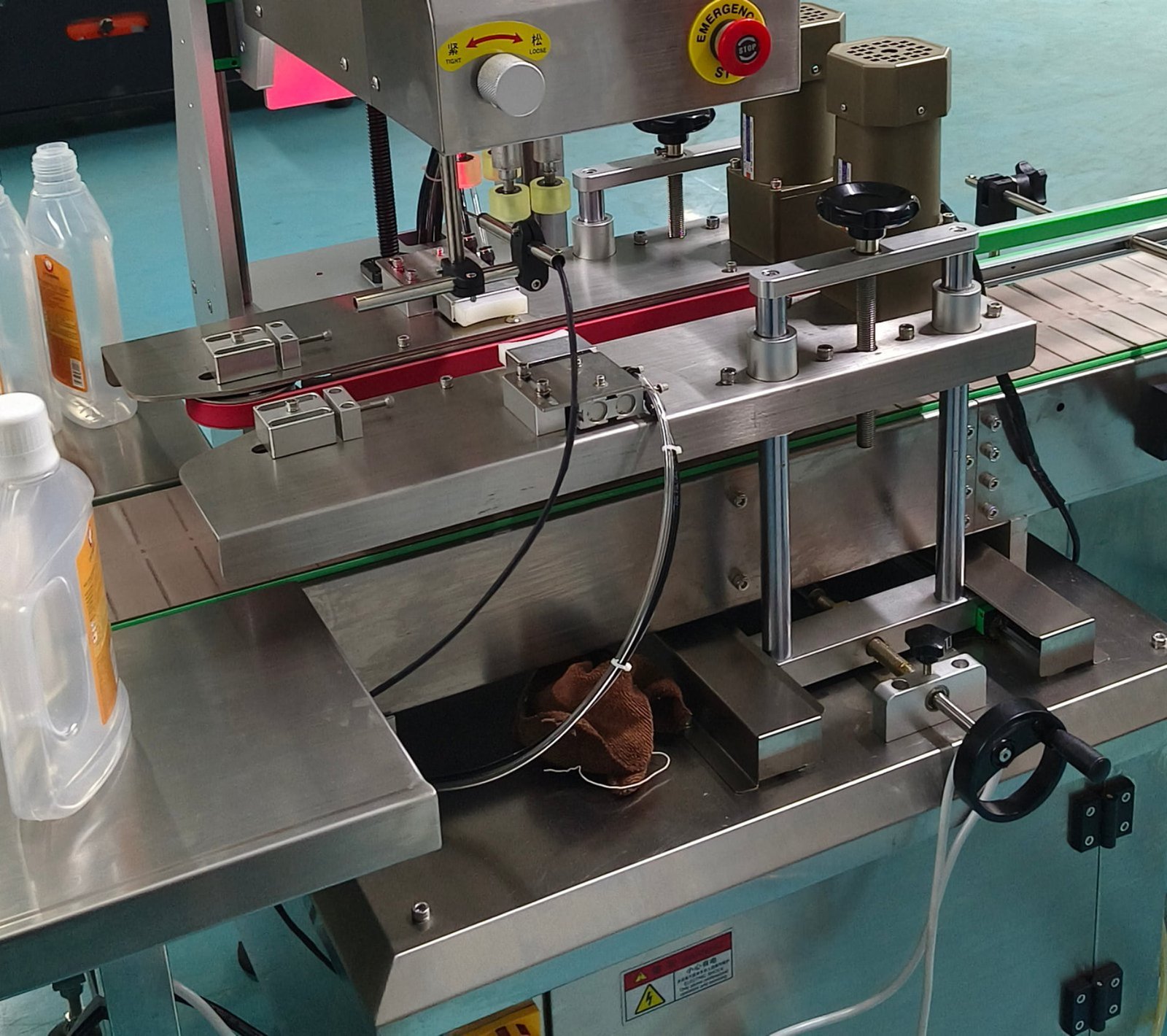
Machine Setting Is Not the Same as Actual Closure Torque
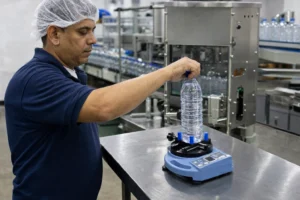
A mechanical position, clutch setting, servo parameter, or motor-load value records how the capping machine was adjusted. It does not directly measure torque at the closure. For that reason, bottle capping torque settings must be checked against actual package results using a suitable torque tester and a defined method. ASTM D3474 addresses calibration and use of torque meters in packaging applications.[8]
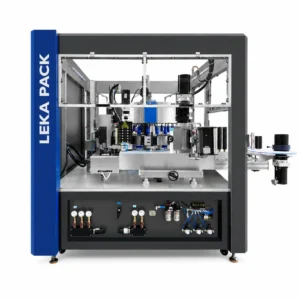
For applicable LEKA capping projects, an optional 10-position mechanical scale can be specified; it is not part of the default configuration and provides a relative adjustment reference rather than an N·m measurement. Depending on the servo configuration, LEKA systems use load parameters to build working recipes. Neither type of setting is an independent measurement of application or removal torque.
For repeatable production checks, follow the step-by-step guide to measure bottle cap torque with a controlled sample state, test interval, fixture and opening event.
A Same-Diameter Cap Can Still Need a Different Setting
Same-diameter closures can differ in thread, material, liner, and tamper-evident design, and may not seat the same on a neck finish.
Reapplying a machine recipe does not ensure identical seating or removal torque. It is a starting point until bottle-and-cap samples are verified.
Revalidation is appropriate when:
| Package Change | Why Revalidation Is Needed |
|---|---|
| Cap supplier or design changes | Recheck the package.[2] |
| Liner changes | Compression and the sealing interface can change.[2] |
| Neck finish changes | Thread engagement and seating can change.[5] |
| Tamper-evident band changes | The opening measurement may show a separate peak.[7] |
| Filling condition changes | Residue or liquid can affect friction and readings.[2] |
For multi-SKU production, see our guide to line changeovers.
What Buyers Should Check Before Capping Evaluation
Cap diameter alone is not sufficient for evaluating a system. In practice, the following are typically needed:
- A bottle photo or dimensional drawing
- Physical bottle samples where required
- The neck finish specification
- Closure supplier information
- Physical cap samples
- Closure liner and tamper-evident band details
- The product and filling condition
- The required production output
Actual samples become especially important when dealing with unfamiliar bottle-and-cap combinations, new thread formats, or non-standard shapes.
If capping is part of a wider filling, labeling and conveying project, review LEKA Bottle Packaging Line Solutions.
What Torque Cannot Tell You
A torque value reflects rotational resistance under defined conditions. On its own, it cannot confirm:
- Leak resistance
- Compatibility between product, liner, and container
- Performance through storage and distribution
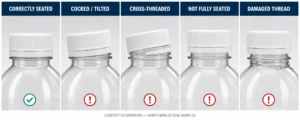
- Whether the cap was aligned correctly during application
- Whether cross-threading occurred
ASTM D2063 and D7860 address torque retention, while ASTM D5094 covers leakage testing for threaded closures.[3][4][9]
From an engineering standpoint, torque should be treated as one element within broader package verification, not as a standalone pass/fail criterion.
Frequently Asked Questions
What Is the Correct Bottle Capping Torque?
There is no single correct value for bottle capping torque. Start from the closure specification and confirm it using the actual bottle-and-cap combination under defined conditions.
Is Removal Torque a Fixed Percentage of Application Torque?
No. The relationship between application torque vs removal torque must be established for each system.
Can the Same Machine Setting Be Used for Caps of the Same Diameter?
Not reliably. Even a same-diameter cap may differ in thread geometry, liner, or tamper-evident design.
Does Passing a Torque Test Mean the Bottle Will Not Leak?
No. Torque testing does not directly confirm seal integrity or leakage resistance.
When Should Actual Bottle and Cap Samples Be Sent?
Whenever a new or unverified bottle-and-cap combination is involved, or when documented torque testing is required.
Request a Bottle and Cap Review
For a threaded-closure project, send bottle and cap details—drawings, neck finish, closure, filling condition, target output, and samples where needed—for package-specific capping review.
Reviewed by Slany Cheung, Technical Sales Director at LEKA Pack Line.
Technical scope: bottle-and-cap evaluation, capping-machine configuration and bottling-line integration.
Sources
- TricorBraun, “Torque Guidelines for Closures & Capping Bottles.” TricorBraun torque guidelines
- Checkline, “Cap Torque Tester Technical Information.” Checkline Cap Torque Tester Technical Information
- ASTM D2063/D2063M-24, “Measurement of Torque Retention for Packages with Continuous Thread Closures Using Non-Automated Torque Testing Equipment.” ASTM D2063/D2063M-24
- ASTM D7860-14(2022), “Measurement of Torque Retention for Packages with Continuous Thread Closures Using Automated Torque Testing Equipment.” ASTM D7860-14(2022)
- ASTM D2911/D2911M-16(2023), “Dimensions and Tolerances for Plastic Bottles.” ASTM D2911/D2911M-16(2023)
- Selig Group, “Container Sealing.” Selig Group container-sealing guidance
- Mecmesin, “Tornado Closure Torque Tester Documentation.” Mecmesin Tornado documentation
- ASTM D3474-23, “Calibration and Use of Torque Meters Used in Packaging Applications.” ASTM D3474-23
- ASTM D5094/D5094M-24, “Gross Leakage of Liquids from Containers with Threaded or Lug-Style Closures.” ASTM D5094/D5094M-24
- Delta El Nile for Industry, “CSD Bottle Caps — PCO 1881 Closures.” Delta El Nile PCO 1881 closure information
- Kinex Cappers, “How to Calibrate a Capping Machine Using a Bottle Cap Torque Tester.” Kinex Cappers calibration guidance
- Thermo Fisher Scientific, “Nalgene Bottles and Carboys Technical Brochure,” D01705 (PDF). Thermo Fisher Nalgene technical brochure D01705
Only publicly accessible ASTM scope and abstract information was used. No unpublished procedure, acceptance value, sample quantity, test speed or waiting time was inferred.